An external capture card can make streaming and recording much easier, whether you game on a console, use a DSLR, or want a cleaner PC workflow.
Below, we’ve focused on the 10 best options for 2026, with an emphasis on image quality, passthrough, latency, and compatibility.
Best 10 External Capture Card Picks for 2026
Stream-Friendly 1080p Classic

- 1080p60 capture for gameplay streaming and recording
- True passthrough helps reduce play delay
- Flashback Recording can save missed highlights
Best For: Console streamers who want dependable 1080p60 capture with low-latency passthrough
Budget USB 3.0 Capture Pick

- Plug-and-play USB 3.0 setup with no external power
- 1080p capture plus HDMI loop-out for low-delay play
- Mic-in support for live commentary
Best For: Buyers who want a simple, low-cost 1080p external capture card
High-Refresh 4K Upgrade

- 4K60 capture with HDR10 support
- 1440p120 and 1080p240 passthrough
- USB-C design with analog audio input
Best For: High-end gamers who want 4K capture and high-refresh passthrough
Portable USB-C Capture Helper
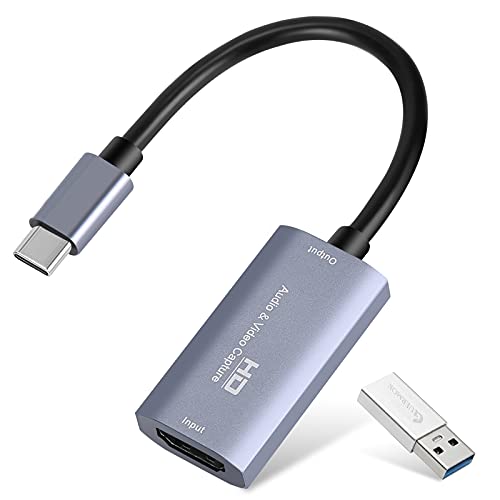
- Compact plug-and-play USB capture card
- 1080p60 capture with wide OS compatibility
- Lightweight design for portable use
Best For: Portable 1080p capture across consoles, cameras, and computers
Premium HDR Streamer
Elgato HD60 S+ HDR Capture Card
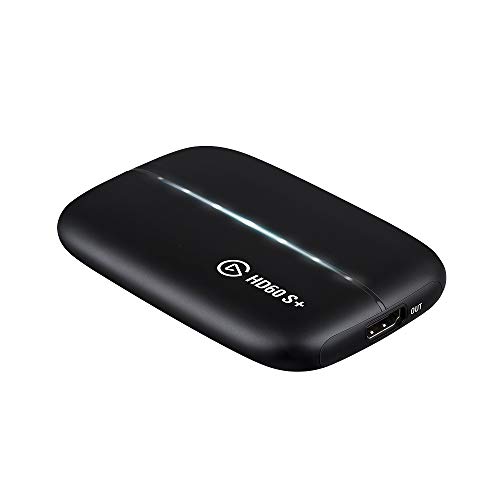
- 1080p60 HDR10 capture for streaming and recording
- 4K60 HDR10 passthrough with ultra-low latency
- Supports PC, Mac, OBS, and major consoles
Best For: Creators who want reliable HDR capture and smooth passthrough
High-Refresh 4K Pass-Through
AVerMedia Live Gamer Extreme 3

- 4K30 capture with up to 1080p240 support
- VRR passthrough at 1440p120 or 1080p120
- Plug-and-play setup with USB-C and HDMI cables
Best For: Gamers who want high-refresh passthrough and easy setup
Versatile Creator Pick

- 1080p60 low-latency capture over USB-C 3.0
- 4K60, 2K120, or 1080p240 passthrough
- Includes 3.5mm mic input and headset jack
Best For: Creators needing console, camera, and audio flexibility
Premium HDMI 2.1 Performer
AVerMedia Live Gamer Ultra 2.1

- 4K60 capture with 4K144 HDR/VRR passthrough
- Low-latency streaming for OBS, Twitch, and YouTube
- Built-in party chat support and RGB lighting
Best For: High-end console streamers who want top-tier passthrough
Easy Plug-and-Play Option
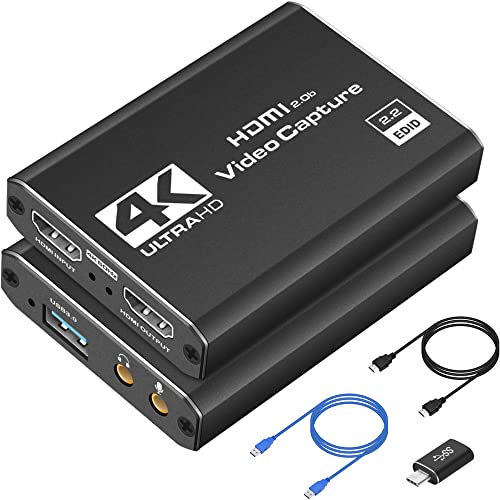
- Plug-and-play USB setup with no drivers
- 1080p60 capture with HDMI loop-out
- Works with Windows, macOS, OBS, and Streamlabs
Best For: Beginners and travelers who want simple 1080p capture
Compact Low-Latency Pick

- 4K60 HDR passthrough with 1080p60 recording
- Plug-and-play setup with Streaming Center and OBS
- Works with Windows, macOS, and iPadOS 17+
Best For: Creators who want a compact, fast-setup streaming card
Stream-Friendly 1080p Classic – Elgato HD60 S
If you want an external capture card that keeps console gameplay smooth while you record or stream, the Elgato HD60 S is built around low-latency 1080p60 capture. It fits a straightforward setup for PS5, PS4, Xbox Series X/S, Xbox One, and PC/Mac use, with HDMI passthrough that helps you play without noticeable delay.
Best For: Streamers and console players who want a reliable 1080p60 external capture card with simple passthrough and recording features.
Pros:
- Captures and streams in 1080p60 for clean full-HD gameplay footage
- True passthrough is designed for zero-lag console play
- Instant Gameview uses ultra-low-latency technology for responsive monitoring
- Flashback Recording lets you save moments after they happen
Cons:
- Max capture resolution is 1080p, not 4K
- Best results depend on a compatible Windows 10 or Mac setup
- Geared more toward gameplay capture than advanced studio workflows
Overall, the HD60 S remains a practical external capture card choice if your priority is smooth 1080p60 capture with proven console support and low-latency monitoring.
Budget USB 3.0 Capture Pick – Rybozen 4K HDMI Capture Card
This external capture card is aimed at simple plug-and-play streaming setups, with 1080p capture, USB 3.0 connectivity, and HDMI loop-out for low-delay gameplay. It works with Windows and Mac OS, and the notes also call out support for cameras, consoles, and common streaming software like OBS.
Best For: Budget-conscious users who want a straightforward external capture card for 1080p streaming, commentary, and HDMI pass-through setups.
Pros:
- Plug-and-play design with no driver or external power required
- USB 3.0 connection is paired with low-latency capture support
- HDMI loop-out helps avoid delay while playing
- Mic-in support allows external commentary during capture
Cons:
- Capture resolution is 1080p, even though the input supports higher signals
- Compatible system details in the notes are Windows-focused
- Warranty is short at 60 days
If you mainly need an affordable external capture card for 1080p gameplay or camera capture, this model covers the basics without adding much setup complexity.
High-Refresh 4K Upgrade – Elgato 4K S
The Elgato 4K S is a newer external capture card for players who want higher-end passthrough and modern device support. It is built for 4K60 capture, includes 1440p120 and 1080p240 passthrough, and adds HDR10 support plus near-zero latency for fast-paced console or PC setups.
Best For: Gamers and creators who want a premium external capture card with 4K60 capture and high-refresh passthrough.
Pros:
- Captures at 4K60 for sharper footage
- Supports 1440p120 and 1080p240 passthrough for high-refresh play
- HDR10 support is included, with tone mapping on Windows
- USB-C and analog audio input add flexibility
Cons:
- Requires newer operating systems and hardware than basic capture cards
- Overkill if you only need standard 1080p streaming
- Core benefits are strongest in a modern high-refresh setup
For users building around PS5, Xbox Series X/S, or similarly modern gear, the 4K S is the most capable external capture card here for high-resolution capture and fast passthrough.
Portable USB-C Capture Helper – Guermok 1080p60 Capture Card
If portability matters, this external capture card is designed for quick plug-and-play capture from HDMI sources to USB-C or USB 3.0 devices. It supports 1080p60 capture, wide device compatibility, and low-latency monitoring for live gaming, online meetings, and recording on the go.
Best For: Users who want a compact external capture card for portable 1080p60 capture across consoles, cameras, and computers.
Pros:
- Supports 1080p60 capture with input up to 4K@30Hz
- Small, lightweight design makes it easy to carry
- Plug-and-play operation with no external power or driver requirement
- Broad compatibility with Windows, Mac, Linux, Android, and more
Cons:
- Notes say it is for capture use only, not direct screen casting to a monitor or TV
- Requires capture software to function
- HDMI to USB-C only; one-way transmission is emphasized in the notes
This is a flexible external capture card for users who need something small and widely compatible, especially for travel, teaching, or basic streaming workflows.
Premium HDR Streamer – Elgato HD60 S+ HDR Capture Card
If you want an external capture card that balances high-quality recording with a simple setup, the Elgato HD60 S+ is built for smooth 1080p60 HDR10 capture and 4K60 HDR10 passthrough. It’s a practical fit for players who want to stream or record while keeping gameplay responsive in OBS and other apps on PC or Mac.
Best For: Streamers who want HDR capture, low latency, and easy recording on PC or Mac.
Pros:
- 1080p60 HDR10 capture for clear gameplay footage
- 4K60 HDR10 zero-lag passthrough for console play
- Instant Gameview and ultra-low-latency workflow
- Flashback Recording and unlimited capture to hard drive
Cons:
- Capture tops out at 1080p60 rather than 4K recording
- Best features are centered on HDR-enabled setups
The HD60 S+ makes sense if you care more about dependable HDR capture and responsive passthrough than chasing maximum recording resolution. It’s a strong external capture card option for creators who want a proven streaming workflow.
High-Refresh 4K Pass-Through – AVerMedia Live Gamer Extreme 3
The AVerMedia Live Gamer Extreme 3 is an external capture card aimed at gamers who want strong capture quality and high-refresh passthrough in one device. It records 4K30 gameplay while supporting VRR passthrough at up to 1440p120 or 1080p120, making it a practical choice for fast console and PC setups.
Best For: Players who want high-refresh passthrough and straightforward plug-and-play capture.
Pros:
- Records gameplay at 4K30 with high refresh support up to 1080p240
- VRR passthrough at 1440p120 or 1080p120
- Ultra-low latency passthrough for smoother play
- Plug-and-play setup with included cables and quick start guide
Cons:
- Capture resolution is limited to 4K30
- Requires a USB 3.2 Gen 1 Type-C port for minimum system requirements
If your priority is keeping gameplay fluid while still capturing clean footage, this model hits a useful middle ground. It stands out as an external capture card for high-refresh players who want simple setup and broad console compatibility.
Versatile Creator Pick – NearStream CCD10 Capture Card
The NearStream CCD10 is a flexible external capture card for users who need console, camera, and PC support in one compact device. It captures up to 1080p60 over USB-C 3.0 while offering 4K60, 2K120, or 1080p240 passthrough, so you can keep gameplay smooth and still feed a streaming or recording workflow.
Best For: Streamers and creators who want broad device compatibility and built-in audio inputs.
Pros:
- 1080p60 capture with low-latency performance
- 4K60, 2K120, or 1080p240 passthrough
- 3.5mm mic input and headset jack for streaming audio
- Works with Windows, Mac, and Linux
Cons:
- Capture resolution is limited to 1080p
- System requirements vary by capture format
With its audio inputs and wide compatibility, the CCD10 is especially useful for creators who want one capture device for multiple use cases. It’s a practical external capture card if you need flexibility more than maximum capture resolution.
Premium HDMI 2.1 Performer – AVerMedia Live Gamer Ultra 2.1
If you want an external capture card that can keep up with next-gen consoles and high-refresh displays, this AVerMedia model is built for serious gaming and streaming. It captures in 4K60, supports 4K144 HDR/VRR passthrough, and is designed for low-latency use with OBS, Twitch, and YouTube on Windows or Mac.
Best For: Streamers and console players who want 4K60 capture with HDMI 2.1 passthrough.
Pros:
- 4K60 capture with 4K144 HDR/VRR passthrough for smooth gameplay.
- Low-latency design helps keep audio and video synced during live streaming.
- Supports party chat monitoring through the headset connection.
- Includes customizable RGB lighting for setup flexibility.
Cons:
- Windows 10/11 x64 or later is required for use.
- More than some basic USB capture cards.
This is a strong external capture card choice if passthrough quality matters as much as capture quality. It stands out for HDMI 2.1 support, 5.1 audio capture, and a feature set aimed at modern console streaming setups.
Easy Plug-and-Play Option – Dcyfol 4K HDMI Capture Card
This external capture card is a practical plug-and-play option for creators who want simple setup and solid 1080p60 recording. It works over USB 3.0 with OBS, Streamlabs, and XSplit, and it supports HDMI loop-out plus low-latency capture for gaming or live content.
Best For: Beginners and portable streamers who want an easy USB capture card.
Pros:
- Plug-and-play setup with no drivers needed.
- Supports 1080p60 capture with HDMI loop-out.
- Compatible with Windows and macOS, plus OBS, Streamlabs, and XSplit.
- Compact and lightweight for travel or mobile setups.
Cons:
- Captures at 1080p rather than 4K.
- Requires a USB 3.0 port.
If you do not need advanced 4K capture, this model covers the basics well and keeps setup simple. It is a sensible external capture card for gaming, camera input, or casual streaming on a budget.
Compact Low-Latency Pick – AVerMedia StreamLine MINI+
For creators who want a compact external capture card with modern passthrough support, this AVerMedia model focuses on fast setup and flexible streaming. It records in 1080p60, offers 4K60 HDR passthrough, and works with Windows, macOS, and iPadOS 17 or later through a USB-C connection.
Best For: Streamers who want a small, easy-to-use capture card with ultra-low latency.
Pros:
- 4K60 HDR passthrough with ultra-low-latency gameplay.
- Records in 1080p60 and supports several format options.
- Plug-and-play setup with AVerMedia Streaming Center and OBS support.
- Works with Windows, macOS, and iPadOS 17 or later.
Cons:
- Capture resolution is limited to 1080p60.
- Some advanced workflows may need compatible hardware requirements.
This is a good fit if you want a compact external capture card that is quick to set up and built for smooth live play. Its strength is the combination of low latency, broad device support, and easy streaming access.
How We Picked the Best External Capture Card
We prioritized External Capture Card models that balance reliable performance with real-world compatibility. The strongest picks support low-latency capture, stable USB connections, and clear software support across common platforms like PS5, Xbox Series X/S, Nintendo Switch, Windows, and macOS where applicable.
We also gave extra weight to passthrough capabilities, since many buyers want to play at high refresh rates while capturing at a lower resolution for streaming or editing.
Quick Comparison
For most streamers, 1080p60 capture is still the best value and easiest setup. If you want sharper footage or future-proofing, look at 4K-capable models with HDMI 2.1 passthrough, HDR support, and higher refresh-rate options such as 120Hz or 144Hz.
If your goal is simple recording from one console or camera, a plug-and-play USB 3.0 device may be enough. If you need more flexible workflows, choose a model with stronger software tools and broader format support.
Key Buying Factors for an External Capture Card
Capture Resolution and Frame Rate
Match the card to your content. 1080p60 is ideal for most live streams, while 4K capture is better for editing, archival recording, or higher-end production. If you play competitive games, passthrough at 120Hz or above can matter more than capture resolution.
Passthrough and Latency
A good External Capture Card should let you play with minimal delay. Look for near-zero or ultra-low latency designs, especially if you rely on a TV or monitor for live gameplay. HDMI passthrough also helps preserve your display setup while recording.
Device and Software Compatibility
Check support for your console, camera, or computer before buying. Some models work best with Windows, while others add broader support for macOS, USB-C devices, or DSLR inputs. Also confirm whether the software is easy to use and actively supported.
Audio, HDR, and Connectivity
HDR support, clean audio passthrough, and dependable USB 3.0 or USB-C connectivity can make a big difference in daily use. If you plan to record commentary or multi-source content, these details matter more than raw specs alone.
Who Should Buy Which External Capture Card?
If you want the easiest setup for console streaming, choose a straightforward 1080p60 model. If you play at high refresh rates or want premium console capture, pick a 4K-ready card with strong passthrough. Creators using cameras or mixed devices should look for broader compatibility and stable USB-C support.
In short, the best External Capture Card is the one that matches your resolution goals, passthrough needs, and platform compatibility without adding unnecessary complexity.