If you want to stream or record PS5 gameplay, the right capture card can make setup easier and your footage look far more polished. The best options handle low latency, clean HDMI passthrough, and stable 1080p60 capture without forcing a complicated workflow.
This roundup highlights 10 capture cards for PS5 that fit different budgets and creator needs, from simple plug-and-play models to higher-end cards with stronger passthrough and newer format support.
Best 10 Capture Card for Ps5 Picks for 2026
Reliable 1080p Game Capture
Elgato HD60 S External Capture Card

- 1080p60 capture for streaming and recording
- True Passthrough for zero-lag console play
- Works with OBS, Twitch, YouTube, PC, and Mac
Best For: streamers who want dependable 1080p60 capture with easy compatibility
Budget 4K Loop-Out Pick

- 4K 60Hz input and loop-out support
- 1080p60 or 2K30 capture via USB 3.0
- Mic-in and wide PS5/OBS compatibility
Best For: budget buyers who want loop-out, commentary input, and broad device support
High-Frame-Rate Premium Choice

- 4K60 capture with HDR10 support
- 1440p120 or 1080p240 passthrough
- Analog audio input for commentary or chat
Best For: PS5 users who want premium capture features and high-refresh passthrough
Compact Plug-and-Play Option
Guermok USB3.0 HDMI Capture Card
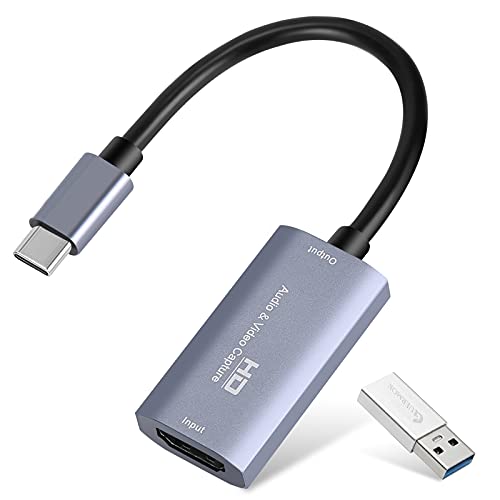
- 1080p60 capture over USB 3.0
- Plug-and-play with no external power
- Works with PS5, OBS, Mac, Windows, and Linux
Best For: travel-friendly users who want simple PS5 capture without extra setup
4K Passthrough Pick

- 4K60, 2K120, or 1080p240 passthrough
- 1080p60 capture over USB-C 3.0
- Mic input and headset jack included
Best For: High-refresh PS5 streaming with flexible audio and device support
Budget-Friendly Streamer

- 1080p capture with USB 3.0
- Plug-and-play setup on Windows and Mac
- Mic-in plus HDMI loop-out
Best For: Simple PS5 streaming on a budget
Balanced 4K Pass-Through

- 4K@60Hz input and loop-out
- 1080p60 capture via USB 3.0
- Works with Windows, macOS, and Linux
Best For: PS5 users wanting a reliable midrange capture card
Budget-Friendly 1080p Option
Plug-and-Play 4K HDMI Capture Card

- Up to 1080p capture with 4K HDMI input support
- No-driver plug-and-play setup
- HDMI loop-out and mic-in for commentary
Best For: Beginners who want a simple PS5 capture setup
Portable Creator Pick
Low-Latency 1080P 60FPS Capture Card
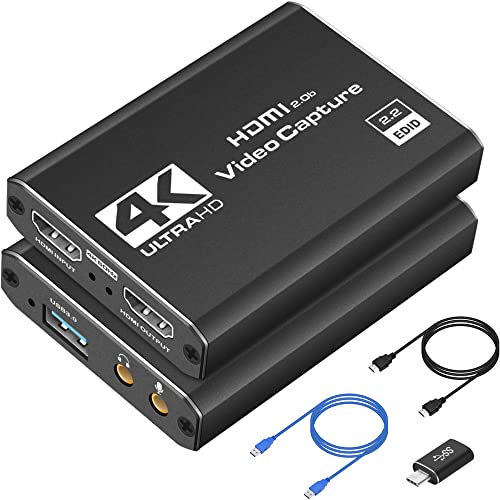
- 1080P 60FPS capture for gaming and streaming
- Plug-and-play with OBS, Streamlabs, and XSplit support
- Lightweight, portable design for on-the-go use
Best For: Creators who want a portable PS5 capture solution
Most Versatile Connection
USB-A and USB-C HDMI Capture Card

- 4K HDMI input with 1080P@60Hz output
- USB Type-A and Type-C ports for flexibility
- Mic-in and plug-and-play setup
Best For: PS5 users who want flexible connections and broad compatibility
Reliable 1080p Game Capture – Elgato HD60 S External Capture Card
If you want a capture card for PS5 that focuses on smooth 1080p60 recording and low-latency passthrough, the Elgato HD60 S is a straightforward pick. It’s built for streaming and recording in OBS, Twitch, and YouTube, while keeping gameplay responsive on console and PC.
Best For: Streamers and console players who want dependable 1080p60 capture with simple PC/Mac support.
Pros:
- Captures gameplay in 1080p60 for clean, standard streaming and recording.
- True Passthrough is designed for zero-lag console play.
- Instant Gameview uses ultra-low-latency tech for smoother monitoring.
- Flashback Recording helps you save moments after they happen.
Cons:
- Maximum capture resolution is 1080p, not 4K.
- Minimum system requirements are specific, including a 64-bit Windows 10 PC.
Overall, the HD60 S is a proven, practical option if your priority is reliable 1080p capture rather than high-resolution passthrough features. It fits well in a basic PS5 streaming setup where stability and low latency matter most.
Budget 4K Loop-Out Pick – XIIXMASK USB 3.0 Capture Card
For shoppers looking for a capture card for PS5 with useful loop-out and broad compatibility, the XIIXMASK model offers a lot of flexibility. It supports 4K 60Hz input and loop-out, with 1080p60 or 2K30 capture through USB 3.0 for streaming and recording.
Best For: Budget-minded users who want a compact PS5 capture card with mic-in support and 4K loop-out.
Pros:
- Supports 4K 60Hz input and 4K 60Hz loop-out.
- Captures at 1080p60 or 2K30 over USB 3.0.
- Includes mic-in support for adding commentary.
- Wide device and software compatibility, including PS5 and OBS Studio.
Cons:
- Notes mention restarting OBS after audio setup to get sound output.
- It’s aimed at capture workflows, not direct display use.
This is a practical feature-packed choice if you want extra connectivity without moving to a premium model. Its loop-out, commentary input, and broad compatibility make it versatile for beginner or casual PS5 streaming.
High-Frame-Rate Premium Choice – Elgato 4K S Capture Card
If you’re shopping for a capture card for PS5 and care about higher-frame-rate passthrough, the Elgato 4K S stands out with modern features. It supports 4K60 capture, 1440p120 or 1080p240 passthrough, HDR10 support, and near-zero latency for a more advanced gaming setup.
Best For: PS5 players who want premium capture features, high-frame-rate passthrough, and HDR support.
Pros:
- Records in 4K60 for detailed footage.
- Passes through 1440p120 or 1080p240 for high-refresh play.
- HDR10 support helps preserve bright, vivid content on Windows.
- Includes analog audio input for in-game chat or commentary.
Cons:
- Some HDR capture features are noted for Windows use.
- Minimum system requirements are more demanding than basic capture cards.
The 4K S is a strong upgrade if your PS5 setup is built around speed, clarity, and flexibility. It’s the most feature-rich option here for users who want modern passthrough rates alongside 4K capture.
Compact Plug-and-Play Option – Guermok USB3.0 HDMI Capture Card
The Guermok capture card for PS5 is a simple USB 3.0 option aimed at easy recording and streaming. It supports up to 1080p60 capture, offers ultra-low latency screen sharing, and is designed for plug-and-play use without external power or drivers.
Best For: Users who want a lightweight, easy-to-carry PS5 capture card for basic streaming and recording.
Pros:
- Captures up to 1080p60 with USB 3.0 speed.
- Plug-and-play setup with no extra drivers or external power.
- Ultra-low latency design helps reduce lag during live use.
- Wide compatibility with PS5, OBS, Mac, Windows, Linux, and more.
Cons:
- Notes say it is for capture use only, not direct screen casting.
- Uses one-way HDMI-to-USB-C transmission.
This is a convenient travel-friendly choice if you want a straightforward PS5 capture solution. It won’t match premium cards on advanced features, but it covers the essentials well for casual streaming and recording.
4K Passthrough Pick – NearStream CCD10
If you want a capture card for PS5 that can stream in 1080p60 without forcing you to give up smooth gameplay, the NearStream CCD10 is built for that job. It supports 4K60, 2K120, or 1080p240 passthrough while capturing at up to 1080p60 over USB-C 3.0, so you can play on a fast display and record at the same time.
Best For: Streamers who want high-frame-rate passthrough and broad console, camera, and OS compatibility.
Pros:
- 4K60, 2K120, and 1080p240 passthrough for high-refresh gameplay
- 1080p60 capture with low-latency performance
- Works with Windows, macOS, and Linux
- Includes 3.5mm mic input and headset jack for commentary
Cons:
- Capture maxes out at 1080p60 rather than higher recording resolutions
- To use the audio ports as intended, you’ll need the right external audio setup
For PS5 users who care about passthrough flexibility as much as recording quality, this model stands out because it balances smooth monitoring with straightforward plug-and-play capture. It also works with PS4, Xbox, Switch, DSLRs, and PCs, which makes it a versatile choice for multi-device setups.
Budget-Friendly Streamer – Rybozen V316B-FR
This capture card for PS5 is a simple option if you mainly want 1080p60 capture and easy setup. The Rybozen V316B-FR uses USB 3.0 plug-and-play operation, supports HDMI loop-out for gameplay with no delay, and works with Windows or Mac OS for streaming or recording in OBS and similar apps.
Best For: Budget-minded users who want a straightforward 1080p capture setup with microphone input.
Pros:
- Up to 1080p capture for HDMI sources
- Plug-and-play with no driver or external power supply required
- HDMI loop-out for low-delay gameplay monitoring
- Microphone input for external commentary
Cons:
- Output supports up to 2K30Hz, not higher
- Video input does not support 4K120Hz or 4K144Hz
If you just need a dependable starter capture solution for PS5 streaming, this model keeps things practical. Its strongest appeal is the easy setup and solid basic feature set, though buyers who want higher-end passthrough or capture specs will need to look elsewhere.
Balanced 4K Pass-Through – Portta HCC101-BK
The Portta HCC101-BK is a practical capture card for PS5 if you want 4K HDMI passthrough and 1080p60 recording in one compact unit. It supports HDMI input and loop-out up to 4K@60Hz, captures over USB 3.0, and works with OBS Studio and other UVC/UAC-compliant apps for streaming or recording.
Best For: PS5 streamers who want dependable 1080p60 capture, 4K passthrough, and broad OS support.
Pros:
- 4K@60Hz HDMI input and loop-out
- 1080p60 capture over USB 3.0
- Plug-and-play compatibility with Windows, macOS, and Linux
- Includes mic in and audio out for streaming setups
Cons:
- Does not support HDR or CEC
- Input passthrough is limited to YUV 4:2:0 at 4K60
- Needs a reasonably capable PC for the listed system requirements
For PS5 owners who want a balanced feature set rather than the highest-end specs, this Portta card is a strong middle-ground pick. It covers the essentials well, especially if you value simple setup, solid latency performance, and cross-platform compatibility.
Budget-Friendly 1080p Option – Plug-and-Play 4K HDMI Capture Card
If you want a capture card for ps5 that keeps setup simple, this 1080p USB 3.0 model is a practical entry point. It supports 4K HDMI input while capturing at up to 1080p, and its plug-and-play design means no driver or external power supply is required.
Best For: New streamers and players who want an easy, low-hassle capture card with mic input and HDMI loop-out.
Pros:
- Captures up to 1080p and supports 4K HDMI input.
- Plug-and-play operation with no driver or external power needed.
- HDMI loop-out helps avoid delay while playing.
- Includes mic-in support for external commentary.
Cons:
- Capture resolution tops out at 1080p.
- Mic input only accepts 3.5mm TRS standard microphone headsets.
- Best fit depends on having a USB 3.0 computer and compatible OS.
This is a straightforward pick if you want reliable PS5 capture without a complicated setup. It focuses on the essentials: easy connection, pass-through play, and optional commentary input.
Portable Creator Pick – Low-Latency 1080P 60FPS Capture Card
This capture card for ps5 is built for creators who want easy setup and solid 1080P 60FPS recording performance. It works as a plug-and-play USB capture card, supports popular apps like OBS Studio, Streamlabs, and XSplit, and includes HDMI passthrough for smooth play while you record or stream.
Best For: Streamers and travelers who want a lightweight, low-latency capture card with broad HDMI-device compatibility.
Pros:
- Captures smooth 1080P 60FPS video.
- Plug-and-play setup with no drivers needed.
- Compatible with OBS Studio, Streamlabs, and XSplit.
- Compact and portable for travel or changing setups.
Cons:
- Video capture resolution is listed as 1080p rather than true 4K capture.
- Requires a USB 3.0 port.
- Works best on compatible Windows and macOS systems.
If portability matters, this model stands out as an easy-to-pack option for PS5 streaming. It prioritizes low latency, simple setup, and broad software support over extra complexity.
Most Versatile Connection – USB-A and USB-C HDMI Capture Card
If you’re shopping for a capture card for ps5 and want flexible connectivity, this Acer model is a strong all-around option. It supports 4K HDMI input, delivers 1080P@60Hz output, and adds both USB Type-A and Type-C ports for easier compatibility across different devices.
Best For: Users who want a flexible, low-latency capture card with mic-in support and broad device compatibility.
Pros:
- Supports 4K input with smooth 1080P@60Hz output.
- Includes both USB 3.0 Type-A and Type-C connectivity.
- Mic-in support makes live commentary easier.
- Plug-and-play design needs no extra drivers or external power.
Cons:
- Capture resolution is listed at 1080p, not 4K capture.
- USB 3.0 port required.
- Some features depend on compatible systems and apps.
For PS5 users who care about flexibility, this is the most adaptable pick in the group. The dual-port design, low-latency performance, and wide device support make it a practical choice for mixed setups.
How We Picked the Best Capture Card for Ps5
We focused on the features that matter most for console capture: reliable 1080p60 recording, low-latency passthrough, broad device compatibility, and simple setup. We also considered whether each Capture Card for Ps5 is a better fit for casual streaming, dedicated content creation, or multi-device use with PCs, cameras, and other consoles.
Because many buyers are pairing a PS5 with a monitor or TV, passthrough quality was a major factor. Cards with 4K input or loop-out can help preserve a smoother play experience, while cards with stronger compression and USB bandwidth are usually better for stable recording.
Quick Comparison
If you want the simplest path, look for a straightforward USB 3.0 card that supports 1080p60 capture and HDMI loop-out. If you care about future-proofing, premium models with higher passthrough support and HDR handling are more flexible. For most PS5 players, the sweet spot is a card that captures clean 1080p60 while letting you play at higher refresh rates on your display.
Key Buying Factors for a Capture Card for Ps5
Capture Resolution and Frame Rate
For most streamers, 1080p60 is the standard to target. It delivers smooth gameplay video without demanding too much from your PC or streaming software. If you plan to edit clips heavily or produce more polished videos, look for stronger passthrough and input support even if your live capture stays at 1080p.
Passthrough and Latency
Passthrough lets you play on a monitor or TV while the card sends video to your computer. Low latency matters because even small delays can make fast-paced PS5 games feel off. If you play shooters, fighters, or action games, prioritize near-zero or ultra-low latency passthrough.
Connectivity and Compatibility
USB 3.0 remains the safest choice for dependable performance. Check whether the card supports USB-A, USB-C, or both, and confirm compatibility with your operating system and streaming software. Some models are better suited for PCs, while others add flexibility for tablets or camera workflows.
Audio Handling
Good audio support is essential for a clean stream. Make sure the card handles game audio properly and works with your preferred microphone and chat setup. If you use headset audio on PS5, double-check how the capture card routes sound so you avoid echo or missing game audio.
Who Should Buy Which Capture Card for Ps5?
Beginners should choose a simple plug-and-play model with 1080p60 capture and easy software setup. Budget buyers can focus on value-oriented cards that still offer HDMI loop-out and stable USB 3.0 performance. If you want the most refined experience, a premium Capture Card for Ps5 with stronger passthrough, better HDR support, and broader resolution options is worth the extra cost.
If you plan to grow into multi-platform streaming or want to reuse the card with a camera later, pick a more versatile model now. That way, your purchase stays useful as your setup becomes more advanced.