Choosing a capture card for Xbox Series X comes down to more than just “4K” on the box. The right pick depends on whether you stream live, record gameplay, use a dual-PC setup, or simply want clean, low-latency footage.
This roundup focuses on practical options with the features most Xbox players actually need, including passthrough quality, USB compatibility, audio handling, and smooth performance for modern consoles.
Best 10 Capture Card for Xbox Series X Picks for 2026
Premium 4K60 Choice
Elgato 4K S Capture Card for PS5, Xbox Series X/S

- 4K60 capture with HDR10 support on Windows
- 1440p120 or 1080p240 passthrough
- Analog audio input for commentary or chat
Best For: Xbox Series X/S players who want high-refresh passthrough and 4K capture
Budget 1080p Option
4K HDMI Video Capture Card for Streaming

- 1080p capture with USB 3.0 plug-and-play setup
- HDMI loop-out for delay-free play
- Mic-in support for commentary
Best For: Budget Xbox Series X capture when 1080p is enough
Trusted 1080p60 Pick
Elgato HD60 S External Capture Card

- 1080p60 capture with true passthrough
- Ultra-low-latency Instant Gameview
- Flashback Recording for saved highlights
Best For: Streamers who want dependable 1080p60 capture from Xbox Series X
Flexible Mid-Range Pick
Guermok 1080p60 Capture Card with 4K Passthrough

- 1080p60 capture with 2K30 support
- 4K60 HDMI pass-through
- Mic input plus headphone and speaker outputs
Best For: Xbox Series X users wanting passthrough and extra audio options
Premium 1080p HDR Pick
Elgato HD60 S+ 1080p60 HDR10 Capture Card
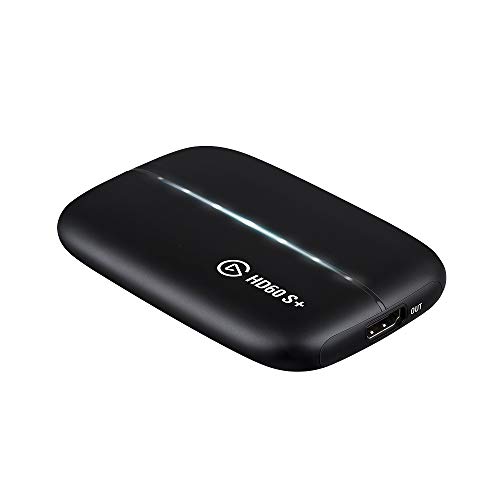
- 1080p60 HDR10 capture
- 4K60 HDR10 zero-lag passthrough
- Flashback Recording and unlimited capture
Best For: Streamers who want reliable HDR capture with low-latency passthrough
Budget Portable Option
UGREEN USB-A/USB-C 1080p30 Capture Card

- Plug-and-play with no driver required
- USB-A and USB-C dual interface
- Lightweight 19.9g portable design
Best For: Casual streamers who want a simple, portable capture solution
High-Refresh Passthrough Choice
NearStream CCD10 1080p60 Capture Card

- 4K60, 2K120, and 1080p240 passthrough
- 1080p60 low-latency capture
- 3.5mm mic input plus headset jack
Best For: Gamers who want smooth passthrough and flexible audio inputs
4K Pro Capture
BlueAVS 4K HDMI Video Capture Card for Streaming

- 4K@60 capture with 1440P@144Hz and 1080P@240Hz
- HDR, VRR, and ALLM passthrough support
- USB-C plug-and-play with OBS and UVC apps
Best For: High-refresh Xbox Series X streaming and advanced passthrough setups
Simple 1080p Streamer
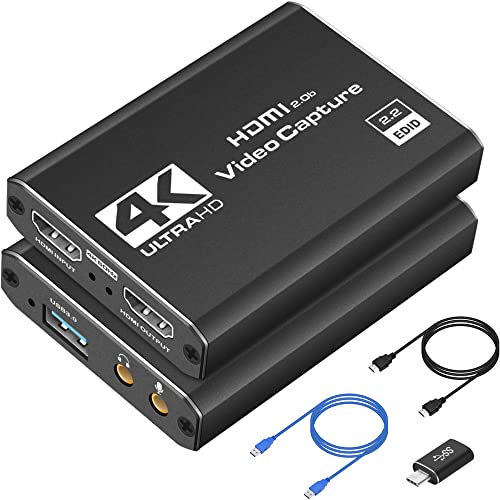
- 1080p capture with low-latency HDMI loop-out
- Plug-and-play setup with no drivers needed
- Works with OBS, Streamlabs, and XSplit
Best For: Easy Xbox Series X recording and beginner streaming
Versatile USB-C Capture
acer USB 3.0 HDMI Capture Card

- 4K input with 1080P@60Hz output
- Mic-in support for live commentary
- USB Type-A and Type-C connectivity
Best For: Compact Xbox Series X capture with flexible connections
Premium 4K60 Choice – Elgato 4K S Capture Card for PS5, Xbox Series X/S
If you want a capture card for Xbox Series X that can handle modern high-frame-rate gaming, the Elgato 4K S is built around 4K60 capture, 1440p120 passthrough, and 1080p240 passthrough. It also adds HDR10 support on Windows and a near-zero latency design, making it a strong fit for gamers who want smooth play while recording or streaming.
Best For: Xbox Series X/S players who want high-refresh passthrough, 4K capture, and broad console support.
Pros:
- 4K60 capture with crisp detail and vivid color support.
- Supports 1440p120 or 1080p240 passthrough for high-refresh gaming.
- HDR10 support on Windows for compatible HDR content.
- Analog 3.5mm audio input for in-game chat or commentary.
Cons:
- Requires Windows 11 for HDR tone mapping support.
- Full feature set is tied to newer system requirements.
This is the most feature-rich option in the group if you care about fast passthrough and modern capture specs. For an Xbox Series X setup, it stands out as the strongest choice for future-proof streaming and recording.
Budget 1080p Option – 4K HDMI Video Capture Card for Streaming
This capture card for Xbox Series X is a straightforward, low-cost way to get gameplay into OBS or other streaming software. It records up to 1080p and supports HDMI input up to 4K30/60 and 1080p120/144Hz, with plug-and-play USB 3.0 operation and no external power required.
Best For: Budget-minded streamers who mainly need simple 1080p capture from an Xbox Series X.
Pros:
- Plug-and-play setup with no driver or external power needed.
- 1080p capture with USB 3.0 and low-latency operation.
- HDMI loop-out supports live play without delay.
- Mic-in support for external commentary.
Cons:
- Capture tops out at 1080p, not 4K.
- Output supports only up to 2K30Hz.
- Mic input is limited to 3.5mm TRS standard headset mics.
If you only need reliable basic capture, this model covers the essentials without adding complexity. It makes the most sense for casual Xbox streaming where 1080p is enough.
Trusted 1080p60 Pick – Elgato HD60 S External Capture Card
If you want a capture card for Xbox Series X that prioritizes dependable 1080p60 recording, the Elgato HD60 S is a proven external option. It offers ultra-low latency, true passthrough, and broad support for OBS, Twitch, YouTube, PC, and Mac.
Best For: Streamers who want a well-known 1080p60 capture card with low-latency passthrough.
Pros:
- 1080p60 capture with true passthrough and zero-lag play.
- Instant Gameview uses ultra-low-latency technology.
- Unlimited capture lets you record long sessions to your drive.
- Flashback Recording helps you save moments after they happen.
Cons:
- Only captures at 1080p, not 4K.
- Best fit is tied to older 1080p streaming workflows.
The HD60 S remains a practical choice if you value stability and simple setup over higher-resolution features. For Xbox Series X users focused on smooth 1080p content, it still covers the core job well.
Flexible Mid-Range Pick – Guermok 1080p60 Capture Card with 4K Passthrough
This capture card for Xbox Series X is a flexible option if you want 1080p60 capture with 4K60 HDMI pass-through and simple USB 3.0 connectivity. It also adds mic input, audio output, and broad device compatibility, which makes it useful for gaming, meetings, and general content creation.
Best For: Xbox Series X users who want a practical capture card with passthrough and extra audio ports.
Pros:
- 1080p60 capture with 2K30 support for streaming and recording.
- 4K60 HDMI pass-through with ultra-low latency.
- Mic In, Audio In, headphone monitoring, and speaker output ports.
- Plug-and-play support with OBS, Streamlabs, VLC, and more.
Cons:
- Pass-through behavior changes by mode, with lower limits in RGB/YUV444.
- Requires capture software for display and recording functions.
For Xbox Series X users who want a good balance of capture quality, passthrough, and audio flexibility, this model is easy to work with. It is especially appealing if you need a capture card that can also handle cameras or other HDMI sources.
Premium 1080p HDR Pick – Elgato HD60 S+ 1080p60 HDR10 Capture Card
If you want a capture card for Xbox Series X that focuses on clean 1080p60 recording with HDR10 support, the Elgato HD60 S+ is built for straightforward streaming and recording. It also offers 4K60 HDR10 zero-lag passthrough, so you can keep playing on your Xbox in the original format while capturing gameplay on a separate PC or Mac setup.
Best For: Streamers and creators who want dependable 1080p60 HDR capture with low-latency passthrough.
Pros:
- 1080p60 HDR10 capture for sharp gameplay recording.
- 4K60 HDR10 passthrough with ultra-low latency for playing while you record.
- Unlimited capture lets you record long sessions directly to your hard drive.
- Flashback Recording helps save moments after they happen.
Cons:
- Capture resolution tops out at 1080p60, not 4K recording.
- Designed around a PC or Mac workflow rather than standalone use.
Overall, this is a strong option if you value polished capture software features and a smooth passthrough experience more than raw recording resolution.
Budget Portable Option – UGREEN USB-A/USB-C 1080p30 Capture Card
This capture card for Xbox Series X is a simple plug-and-play choice if you mainly need easy video capture for streaming or recording at 1080p30. The UGREEN model supports HDMI input up to 4K60, uses USB-A or USB-C for connection, and is designed to work without drivers or external power.
Best For: Casual streamers and users who want a lightweight, portable, driver-free capture card.
Pros:
- Plug and play with no driver required.
- USB-A and USB-C dual interface improves compatibility.
- Very lightweight at 19.9g and easy to carry.
- Low-latency transmission for real-time screen sharing and gaming.
Cons:
- Capture output is limited to 1080p30.
- Does not support capture when HDCP encryption is enabled.
- Requires HDCP to be turned off for Xbox and other consoles.
For basic console streaming or recording, this is a practical, low-hassle option, but the 30fps ceiling makes it better for simple setups than high-frame-rate gameplay.
High-Refresh Passthrough Choice – NearStream CCD10 1080p60 Capture Card
If you are shopping for a capture card for Xbox Series X and care about high-refresh passthrough, the NearStream CCD10 is built to keep gameplay smooth while you stream. It captures at 1080p60 over USB-C 3.0 and supports 4K60, 2K120, or 1080p240 passthrough, making it a good fit for players who want fast monitor or TV output during recording.
Best For: Gamers who want high-refresh passthrough plus 1080p60 capture in a plug-and-play setup.
Pros:
- Supports 4K60, 2K120, and 1080p240 passthrough.
- 1080p60 capture with low-latency performance.
- Includes a 3.5mm mic input and headset jack.
- Works with Windows, macOS, and Linux.
Cons:
- Capture resolution is limited to 1080p.
- Some 4K30 capture formats require stronger system hardware.
- Needs a USB 3.0 port and compatible software like OBS or PotPlayer.
That mix of high-refresh passthrough and built-in audio options makes this a flexible choice for streamers who want more control over their console setup.
4K Pro Capture – BlueAVS 4K HDMI Video Capture Card for Streaming
If you want a capture card for Xbox Series X that can handle modern high-refresh gameplay, this BlueAVS unit is built for more than basic 1080p recording. It supports 4K60 input and passthrough, plus 1440p144 and 1080p240 capture modes, so it suits both cinematic console play and faster competitive setups.
Best For: Streamers and gamers who want high-resolution capture with HDR, VRR, and flexible passthrough support.
Pros:
- Captures up to 4K@60Hz, with 1440P@144Hz and 1080P@240Hz support.
- Supports HDR, VRR, and ALLM for smoother passthrough visuals.
- USB-C external design works plug-and-play with OBS and UVC-compliant software.
- Includes a 3.5mm audio port for line-in or headset audio mixing.
Cons:
- Requires a USB 5Gbps port for stable 4K streaming and recording.
- May be more capture card than needed if you only want simple 1080p recording.
This is the most feature-rich option in the group, especially if you care about preserving original frame rate and screen ratio during capture. For Xbox Series X users with a high-end display or fast-paced games, it offers the broadest headroom.
Simple 1080p Streamer – 4K HDMI Capture Card USB 3.0
This capture card for Xbox Series X is a straightforward choice if you want easy streaming and recording without a complicated setup. It focuses on smooth 1080p capture, low latency, and HDMI loop-out, making it a practical pick for everyday gameplay sharing.
Best For: Beginners and budget-conscious streamers who want simple plug-and-play Xbox capture.
Pros:
- Plug-and-play USB capture with no drivers needed.
- Supports HDMI loop-out for lag-free play while recording.
- Compatible with OBS, Streamlabs, and XSplit.
- Portable USB 3.0 design is easy to move between setups.
Cons:
- Video capture resolution is listed as 1080p, so it is not the best fit for higher-resolution workflows.
- Windows and macOS support only, which narrows platform flexibility.
If your priority is getting an Xbox Series X signal into OBS quickly and reliably, this model keeps things simple. It is best suited to creators who care more about ease of use than advanced capture formats.
Versatile USB-C Capture – acer USB 3.0 HDMI Capture Card
For shoppers comparing a capture card for Xbox Series X, this acer model stands out for its balance of simplicity and flexibility. It takes 4K input, outputs smooth 1080p60, and includes both USB Type-A and Type-C ports, which makes it a useful everyday option for streaming or recording.
Best For: Users who want a compact, low-latency capture card with mic input and broad device support.
Pros:
- 4K input with 1080P@60Hz output for smooth capture.
- Low-latency YUY2 processing with richer color than MJPEG.
- Mic-in support for voice commentary without extra adapters.
- USB Type-A and Type-C ports add connection flexibility.
Cons:
- Output is capped at 1080p60, so it is not aimed at higher-end capture needs.
- Its feature set is more focused on practicality than advanced passthrough specs.
This is a solid all-rounder for Xbox Series X owners who want a compact card that handles capture, commentary, and wide software compatibility. It is especially appealing if you value easy setup and travel-friendly hardware.
How We Picked the Best Capture Card for Xbox Series X
We focused on capture cards that make sense for Xbox Series X owners, prioritizing reliable video capture, low-latency passthrough, and broad software compatibility. We also weighed ease of use, USB connection type, and whether the card supports common streaming and recording workflows without unnecessary setup.
Quick Comparison
If you want the simplest path, 1080p60 models are usually the easiest and most affordable choice. If you care about sharper monitoring on a 4K display, look for stronger passthrough such as 4K60, 1440p120, or even higher-refresh support. For creators who want future-proof flexibility, a premium Capture Card for Xbox Series X with HDR, VRR, and USB-C can be worth the upgrade.
Key Buying Factors for a Capture Card for Xbox Series X
Capture Resolution Vs. Passthrough
Don’t confuse capture resolution with passthrough. Many cards capture at 1080p60 while still allowing higher-resolution output to your TV or monitor. If you play competitively, passthrough matters as much as recording quality because it preserves your gameplay experience.
Latency and Console Feel
Low latency is essential if you’re using the card while gaming. A good Capture Card for Xbox Series X should avoid noticeable delay in preview windows and keep controller response feeling natural when routed through the card.
USB Standard and Compatibility
USB 3.0 or USB-C is usually preferable for smoother bandwidth and fewer bottlenecks. Also confirm compatibility with your PC, laptop, or streaming software before buying, especially if you plan to record and stream at the same time.
Audio Support
Some models offer mic input, audio output, or cleaner HDMI audio handling. That can be useful if you want commentary, party chat capture, or a more complete streaming setup without extra adapters.
HDR, VRR, and High Refresh Passthrough
If you use a modern display, support for HDR, VRR, and higher refresh rates can make a meaningful difference. These features are especially important for gamers who want their capture card to stay out of the way during play.
Who Should Buy Which Capture Card for Xbox Series X?
Buy a basic 1080p60 card if you’re a beginner, stream casually, or just need dependable recording on a budget. Choose a midrange 4K passthrough model if you play on a high-end monitor and want better flexibility. Go for a premium option if you stream regularly, care about HDR or VRR, or want the most polished setup for a Capture Card for Xbox Series X.
In short, the best choice is the one that fits your resolution needs, your display, and how serious you are about streaming or content creation.