Choosing the best FPV drone for racing means balancing acceleration, responsiveness, durability, video quality, and the cost of replacement parts. The right model depends heavily on where you fly and how much building or tuning you want to do.
These ten picks cover indoor micro whoops, beginner-ready kits, and more capable FPV systems, making it easier to find a setup that matches your experience, budget, and racing goals.
Best 10 Fpv Drone for Racing Picks for 2026
Best Beginner RTF Pick
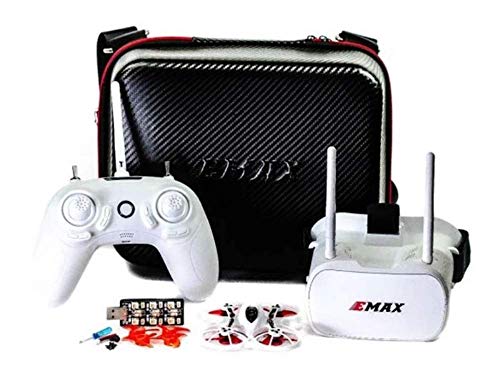
- Complete FPV kit with goggles and controller
- Up to 35 mph with a lightweight, durable build
- Listed control range reaches 200 feet
Best For: Beginners wanting a ready-to-fly FPV starter kit
Best Ultralight Freestyle Pick
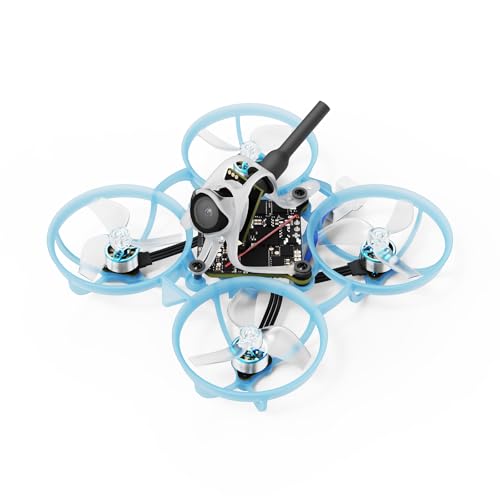
- 0702 25000KV motors support lively 1S performance
- Reinforced frame and canopy target crash resilience
- Designed for indoor and outdoor freestyle flying
Best For: Experienced pilots with compatible FPV gear
Best Premium Immersive Pick

- Captures stabilized 4K/60fps video
- Includes Goggles 3, RC Motion 3, and three batteries
- Propeller guards support more confident flying
Best For: Advanced pilots combining FPV flight with video creation
Beginner-Friendly FPV Starter

- Complete drone, transmitter, goggles, and battery kit
- Three modes with multiple speed settings
- Altitude hold, self-protection, and Turtle Mode
Best For: Beginners learning FPV flight before moving into faster racing practice
Lightweight Racing Trainer

- 26g frame with duct guards for indoor training
- High-KV brushless motors deliver responsive power
- Betaflight and ELRS support advanced practice
Best For: Intermediate pilots training for indoor racing and freestyle
Speed-Tuned Micro Racer

- Ultralight 1S brushless platform
- Built-in ELRS and Betaflight tuning
- Includes two batteries and charger
Best For: Experienced pilots practicing indoor racing and freestyle
Best Beginner RTF Pick – Tiny Hawk Micro Racing Drone
Tiny Hawk RTF Micro Indoor Racing Drone with FPV Goggles and Controller for Beginners
Check Price On AmazonIf you want an accessible FPV drone for racing, the Tiny Hawk RTF kit provides the essential equipment in one package. It includes the drone, FPV goggles, controller, battery, and a carry case, so beginners can start without buying extra flight gear.
Best For: Beginners seeking an affordable, ready-to-fly indoor or short-range FPV experience.
Pros:
- Complete ready-to-fly kit with goggles and controller
- Real FPV video rather than Wi-Fi transmission
- Lightweight, durable design with speeds up to 35 mph
- Carry case makes transport convenient
Cons:
- Maximum listed range is about 200 feet
- 720p video is modest compared with newer HD systems
- Micro size is better suited to indoor or compact flying areas
The Tiny Hawk is a practical entry point for learning FPV controls and racing fundamentals. Its all-in-one setup and durable, lightweight build make it especially useful for new pilots, though experienced racers may want more range or advanced video quality.
Best Ultralight Freestyle Pick – BETAFPV Air65 II
The BETAFPV Air65 II is a strong choice for pilots who want an ultralight FPV drone for racing and freestyle practice. Its 1S platform combines high-KV motors, three-blade props, a reinforced frame, and a crash-resilient flight controller for responsive flying in indoor or outdoor spaces.
Best For: Experienced pilots who prioritize lightweight freestyle performance and crash resilience.
Pros:
- 0702 25000KV motors provide strong 1S propulsion
- Matrix 1S 5IN1 II flight controller includes a high-output ESC
- Reinforced canopy and impact-absorbing frame are designed for repeated crashes
- Compact design supports indoor and outdoor freestyle flying
Cons:
- Listed as a quadcopter rather than a complete ready-to-fly kit
- Its ultralight 1S format is aimed at freestyle performance, not heavy payloads
- Supplied notes do not list goggles, a transmitter, or batteries
The Air65 II is best viewed as a performance-focused micro platform rather than an out-of-the-box beginner package. Its motors, propellers, and reinforced electronics make it appealing to pilots who already have compatible FPV equipment and want a nimble, durable quad.
Best HD Micro RTF Pick – CADDXFPV Protos HD FPV Kit
The CADDXFPV Protos packages HD video, goggles, a controller, and three batteries into a compact ready-to-fly setup. For shoppers comparing an FPV drone for racing, its manual mode, low-latency 1080p/60fps goggles, and palm-sized design offer room to progress from assisted flight to freestyle practice.
Best For: Beginners and traveling pilots who want a complete, compact HD FPV kit with manual flight capability.
Pros:
- Complete kit includes drone, goggles, controller, three batteries, and carry case
- 1080p/60fps goggles are specified with approximately 30 ms latency
- Three flight modes include Position Hold, Self-Stabilizing, and Manual
- Three batteries provide up to 30 minutes of stated total flight time
Cons:
- Recommended RC control distance is approximately 150 m ± 50 m
- Charging butler charger is excluded from the listed kit
- Small micro frame may be less suitable for demanding full-size racing
Protos stands out as a versatile micro RTF option because it combines beginner aids with a manual mode for skill development. It is a good fit for portable FPV practice and casual racing, while dedicated racers may prefer a platform built specifically for competition-level speed and tuning.
Best Premium Immersive Pick – DJI Avata 2 Fly More Combo
The DJI Avata 2 Fly More Combo is a premium alternative for pilots who want an immersive FPV drone for racing that also captures high-quality aerial video. With Goggles 3, RC Motion 3, three batteries, a built-in propeller guard, and 4K/60fps recording, it is designed more for accessible FPV flight and content creation than competitive racing.
Best For: Advanced users who want long-range immersive flying, stabilized 4K video, and extended battery capacity.
Pros:
- 4K/60fps capture with a 1/1.3-inch sensor and 155-degree field of view
- Fly More Combo includes three intelligent batteries, Goggles 3, and RC Motion 3
- Built-in propeller guards add protection during flight
- RockSteady and HorizonSteady stabilization support smoother footage
Cons:
- Its listed advanced skill level may not suit first-time pilots
- At 377 g, it is substantially larger and heavier than micro whoops
- Motion-control and camera features prioritize immersive filming over competition racing
Avata 2 makes the most sense when video quality, flight immersion, and battery availability matter as much as agility. It can deliver an exciting FPV experience, but dedicated racers may prefer a lighter, more manually configurable racing quad.
Beginner-Friendly FPV Starter – Cetus Pro FPV Kit
The BETAFPV Cetus Pro is a practical entry point for anyone seeking an fpv drone for racing without assembling a full custom setup. Its brushless motors, three flight modes, altitude hold, and included goggles and transmitter make it approachable for learning indoor flight before progressing to faster, more demanding practice.
Best For: Beginners who want an all-in-one FPV kit with assisted flight features and room to learn sport, manual, and freestyle flying.
Pros:
- Complete kit includes the drone, LiteRadio 2 SE transmitter, VR02 goggles, two batteries, charger, and carrying bag.
- Normal, Sport, and Manual modes support different experience levels and speed settings.
- Altitude hold, emergency landing, self-protection, and Turtle Mode can make practice less intimidating.
Cons:
- Altitude hold is available only in Normal mode.
- The listed maximum range is 80 meters, limiting longer-distance practice.
- Its beginner-focused design may be less suitable for advanced competitive racing.
The Cetus Pro is best viewed as a forgiving training platform rather than a race-tuned machine. It offers useful safety and recovery functions while still providing a path toward manual control and faster flying.
Lightweight Racing Trainer – R8 ELRS FPV Whoop
The STARTFPV R8 is a compact fpv drone for racing practice, indoor training, and freestyle drills. Its 26-gram frame, duct guards, 0802 20000KV brushless motors, ELRS control link, and Betaflight tuning are aimed at pilots who already understand the basics and want more responsive handling.
Best For: Intermediate pilots practicing indoor racing, sharp turns, punch-outs, and freestyle maneuvers with a lightweight whoop.
Pros:
- Low-profile 80mm frame and duct guards are designed for stability and protection during indoor practice.
- 0802 20000KV motors provide substantial power for punch-outs, recoveries, rolls, and fast directional changes.
- Ready-to-fly package includes a Radiomaster Pocket controller, four batteries, charger, spare props, and tools.
- Betaflight firmware and the Matrix G4 5-in-1 flight controller support continued tuning and skill development.
Cons:
- FPV goggles are not included, so they must be purchased separately.
- The controller requires its own transmitter battery.
- Its advanced handling and Betaflight setup are less suited to first-time pilots.
With its low weight and strong thrust-to-weight ratio, the R8 is positioned more as a progression trainer than a gentle starter. It is a compelling choice for pilots who want a small, protected platform that can handle racing and freestyle practice.
Betaflight Progression Kit – Cetus X FPV Betaflight Kit
The BETAFPV Cetus X is an fpv drone for racing learners who are ready to move beyond basic assisted flight. This Betaflight FC version combines an ExpressLRS 2S power setup with a LiteRadio 3 transmitter, VR03 goggles with DVR, and access to Betaflight Configurator for learning setup and tuning.
Best For: Advanced beginners and developing pilots who want a ready-to-fly kit with longer listed range, DVR recording, and Betaflight configuration.
Pros:
- Betaflight flight controller lets pilots learn configuration and progress toward more customizable flight behavior.
- ExpressLRS, LiteRadio 3 transmitter, and the supplied system offer a longer listed maximum range of 600 meters.
- VR03 goggles include DVR recording, while four BT2.0 450mAh batteries are included.
Cons:
- The kit is identified as advanced, so it may be demanding for complete beginners.
- Expected flight time with the supplied batteries is about five minutes.
- Replacement cameras and video components must match the Betaflight FC version.
The Cetus X is a stronger bridge between a guided starter kit and the configurable FPV ecosystem. Its Betaflight support and DVR add useful progression features, but buyers should be prepared to calibrate controls and verify component compatibility.
Speed-Tuned Micro Racer – R8 ELRS Whoop
The R8 is a strong choice if you want an FPV drone for racing that emphasizes low weight, agility, and tunable Betaflight control. Its 80mm frame, 1S brushless setup, and built-in ELRS receiver suit experienced pilots refining indoor precision and speed.
Best For: Experienced FPV pilots seeking an ultralight indoor racer or freestyle platform.
Pros:
- Very light 26g frame and approximately 38g all-up weight for nimble handling.
- 0802 20000KV motors provide substantial punch for recoveries and fast maneuvers.
- Betaflight settings are open for PID, filter, and rate customization.
- Includes two batteries, a charger, spare propellers, and tools.
Cons:
- Transmitter and 5.8GHz FPV goggles are not included.
- Its performance-focused setup is better suited to pilots with existing FPV experience.
- Rated flight time is approximately 3–6 minutes per battery.
Choose the R8 when control feel and tuning potential matter more than a complete starter package. The ELRS link, protected ducts, and available replacement parts make it a practical platform for repeated indoor practice.
Beginner RTF Racer – Tinyhawk Lite FPV Kit
The Tinyhawk Lite is a convenient entry point for shoppers seeking an FPV drone for racing with the essential gear included. Its 75mm frame, real-time analog FPV system, durable plastic construction, and Betaflight support make it suitable for learning control before moving into more advanced tuning.
Best For: Beginners who want a complete, compact FPV kit for practice and progression.
Pros:
- RTF package includes the drone, goggles, and remote control.
- Real FPV video provides a responsive, low-latency flying experience.
- Betaflight allows adjustments to flight modes, rates, and responsiveness.
- Lightweight, durable frame is designed to handle everyday bumps and crashes.
Cons:
- The kit is aimed at beginners rather than dedicated high-performance racing.
- Its 1S battery and compact design are optimized for accessible practice, not maximum power.
- Video capture is listed at 720p, while the FPV system prioritizes real-time viewing.
For a first step into FPV, the Tinyhawk Lite reduces setup complexity while leaving room to learn Betaflight. It is a sensible practice kit for indoor or outdoor flying and basic racing skills.
Guided Starter Racer – APEX FPV Drone Kit
The APEX kit offers a straightforward way to try an FPV drone for racing while keeping beginner controls available. It arrives pre-tuned with goggles, three batteries, and selectable flight modes ranging from altitude-assisted practice to full manual acro flying.
Best For: Beginners who want an RTF kit with a gradual path from stabilized flight to freestyle control.
Pros:
- Pre-calibrated RTF package requires no complex setup or soldering.
- Three batteries provide a stated 15–18 minutes of combined flying time.
- Beginner, Horizon, and manual modes support progression through skill levels.
- 5.8G analog FPV offers near-zero-latency control response.
Cons:
- Analog video can show snow and scan lines and uses standard-definition output.
- The 400mAh batteries offer less capacity than some larger beginner kits.
- It is designed primarily for beginner freestyle and learning rather than elite racing.
The APEX is a practical learning-focused option, especially for pilots who want stabilization before switching to manual mode. Its included batteries and wide-view goggles also make it ready for longer introductory sessions.
How We Picked the Best Fpv Drone for Racing
We compared the selected drones by looking at flight weight, motor performance, control systems, video transmission, included accessories, battery setup, durability, and upgrade potential. We also considered whether each model is ready to fly out of the box or better suited to pilots who already own compatible FPV gear.
For beginners, an included transmitter and goggles can make the buying process simpler. Experienced pilots may place more value on ELRS compatibility, Betaflight support, replaceable components, low latency, and access to batteries and spare frames.
Quick Comparison
| Best For | Recommended Type | What to Prioritize |
|---|---|---|
| Indoor practice | Lightweight ducted whoop | Prop guards, low weight, gentle power delivery |
| First FPV kit | RTF package | Included goggles, controller, batteries, and charger |
| Outdoor racing | Brushless micro or larger FPV quad | Acceleration, durable frame, responsive controls |
| Video-focused flying | Digital FPV system | Camera quality, transmission range, and goggles |
| Upgrading skills | Betaflight-compatible model | Manual mode, tuning access, and replacement parts |
Key Buying Factors for an Fpv Drone for Racing
Weight and Motor Performance
A lighter drone is easier to control and usually safer indoors, while higher-power brushless motors provide stronger acceleration outdoors. Match motor output and battery voltage to your experience; excessive power can make a beginner setup difficult to manage.
Flight Modes and Controls
Angle mode helps new pilots stabilize the quadcopter. Horizon and Acro modes offer more control for racing and freestyle but require practice. ELRS radio systems are widely valued for range, responsiveness, and reliability.
Video System and Goggles
Analog FPV systems are generally affordable and have low latency, while digital systems can provide a clearer image. Check whether the goggles are included, compatible with the transmitter, and comfortable enough for longer sessions.
Battery Life and Replacement Costs
Micro racers often deliver only a few minutes per battery, so multiple packs are useful. Confirm the connector, cell count, charging requirements, and availability of replacement batteries, props, motors, frames, and cameras before buying.
Durability and Repairability
Prop guards help protect indoor whoops from walls and furniture. For outdoor racing, prioritize a replaceable frame, accessible electronics, and readily available spare parts. A crash-resistant design can reduce ownership costs even when the initial price is higher.
Who Should Buy Which Fpv Drone for Racing?
New pilots: Choose a complete RTF kit with stabilized flight modes, goggles, a controller, and spare batteries. Small ducted whoops are usually the safest starting point.
Indoor racers: Look for an ultralight brushless whoop with prop protection, predictable handling, and affordable batteries. These models are practical for homes, offices, and small practice spaces.
Outdoor beginners: A more powerful RTF drone with durable construction and multiple batteries gives you room to progress without requiring an immediate custom build.
Intermediate and advanced pilots: Select an ELRS or Betaflight-compatible platform with manual flight capability, upgradeable components, and the video performance you need. Before purchasing, verify local flight rules and practice in a clear, permitted area.