The best FPV drone for freestyle should match your flying experience, preferred video system, and tolerance for repairs. Lightweight whoops are easier to practice with, while larger 5-inch quads deliver the speed, power, and durability experienced pilots expect.
We compared 10 notable options across beginner kits, ready-to-fly bundles, analog racers, digital cinewhoops, and freestyle-focused builds to help you choose the right setup for indoor practice, outdoor tricks, or cinematic flight.
Best 10 Fpv Drone for Freestyle Picks for 2026
Best Immersive Pick

- Goggles 3 and Motion 3 included
- 4K/60fps video with 155° FOV
- Guarded, beginner-friendly design
Best For: Beginners wanting a complete immersive FPV kit
Long-Range Freestyle Build

- 6S 5-inch freestyle platform
- ELRS 868/900MHz Nano receiver
- 1.6W analog VTX and modular mounting
Best For: Experienced pilots with compatible long-range ELRS gear
Best Ultralight Whoop
BETAFPV Air65 II Brushless Whoop
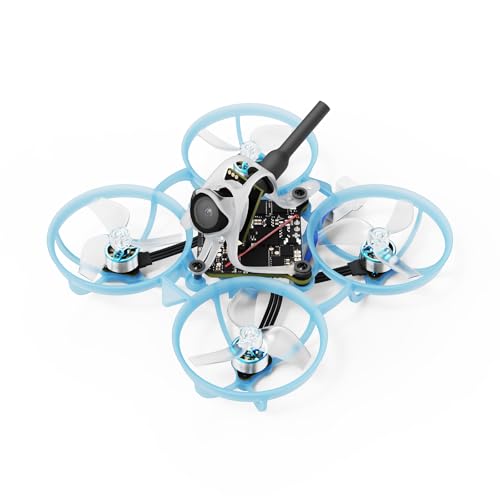
- Ultralight 1S freestyle design
- Crash-resistant frame, canopy, and FC
- Suitable for indoor and outdoor flying
Best For: Practice-focused pilots wanting a resilient small whoop
Best 2.4GHz Analog Option
- 5-inch 6S freestyle platform
- ELRS 2.4GHz receiver
- Modular frame with anti-spark protection
Best For: Pilots already equipped for ELRS 2.4GHz analog FPV
Beginner Freestyle Starter

- Complete kit with drone, goggles, transmitter, batteries, and charger
- Three flight modes help pilots progress toward Manual flying
- Self-protection and Turtle Mode support safer practice
Best For: Beginners learning FPV and basic freestyle maneuvers
Indoor Freestyle Trainer

- Lightweight Tiny Whoop design suits indoor practice
- ELRS controller and Betaflight tuning support responsive handling
- Four batteries and a charger extend training sessions
Best For: Intermediate pilots polishing freestyle and racing skills indoors
Best Immersive Pick – DJI Avata 2 Fly More Combo
The DJI Avata 2 Fly More Combo is a practical fpv drone for freestyle if you want an approachable, ready-to-fly setup with goggles and motion control included. Its built-in propeller guard, beginner-friendly controls, and automatic flip, roll, and 180° drift capabilities make it a strong entry point for immersive FPV flying.
Best For: Beginners who want a complete goggles-based FPV experience with stabilized 4K video.
Pros:
- Includes DJI Goggles 3 and DJI RC Motion 3 for an immersive out-of-the-box setup.
- Built-in propeller guards add durability and confidence during practice flights.
- Captures 4K/60fps footage with a 1/1.3-inch sensor and wide 155° field of view.
- Supports beginner-friendly flips, rolls, and 180° drifts.
Cons:
- The 1-battery combo may require additional batteries for longer sessions.
- Its motion-control approach may be less suitable for pilots seeking traditional freestyle transmitter control.
Choose the Avata 2 when ease of use, immersive viewing, and content creation matter more than a fully open freestyle build. It offers a polished way to learn FPV maneuvers while retaining useful stabilization features.
Long-Range Freestyle Build – Nazgul ECO XL5 868/900MHz
The iFlight Nazgul ECO XL5 is a practical fpv drone for freestyle for pilots who already have compatible control equipment and want a durable 5-inch BNF platform. Its carbon-fiber and aluminum construction, 6S setup, high-power VTX, and ELRS 868/900MHz receiver support an adaptable freestyle build.
Best For: Experienced pilots seeking a customizable 5-inch analog freestyle drone with long-range ELRS receiver support.
Pros:
- Carbon fiber and aluminum construction balances low weight with durability.
- BLITZ 5.8G 1.6W VTX supports strong analog video output.
- Standard 20×20 and 30.5×30.5 mounting holes allow DIY customization.
- Built-in buzzer and receiver mount simplify maintenance and adjustments.
Cons:
- BNF configuration requires a compatible remote controller and other FPV equipment.
- Analog video is less detailed than the digital systems used in many camera drones.
This Nazgul ECO XL5 variant is a good fit when you want a robust 5-inch freestyle platform and specifically need ELRS 868/900MHz compatibility. Confirm your transmitter and video setup before ordering.
Best Ultralight Whoop – BETAFPV Air65 II Brushless Whoop
The BETAFPV Air65 II is a practical fpv drone for freestyle when you want an ultralight whoop that can fly indoors or outdoors. Its 1S power system, reinforced frame and canopy, impact-cushioned flight controller, and high-KV motors are designed for responsive handling and repeated crashes.
Best For: Pilots who want a small, resilient freestyle whoop for indoor practice and smooth outdoor flying.
Pros:
- Ultralight 1S design is suitable for indoor and outdoor freestyle practice.
- 0702 25000KV motors and three-blade props provide strong low-throttle response.
- Reinforced canopy, frame, and cushioned FC mounting improve crash resilience.
- Matrix 1S 5IN1 II controller includes a 12A continuous, 18A peak ESC.
Cons:
- The compact 1S platform is less suited to carrying larger cameras or accessories.
- Its small whoop format will not deliver the speed and carry capacity of a 5-inch freestyle drone.
The Air65 II makes sense for pilots prioritizing low-risk practice, portability, and crash tolerance. It is especially useful for building freestyle control skills in tighter spaces before moving to a larger quad.
Best 2.4GHz Analog Option – Nazgul ECO XL5 2.4GHz ELRS
The iFlight Nazgul ECO XL5 2.4GHz version is a practical fpv drone for freestyle for pilots who prefer a configurable 5-inch analog quad with ELRS 2.4GHz control. It combines a lightweight carbon-fiber and aluminum frame with a powerful VTX, anti-spark protection, and mounting space for future component changes.
Best For: Freestyle pilots using ELRS 2.4GHz who want a durable, serviceable BNF quad.
Pros:
- Carbon-fiber and aluminum construction keeps the 5-inch frame lightweight and durable.
- ELRS 2.4GHz receiver suits common compatible control setups.
- BLITZ 5.8G 1.6W VTX provides analog video transmission.
- Anti-spark filtering helps protect electronics from rapid power spikes.
Cons:
- BNF status means a compatible transmitter and supporting FPV equipment are still needed.
- Analog video provides less visual detail than digital FPV systems.
- The 2.4GHz receiver version is not the choice for pilots specifically requiring 868/900MHz ELRS.
Pick this version if your existing radio gear uses ELRS 2.4GHz and you want a durable 5-inch freestyle quad with room for customization. The receiver frequency is the key distinction to verify before purchase.
Beginner Freestyle Starter – Cetus Pro FPV Kit
The BETAFPV Cetus Pro is a practical entry point for anyone seeking an fpv drone for freestyle without assembling a separate setup. Its brushless quadcopter, three flight modes, altitude hold, and self-protection features make it approachable while still supporting progression into manual flying and freestyle practice.
Best For: Beginners who want a complete FPV kit with goggles, transmitter, and safety-oriented flight aids.
Pros:
- Includes the drone, LiteRadio 2 SE transmitter, VR02 goggles, batteries, charger, and accessories.
- Normal, Sport, and Manual modes support gradual skill progression.
- Altitude hold, emergency landing, self-protection, and Turtle Mode help reduce beginner frustration.
- Supports FPV simulator practice.
Cons:
- Altitude hold is available only in Normal mode.
- The listed maximum range is 80 meters.
- Its beginner-focused design may be less suitable for advanced freestyle pilots seeking a larger, more powerful quadcopter.
The Cetus Pro is best viewed as a learn-to-fly package rather than a dedicated freestyle powerhouse. It offers a straightforward route from assisted flight to Manual mode, with useful recovery features for building confidence.
Indoor Freestyle Trainer – R8 ELRS FPV Whoop
The STARTFPV R8 is a compact fpv drone for freestyle training, particularly for pilots who have moved beyond the basics. Its 1S brushless setup, Betaflight tuning, low-profile frame, and duct guards are designed for indoor practice, racing drills, and repeated freestyle technique work.
Best For: Developing pilots who want an ELRS-equipped Tiny Whoop for indoor training and controlled freestyle progression.
Pros:
- Lightweight 26g frame and approximately 38g takeoff weight suit indoor practice.
- 0802 20000KV brushless motors provide power for punch-outs, recoveries, rolls, and other maneuvers.
- Betaflight firmware and Matrix G4 5-in-1 flight controller are tuned for training, racing, and freestyle.
- Includes a Radiomaster Pocket controller, four batteries, charger, spare propellers, and tools.
Cons:
- Transmitter batteries are not included.
- FPV goggles are not included, so the kit is not fully ready to fly on its own.
- Its lightweight 1S design is aimed at indoor and training use rather than full-size outdoor freestyle.
The R8 stands out as a skill-building platform with responsive Betaflight handling and an ELRS control link. Buyers should budget for goggles and transmitter batteries before planning their first flight.
Filming Freestyle Cinewhoop – Gofilm 20 4K/60FPS Cinewhoop
The CADDXFPV Gofilm 20 combines freestyle agility with stabilized video capture, making it an fpv drone for freestyle pilots who also want footage. Its 115g cinewhoop frame, 360-degree protective guards, Avatar Moonlight camera system, and support for 2S-4S batteries suit compact outdoor flying and content-focused sessions.
Best For: Hobbyists and creators who want protected freestyle flight with 4K/60FPS recording and low-light capability.
Pros:
- Avatar Moonlight system records 4K/60FPS video with a 160-degree field of view.
- EIS and Gyroflow support help produce smoother footage.
- 360-degree guards and a durable injection-molded body provide impact protection.
- 115g weight, 22ms transmission latency, and 2S-4S support balance portability and performance.
Cons:
- A high-speed microSD card is required for full 4K recording and is not included.
- The listed drone package does not include a controller or FPV goggles.
- Hover time is listed at approximately 5.5 minutes.
The Gofilm 20 is a strong choice when video quality matters as much as maneuverability. Its protective cinewhoop construction adds confidence around obstacles, while the missing control and viewing equipment means buyers should verify their existing setup.
Best Beginner Progression Kit – Aquila20 FPV Kit
If you want an fpv drone for freestyle that can ease you into manual flight, the BETAFPV Aquila20 offers a complete starting setup. Its N, S, and M flight modes let you progress from altitude-hold hovering to acrobatic control, while the durable frame and Turtle Mode help reduce downtime after crashes.
Best For: Beginners who want a complete indoor/outdoor kit with a gradual path toward freestyle flying.
Pros:
- Includes the drone, VR04 goggles, LiteRadio 4 SE transmitter, batteries, charger, and carrying case.
- Three flight modes support a clear progression from stable hovering to manual acrobatics.
- PA410 frame and Turtle Mode are practical features for learning through crashes.
- Up to about 10 minutes of flight time with the included 2S battery system.
Cons:
- The drone cannot switch from N mode to S or M mode during flight.
- The advertised maximum range is 200 meters, which may limit longer-range practice.
- MicroSD card for goggles recording is not included.
The Aquila20 is a sensible choice when learning support matters more than maximum freestyle performance. It provides the essential gear and a structured route to manual flying in one package.
Best Micro HD Freestyle Kit – CADDXFPV Protos RTF
The CADDXFPV Protos is a palm-sized fpv drone for freestyle that combines a lightweight design with HD video and a manual flight mode. Its 100g weight, crash-resistant polymer body, and included goggles and controller make it a convenient option for pilots who want a compact kit that can grow with their skills.
Best For: Pilots seeking a tiny, portable freestyle platform with HD goggles and multiple flight modes.
Pros:
- Compact 100g design with a 2MP camera and 1080P/60FPS goggles display.
- Manual, self-stabilizing, and Position Hold modes accommodate different skill levels.
- Three batteries provide up to 30 minutes of combined flying, with a 20-minute smart-charging claim.
- Single-piece polymer body and spare propellers help keep minor-crash repairs manageable.
Cons:
- The recommended RC control distance is approximately 150 meters, plus or minus 50 meters.
- The kit excludes the charging butler charger.
- The compact platform may offer less room for upgrades than a larger freestyle drone.
Protos stands out for pairing a genuinely small airframe with a high-definition video system and manual mode. It is especially appealing for travel, indoor practice, and pilots who want a ready-to-fly freestyle experience without a larger build.
Best Lightweight Tuning Starter – Tinyhawk Lite RTF
For newcomers comparing an fpv drone for freestyle, the Tinyhawk Lite offers real-time FPV video, a lightweight 75mm platform, and Betaflight configuration support. The ready-to-fly package is designed for straightforward practice while giving pilots tools to adjust rates, flight modes, and responsiveness as they improve.
Best For: Beginners who want a light, durable freestyle trainer with room for configuration and skill development.
Pros:
- Real FPV video feed is designed to provide responsive, low-latency control through the goggles.
- Betaflight Configurator supports adjustments to rates, flight modes, and responsiveness.
- Lightweight 37g design and 75mm wheelbase suit portability and beginner practice.
- Includes the drone, controller, goggles, and a 1S HV 750mAh battery in a ready-to-fly setup.
Cons:
- The listed video capture resolution is 720p rather than HD 1080p.
- The supplied details do not specify an exact flight-time figure.
- Its 1S power system is oriented toward a lightweight trainer rather than maximum freestyle power.
The Tinyhawk Lite is a strong fit for pilots who value manageable handling and tuning flexibility. Its durable, lightweight frame lowers the barrier to practice, while Betaflight gives advancing users more control over how the drone responds.
How We Picked the Best Fpv Drone for Freestyle
We focused on the features that matter most during freestyle practice and everyday FPV flying: frame size, motor performance, flight-controller platform, video quality, radio compatibility, included accessories, and ease of setup. The selection includes ready-to-fly kits for newcomers, lightweight whoops for safer indoor practice, and larger 5-inch drones for pilots who want stronger acceleration and more control during flips, rolls, dives, and power loops.
We also considered whether each package includes essential equipment such as goggles, a transmitter, batteries, chargers, and a receiver compatible with common ELRS systems. A complete kit can be convenient for beginners, while bind-and-fly models may be a better choice for pilots who already own FPV gear.
Quick Comparison
| Best For | Recommended Type | What to Expect |
|---|---|---|
| First-time pilots | Ready-to-fly kit | Includes the controller, goggles, and basic accessories |
| Indoor practice | Ultralight whoop | Lower risk, quieter operation, and easier recovery |
| Outdoor freestyle | 5-inch 6S quad | More power, speed, and trick capability |
| Immersive video | Digital FPV drone | Sharper, cleaner footage and a more detailed pilot view |
| Budget-friendly repairs | Analog FPV drone | Lower equipment cost and widely available replacement parts |
Key Buying Factors for an Fpv Drone for Freestyle
Size, Power, and Durability
A 5-inch quad is the traditional choice for outdoor freestyle because it offers strong thrust and enough momentum for advanced maneuvers. Smaller whoops are less intimidating and better suited to rooms, garages, and confined spaces, but they generally have less power and wind resistance.
Analog Versus Digital Video
Analog systems are usually less expensive and can be economical when crashes are frequent. Digital systems provide a clearer pilot view and often produce better recorded footage, but replacement cameras, video transmitters, and goggles can cost more. Choose one ecosystem before buying several components.
Radio Protocol and Included Gear
Check whether the drone is bind-and-fly or ready-to-fly. ELRS receivers are popular for their range and reliability, but the transmitter must use a compatible frequency and protocol. For a complete beginner setup, confirm that the package includes goggles, controller, batteries, and a suitable charger.
Battery and Maintenance Needs
Battery size affects flight time, weight, acceleration, and handling. Larger 6S batteries offer performance but add cost and require careful charging and storage. Budget for spare propellers, batteries, tools, and replacement arms or motors, since freestyle crashes are part of the learning process.
Who Should Buy Which Fpv Drone for Freestyle?
New pilots should start with a complete kit or a protected whoop such as the Cetus Pro, Aquila20, Tinyhawk Lite, or another lightweight RTF option. These packages reduce setup complexity and make basic flight practice more approachable.
Pilots moving beyond beginner training should consider the Air65 II or R8-style whoop for compact freestyle practice. Experienced outdoor pilots who already own compatible goggles and transmitters will generally get the most performance from a 5-inch Nazgul-style 6S BNF quad. Choose a digital cinewhoop such as the Gofilm 20 or Protos when stabilized, high-resolution footage is as important as freestyle control.