If you need clean audio for streaming, podcasting, gaming, or home recording, an audio interface with loopback can make your setup much easier. It lets you route system audio and microphone input together without awkward workarounds.
Below, we focus on practical options for creators who want reliable sound, simple monitoring, and the right connections for their gear and workflow.
Best 10 Audio Interface with Loopback Picks for 2026
Streaming Starter Pick
MAONO PS22 Lite USB Audio Interface for PC

- 24-bit/192kHz recording with 106dB dynamic range
- ProStudio Routing Software adds loopback and virtual channels
- Compact plug-and-play design with direct monitoring
Best For: Beginners, streamers, and podcasters who want simple loopback routing
Compact Loopback Choice
Korg microAUDIO 22 USB-C Interface

- Built-in loopback mode for streaming and tutorials
- Two combo inputs with 48V phantom power
- Compact USB-C powered design with zero-latency monitoring
Best For: Small setups and mobile creators who want easy system-audio mixing
Creator Workflow Pick
MAONO P1 USB Audio Interface with 70dB Gain
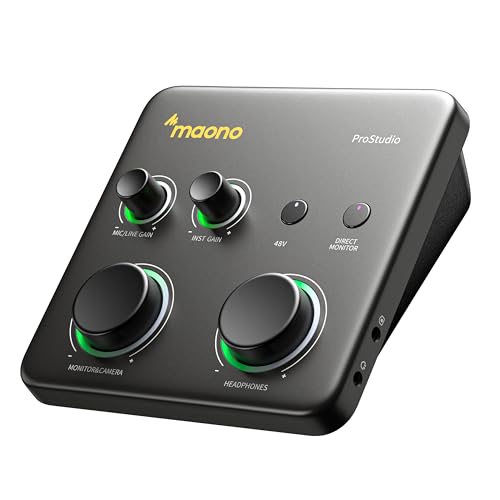
- Up to 70dB gain with 24-bit/192kHz audio
- Built-in loopback via ProStudio2 routing software
- Dual USB connectivity for computer and mobile devices
Best For: Creators who need strong mic gain and flexible cross-device routing
Minimal Setup Pick
2X2 24-bit/192kHz Audio Interface with Loopback

- Monitor mix/loopback function built in
- Class-compliant USB-C setup with no drivers required
- Two combo inputs with 48V phantom power and Hi-Z
Best For: Users who want a simple plug-and-play interface with loopback
Studio-Ready 4x2 Interface
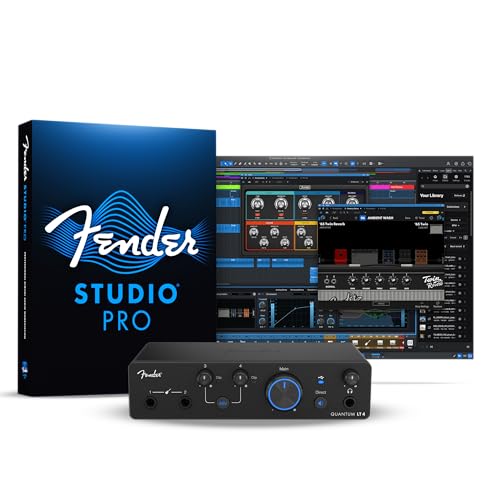
- 4x2 USB-C interface with dual MAX-HD mic preamps
- Dual instrument inputs and balanced TRS outputs
- Loopback routing with strong headphone monitoring
Best For: Musicians and streamers who want Fender software integration and flexible routing
Portable One-Cable Loopback Interface

- USB-C, bus-powered, class-compliant setup
- 24-bit/192kHz recording with two combo inputs
- Monitor mix/loopback and zero-latency monitoring
Best For: Mobile creators who want simple plug-and-play recording
Budget Podcast Loopback Pick
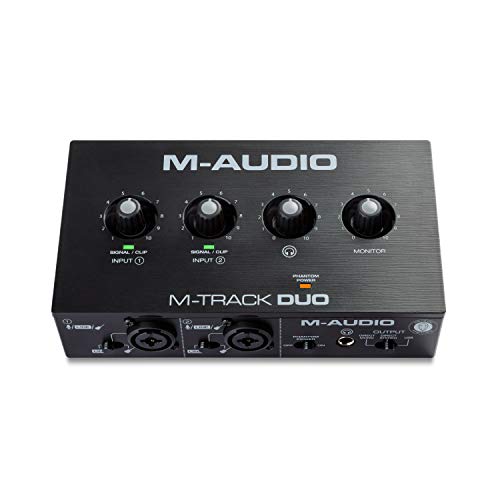
- Two combo XLR/Line/Instrument inputs with phantom power
- USB/direct switch for zero-latency monitoring
- Includes MPC Beats software for recording and podcasting
Best For: Beginners and podcasters who want a simple dual-input interface
Compact 2x2 USB-C Recording Interface with Loopback
Yamaha UR22MK3 W USB-C Audio Interface
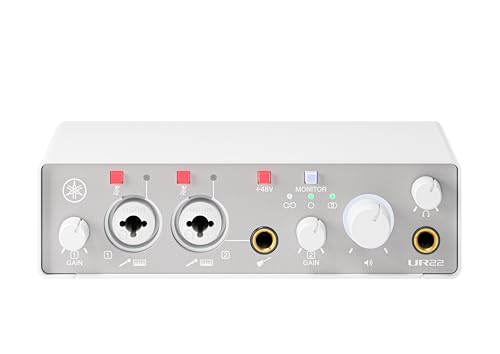
- 24-bit/192kHz with 2 x 2 analog I/O
- Loopback, direct monitoring, and mute controls
- Two combo inputs plus Hi-Z input
Best For: Solo creators and musicians needing a compact loopback interface
Budget Streaming Audio Interface with Monitoring Modes
Synido 2x2 USB-C Audio Interface

- Three monitoring modes for recording and streaming
- 24-bit/48kHz with a dedicated audio chip
- Portable 2-channel design with phantom power
Best For: Streamers and beginners wanting simple monitoring controls
Hybrid Creator Interface with Built-In Loopback
MAONO P2 Hybrid USB Audio Interface

- Built-in loopback and dual USB connectivity
- 24-bit/192kHz with dual XLR inputs
- Direct monitoring with mute controls
Best For: Multi-device creators needing flexible loopback routing
Streaming Starter Pick – MAONO PS22 Lite USB Audio Interface for PC
If you want an audio interface with loopback for streaming, podcasting, and simple home recording, the MAONO PS22 Lite is built around flexibility. It offers 24-bit/192kHz capture, a 106dB dynamic range, and ProStudio Routing Software with additional virtual channels and loopback support, making it a practical choice for creators who need one device to handle voice, instruments, and broadcast audio.
Best For: Beginners, streamers, and podcasters who want an easy-to-use interface with loopback and instrument input.
Pros:
- 24-bit/192kHz recording with a 106dB dynamic range
- ProStudio Routing Software adds virtual channels and loopback
- Mic support up to 56 dB gain with 48V phantom power
- Compact, plug-and-play design with direct monitoring
Cons:
- Only one product note set is provided, so advanced routing detail is limited
- Best suited to entry-level and compact setups rather than larger rigs
Overall, the PS22 Lite stands out as a creator-friendly option when you want straightforward setup plus loopback routing for live content. Its small footprint and beginner-oriented modes make it easy to integrate into a PC, Mac, or iPad workflow.
Compact Loopback Choice – Korg microAUDIO 22 USB-C Interface
The Korg microAUDIO 22 is a compact audio interface with loopback built for livestreams, podcasts, and tutorial-style recording. It pairs 24-bit/192kHz conversion with two combo inputs, zero-latency monitoring, and built-in loopback mode, so you can blend system audio with live mics or instruments without complicated routing.
Best For: Small home studios and mobile creators who need a simple USB-C interface with built-in loopback.
Pros:
- Built-in loopback mode for streaming and tutorial workflows
- Two mic/line/Hi-Z combo inputs with switchable 48V phantom power
- 24-bit/192kHz capture and zero-latency monitoring
- Compact USB-C powered design for portable setups
Cons:
- Two-channel design may be limiting for larger recording needs
- Supported software list is narrower than some creator-focused interfaces
For users who want loopback without extra software complexity, the microAUDIO 22 keeps the workflow direct and practical. Its small footprint and powered USB-C operation make it especially appealing for desks with limited space or travel-friendly rigs.
Creator Workflow Pick – MAONO P1 USB Audio Interface with 70dB Gain
If you need an audio interface with loopback for recording, streaming, and mobile content, the MAONO P1 is designed to keep everything moving on one setup. It supports dual USB connectivity for computer and phone or iPad use, offers up to 70dB gain, and includes built-in loopback through ProStudio2 so you can route voice, backing tracks, and desktop audio into one workflow.
Best For: Streamers, podcasters, and musicians who want high-gain recording plus flexible loopback routing across devices.
Pros:
- Up to 70dB gain and 24-bit/192kHz audio
- Built-in loopback with ProStudio2 routing software
- Dual USB ports with MFi-certified connectivity for computer and mobile use
- Auto-Gain, independent mute controls, and direct monitoring
Cons:
- Feature set may be more than casual users need
- Desk-friendly design is compact, but still aimed at creator workflows rather than ultra-minimal setups
The P1 is one of the more versatile picks here because it combines high-gain mic performance with a broad routing toolkit. If your work spans OBS, GarageBand, and mobile recording, it offers a clean way to manage loopback without juggling extra hardware.
Minimal Setup Pick – 2X2 24-bit/192kHz Audio Interface with Loopback
This audio interface with loopback is aimed at users who want a clean, class-compliant setup without extra drivers. The 2×2 design supports 24-bit/192kHz recording, two combo inputs, direct monitoring, and a monitor mix/loopback function, giving you a straightforward path for recording vocals, guitar, and desktop audio on Mac, PC, or iOS.
Best For: Creators who want a simple one-cable interface with built-in monitor mix and loopback control.
Pros:
- Monitor mix/loopback function for blended playback and live input
- 24-bit/192kHz fidelity with class-compliant USB-C operation
- Two combo inputs with 48V phantom power and Hi-Z support
- Direct monitoring and a 3.5mm headphone jack for easy tracking
Cons:
- No driver requirement may appeal more to simplicity than customization
- Only two channels, so it is best for compact sessions
The Q28 is a practical pick if you value plug-and-play recording and want loopback built into the workflow rather than added later. It keeps the feature set focused on the essentials, which is ideal for smaller studios and mobile production.
Studio-Ready 4×2 Interface – Fender Quantum LT 4
The Fender Quantum LT 4 is an audio interface with loopback built for creators who want flexible inputs and straightforward streaming support. With four channels of USB-C connectivity, dual MAX-HD mic preamps, dual instrument inputs, and balanced outputs, it covers home recording and content creation without feeling overbuilt.
Best For: Musicians, streamers, and podcasters who want a compact 4×2 interface with loopback and Fender software integration.
Pros:
- Two MAX-HD mic preamps with up to 75 dB of gain for detailed vocal and instrument capture
- Dual instrument inputs for guitar, bass, and line-level sources
- Loopback routing plus a strong headphone amp for streaming and podcast workflows
- Balanced TRS outputs and low-latency drivers for responsive monitoring
Cons:
- More interface than basic solo recorders may need
- Full software control leans on Fender Studio Pro or Universal Control
The Quantum LT 4 makes sense if you want Fender-branded hardware with practical recording and loopback features in one box. It’s especially appealing for users who plan to track instruments and manage content creation from the same interface.
Portable One-Cable Loopback Interface – PIYONE Q28 Alloy Grey
This audio interface with loopback is a practical pick for creators who want a simple, portable recording setup. The PIYONE Q28 offers class-compliant USB-C operation, 24-bit/192kHz recording, and a monitor mix/loopback function that suits laptop-based music, streaming, and voice capture.
Best For: Mobile creators and home recordists who want a bus-powered 2×2 interface with loopback and no-driver setup.
Pros:
- Plug-and-play USB-C design with bus power and no drivers required
- 24-bit/192kHz conversion for high-resolution recording
- Two combo XLR/TRS inputs with 48V phantom power
- Zero-latency direct monitoring plus 3.5mm headphone connectivity
Cons:
- Only listed for Windows in the supplied details
- Two-channel layout may be limiting for larger setups
As a compact loopback interface, the Q28 is aimed at convenience first: one cable, simple monitoring, and enough I/O for vocals or a guitar-and-mic setup. It’s a sensible option if you want high-fidelity recording without extra power bricks or driver installs.
Budget Podcast Loopback Pick – M-AUDIO M-Track Duo
The M-AUDIO M-Track Duo is an easy-to-use audio interface with loopback-style monitoring flexibility for podcasting, recording, and live streaming. It offers two combo inputs, 48kHz audio resolution, and a USB/direct switch that helps you track with zero latency on Mac or PC.
Best For: Podcasters, streamers, and beginners who want a simple dual-input interface with straightforward monitoring.
Pros:
- Two combo XLR/Line/Instrument inputs with phantom power
- USB/direct switch for zero-latency monitoring
- 1/4″ headphone output and stereo 1/4″ main outputs
- Includes MPC Beats software for getting started quickly
Cons:
- 48kHz maximum sample rate is lower than some newer interfaces
- Basic feature set is aimed more at essentials than advanced routing
The M-Track Duo keeps the feature list focused, which is often what first-time buyers want. If your priority is dependable inputs, clean monitoring, and bundled software for podcast or home recording work, it remains a solid value option.
Compact 2×2 USB-C Recording Interface with Loopback – Yamaha UR22MK3 W USB-C Audio Interface
If you want an audio interface with loopback for streaming, recording, and simple desktop setups, the Yamaha UR22MK3 W is built around a clean 2-in/2-out layout with direct monitoring and mute controls. It supports up to 24-bit/192kHz audio, includes two combo inputs plus a Hi-Z input, and works across Windows, macOS, and iOS for flexible use.
Best For: Solo creators, podcasters, and musicians who want a compact interface with loopback and cross-platform support.
Pros:
- 24-bit/192kHz support with 2 x 2 analog I/O
- Loopback, direct monitoring, and mute buttons for practical routing
- Two combo inputs plus a Hi-Z input for mics and instrument recording
- Compact metal build with USB-C connectivity and portable size
Cons:
- Only 2 channels, so it is best for smaller recording setups
- Included software details are limited in the supplied notes
- White finish may not suit every desk setup
The UR22MK3 W is a straightforward choice if you want reliable loopback and direct monitoring without adding complexity. Its small footprint and cross-platform compatibility make it easy to fit into a home studio, mobile rig, or streaming workflow.
Budget Streaming Audio Interface with Monitoring Modes – Synido 2×2 USB-C Audio Interface
This audio interface with loopback-style streaming features is aimed at creators who want simple routing, portable hardware, and easy monitoring control. The Synido 2×2 supports 24-bit/48kHz recording, offers three monitoring modes, and includes XLR and 6.35mm input compatibility for a range of microphones and instruments.
Best For: Streamers, podcasters, and beginners who want an affordable interface with flexible monitoring options.
Pros:
- Three monitoring modes: Stereo, Mix, and USB
- 24-bit/48kHz audio with a dedicated audio chip
- XLR/6.35mm input support and 48V phantom power
- Lightweight, portable design with included cables and adapter
Cons:
- 48kHz maximum sample rate is lower than some competing interfaces
- Notes recommend a third-party ASIO driver for best performance
- Best suited to 2-channel setups rather than larger sessions
The Synido 2×2 is a practical pick if you value easy switching between monitoring modes and a travel-friendly design. It focuses on straightforward recording and live-stream use instead of high-end studio expansion.
Hybrid Creator Interface with Built-In Loopback – MAONO P2 Hybrid USB Audio Interface
The MAONO P2 is an audio interface with loopback built for creators who switch between computer, phone, and tablet workflows. It combines dual USB connectivity, 24-bit/192kHz recording, direct monitoring, and software routing tools, making it a strong fit for streaming, podcasting, and guitar or vocal content.
Best For: Multi-device creators who want loopback, dual XLR support, and flexible recording workflows.
Pros:
- Built-in loopback for combining instrument, voice, backing tracks, and desktop audio
- Dual USB ports with MFi-certified connectivity for computer and mobile use
- 24-bit/192kHz audio, 56dB gain, and -130dB EIN for clean capture
- Direct monitoring, mute controls, and signal indicators for easier tracking
Cons:
- Feature set may be more than needed for basic single-mic recording
- Best value depends on whether you will use the software routing tools
- Desk-friendly design is compact, but still aimed at dedicated creator setups
If you want one interface that handles streaming, mobile recording, and desktop routing, the P2 stands out for its workflow flexibility. Its loopback and dual USB approach make it especially useful for creators who move between devices and content formats.
How We Picked the Best Audio Interface with Loopback
We prioritized loopback capability, sound quality, input flexibility, and everyday usability. That means looking at preamp gain, low-latency monitoring, driver support, and whether the interface works well with PC, Mac, and mobile devices. We also considered how useful each model is for typical creator tasks like live streaming, voice recording, music demos, and podcast production.
Quick Comparison
Some models are better for simple one-mic streaming setups, while others suit musicians who need combo inputs, higher gain, or dual instrument support. Compact 2-in/2-out interfaces are usually the easiest choice for beginners, but hybrid and higher-channel options are worth considering if you want more routing flexibility or plan to expand later.
Key Buying Factors for an Audio Interface with Loopback
Loopback Workflow
Check how the loopback function is implemented. Some interfaces provide a dedicated software or hardware routing path, while others are built around straightforward system-audio capture for streaming and calls. Make sure the setup fits your platform and recording app.
Inputs, Gain, and Monitoring
Think about what you’ll plug in now and later. A single mic setup is easy to cover, but singers, podcasters, and guitarists may want combo inputs, instrument-level support, and enough gain for dynamic microphones. Direct monitoring is important if you want to hear yourself without distracting delay.
Connectivity and Device Support
USB-C is common, but compatibility matters more than the port itself. Confirm support for your computer, tablet, or phone, and check whether any included software or drivers are required for full functionality.
Audio Quality and Build
For most buyers, 24-bit recording and at least 48kHz support are plenty; higher sample rates can be useful, but they are not the main reason to buy. Solid knobs, clear meters, and stable drivers often matter more in day-to-day use than headline specs.
Who Should Buy Which Audio Interface with Loopback?
Choose a compact Audio Interface with Loopback if you mainly stream, voice chat, or record a single mic and want a simple setup. Pick a model with stronger preamps and multiple inputs if you record vocals and instruments, or if you want room to grow into podcasting and music production. Mobile creators should focus on interfaces with confirmed phone and tablet compatibility, while PC/Mac users can prioritize the routing features and driver stability that match their workflow best.