If you need low-latency, networked audio for recording, live sound, or installed systems, an audio interface with Dante can simplify routing and scale far beyond traditional analog I/O.
Below, we’ve rounded up 10 standout options for different workflows, from compact USB adapters to multichannel stage boxes and rackmount interfaces.
Best 10 Audio Interface with Dante Picks for 2026
Hybrid studio Dante interface

- 16-in/16-out Dante and USB audio interface
- Includes VST Rack Pro with 30+ plug-ins
- Mac/Windows support with 2 mic inputs
Best For: Small studios and hybrid Dante/USB workflows
High-channel Dante bridge
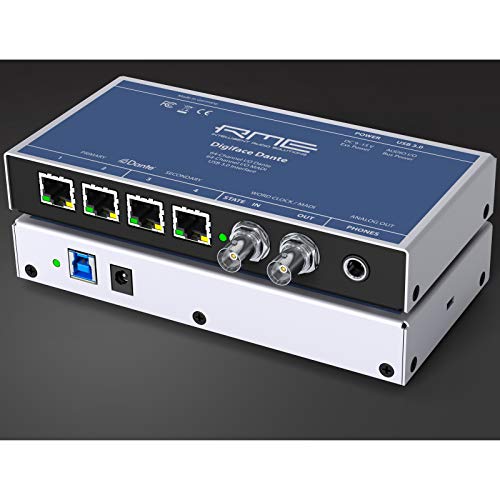
- 128-in/128-out Dante, MADI, and USB 3.0
- Up to 24-bit/192 kHz with word clock I/O
- Bus-powered with headphone output
Best For: Large routing jobs and portable high-channel systems
Four-channel network input box
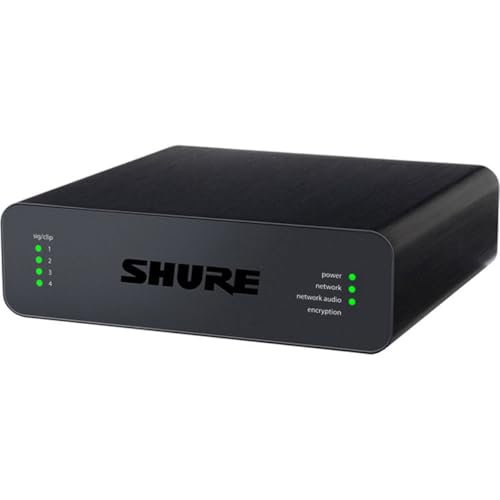
- Four mic/line XLR inputs over Dante
- Works with Windows and macOS
- Supports Crestron and AMX control ecosystems
Best For: Installed sound and conferencing inputs
Rack stage box for Yamaha systems

- 16 inputs and 8 outputs in a 3U rack
- Dante Ethernet with 96 kHz sample rate
- Recallable D-PRE preamps and QUICK CONFIG
Best For: Yamaha mixer setups needing stage-box expansion
Dante input for mixers

- 2-channel Dante input interface with XLR
- PoE-powered for easier installation
- Compatible with AHM systems, Dante systems, and mixers
Best For: Compact analog-to-Dante input bridging for installed or live systems
USB bridge for Dante networks

- 2-channel USB bridge for Dante networks
- AES67 compliant for interoperability
- Supports 24-bit audio with analog input/output
Best For: Connecting USB devices to a Dante/AES67 audio network
Conference-ready network interface

- 7-channel Dante audio network interface
- USB plus 3-pin input and output
- PoE-powered and geared to Windows conferencing
Best For: Windows-based conferencing setups needing Dante plus USB I/O
Analog Input Bridge
Audinate Dante AVIO 2-Channel Analog Input Adapter
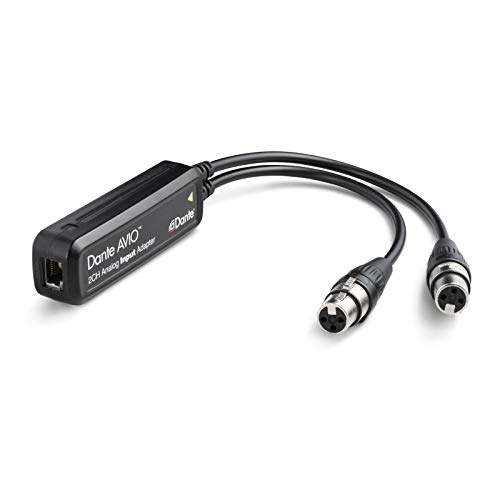
- 2-channel Dante analog input adapter
- Built to add analog sources to Dante
- Simple, focused conversion device
Best For: Small setups needing two-channel analog-to-Dante input
Reference Pick
ESI planet 22c | Reference Quality Dante Audio Interface

- 4-channel Dante audio interface
- 24-bit/96kHz converters for recording and measurement
- Works with major DAWs on Windows and macOS
Best For: Recording, live sound, and audio measurement
Pro Network Box
Dante Audio 4 Channel Analog Audio Network Interface Box
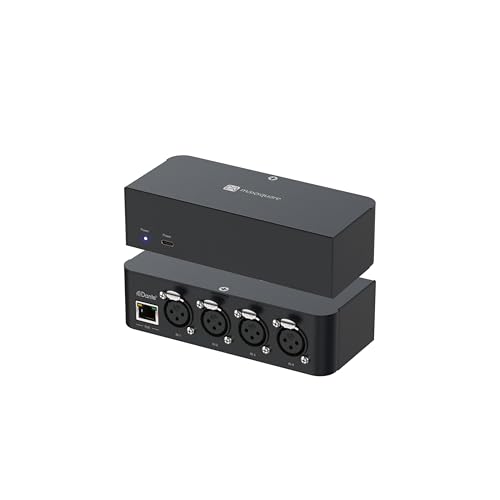
- Four XLR inputs for analog-to-network audio
- Supports Dante and AES67 transport
- PoE plus Type-C power options
Best For: Professional installs needing four XLR inputs and network audio
Hybrid studio Dante interface – Yamaha RUio16-D
If you want an audio interface with dante that also works as a compact USB recording hub, the Yamaha RUio16-D is built for hybrid studio and live workflows. It offers 16-in/16-out Dante/USB routing, two line outputs, and two mic inputs, plus VST Rack Pro software with 30+ plug-ins for added processing on Mac or Windows.
Best For: Small studios, engineers, and performers who need Dante plus USB integration and a simple plug-in-based setup.
Pros:
- 16-in/16-out Dante and USB interface support
- Includes VST Rack Pro software with 30+ plug-ins
- Works with Mac and Windows systems
- Compact 3.6-pound unit with 2-year warranty
Cons:
- Only two mic inputs and two line-level outputs
- Max sample rate tops out at 96 kHz
- Not the highest-channel option in this group
The RUio16-D is a practical pick if you want Dante connectivity plus USB convenience without moving to a much larger rack system. Its onboard software bundle adds value, but its I/O count is better suited to smaller setups than high-channel-count productions.
High-channel Dante bridge – RME Digiface Dante
The RME Digiface Dante is a powerful audio interface with dante for users who need a lot of routing in a compact USB 3.0 unit. It supports 128-in/128-out Dante/MADI/USB connectivity, includes a headphone output, and is rated for up to 24-bit/192 kHz operation with word clock I/O.
Best For: Engineers and production setups that need high-channel Dante and MADI routing in a portable interface.
Pros:
- 128-in/128-out Dante, MADI, and USB 3.0 connectivity
- Up to 24-bit/192 kHz support
- Includes headphone output and word clock I/O
- Bus-powered design keeps the footprint portable
Cons:
- Listed compatibility is PC-focused, with Windows support noted
- No built-in mic inputs are listed
- May be more interface than small rigs need
This is the most feature-dense option here if your priority is routing scale rather than simplicity. It makes sense for complex Dante systems, but users who only need basic input expansion will likely find it more than they require.
Four-channel network input box – Shure ANI4IN-XLR
The Shure ANI4IN-XLR is a focused audio network interface with dante for bringing four XLR mic or line sources onto a networked audio system. It is designed for professional audio devices and supports Windows and macOS, making it a straightforward choice when you only need a small number of analog inputs.
Best For: Installed sound, conferencing, and integrators that need four networked XLR inputs.
Pros:
- Four mic/line XLR inputs over Dante
- Works with Windows and macOS
- Very small footprint and light 1.5-pound build
- Supports professional control ecosystems like Crestron and AMX
Cons:
- Only four channels of input
- No output channels are listed
- XLR input focus may not suit broader interface needs
This is a targeted network input solution rather than a general-purpose studio interface. If your setup needs only a few reliable analog feeds on Dante, it keeps the hardware simple and installation-friendly.
Rack stage box for Yamaha systems – Yamaha Tio1608-D2
The Yamaha Tio1608-D2 is a Dante-enabled stage box audio I/O rack designed for larger mixing workflows. It provides 16 inputs and 8 outputs, runs at 96 kHz, and includes recallable D-PRE preamplifiers plus QUICK CONFIG mode for DM3 and TF series mixers.
Best For: Yamaha mixer users who want a Dante stage box with built-in preamps and straightforward setup.
Pros:
- 16 inputs and 8 outputs in a 3U rack format
- Dante Ethernet connectivity for networked audio
- Recallable D-PRE preamps and QUICK CONFIG support
- Compatible with Yamaha TF mixers with Dante cards
Cons:
- Designed around Yamaha mixer ecosystems
- Maximum sample rate is 96 kHz, not higher
- Heavier and less portable than smaller desktop interfaces
For users already invested in Yamaha workflows, this stage box is a clean way to expand I/O over Dante without adding complexity. It is less of a universal interface and more of a purpose-built rack solution for compatible rigs.
Dante input for mixers – 2-channel XLR interface
If you need an audio interface with dante for bringing two analog XLR sources into a Dante system, the Allen & Heath DT20-X is built for that job. It supports 2 channels, uses PoE, and is compatible with AHM systems, Dante systems, and mixers, making it a focused input bridge for installed or live audio setups.
Best For: Users who need a compact 2-channel Dante input interface for XLR sources in Allen & Heath or broader Dante environments.
Pros:
- 2-channel Dante input interface with XLR audio input
- PoE power supply simplifies installation
- Compatible with AHM systems, Dante systems, and mixers
- Supports up to 96 kHz sample rate
Cons:
- Input-only design, so it is not a full bidirectional interface
- Limited to 2 channels
This is a practical choice when your priority is straightforward analog-to-Dante conversion rather than extra routing or USB features. The DT20-X keeps the feature set narrow and installation-friendly, which can be a benefit in system-focused deployments.
USB bridge for Dante networks – AES67 USB transceiver
For buyers looking for an audio interface with dante that connects USB gear to a networked audio setup, this ToVi adapter is a practical bridge. It is a 2-channel USB transceiver, AES67 compliant, and designed to move audio between USB devices and Dante networks with low-latency, 24-bit performance.
Best For: People who want to connect a PC, laptop, or tablet to a Dante network using a compact USB audio adapter.
Pros:
- Bridges USB audio devices with Dante networks
- AES67 compliant for audio-over-IP interoperability
- Supports 24-bit audio at 44.1 kHz and 48 kHz
- Includes analog mic input and speaker output support
Cons:
- Limited to 2 channels
- Maximum listed sample rate is 96 kHz, while the 24-bit performance note highlights 44.1/48 kHz
This is a useful option when the goal is simply to get USB audio into a Dante ecosystem without a larger interface. Its plug-and-play positioning, dual power options, and compact footprint make it well suited to studio, broadcast, or live sound workflows.
Conference-ready network interface – 7-channel USB PoE unit
If you want an audio interface with dante for conferencing or networked USB integration, the Shure ANIUSB-MATRIX is a flexible option to consider. It combines USB, 3-pin input, and 3-pin output connectivity with PoE power, and it is designed for Windows-based audio/video conferencing software.
Best For: Conference and collaboration setups that need a network audio interface with USB support and Dante connectivity.
Pros:
- 7-channel audio network interface
- USB connectivity plus 3-pin input and output
- PoE-powered for cleaner installation
- Designed for Windows-based conferencing software
Cons:
- Only the Windows platform is listed
- Heavier than the compact USB adapter option
For users building a conferencing-friendly Dante setup, this unit offers more channels and more I/O flexibility than a basic USB bridge. It is best when you need a network interface that fits into a professional PC-based workflow.
Analog Input Bridge – Audinate Dante AVIO 2-Channel Analog Input Adapter
If you need a simple audio interface with Dante for bringing analog sources onto an IP audio network, this 2-channel input adapter keeps the setup focused on conversion rather than extra features. It is designed specifically as a Dante analog input adapter, making it a straightforward fit for routing two channels into a Dante-based system.
Best For: Small systems that only need a dependable 2-channel analog-to-Dante input bridge.
Pros:
- 2-channel Dante analog input design
- Purpose-built for adding analog sources to a Dante network
- Compact, focused solution with no unnecessary extras
Cons:
- Limited to two input channels
- Not a full-featured standalone interface
For buyers who want the most direct path from analog gear into Dante, this adapter is a clean and practical choice. It makes sense when your priority is simple input conversion rather than broader interface controls or multichannel expansion.
Reference Pick – ESI planet 22c | Reference Quality Dante Audio Interface
If you want an audio interface with Dante for recording or measurement work, the ESI planet 22c is built around 24-bit/96kHz converters and a 4-channel Dante IP audio network. It also works with major DAWs on Windows and macOS, giving it a practical role in studio and live-sound setups where compatibility matters.
Best For: Recording, live sound, and audio measurement users who want a 4-channel Dante interface with 24-bit/96kHz conversion.
Pros:
- 4-channel Dante connectivity
- 24-bit/96kHz converters for higher-resolution audio
- Compatible with major DAWs on Windows and macOS
- Includes a 2-year warranty and support from a US- and Germany-based team
Cons:
- Only 4 channels
- Uses TRS inputs, which may not suit every rig
The planet 22c stands out for buyers who want a compact Dante interface with a reference-leaning feature set rather than a large-channel-count unit. Its warranty and broad software support make it a sensible option when reliability and day-to-day compatibility are priorities.
Pro Network Box – Dante Audio 4 Channel Analog Audio Network Interface Box
For buyers comparing an audio interface with Dante that can handle four analog sources, this MSQ-3900D is built around four 3-pin XLR inputs and support for Dante audio over IP plus AES67 RTP transport. With PoE class 0 and a Type-C power input, it is aimed at installations where flexible powering and network audio transport are both important.
Best For: Professional installations that need four XLR analog inputs and Dante/AES67 network transport.
Pros:
- Four 3-pin XLR analog inputs
- Supports Dante audio over IP and AES67 RTP transport
- PoE class 0 support for simpler installation
- Aluminum housing with CE/FCC/RoHS certification
Cons:
- Designed for specialized pro audio use
- Includes a one-year limited warranty
This is a good fit when you want a rugged network interface box rather than a desktop-style interface. Its four-channel input layout and flexible power options make it a practical choice for professional environments that rely on Dante networking.
How We Picked the Best Audio Interface with Dante
We focused on practical buying factors that matter in real setups: channel count, connectivity, Dante/AES67 compatibility, analog vs. digital I/O, installation flexibility, and whether the unit is better suited for studio, stage, or permanent systems. We also considered power options, physical form factor, and how easily each device fits into an existing networked audio workflow.
Quick Comparison
Not every Audio Interface with Dante serves the same purpose. Some are designed as simple 1- or 2-channel bridge devices for expanding a laptop or mixer setup, while others function as rackmount stage boxes or multi-input network endpoints. The right choice depends on whether you need portable recording, remote I/O for live production, or a scalable installation-friendly solution.
Key Buying Factors for an Audio Interface with Dante
Channel Count and I/O Type
Start with the number of inputs and outputs you actually need today, then allow room for growth. Also check whether you need mic preamps, line-level inputs, XLR connectors, or USB bridging. A higher channel count is not automatically better if your workflow only requires a few sources.
Network Compatibility
Most buyers should confirm Dante support, and some setups benefit from AES67 compatibility for broader interoperability. If your system includes consoles, stage boxes, or third-party networked devices, compatibility can be just as important as raw audio specs.
Form Factor and Power
Portable users may prefer compact USB or desktop units, while installers often want rackmount hardware or PoE-powered endpoints. Consider cable management, mounting, and whether the unit will live on a desk, in a rack, or on stage.
Workflow Fit
For recording, look for reliable computer connectivity and simple routing. For live sound, prioritize stable networking and easy expansion. For installed audio, focus on channel density, durable construction, and system integration.
Who Should Buy Which Audio Interface with Dante?
If you want a compact bridge between a computer and a Dante network, choose a small USB-focused model. If you need remote stage I/O, a rackmount Dante unit or stage box is usually the better fit. If you’re expanding an existing setup with just one or two channels, a lightweight adapter can be the most cost-effective option. In short, the best Audio Interface with Dante is the one that matches your channel count, network needs, and installation style without forcing unnecessary complexity.