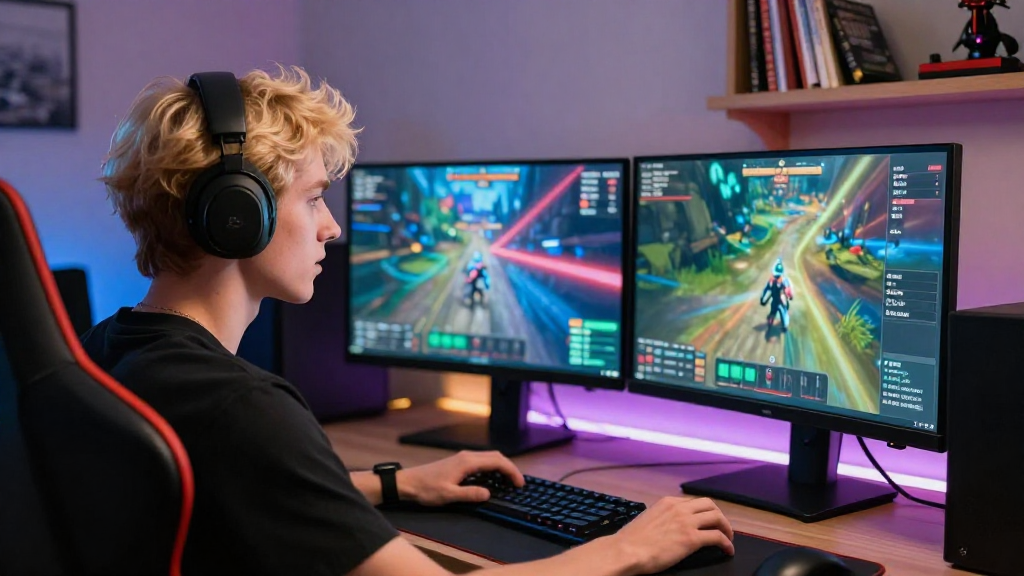
In recent years, the intersection of gaming and multitask learning has captured both academic interest and popular attention. As video games evolve, they offer more than just entertainment; they could potentially enhance cognitive abilities. But can gaming truly facilitate effective multitasking skills? Let’s delve deeper into this fascinating topic.
What Is Multitask Learning?
Multitask learning refers to the simultaneous process of acquiring skills or knowledge across various tasks.
In essence, it’s a framework where multiple tasks are learned and improved at the same time rather than sequentially. This concept is particularly relevant in fields such as:
- Education: Helping students absorb information through diverse subjects.
- Cognitive Science: Understanding how the brain processes multiple streams of information.
- Artificial Intelligence: Training models to handle various functions at once.
How Does Gaming Fit Into This?
The link between gaming and multitask learning stems from the complex, interactive nature of many modern video games. Here are some reasons why games might enhance our multitasking abilities:
-
Dynamic Environments: Many games require players to adapt quickly to changing scenarios, enhancing their ability to switch between tasks without losing focus.
-
Simultaneous Prioritization: Players often need to manage resources, strategize, and react to opponents concurrently. This experience can improve cognitive flexibility and resource allocation skills.
-
Enhanced Memory: Video games often challenge players to remember multiple pieces of information simultaneously, boosting memory retention associated with multitasking.
Which Games Promote Multitask Learning?
Not all games are created equal when it comes to teaching multitask learning skills. Here are some genres and examples that effectively foster this ability:
1. Action Games
These fast-paced games require quick reflexes and decision-making.
- “Call of Duty”: Players must handle combat, navigation, and teamwork all at once.
- “Overwatch”: Characters possess unique abilities requiring players to multitask between offense and defense.
2. Strategy Games
These games demand forethought and planning, with players managing multiple resources and units.
- “Starcraft II”: Players need to build, expand, and wage war, balancing several tasks simultaneously.
- “Civilization VI”: Managing an entire civilization involves resource management, diplomacy, and warfare.
3. Simulation Games
These provide realistic scenarios that require multitasking.
- “The Sims”: Players juggle the needs and desires of multiple characters, making simultaneous decisions.
- “Farming Simulator”: Players manage farming activities and confront multiple challenges at once.
How Can Gaming Improve Multitask Learning Skills?
Engaging with video games can enhance multitask learning skills through various cognitive benefits:
Cognitive Flexibility
Gaming often requires players to adapt their strategies based on real-time changes and unexpected events.
This flexibility can translate to real-world scenarios where quick adjustments are necessary.
Improved Attention Control
Many games train players to concentrate on significant stimuli while ignoring distractions.
This skill is crucial for multitasking effectively in everyday life, such as in workplaces or during study sessions.
Greater Hand-Eye Coordination
Fast-paced games demand acute hand-eye coordination, refining this ability through practice.
Improved coordination enhances task performance, especially when tasks require physical interaction.
Team Collaboration
Multiplayer games encourage players to coordinate with others, mastering communication and teamwork.
These essential skills are vital in both professional and academic settings, where collaborative multitasking is often needed.
What Are the Limitations of Gaming for Multitask Learning?
Despite the potential benefits of gaming and multitask learning, several limitations exist. It’s essential to consider these factors to understand and maximize the efficacy of gaming as a learning tool:
1. Overstimulation
While strategic games promote multitasking, many fast-paced games lead to cognitive overload.
Players might feel overwhelmed, leading to diminished performance in multitasking scenarios.
2. Transferability of Skills
The skills gained from gaming do not always easily transfer to real-world multitasking tasks, especially if the gaming context is vastly different.
3. Time Management Concerns
Excessive gaming can lead to poor time management and prioritization skills.
If players focus solely on games, they might neglect critical real-life responsibilities that require effective multitasking.
4. Need for Balance
Differentiating between beneficial and detrimental gaming is essential.
Playing games responsibly, in moderation, can ensure that cognitive benefits are fully realized without adverse effects.
Conclusion: Can Gaming Truly Teach Multitask Learning?
The intersection of gaming and multitask learning opens a broad spectrum of opportunities for cognitive development.
While video games possess the potential to enhance various multitasking skills through enhanced cognitive flexibility, attention control, and collaboration, users must be mindful of potential overstimulation and skill transfer issues.
Parents, educators, and gamers themselves can cultivate a balanced approach by integrating appropriate games into learning routines. By doing so, they open doors for deeper insights into the nexus of gaming and cognitive advancement.
As the world of gaming continues to evolve, so will its role in educational approaches, fostering the indispensable skill of multitasking in an increasingly complex world.