Choosing a wifi 7 gaming router is about more than top speed on the box. The best models can improve latency, handle busy homes, and keep gaming stable while other devices stream, download, or work online.
Below, you’ll find a focused roundup of the top options for different needs, from premium flagship builds to more affordable routers with strong gaming features and multi-gig wired ports.
Best 10 Wifi 7 Gaming Router Picks for 2026
Ultra-High-End Quad-Band Speed
ASUS ROG Rapture GT-BE98 Pro WiFi 7 Gaming Router

- Quad-band Wi-Fi 7 with up to 30Gbps throughput
- Dual 10G plus four 2.5G ports for wired expansion
- Triple-Level Game Acceleration for gaming traffic
Best For: Power users and gamers who want the fastest, most feature-packed setup
Balanced Whole-Home Performer
TP-Link Archer BE12000 Wi-Fi 7 Router

- Tri-band Wi-Fi 7 with up to 5,765 Mbps on 6GHz and 5GHz
- 10G WAN/LAN and 2.5G port for faster wired links
- Covers up to 3,000 sq. ft. and 128 devices
Best For: Families and gamers who want easy management and wide coverage
Wired-Speed Powerhouse

- Up to 7.2Gbps Wi-Fi 7 with Multi-Link Operation
- 10G SFP+ and 10G WAN/LAN ports for wired capacity
- AiMesh support plus Guest Network Pro
Best For: Power users who want a dual-band router with elite wired networking
Compact Gaming Coverage
NETGEAR Nighthawk BE9300 WiFi 7 Router

- Tri-band Wi-Fi 7 with up to 9.3Gbps speed
- 2.5 Gig internet port for multi-gig service
- Coverage up to 2,500 sq. ft. for 100 devices
Best For: Users who want a compact, easy-to-manage Wi-Fi 7 upgrade
Budget Gaming Focus
TP-Link Archer GE400 Dual-Band BE6500
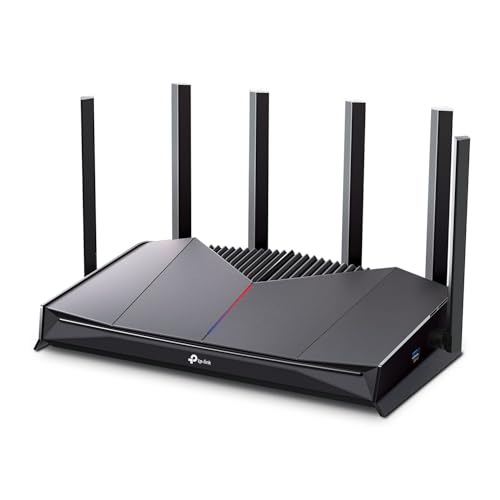
- Dedicated gaming port with WTFast and QoS
- Up to 6,500 Mbps dual-band Wi-Fi 7 speeds
- 2 x 2.5G plus 3 x 1G ports for wired devices
Best For: Players who want gaming-first features on a dual-band Wi-Fi 7 router
Elite AI Powerhouse
ASUS GT-BE19000AI Tri-Band WiFi 7

- Tri-band Wi-Fi 7 with up to 19 Gbps speeds
- Dual 10G plus four 2.5G ports for serious wired capacity
- AI Game Boost and built-in AI features for advanced setups
Best For: Advanced gamers and power users seeking flagship Wi-Fi 7 hardware
Value Wi-Fi 7 Choice
TP-Link Archer BE230 Dual-Band BE3600

- Wi-Fi 7 with MLO, Multi-RUs, and 4K-QAM
- 2 x 2.5G plus 3 x 1G ports for wired speed
- EasyMesh, VPN, and HomeShield for flexible home use
Best For: Buyers wanting affordable Wi-Fi 7 gaming performance and expansion
Premium Multi-Gig Pick
TP-Link Archer BE600 Tri-Band Router

- Tri-band Wi‑Fi 7 with MLO and 320 MHz channels
- 1x 10G, 1x 2.5G, and 3x 2.5G LAN ports
- Covers up to 2,600 sq. ft. and 120 devices
Best For: Large homes with multi-gig internet and demanding gaming setups
Low-Latency Gaming Choice

- Wi‑Fi 7 dual-band router with up to 6.5 Gbps speed
- Gaming Port, Open NAT, and mobile game prioritization
- Four 2.5GbE ports for fast wired connections
Best For: Gamers who want low-latency play and gaming-specific features
Value Dual-Band Option
TP-Link Archer BE400 WiFi 7 Router

- Wi‑Fi 7 with MLO, Multi-RUs, and 4K-QAM
- Dual 2.5Gbps ports plus USB 3.0
- EasyMesh support for whole-home expansion
Best For: Smaller homes wanting Wi‑Fi 7 speed and easy mesh growth
Ultra-High-End Quad-Band Speed – ASUS ROG Rapture GT-BE98 Pro WiFi 7 Gaming Router
If you want a wifi 7 gaming router built for maximum headroom, the ASUS ROG Rapture GT-BE98 Pro stands out with quad-band Wi-Fi 7, up to 30Gbps throughput, and 320MHz support in the 6GHz band. It is designed for demanding homes that want fast wireless performance plus serious wired expansion.
Best For: Enthusiasts who want top-tier wireless speed, strong wired connectivity, and gaming-focused acceleration.
Pros:
- Up to 30Gbps Wi-Fi 7 performance with Multi-Link Operation and 4096-QAM
- Dual 10G ports plus four 2.5G ports for flexible high-speed wired setups
- Triple-Level Game Acceleration prioritizes gaming traffic end to end
- External dual-feeding antennas are designed to improve coverage and signal strength
Cons:
- Quad-band design and advanced hardware may be more than many households need
- Large physical footprint may require some placement planning
- Premium feature set is aimed at advanced users and power gamers
This is the kind of router to choose when you want a flagship platform for gaming, multi-device streaming, and fast wired networking. Its mix of Wi-Fi 7 speed, multi-gig ports, and mesh support makes it especially versatile for a high-performance home network.
Balanced Whole-Home Performer – TP-Link Archer BE12000 Wi-Fi 7 Router
The TP-Link Archer BE12000 is a practical wifi 7 gaming router for households that want fast tri-band coverage, multi-gig connectivity, and easy app-based management. With support for the latest 6GHz band and speeds tuned for 4K/8K streaming and AR/VR gaming, it targets strong everyday performance without overcomplicating setup.
Best For: Homes that need broad coverage, modern Wi-Fi 7 features, and simple management for many devices.
Pros:
- Tri-band Wi-Fi 7 with up to 5,765 Mbps on 6GHz and 5GHz
- 10G WAN/LAN port plus 2.5G port for multi-gig internet plans
- Covers up to 3,000 sq. ft. and supports up to 128 devices
- Easy setup and firmware management through the Tether app
Cons:
- Performance depends on distance, obstacles, and network conditions
- Mesh expansion requires EasyMesh-compatible extenders, not Deco systems
- Separate modem still needed for internet service
Overall, this router offers a strong mix of speed, coverage, and convenience for busy homes. It is a solid choice if you want Wi-Fi 7 benefits, plenty of device capacity, and multi-gig support in a more mainstream package.
Wired-Speed Powerhouse – ASUS RT-BE88U WiFi 7 Router
The ASUS RT-BE88U is a wifi 7 gaming router aimed at users who care as much about wired performance as wireless speed. It combines up to 7.2Gbps Wi-Fi 7 throughput with a 10G SFP+ port, a 10G WAN/LAN port, and mesh support, making it a strong fit for high-performance home networks.
Best For: Users who want a fast dual-band Wi-Fi 7 router with serious multi-gig wired options.
Pros:
- Up to 7.2Gbps Wi-Fi 7 speeds with Multi-Link Operation and 4096-QAM
- One 10G SFP+ port and one 10G WAN/LAN port for heavy wired use
- Quad-core 2.6GHz CPU supports demanding network applications
- AiMesh support and Guest Network Pro add flexibility for larger setups
Cons:
- Dual-band design may be less flexible than tri-band or quad-band alternatives
- Advanced wired features may exceed what basic households need
- Best value depends on whether you can use the 10G-class hardware
This router makes the most sense if your setup includes multi-gig internet, wired gaming gear, or other high-bandwidth devices. It is a strong all-around option, especially for buyers who want Wi-Fi 7 and premium Ethernet capability in one unit.
Compact Gaming Coverage – NETGEAR Nighthawk BE9300 WiFi 7 Router
The NETGEAR Nighthawk BE9300 is a wifi 7 gaming router built for straightforward high-speed home use. With tri-band Wi-Fi 7 speeds up to 9.3Gbps, a 2.5 Gig internet port, and coverage rated for up to 2,500 sq. ft., it focuses on strong performance in a smaller footprint.
Best For: Buyers who want a compact Wi-Fi 7 router with solid coverage and app-based setup.
Pros:
- Tri-band Wi-Fi 7 with up to 9.3Gbps wireless speed
- 2.5 Gig internet port supports multi-gig plans
- Coverage rated up to 2,500 sq. ft. for up to 100 devices
- NETGEAR Armor and built-in security features help protect your network
Cons:
- Router only, so you still need a separate modem for internet service
- No multi-gig LAN port beyond the 2.5 Gig internet connection
- Coverage is strong, but smaller than some larger Wi-Fi 7 rivals
For shoppers who want a simpler Wi-Fi 7 upgrade with gaming-friendly speeds and easy management, this model is appealing. It balances performance, coverage, and security in a more compact design than many flagship routers.
Budget Gaming Focus – TP-Link Archer GE400 Dual-Band BE6500
If you want a wifi 7 gaming router that puts gaming features first without jumping to a premium tri-band price, the TP-Link Archer GE400 is built around practical speed and low-lag tools. Its dual-band Wi-Fi 7 design, dedicated gaming port, and game traffic prioritization make it a sensible pick for players who mainly want stable performance on 5 GHz and wired connections.
Best For: Gamers who want a feature-packed dual-band Wi-Fi 7 router with wired multi-gig support and easy gaming optimization.
Pros:
- Dedicated multi-gig gaming port plus prioritized game traffic and WTFast acceleration
- Up to 6,500 Mbps combined wireless data rate on dual-band Wi-Fi 7
- 2 x 2.5G ports and 3 x 1G ports for flexible wired setups
- EasyMesh support and a dedicated game dashboard for quick tuning
Cons:
- No 6 GHz band, so it is not a tri-band Wi-Fi 7 option
- Coverage and speeds can vary with walls, distance, and interference
- Needs a separate modem for internet service
Overall, the Archer GE400 is a straightforward choice if your gaming setup benefits more from smart traffic handling and multi-gig Ethernet than from extra wireless bands. It balances value, coverage, and gaming controls well for a home router focused on responsiveness.
Elite AI Powerhouse – ASUS GT-BE19000AI Tri-Band WiFi 7
The ASUS GT-BE19000AI is the most ambitious wifi 7 gaming router in this group, pairing tri-band Wi-Fi 7 speeds with unusually strong hardware and AI-driven networking tools. With dual 10G ports, four 2.5G ports, and game acceleration features, it is designed for high-end gaming setups, heavy multitasking, and future-proof wired networking.
Best For: Power users and gamers who want top-tier Wi-Fi 7 performance, advanced AI features, and expansive wired capacity.
Pros:
- Tri-band Wi-Fi 7 with 320MHz channels and up to 19 Gbps speeds
- Dual 10G ports plus four 2.5G ports and 20G link aggregation
- Triple-Level AI Acceleration Engine with Adaptive QoE for gaming
- Built-in AI support, ASUSWRT 6.0, and AiMesh compatibility
Cons:
- Feature set is complex and aimed at advanced users
- Large, heavy hardware may be more than many homes need
- Premium specs likely make it a high-cost option
This router is best viewed as a flagship networking platform rather than a simple plug-and-play pick. If you want maximum bandwidth, rich controls, and room to grow into more devices and faster internet, it stands out strongly.
Value Wi-Fi 7 Choice – TP-Link Archer BE230 Dual-Band BE3600
The TP-Link Archer BE230 is a practical wifi 7 gaming router for buyers who want modern wireless features without paying for a tri-band flagship. It combines Wi-Fi 7 tools like Multi-Link Operation and 4K-QAM with multi-gig Ethernet, EasyMesh support, and a compact dual-band design that fits everyday gaming and streaming needs.
Best For: Households that want affordable Wi-Fi 7 performance, wired multi-gig ports, and easy whole-home expansion.
Pros:
- Wi-Fi 7 features including MLO, Multi-RUs, and 4K-QAM
- 2 x 2.5G ports plus 3 x 1G ports for faster wired networking
- EasyMesh support for simple whole-home coverage expansion
- USB 3.0, VPN support, and HomeShield security features
Cons:
- Dual-band design does not include a 6 GHz band
- Lower wireless speed ceiling than premium Wi-Fi 7 gaming routers
- Coverage is rated for up to 2,000 sq. ft. and 60 devices
For shoppers who want Wi-Fi 7 benefits at a more approachable level, the BE230 keeps the essentials in focus. It is a solid all-rounder if you care about speed, security, and expandability more than top-end flagship specs.
Premium Multi-Gig Pick – TP-Link Archer BE600 Tri-Band Router
If you want a wifi 7 gaming router that can also handle a busy home, the TP-Link Archer BE600 is built around high-end wireless speed and multi-gig wired flexibility. Its tri-band design, 320 MHz channels, and Wi‑Fi 7 features are aimed at fast gaming, smooth streaming, and heavy device loads.
Best For: Large homes with multi-gig internet, gaming devices, and lots of connected gear.
Pros:
- Tri-band Wi‑Fi 7 with Multi-Link Operation, Multi-RUs, and 4K-QAM
- Fast wireless performance with up to 5,765 Mbps on 6 GHz
- Strong wired setup with 1x 10 Gbps port, 1x 2.5 Gbps port, and 3x 2.5 Gbps LAN ports
- Up to 2,600 sq. ft. coverage for as many as 120 devices
Cons:
- Premium features may be more than a basic internet setup needs
- Best results depend on multi-gig service and compatible devices
Overall, this is the most fully featured option in the group if you care about top-end Wi‑Fi 7 performance and serious port selection. It stands out for gamers and power users who want speed now and room to grow later.
Low-Latency Gaming Choice – ASUS TUF Gaming BE6500
The ASUS TUF Gaming BE6500 is a wifi 7 gaming router focused on stable, low-latency play rather than maximum band count. Its dual-band Wi‑Fi 7 design, MLO support, and gaming-oriented tools make it a practical fit for players who want a router tuned for speed and responsiveness.
Best For: Gamers who want a tough, gaming-first router with straightforward multi-gig wired support.
Pros:
- Wi‑Fi 7 dual-band design with up to 6,500 Mbps wireless speeds
- MLO support for more stable connections and improved efficiency
- Four 2.5GbE ports, including 1 WAN and 3 LAN
- Gaming features like a Gaming Port, mobile game prioritization, and Open NAT
Cons:
- Dual-band design offers fewer wireless bands than tri-band rivals
- Best suited to gaming-focused homes rather than maximum coverage needs
For gamers, the appeal here is the blend of Wi‑Fi 7 speed, low-latency features, and simple wired prioritization. If your main goal is responsive play and dependable connectivity, this model is easy to justify.
Value Dual-Band Option – TP-Link Archer BE400 WiFi 7 Router
The TP-Link Archer BE400 is a wifi 7 gaming router for buyers who want modern wireless features without stepping up to a tri-band model. It combines Wi‑Fi 7 tech, dual 2.5Gbps ports, and EasyMesh support in a compact package aimed at fast everyday networking and online play.
Best For: Smaller homes or apartments that want Wi‑Fi 7 speed, gaming support, and flexible mesh expansion.
Pros:
- Wi‑Fi 7 with MLO, Multi-RUs, and 4K-QAM
- Up to 5,764 Mbps on 5 GHz and 688 Mbps on 2.4 GHz
- Dual 2.5Gbps ports plus USB 3.0 for faster wired connectivity
- EasyMesh compatibility for expanding whole-home coverage
Cons:
- Dual-band design has less wireless flexibility than tri-band routers
- Coverage and device support are lower than the larger BE9700 model
This is a sensible middle-ground pick if you want Wi‑Fi 7 performance and gaming-friendly latency features without paying for more router than you need. It should fit well in smaller setups where mesh expansion is a plus.
How We Picked These Wifi 7 Gaming Router Options
We prioritized routers that combine Wi-Fi 7 features with gaming-focused hardware and practical home-network benefits. That means strong wireless throughput, multi-gig Ethernet, modern band support, and tools such as game acceleration, low-latency optimization, or mesh compatibility. We also considered how well each Wifi 7 Gaming Router fits different room sizes, device counts, and budget levels.
Quick Comparison
Premium quad-band and AI-driven models are the best fit for performance-first players who want maximum headroom and advanced networking features. Tri-band options usually deliver a better balance of speed, congestion handling, and price. Dual-band models can still be excellent for smaller households or gamers who care most about wired ports, stable latency, and value.
Key Buying Factors for a Wifi 7 Gaming Router
Speed Is Only Part of the Story
Look at more than peak wireless ratings. For gaming, latency consistency and congestion handling often matter more than raw headline speed. Features like Multi-Link Operation, wider channels, and 6GHz support can help, but real-world performance depends on your devices and environment.
Wired Connectivity Matters
If you use a gaming PC, console, or NAS, multi-gig ports can be a major advantage. A router with 2.5G or 10G ports can reduce bottlenecks and give you more flexibility for fast internet plans and local network transfers.
Band Layout and Coverage
Tri-band and quad-band routers are better suited to busy homes because they spread traffic more efficiently. Dual-band models can still work well, especially if your space is smaller or your gaming devices are mostly wired.
Gaming Features and Management
Useful extras include device prioritization, QoS controls, dedicated gaming modes, and easy app-based management. If you want future expansion, mesh compatibility is also worth considering.
Who Should Buy Which Wifi 7 Gaming Router?
Choose a premium flagship if you want the strongest feature set, multiple 10G-class options, and the best chance of handling heavy household traffic without compromise. Pick a midrange tri-band model if you want a well-rounded Wifi 7 Gaming Router that balances speed, ports, and value. Go with a dual-band option if you want solid Wi-Fi 7 performance at a lower cost and your setup relies more on wired gaming than whole-home wireless coverage.
In short, match the router to your internet plan, home size, and how many devices compete with your games. That approach will matter more than chasing the highest number on the spec sheet.