A great gaming router for multiple devices has to do more than hit high speeds on paper. It needs to keep latency low, manage crowded traffic well, and stay stable when phones, consoles, PCs, and streaming devices are all online at once.
In this roundup, we focused on routers that balance performance, modern Wi-Fi standards, useful wired ports, and practical gaming features so you can choose the right fit for your home.
Best 10 Gaming Router for Multiple Devices Picks for 2026
Flint 2 for Heavy-Duty Homes
GL.iNet GL-MT6000 WiFi 6 Gaming Router

- Wi‑Fi 6 up to 6 Gbps
- Supports over 100 devices
- 2 x 2.5G + 4 x 1G ports
Best For: Large homes, gamers, and VPN users
Nighthawk WiFi 7 Pick
NETGEAR BE9300 Tri-Band Router

- WiFi 7 speeds up to 9.3 Gbps
- Covers up to 2,500 sq. ft.
- Supports up to 100 devices
Best For: Fast, crowded homes that want WiFi 7
Flint 3e for Low-Latency Networking
GL.iNet GL-BE6500 Wi-Fi 7 Router

- Wi‑Fi 7 up to 6.5 Gbps
- Supports over 100 devices
- WireGuard/OpenVPN up to 680 Mbps
Best For: Families and gamers wanting WiFi 7 with VPN
MSI Gaming Value Pick
MSI Radix AXE6600 Tri-Band Router

- WiFi 6E tri-band with 8 streams
- AI QoS prioritizes traffic
- 1.8 GHz quad-core processor
Best For: Gamers who want tri-band WiFi 6E and RGB
Premium tri-band pick
ASUS ROG Rapture GT-AX11000 Pro Gaming Router

- Tri-band Wi‑Fi 6 with six antennas
- 10G and 2.5G wired ports
- Game acceleration for busy networks
Best For: Large homes needing a premium gaming router for multiple devices
Wi‑Fi 7 mesh-ready pick
TP-Link Archer BE230 Wi‑Fi 7 Router

- Wi‑Fi 7 with MLO and 4K-QAM
- Supports up to 60 devices
- Two 2.5G ports plus EasyMesh
Best For: Homes that need a flexible gaming router for multiple devices
High-capacity advanced pick
GL.iNet Flint 3 BE9300 Tri-Band Router

- Tri-band Wi‑Fi 7 with 6GHz
- Five 2.5G ports for wired gear
- Built for over a hundred devices
Best For: Power users needing a gaming router for multiple devices with advanced controls
RGB-Ready Wi‑Fi 6 Pick
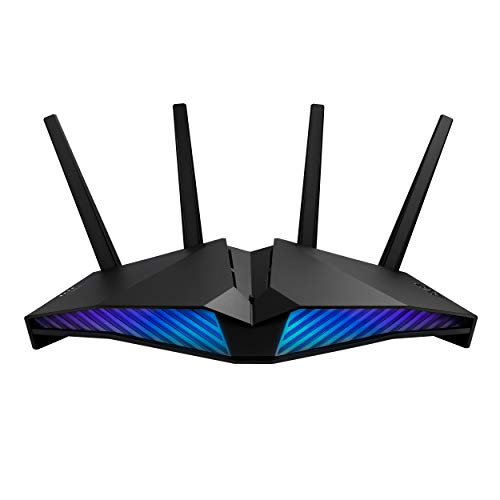
- Wi‑Fi 6 speeds up to 5400 Mbps
- Mobile Game Mode for lower-latency play
- AiProtection Pro and AiMesh support
Best For: Homes wanting gaming features plus easy network expansion
Long-Range All-Rounder
TP-Link Archer AX73 WiFi 6 Router

- Up to 5400 Mbps Wi‑Fi 6 speeds
- MU-MIMO and OFDMA for less congestion
- 6 antennas with beamforming for wider coverage
Best For: Larger homes needing strong coverage for many connected devices
Tri-Band Capacity Boost
TP-Link Archer AXE75 WiFi 6E Router

- Tri-band Wi‑Fi 6E with 6 GHz support
- OFDMA increases capacity for more devices
- 2.5Gbps WAN port and VPN support
Best For: Crowded homes that want extra capacity and 6E performance
Flint 2 for Heavy-Duty Homes – GL.iNet GL-MT6000 WiFi 6 Gaming Router
If you want a gaming router for multiple devices that can also handle VPN use, the GL.iNet Flint 2 is built for busy homes and power users. It supports Wi‑Fi 6 speeds up to 6 Gbps, offers low-latency performance, and is designed to stay stable when many devices are connected.
Best For: Gamers, streamers, and households that need strong multi-device performance with VPN support.
Pros:
- Wi‑Fi 6 with up to 6 Gbps speeds for smoother gaming and 4K streaming
- Supports over a hundred devices for dense home or DIY setups
- Rapid VPN performance with WireGuard up to 900 Mbps and OpenVPN up to 880 Mbps
- Includes 2 x 2.5G Ethernet ports plus 4 x 1G ports for flexible wired connections
Cons:
- Firmware update is strongly recommended right after setup
- Best performance may require a wired Ethernet setup during initial configuration
The Flint 2 stands out as a practical pick if you need gaming-focused speed without sacrificing support for a large number of connected devices. Its VPN features and extra-fast Ethernet ports make it especially appealing for users who want more control over home networking.
Nighthawk WiFi 7 Pick – NETGEAR BE9300 Tri-Band Router
If you need a gaming router for multiple devices and want the latest wireless standard, the NETGEAR Nighthawk BE9300 is built for fast, crowded networks. It delivers WiFi 7 speeds up to 9.3 Gbps, includes a 2.5G internet port, and is rated for coverage in homes with many connected devices.
Best For: Households that want WiFi 7 speed, strong coverage, and simple app-based control.
Pros:
- WiFi 7 tri-band design with up to 9.3 Gbps wireless speed
- Designed to support up to 100 devices with coverage up to 2,500 sq. ft.
- 2.5 Gig internet port for multi-gig service plans
- Includes NETGEAR Armor trial and built-in security features
Cons:
- Router only, so it does not include a built-in modem
- Made for use in the U.S. only
This model is a strong fit if you want a newer WiFi 7 router that can keep pace with gaming, streaming, and a full house of devices. It favors speed, coverage, and easy management through the Nighthawk app.
Flint 3e for Low-Latency Networking – GL.iNet GL-BE6500 Wi-Fi 7 Router
The GL.iNet Flint 3e is a strong gaming router for multiple devices if you want Wi‑Fi 7 features without moving to a tri-band model. It offers up to 6.5 Gbps speeds, MLO and 4K-QAM, and is tuned for low-latency use in high-density homes or workspaces.
Best For: Gamers and families who want WiFi 7 performance, VPN control, and broad device support.
Pros:
- Wi‑Fi 7 speeds up to 6.5 Gbps with MLO and 4K-QAM
- Supports over a hundred devices for busy networks
- WireGuard and OpenVPN both reach up to 680 Mbps
- Includes AdGuard Home support and Bark parental controls
Cons:
- Dual-band design, so it does not offer a 6 GHz tri-band setup
- VPN speeds depend on network and server conditions
For buyers who want modern WiFi 7 features and strong device capacity, the Flint 3e brings a lot of value. It’s especially appealing if you want a router that can balance gaming, streaming, and everyday family use.
MSI Gaming Value Pick – MSI Radix AXE6600 Tri-Band Router
The MSI Radix AXE6600 is a gaming router for multiple devices that focuses on tri-band capacity and automatic traffic handling. With WiFi 6E support, AI QoS, and an 8-stream design, it is aimed at delivering stable performance when several users are online at once.
Best For: Gamers who want tri-band WiFi 6E, automatic prioritization, and RGB styling.
Pros:
- Tri-band WiFi 6E with 8-stream support and up to 6.6 Gbps speeds
- AI QoS automatically prioritizes data packets
- 1.8 GHz quad-core processor for responsive performance
- Mystic Light RGB support for matching compatible setups
Cons:
- Does not list multi-gig Ethernet ports in the provided details
- Fewer advanced networking extras are listed than on some newer WiFi 7 models
This router is a sensible choice if you want gaming-oriented features without overcomplicating setup. Its strength is straightforward tri-band performance with AI-managed traffic for homes where multiple devices compete for bandwidth.
Premium tri-band pick – ASUS ROG Rapture GT-AX11000 Pro Gaming Router
If you want a gaming router for multiple devices in a large home, this ASUS ROG Rapture model is built for high-capacity networking with tri-band Wi‑Fi 6, six antennas, and extensive coverage. Its triple-level game acceleration and fast wired options make it a strong fit when gaming, streaming, and everyday traffic all need to stay responsive.
Best For: Multi-device households that want a premium gaming router with extensive coverage and multiple high-speed ports.
Pros:
- Tri-band Wi‑Fi 6 design helps spread traffic across more connections.
- 10G and 2.5G ports add flexibility for high-speed wired setups.
- RangeBoost Plus and six antennas are aimed at wide coverage.
- Triple-level game acceleration is designed to prioritize gaming traffic.
Cons:
- Renewed unit, so condition may vary versus new-in-box hardware.
- Higher-end feature set may be more than basic homes need.
- Large, performance-focused design may not suit minimal setups.
Overall, this is the most premium option here for buyers who need strong wireless reach, fast ports, and gaming-focused controls in a busy home network.
Wi‑Fi 7 mesh-ready pick – TP-Link Archer BE230 Wi‑Fi 7 Router
For shoppers looking for a gaming router for multiple devices without going all-in on a flagship gaming brand, the Archer BE230 brings Wi‑Fi 7, dual-band coverage, and support for up to 60 devices. It also adds 2.5G ports, EasyMesh compatibility, and HomeShield tools, making it practical for a connected home that mixes consoles, smart TVs, and everyday devices.
Best For: Families and apartments that want Wi‑Fi 7, mesh expandability, and plenty of device support.
Pros:
- Wi‑Fi 7 features like MLO and 4K-QAM boost efficiency.
- Up to 60 devices and 2,000 sq. ft. coverage fit busy homes.
- Two 2.5G ports plus three 1G ports improve wired flexibility.
- EasyMesh and HomeShield add expansion and security features.
Cons:
- Dual-band design does not include 6 GHz.
- Best performance depends on environment and wall interference.
- Separate modem is required.
This is a well-rounded choice if you want newer Wi‑Fi 7 features and strong multi-device support without stepping up to a more complex tri-band setup.
High-capacity advanced pick – GL.iNet Flint 3 BE9300 Tri-Band Router
The Flint 3 is a strong gaming router for multiple devices if you want tri-band Wi‑Fi 7, six-gigahertz support, and very high wired capacity. GL.iNet also emphasizes mass device connectivity, low-latency performance, and VPN features, so it fits households that care about gaming, streaming, and network control in one box.
Best For: Power users and large households that want Wi‑Fi 7, lots of wired ports, and advanced control features.
Pros:
- Tri-band Wi‑Fi 7 with 6GHz support targets faster, cleaner connections.
- Five 2.5G ports are useful for high-speed wired devices.
- Designed for over a hundred devices with low-latency performance.
- VPN, AdGuard Home, and parental controls add network management tools.
Cons:
- Feature-rich setup may be more than casual users need.
- Firmware update is recommended at initial setup.
- Best results depend on careful configuration and network environment.
If your home network is crowded and you want advanced features alongside serious throughput, this router stands out for both device handling and flexibility.
RGB-Ready Wi‑Fi 6 Pick – ASUS RT-AX82U Gaming Router
If you want a gaming router for multiple devices that still leaves room for style, the ASUS RT-AX82U is built around Wi‑Fi 6 speeds up to 5400 Mbps, a 1.5 GHz tri-core processor, and 160 MHz support. It’s designed to handle consoles, PCs, phones, tablets, and smart TVs while keeping latency in check with Mobile Game Mode in the ASUS Router app.
Best For: Households that want fast Wi‑Fi 6 performance, app-based gaming controls, and easy mesh expansion.
Pros:
- Wi‑Fi 6 with up to 5400 Mbps and 160 MHz channels
- Mobile Game Mode helps minimize lag and latency for mobile play
- AiProtection Pro adds commercial-grade network security
- AiMesh compatibility makes it easier to expand coverage later
Cons:
- Dual-band design may be less flexible than a tri-band option
- RGB lighting is useful for style, but not necessary for performance
Overall, this router makes sense if you want strong all-around performance with gaming-focused tools and security features. It’s a practical fit for busy homes that need one router to support lots of connected devices.
Long-Range All-Rounder – TP-Link Archer AX73 WiFi 6 Router
The TP-Link Archer AX73 is a straightforward gaming router for multiple devices if your priority is broad coverage and steady throughput. It delivers up to 5400 Mbps, uses MU-MIMO and OFDMA to reduce congestion, and adds 6 antennas with beamforming to help keep connections stable across rooms.
Best For: Larger homes that need reliable Wi‑Fi 6 coverage for streaming, gaming, and everyday devices.
Pros:
- Up to 5400 Mbps with Wi‑Fi 6 support
- MU-MIMO and OFDMA help reduce network congestion
- 6 antennas plus beamforming are aimed at better coverage
- Includes USB 3.0 sharing and TP-Link HomeShield security features
Cons:
- Dual-band design won’t match the separation of a tri-band router
- No gaming-specific mode is listed in the supplied notes
For buyers who care more about range and stable performance than extra gaming branding, the AX73 is easy to understand and well equipped. It’s a solid option when multiple people are online at once and you want fewer slowdowns.
Tri-Band Capacity Boost – TP-Link Archer AXE75 WiFi 6E Router
If you need a gaming router for multiple devices and want more headroom for busy traffic, the TP-Link Archer AXE75 stands out with tri-band Wi‑Fi 6E support. Its 6 GHz band, OFDMA capacity boost, and 2.5Gbps WAN port are aimed at keeping gaming, streaming, and downloads moving at the same time.
Best For: Multi-device homes that want 6 GHz capacity, strong performance, and flexible VPN support.
Pros:
- Tri-band Wi‑Fi 6E with 6 GHz support for lower latency
- OFDMA increases capacity for many simultaneous devices
- 2.5Gbps WAN port adds faster wired internet potential
- Includes OneMesh support and VPN server/client options
Cons:
- Best benefits depend on devices that can use Wi‑Fi 6E
- Mesh expansion requires a compatible OneMesh extender
This is the most future-facing pick in the group if your network is crowded and you want a cleaner path to more bandwidth. It fits buyers who want the extra room of 6E without giving up mainstream Wi‑Fi 6 compatibility.
How We Picked the Best Gaming Router for Multiple Devices
We focused on routers that make sense for real-world shared networks, not just benchmark numbers. That means strong wireless performance, enough capacity for several active users, solid processor and antenna designs, and features that help prioritize gaming traffic when the network gets busy.
We also looked for models with current connectivity standards such as Wi-Fi 6, Wi-Fi 6E, and Wi-Fi 7, plus multi-gig ports where they add real value for fast internet plans and wired gaming setups.
Quick Comparison
If your home is packed with devices, a tri-band or Wi-Fi 7 model is usually the easiest way to reduce congestion. If your internet plan is slower or your home is smaller, a strong Wi-Fi 6 router may be enough and can offer better value.
Gamers who use Ethernet should pay close attention to 2.5G or faster ports. Households with many wireless devices should prioritize higher-bandwidth bands, better channel handling, and QoS tools that can keep gameplay responsive while others stream or download.
Key Buying Factors for a Gaming Router for Multiple Devices
Wireless Standard and Band Layout
Wi-Fi 7 is the newest option and is best for future-proofing, while Wi-Fi 6E adds a useful 6GHz band for less interference. Wi-Fi 6 still performs well if you want dependable speed without paying for the latest standard.
Capacity and Traffic Management
Look for QoS, device prioritization, MU-MIMO, beamforming, and strong CPU performance. These features matter more in a Gaming Router for Multiple Devices than raw peak speed because they help keep latency consistent when the network is busy.
Wired Connectivity
Multi-gig WAN and LAN ports are worth it if you have fast fiber service, a NAS, or a gaming PC you want connected by cable. Extra Ethernet ports also make it easier to support consoles, desktops, and home office gear without needing a switch immediately.
Coverage and Placement
A powerful router can still underperform if it is placed poorly. Consider your floor plan, wall materials, and the number of rooms that need reliable coverage. A stronger single router is ideal for medium spaces, while a mesh setup may be better for larger or multi-story homes.
Who Should Buy Which Gaming Router for Multiple Devices?
If you want the newest features and the best chance of handling lots of devices smoothly, choose a Wi-Fi 7 model. If you want excellent value with strong gaming features, Wi-Fi 6 and Wi-Fi 6E options are often the sweet spot.
Choose tri-band if several people stream, game, and work online at the same time. Choose dual-band if your device count is moderate and you care more about simplicity and price. For competitive players, pick the model with the best wired ports, the most robust QoS tools, and the least network congestion in your home.