Cutting the cord does not mean giving up local news, sports, weather, and major broadcast networks. The right TV antenna can provide free over-the-air channels with a simple setup and no monthly subscription.
We selected 10 TV antennas for home use across indoor, outdoor, portable, amplified, and long-cable designs. Use the guide below to narrow your choice based on signal conditions, installation location, TV compatibility, and household needs.
Best 10 TV Antennas for Home Use Picks for 2026
Best Long-Cable Pick

- 13-foot coaxial cable for flexible placement
- 360° reception design with built-in amplifier
- Works with smart and older TVs
Best For: Flexible indoor setups needing a long cable
Best Simple Tabletop Pick
GE Modern Loop Rabbit Ears Antenna
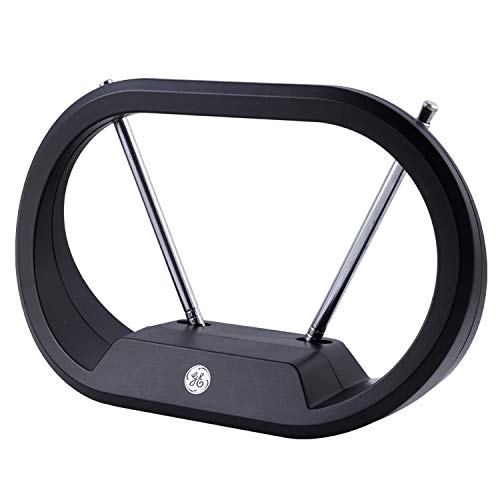
- Adjustable loop and extendable dipoles
- 30-mile VHF/UHF reception range
- Quick tabletop setup with included cable
Best For: Compact indoor setups near local towers
Best Outdoor Range Pick
GE Outdoor HD Digital TV Antenna

- 70-plus-mile stated reception range
- Weather-resistant attic or outdoor design
- J-mount included for installation
Best For: Homes needing attic or outdoor reception
Best Indoor/Outdoor Flexibility

- Indoor or outdoor placement options
- 16.5-foot coaxial cable
- Switchable booster for longer distances
Best For: Homes testing multiple antenna locations
Best Portable Pick

- Compact, travel-friendly design
- 20-mile omnidirectional VHF/UHF reception
- 4K/8K and NEXTGEN TV ready
Best For: RVs, travel, tailgating, and nearby broadcast towers
Best Simple Indoor Setup
DAANT Indoor Long-Range TV Antenna

- 16-foot coaxial cable included
- Supports 4K, UHD, and 1080p broadcasts
- Simple plug-in and scan installation
Best For: Digital TV users wanting an easy indoor setup
Flexible Indoor-Outdoor Pick

- 18-foot reinforced coaxial cable
- Indoor or outdoor magnetic-base placement
- Switchable signal booster
Best For: Flexible setups that need extra cable reach
Easy Indoor Setup

- 16.5-foot coaxial cable
- Detachable signal amplifier
- Supports HD, 4K, and ATSC formats
Best For: Indoor setups that benefit from amplifier flexibility
Best Long-Cable Pick – QIRUOZ 360° Indoor TV Antenna
For shoppers comparing tv antennas for home use, this QIRUOZ model emphasizes flexible placement and broad compatibility. Its 13-foot coaxial cable, 360° reception design, built-in amplifier, and support for VHF/UHF OTA signals make it suited to a range of indoor setups.
Best For: Homes that need flexible indoor placement, a long cable, and compatibility with smart or older TVs.
Pros:
- 13-foot coaxial cable supports placement away from the television.
- 360° reception design and built-in signal amplifier are intended to improve signal capture.
- Compatible with smart TVs, older TVs, HDTVs, and supported 4K, 1080P, and 8K devices.
- Includes wall, window, and tabletop mounting options plus a three-year return policy and lifetime warranty support.
Cons:
- Actual channel availability depends on local broadcast coverage and signal conditions.
- The amplifier requires powered operation, so placement near an outlet may be convenient.
This is a feature-rich indoor option for buyers who value cable length and placement flexibility. As with any OTA antenna, scan for channels after installation and test positioning for the most reliable reception.
Best Simple Tabletop Pick – GE Modern Loop Rabbit Ears Antenna
This GE model is a straightforward choice among tv antennas for home use, especially for a tabletop setup near the television. It combines an adjustable loop and extendable dipoles with a 30-mile stated range and a short included coaxial cable.
Best For: Apartments, bedrooms, and other indoor spaces close enough to local broadcast transmitters for a compact tabletop antenna.
Pros:
- Adjustable loop and dipoles allow users to optimize placement and reception.
- Receives VHF and UHF broadcasts from up to 30 miles, according to the supplied specifications.
- Simple setup: connect the included four-foot coaxial cable and scan for channels.
- Supports 4K and 8K-ready televisions and ATSC 3.0 broadcasts where available.
Cons:
- Its 30-mile range is less suited to homes farther from broadcast towers.
- The four-foot cable provides less placement flexibility than longer-cable alternatives.
Choose this antenna when you want a compact, adjustable design without a complicated installation. Reception will still depend on your location, building materials, and the direction of nearby broadcast signals.
Best Outdoor Range Pick – GE Outdoor HD Digital TV Antenna
For shoppers seeking tv antennas for home use beyond a basic indoor setup, this GE antenna is designed for attic or outdoor mounting. Its weather-resistant construction, included J-mount, and stated 70-plus-mile range make it the most installation-oriented option in this lineup.
Best For: Homes that need an attic or outdoor antenna and are positioned farther from local broadcast sources.
Pros:
- Designed to receive VHF and UHF signals from up to 70-plus miles.
- Weather-resistant construction supports outdoor use and flexible roof, mast, or attic installation.
- Includes a J-mount and works with all TV brands and standard coaxial converter boxes.
- Supports 4K, 8K, and ATSC 3.0 broadcasts where available.
Cons:
- Outdoor or attic installation generally requires more planning than a tabletop antenna.
- The larger 29-by-15-by-20.5-inch body may be unsuitable for compact indoor spaces.
This is the strongest fit when indoor reception is inadequate and you are comfortable mounting an antenna in an attic or outdoors. Confirm mounting space, cable routing, and local signal availability before installation.
Best Indoor/Outdoor Flexibility – NEOSIGN Local Channel Antenna
This NEOSIGN antenna offers a flexible approach to tv antennas for home use, supporting indoor or outdoor placement and including a long 16.5-foot coaxial cable. Its switchable signal booster is intended for longer-distance reception, while the manufacturer notes that performance depends on local signal coverage.
Best For: Buyers who want to experiment with indoor or outdoor placement and need a particularly long cable.
Pros:
- 16.5-foot coaxial cable allows placement farther from the TV or near a window.
- Can be used indoors or outdoors and is described as weather-resistant.
- Includes a signal booster that can be switched on when distance exceeds 35 miles.
- Supports local HD channels and 4K/1080p formats with compatible equipment.
Cons:
- The stated 180-mile range is not a guarantee; the notes emphasize that reception depends on local signal coverage.
- Users must select the appropriate mode and rescan channels after moving the antenna or changing the range setting.
- Outdoor installation requires choosing a suitable protected location.
This antenna is appealing for homes where placement flexibility matters more than a fixed installation. Before buying, check which OTA channels reach your address, then test locations and rescan after each move.
Best Portable Pick – GE Portable HD TV Antenna
If you need tv antennas for home use that can also travel, this compact GE model is a practical choice. It receives VHF and UHF signals up to 20 miles away, supports 1080p, 4K, 8K, and NEXTGEN TV broadcasts where available, and uses a magnetic base for flexible placement.
Best For: RVs, camping, tailgating, backup TV reception, and homes within roughly 20 miles of broadcast sources.
Pros:
- Compact design is easy to store and transport.
- Omnidirectional reception helps simplify positioning.
- Magnetic base supports secure placement on metal surfaces.
- Includes a limited-lifetime replacement pledge and U.S.-based technical support.
Cons:
- Its stated 20-mile range may be limiting in weaker-signal areas.
- It is designed as a portable antenna rather than a larger permanent installation.
This GE antenna stands out for portability and straightforward setup. It is a sensible fit when convenience matters more than maximum range, especially for temporary use or homes relatively close to broadcast towers.
Best Placement Flexibility – FGOTV Indoor TV Antenna
For shoppers comparing tv antennas for home use, this FGOTV indoor model offers selectable short- and long-range modes plus a 16.5-foot cable. Its Smart IC chip is designed to filter cellular and FM interference, while placement near a window and a fresh channel scan can help optimize reception.
Best For: Indoor setups that need flexible cable placement and adjustable reception modes based on distance from broadcast towers.
Pros:
- Offers short-range and long-range modes for different signal conditions.
- Long 16.5-foot cable provides more placement flexibility.
- Supports 4K, UHD, and 1080p broadcasts where available.
- Includes an amplifier and guidance for troubleshooting reception.
Cons:
- Actual channel count and picture quality depend on location, terrain, and building materials.
- The amplifier may not noticeably improve reception in weak-signal areas.
- Low-VHF channels may require an additional compatible antenna.
This model is a versatile indoor option, but it rewards careful setup. Check tower distance, choose the appropriate mode, place it high and near a window, and rescan channels after adjustments.
Best Simple Indoor Setup – DAANT Indoor Long-Range TV Antenna
This DAANT model is a straightforward option among tv antennas for home use, with a 16-foot coaxial cable and support for 4K, UHD, and 1080p broadcasts. Connect it to a digital or smart TV, try different orientations and placements, then scan for available local channels.
Best For: Digital-TV households seeking an uncomplicated indoor antenna with a relatively long included cable.
Pros:
- 16-foot coaxial cable makes positioning easier.
- Supports 4K, UHD, and 1080p broadcast signals where available.
- Designed for simple plug-in installation and channel scanning.
- Three shielding layers are intended to help reduce signal loss and distortion.
Cons:
- Not suitable for older analog televisions.
- Reception still depends on tower location and indoor placement.
- Warranty coverage is listed as three months.
The DAANT is best viewed as an easy-to-install indoor antenna rather than a guaranteed long-distance solution. Its cable length and simple setup are useful, but checking local coverage and experimenting with placement remain important.
Flexible Indoor-Outdoor Pick – Magnetic-Base 4K Antenna
For shoppers comparing tv antennas for home use, this Lyrwihn model stands out for its 18-foot reinforced coaxial cable, signal booster, and magnetic base. It supports indoor placement while also offering a practical option for mounting on metal surfaces outdoors.
Best For: Homes that want flexible placement, a long cable, and optional boosted reception for local channels.
Pros:
- Supports 4K and 1080p digital formats.
- Includes an 18-foot thick coaxial cable for flexible positioning.
- Magnetic base supports indoor or outdoor placement on iron surfaces.
- Signal booster can be activated for distances beyond 35 miles.
Cons:
- Actual channel reception depends on location, broadcast coverage, and surroundings.
- Outdoor use and installation may require additional planning.
- The listed 180-mile range is a maximum claim rather than a guaranteed reception distance.
This is a versatile choice when cable length and mounting flexibility matter. Check available towers in your area and rescan channels after installation or changing the range setting.
Easy Indoor Setup – Vansky Amplified HDTV Antenna
This Vansky model is a straightforward option among tv antennas for home use, with a detachable amplifier and 16.5-foot coaxial cable. Its indoor-focused design lets you position it near a window or wall while supporting common HD and 4K broadcast formats.
Best For: Indoor viewers who want a long cable, removable amplifier, and a setup designed specifically for home use.
Pros:
- Supports 720p, 1080i, 1080p, 4K, and ATSC formats.
- 16.5-foot coaxial cable allows flexible placement.
- Detachable amplifier lets you compare reception with or without boosting.
- Flame-retardant materials are intended for indoor use.
Cons:
- Thick walls, valleys, and high-rise buildings can affect reception.
- The amplifier may not improve every setup; the notes recommend removing it and rescanning if needed.
- Indoor placement may be less suitable in areas with difficult broadcast conditions.
The detachable amplifier is useful for fine-tuning reception instead of committing to one configuration. Check local tower availability and try window placement before judging performance.
Quick-Mount Choice – Smart IC Amplified Antenna
For tv antennas for home use in apartments, suburban homes, or rooms where drilling is inconvenient, this Rymafxi antenna emphasizes quick installation. It includes an 18-foot coaxial cable, built-in amplifier, magnetic base, and adhesive pads for mounting on metal, walls, glass, or wood.
Best For: Viewers who prioritize tool-free installation and flexible placement for smart or older TVs.
Pros:
- Magnetic base and adhesive pads provide multiple mounting options.
- 18-foot coaxial cable supports positioning away from the TV.
- Built-in Smart IC chip and amplifier are designed to improve signal transmission and reduce interference.
- Supports 720p, 1080p, 4K, and 8K formats according to the product notes.
Cons:
- Its advertised 1200-plus-mile range should not be treated as guaranteed real-world reception.
- Reception still depends on local towers, terrain, buildings, and interference.
- Adhesive mounting may not suit every wall or surface.
This model is most appealing when simple, no-drill placement is more important than a traditional bracket installation. Test several locations and rescan your TV to find the strongest available signal.
How We Picked the Best TV Antennas for Home Use
We focused on the features that matter most in everyday antenna performance: reception design, indoor or outdoor placement, cable length, amplifier configuration, compatibility with modern and older televisions, and ease of installation. We also included a mix of compact antennas for apartments and bedrooms, portable models for travel or RV use, and outdoor designs for homes where indoor reception is limited.
Advertised range claims can vary substantially by terrain, building materials, antenna height, and local broadcast-tower locations. Treat mileage figures as estimates rather than guarantees, and check your local channel availability before buying.
Quick Comparison
| Best For | Recommended Type | Why It Matters |
|---|---|---|
| Apartments and bedrooms | Compact indoor antenna | Simple placement with minimal visual impact |
| Weak or obstructed signals | Outdoor or amplified antenna | More height, better positioning, or signal assistance |
| Renters | Indoor model with a long cable | Flexible placement without permanent installation |
| Travel and temporary setups | Portable HD antenna | Lightweight and easy to reposition |
| Older televisions | Compatible digital antenna | May require a digital converter box if the TV lacks a tuner |
Key Buying Factors for TV Antennas for Home Use
Indoor Versus Outdoor Placement
Indoor antennas are easiest to install and work well near windows or on exterior-facing walls, especially in areas close to broadcast towers. Outdoor antennas generally have a better chance of receiving distant or obstructed signals because they can be mounted higher and away from indoor interference.
Reception Conditions and Amplification
Amplifiers may help compensate for long cable runs or signal splitting, but they cannot create a missing broadcast signal. If reception is already strong, an amplifier can be unnecessary. For challenging locations, prioritize placement and antenna orientation before relying on a booster.
Cable Length and Connectivity
A longer cable gives you more freedom to position an indoor antenna near a window or higher on a wall. Confirm that the included coaxial cable reaches your preferred location and that your television has a coaxial antenna input. Older sets may need a separate digital converter box.
Channel Scanning and Placement
After connecting the antenna, run the television’s channel scan. Test several locations and orientations, keeping the antenna away from large metal objects, thick concrete, and electronic interference. A free reception map can help identify the direction of nearby towers.
Who Should Buy Which TV Antennas for Home Use?
Choose an Indoor Antenna for Convenience
Indoor models are the practical choice for renters, apartments, guest rooms, and households within reliable broadcast range. Choose one with a long cable if the best signal area is not beside the TV.
Choose an Outdoor Antenna for Difficult Reception
Homes in rural areas, valleys, or behind substantial obstructions should consider an outdoor antenna. Installation takes more effort, but added height and clearer line of sight can improve reliability.
Choose an Amplified Model for Long Runs
An amplified antenna can be useful when the antenna sits far from the television or feeds multiple TVs. It is most helpful when used with a suitable placement and a stable power connection.
Choose a Portable Model for Flexible Viewing
Portable antennas suit travel, RVs, dorm rooms, and temporary setups. Their performance depends heavily on location, so they are best for areas with reasonably strong local broadcasts.