If you want a fun, inspiring way into synthesis without overspending, synthesizers under 300 offer a lot more than basic toy instruments. Today’s budget models can cover bass, leads, lo-fi experimentation, sequencing, and compact performance setups.
This roundup focuses on affordable synths that make sense for beginners, portable musicians, and anyone building a small electronic music rig on a budget.
Best 10 Synthesizers Under 300 Picks for 2026
Analog Bass Sequencer Pick

- Three oscillators for thick bass tones
- 16-step sequencer for fast pattern building
- Battery power and speaker improve portability
Best For: bass-focused players who want an affordable analog groove machine
Portable Mini Controller Pick

- 25 keys plus 8 MPC pads for beat making
- Built-in sounds and speaker for standalone use
- Includes arpeggiator, note repeat, and software
Best For: mobile producers and songwriters who want a compact controller with onboard sounds
Delay Ribbon Synth Pick

- Analog-style delay adds strong echo character
- Ribbon keyboard keeps it highly portable
- MS-10/MS-20-style filter adds classic tone
Best For: experimenters who want a tiny analog synth with built-in delay
Portable FM Workstation Pick
Wireless Portable FM Synthesizer

- 6 operators and 32 algorithms for FM variety
- 128 presets plus 6 built-in effects
- Battery power, speaker, and wireless MIDI support
Best For: players who want a compact FM synth with presets and modern features
Classic Pocket Icon
Stylophone Original Pocket Electronic Synthesizer

- Iconic analog pocket synth with stylus control
- Three octaves plus optional vibrato effect
- Battery-powered, portable, and beginner-friendly
Best For: Beginners and gift buyers who want a tiny retro synth
Hybrid Mini Workhorse
Behringer Pro VS Mini Portable Synthesizer

- 4-voice hybrid synth with vector morphing oscillators
- Includes analog low-pass filter, sequencer, and arpeggiator
- USB-C, battery, or USB-powered portable design
Best For: Portable sound designers who want hybrid synthesis and sequencing
Open-Source Chord Creator
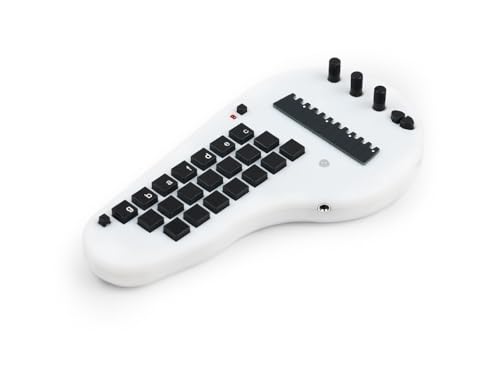
- 21 chord buttons for quick chord selection
- Harp touch zone with 12 touch sections
- USB MIDI support and custom preset capability
Best For: Chord-focused players and tinkerers who want an open-source synth
Portable FM Power

- 6-operator FM engine with 32 algorithms
- 128 presets plus FM SYSEX import
- USB-C, Bluetooth BLE MIDI, and 3.5mm MIDI IN
Best For: Portable FM sound design and MIDI-ready setups
Classic Bassline
Behringer TD-3-AM Analog Bass Synth

- True analog VCO, VCF, and VCA circuitry
- 16-step sequencer for groove programming
- Built-in distortion and 16-voice poly chain
Best For: Acid-style basslines and analog sequenced grooves
Retro Portable Pick
Stylophone GENX-2 Analogue Synth

- Battery-powered with a built-in speaker
- LFO, filter, PWM, and analogue delay
- CV/Gate outputs for hardware rigs
Best For: Portable analog sound design and modular control
Analog Bass Sequencer Pick – Korg Volca Bass
If you want synthesizers under 300 that focus on bass first, the Korg Volca Bass is built for fat, aggressive low end and hands-on groove making. Its three oscillators and simple analog layout make it easy to dial in classic acid-leaning lines, while the 16-step sequencer helps you build patterns fast.
Best For: Players who want a compact analog bass synth for rhythmic lines, acid-style grooves, and portable jamming.
Pros:
- Three oscillators for a wide range of bass tones
- Electribe-inspired 16-step sequencer for quick groove creation
- Slide and Active Step functions help create evolving bass lines
- Battery-powered, compact, and includes built-in speaker
Cons:
- Focused mainly on bass sounds rather than broad synth duties
- Small size and simple controls may feel limiting for deep sound design
The Volca Bass stands out as a practical, performance-friendly analog option if your priority is heavy bass and immediate sequencing. It is especially appealing when you want portable hardware that still delivers classic analog character.
Portable Mini Controller Pick – Akai MPK Mini Play MK3
Among synthesizers under 300, the Akai MPK Mini Play MK3 is a flexible pick for players who want both a mini keyboard controller and built-in sounds. It combines 25 keys, MPC-style pads, and onboard instrument and synth sounds, making it useful for sketching ideas away from a computer.
Best For: Beat makers, songwriters, and mobile producers who want a compact controller with built-in sounds and software support.
Pros:
- 25-key dynamic keybed with 8 velocity-sensitive backlit MPC pads
- Built-in speaker and over 100 internal drum and instrument sounds
- Arpeggiator, note repeat, and 4 encoder knobs add creative control
- Includes software, samples, and learning content for setup and practice
Cons:
- Mini key size may not suit players who prefer a larger keyboard
- Batteries are not included for untethered use
This model makes sense if you want a compact all-in-one idea starter rather than a full-size synth. It is especially practical for quick beat building, portable composing, and easy integration with a laptop workflow.
Delay Ribbon Synth Pick – Korg Monotron Delay
If you are shopping for synthesizers under 300 and want something tiny but characterful, the Korg Monotron Delay is a simple analog ribbon synth with a strong effects identity. Its built-in delay, ribbon keyboard, and classic MS-10/MS-20-style filter make it a fun go-anywhere sound source for experiments and quick textures.
Best For: Players who want an ultra-portable analog synth for effects, textures, and simple ribbon performance.
Pros:
- Analog-style space delay with rate and intensity controls
- Wide-range ribbon controller for expressive playing
- Includes a classic analog filter from the MS-10 and MS-20 lineage
- Built-in speaker and battery power support portable use
Cons:
- Very minimal design limits traditional keyboard-style play
- Best suited to simple lines and sound effects rather than full arrangements
The Monotron Delay is less about complexity and more about immediate sonic character. For players who value portability and hands-on effects, it offers a distinctive and inexpensive way to add analog flavor.
Portable FM Workstation Pick – Wireless Portable FM Synthesizer
For shoppers comparing synthesizers under 300, this wireless portable FM synth offers a lot of features in a compact body. With 6 operators, 32 algorithms, built-in effects, presets, and multiple MIDI connection options, it is geared toward players who want FM sound variety and modern convenience in one unit.
Best For: Musicians who want a portable FM synth with presets, onboard effects, sequencing, and broad connectivity.
Pros:
- 6 operators and 32 algorithms provide a wide FM palette
- 128 factory presets cover pianos, strings, brass, basses, and synths
- Built-in speaker, battery operation, and compact size improve portability
- Includes arpeggiator, 16-step sequencer, and 6 built-in effects
Cons:
- Silicone keys may not appeal to everyone
- Feature set is broad, so it may feel more like a multi-tool than a focused synth
This is a strong choice if you want FM synthesis without giving up portability or modern connectivity. It packs enough presets and performance tools to serve as both a creative sketchpad and a sound module.
Classic Pocket Icon – Stylophone Original Pocket Electronic Synthesizer
If you want one of the most recognizable synthesizers under 300, the Stylophone is a tiny, battery-powered option with a true retro feel. It uses a touch-sensitive metal surface and stylus control, making it simple to start playing while still offering an iconic analog sound, three octaves, and optional vibrato.
Best For: Beginners, gift buyers, and players who want a pocket-sized synth with a classic sound.
Pros:
- Original pocket synthesizer with an iconic analog character
- Easy stylus-based playing on a touch-sensitive metal surface
- Very portable at less than 12 cm wide
- Built-in speaker, headphone socket, and AA battery power
Cons:
- Limited to three octaves
- Best suited to simple playing rather than deep sound design
- Requires 3 x AA batteries
This is a fun, compact pick if portability and recognizable personality matter more than advanced synthesis features. It also has computer connectivity, so you can record or manipulate its sounds with external software.
Hybrid Mini Workhorse – Behringer Pro VS Mini Portable Synthesizer
Among synthesizers under 300, the Behringer Pro VS Mini stands out as a compact hybrid module with serious sound-shaping options. It combines vector morphing oscillators, an analog low-pass filter, a 16-step sequencer, and an arpeggiator, while also offering wavetable synthesis and battery or USB power.
Best For: Players who want a small, portable synth module with sequencing and hybrid sound design.
Pros:
- 4-voice hybrid synthesizer with 16 vector oscillators
- Analog low-pass filter plus sequencer and arpeggiator
- USB-C connectivity with battery or USB power options
- Compact size for portable use
Cons:
- Only 27 keys, so it is not a full-size keyboard experience
- More of a compact module than a traditional performance synth
- Best for users comfortable with a feature-rich setup
If you want a small synth with more depth than a novelty instrument, this model offers a strong mix of portable convenience and hands-on sound tools. It is especially appealing for desktop setups and music software users.
Open-Source Chord Creator – Minichord Synthesizer
The Minichord is a good fit if you are shopping for synthesizers under 300 and want a different way to make music. Its 21 chord buttons, harp touch zone, built-in and custom presets, and USB MIDI support make it a creative tool for experimenting with chords and performance ideas.
Best For: Players who want an open-source MIDI synth focused on chords and expressive control.
Pros:
- 21 chord buttons for major, minor, and 7th chords
- Harp touch zone divided into 12 sections for expressive play
- Supports built-in and custom presets
- USB MIDI compatibility for music software use
Cons:
- More specialized than a standard keyboard synth
- Open-source design may appeal more to tinkerers
- Not aimed at players wanting traditional keys
This is a creative, modern option for people who like chord-driven playing and MIDI integration. Its open-source nature also makes it attractive if customization matters as much as performance.
Portable FM Power – M-VAVE FM-1 6-Operator Synth
If you’re shopping for synthesizers under 300, the M-VAVE FM-1 stands out as a compact FM option with a deep feature set. Its 6-operator engine, 32 algorithms, and portable battery-powered design make it a practical pick for quick sound design, travel, and DAW-friendly setups.
Best For: Guitarists and producers who want a portable FM synth with MIDI flexibility and built-in sequencing tools.
Pros:
- 6-operator FM synthesis with 32 algorithms for DX-style leads, pads, basses, and brass/strings
- Includes 128 factory presets plus FM SYSEX import for fast sound access
- Built-in arpeggiator, 16-step sequencer, and six effects for hands-on production
- USB-C, Bluetooth BLE MIDI, and 3.5mm MIDI IN support broad connectivity
Cons:
- 27-key silicone keyboard is compact and may feel limiting for extended playing
- Best suited to sound design and sketching rather than a full-size performance keyboard
The FM-1 is a strong value if you want a small synth that goes beyond basic presets and can travel easily. Its feature mix feels especially useful for players who want a battery-powered FM box that integrates into a modern MIDI setup.
Classic Bassline – Behringer TD-3-AM Analog Bass Synth
Among synthesizers under 300, the Behringer TD-3-AM is aimed squarely at classic bass and groove sounds. It uses true analog circuitry with a pure analog signal path, making it a straightforward pick if you want the familiar punch and movement of a bass-line synth.
Best For: Players who want an affordable analog bass synth for classic sequenced patterns and acid-style tones.
Pros:
- True analog circuitry with VCO, VCF, and VCA signal path
- Built-in 16-step sequencer for riff-based programming
- Distortion effects add extra grit and edge
- 16-voice poly chain support for expanding the setup
Cons:
- Focused primarily on bass and groove sounds rather than broad synth duties
- Controls are specialized, so it may not suit users wanting a general-purpose keyboard synth
The TD-3-AM is a narrow but useful tool if your priority is bassline sequencing and analog character. It’s a practical value choice for anyone chasing that classic resonant filter feel without leaving the budget tier.
Retro Portable Pick – Stylophone GENX-2 Analogue Synth
If you’re comparing synthesizers under 300, the Stylophone GENX-2 offers a very portable analog experience with hands-on controls. Its built-in speaker, battery operation, and CV/Gate outputs make it a flexible choice for sketching sounds anywhere or connecting to a hardware rig.
Best For: Portable analog experimentation and users who want a stylus-based synth with CV/Gate control.
Pros:
- Battery-powered design with built-in speaker for play-anywhere convenience
- Resonant low-pass filter, LFO, envelope, and PWM for sound shaping
- Dual sub-octave switches and analogue delay add fuller, deeper tones
- CV and Gate outputs support external modular and semi-modular gear
Cons:
- Stylus keyboard and expression strip are unconventional if you prefer traditional keys
- Included feature set is specialized, so it’s less of a general all-rounder
The GENX-2 is a fun pick for players who want a compact synth with a distinctive hands-on feel. It pairs retro playability with real connectivity, which makes it especially appealing in small hardware-focused setups.
How We Picked These Synthesizers Under 300
We focused on sound quality, hands-on controls, portability, sequencing features, and overall value. Since budget synths vary widely in purpose, we prioritized instruments that are actually useful for learning, performing, or sketching ideas—not just cheap on paper.
We also looked for a balanced mix of analog-style bass synths, portable pocket instruments, hybrid keyboards, and preset-based options so different users can find the right fit.
Quick Comparison
If you want a more traditional synth workflow, choose a model with dedicated knobs, a filter, and a sequencer. If portability matters most, compact battery-powered or pocket-sized options are easier to carry and play anywhere. If you need broader versatility, keyboard-style synths and hybrid units usually provide the easiest all-in-one experience.
Key Buying Factors for Synthesizers Under 300
Sound Engine
Analog, virtual-analog, FM, hybrid, and preset-based synths all behave differently. Analog-style units usually excel at bass and raw character, while FM and preset synths can offer more variety in a smaller package.
Controls and Playability
For hands-on sound design, look for real knobs, sliders, and accessible sequencing. If you are just starting out, a simpler layout can be better than a deep feature set you will rarely use.
Portability and Power
Many Synthesizers Under 300 are designed for mobile use, so check whether the unit runs on batteries, has a built-in speaker, or needs external power and headphones.
Sequencing and Connectivity
A built-in sequencer is a major advantage for beatmaking and live jamming. MIDI, CV/gate, USB, and audio output options also matter if you plan to connect to a DAW, controller, or modular setup.
Who Should Buy Which Synthesizers Under 300?
Beginners who want immediate fun and simple sound creation should look at compact, easy-to-play models with straightforward controls. Bass-focused producers will usually be happiest with synths that emphasize filter movement, sequencing, and punchy low end. Experimenters and portable musicians may prefer ribbon-style or pocket synths for sketching ideas on the go.
If you want the most flexible setup, consider a hybrid or keyboard-style option that can function as both a playable instrument and a compact production tool. The best choice among Synthesizers Under 300 depends on whether you value sound character, portability, or workflow more than raw feature count.