Robot building kits turn screen time into hands-on problem-solving. The right set can help children explore coding, mechanics, electronics, solar power, or robotics without requiring a full workshop or advanced experience.
We selected 10 options ranging from beginner-friendly multi-build sets to programmable Arduino-compatible cars and more advanced robot-arm projects. Use the guide below to match the kit’s complexity, controls, and learning goals with the builder’s age and interests.
Best 10 Robot Building Kits Under 300 Picks for 2026
Best Solar Multi-Build

- Builds 13 land- or water-capable models
- Solar-powered STEM learning
- Recommended for ages 8–15
Best For: Screen-free solar science and family building
Best Programmable Pick

- Arduino-compatible programmable robot car
- FPV camera and sensor-based modes
- Includes rechargeable 2000 mAh battery
Best For: Older beginners learning coding and electronics
Best Build Variety

- Includes 36 robot build options
- 14 models use motors
- Sorting tray and video tutorials included
Best For: Frequent rebuilding and mechanical STEM play
Best Renewable-Energy Starter

- 12 builds from 190 parts
- Works with sunlight or a flashlight
- Recommended for ages 8–12
Best For: Young STEM learners exploring solar energy
Best Mechanical Coding Project
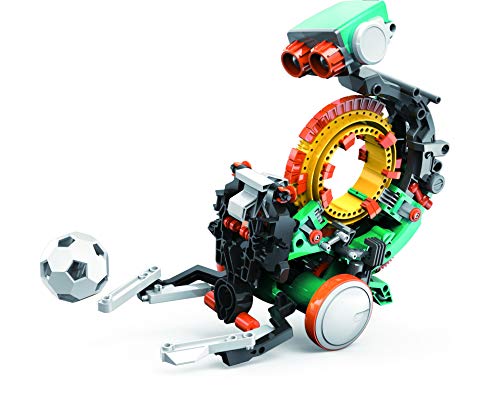
- Mechanical coding wheel programs physical actions
- Multiple-hour, hands-on assembly project
- Designed for ages 10 and up
Best For: Young engineers who prefer tactile coding and mechanical building
Best App-Controlled 5-in-1 Set
Sillbird Remote-Control Robot Kit

- Builds five models from 488 pieces
- Offers app and remote control modes
- Rechargeable battery supports up to 40 minutes
Best For: Kids who want repeatable builds and interactive controls
Best Solar-Powered Variety

- Builds 12 rolling, crawling, or floating robots
- Offers solar and indoor battery-box power
- Teaches renewable energy and mechanics
Best For: Children exploring solar power and repeatable STEM builds
Best All-Around Pick
Sillbird 5-in-1 Programmable Robot Kit
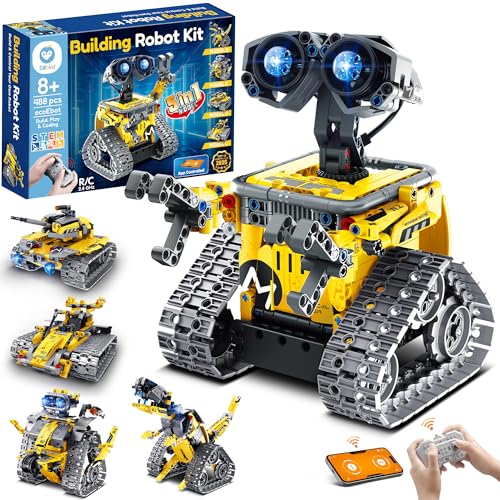
- Five buildable models with progressive difficulty
- Remote and Bluetooth app control
- 488 pieces with rechargeable battery
Best For: Kids 8 and up who want building, coding, and interactive play
Best Mechanical Project

- Wooden robotic arm construction project
- Introduces motors, circuits, and mechanical movement
- No soldering required
Best For: Older kids, teens, adults, and classroom STEM projects
Best for Coding Variety

- 780 pieces create six space-themed models
- App and 2.4GHz remote control
- Includes path coding and STEM programming modes
Best For: Kids 8 and up who enjoy space themes and programmable play
Best Solar Multi-Build – 13-in-1 Solar Robot Kit
This 13-in-1 solar robot kit is a versatile pick for shoppers comparing robot building kits under 300. Designed for children ages 8 to 15, it lets builders assemble and disassemble multiple land- and water-capable models while introducing solar energy concepts.
Best For: Kids who want screen-free STEM play, multiple rebuild options, and a parent-child science activity.
Pros:
- Offers 13 different robot builds with reusable, disassemblable parts.
- Uses a solar power engine to introduce renewable-energy ideas.
- Includes smooth, non-toxic ABS components and a step-by-step manual.
- Supports hands-on creativity, problem-solving, and family projects.
Cons:
- Solar operation depends on sufficient light.
- The broad range of builds may require adult help for younger users.
Choose this set if variety and renewable-energy learning matter more than advanced programming. It is a straightforward building kit with plenty of opportunities to rebuild and experiment.
Best Programmable Pick – ELEGOO UNO R3 Smart Robot Car
For shoppers seeking robot building kits under 300 with coding and electronics, the ELEGOO UNO R3 Smart Robot Car Kit offers a more advanced project. It combines assembly with Arduino programming, app or remote control, live camera video, sensors, and rechargeable power.
Best For: Beginners, classrooms, coding clubs, and older children ready to move beyond basic assembly into programmable robotics.
Pros:
- Supports FPV video, line tracking, obstacle avoidance, and multiple driving modes.
- Includes guided wiring, an illustrated tutorial, and example programs.
- Works with Arduino IDE for customized routes, reactions, and experiments.
- Includes a camera module, sensors, motors, IR remote, and 2000 mAh rechargeable battery.
Cons:
- Recommended for ages 12 and up, with adult guidance for first-time builders.
- Assembly and programming are more involved than simpler construction kits.
This is the strongest choice here for hands-on coding and electronics practice. Its guided setup helps beginners get started, while Arduino compatibility leaves room for more creative projects.
Best Build Variety – 36-in-1 Motor Robotics Kit
The JOVA Klever Kits set stands out among robot building kits under 300 for its large selection of projects. Recommended for ages 8 to 13, it includes 36 robot possibilities, including 14 motorized models such as walking machines and racing cars.
Best For: Children who enjoy frequent rebuilds, mechanical experimentation, and screen-free solo or family activities.
Pros:
- Provides 36 creative robot builds, with 14 motorized models.
- Includes a sorting tray to make parts easier to organize and store.
- Offers a full-color instruction booklet and video tutorials.
- Encourages learning in science, engineering, mechanics, and problem-solving.
Cons:
- The many components may require careful sorting and organization.
- Its focus is on mechanical building rather than programmable coding.
Pick this kit when the number of possible builds is the main priority. The storage tray and video guidance are useful additions for keeping a high-piece-count project manageable.
Best Renewable-Energy Starter – 12-in-1 Solar Robot Kit
The Sillbird 12-in-1 kit is a practical option for families comparing robot building kits under 300 for children ages 8 to 13. Its 190 parts support robot, car, and boat builds while the expanded solar panel gives kids a hands-on introduction to renewable energy.
Best For: Younger STEM learners, homeschool activities, classroom projects, and families looking for indoor or outdoor solar-powered play.
Pros:
- Offers 12 build experiences using 190 parts.
- Can be used outdoors in sunlight or indoors with a flashlight.
- Introduces solar power, engineering, hand-eye coordination, and problem-solving.
- Includes step-by-step instructions and a larger sun-collecting panel.
Cons:
- Solar performance varies with the available light.
- It is recommended for ages 8 to 12, so older children may want a more advanced kit.
This kit balances approachable assembly with meaningful renewable-energy exploration. It is a good starting point for children who want several vehicle-style builds without moving into electronics programming.
Best Mechanical Coding Project – Mech-5 STEM Coding Robot
For shoppers comparing robot building kits under 300, the TEACH TECH Mech-5 stands out as a hands-on mechanical engineering project rather than a pre-assembled toy. Kids ages 10 and up assemble the robot and program actions by snapping coding buttons onto its mechanical coding wheel.
Best For: Future engineers who enjoy longer, instruction-led building projects and learning coding basics through physical mechanisms.
Pros:
- Mechanical coding wheel controls actions such as throwing, lifting, kicking, and drawing.
- Provides an in-depth STEM building experience with multiple hours of assembly.
- Supports coding, problem-solving, and mechanical engineering learning.
- Includes step-by-step instructions and a one-year warranty against manufacturer defects.
Cons:
- Requires careful assembly and patience, so it may not suit children seeking immediate play.
- Requires two AAA batteries, which are not listed as included.
Choose Mech-5 when the building process is as important as the finished robot. Its button-based mechanical programming offers a tactile introduction to coding without relying on an app.
Best App-Controlled 5-in-1 Set – Sillbird Remote-Control Robot Kit
Among robot building kits under 300, the Sillbird kit combines a 488-piece build with app and remote control. Kids can create five models, including a robot, dinosaur, tank, and car, then explore driving, path, gyro, one-handed, and programming modes.
Best For: Kids ages 8 and up who want several build options, rechargeable play, and both remote and app-based controls.
Pros:
- Offers five creative models for varied building and play experiences.
- Includes 488 blocks with clear, illustrated assembly instructions.
- Supports remote control and app control with multiple operating modes.
- Rechargeable battery provides up to 40 minutes of play.
Cons:
- The app-based features may require a compatible device and setup.
- Some younger builders may need help progressing from simpler to more complex models.
This is a flexible choice for families seeking both construction and interactive play. The multiple models extend the kit’s usefulness, while the rechargeable design avoids frequent battery replacement during play.
Best Solar-Powered Variety – 12-in-1 Solar Robot Kit
For families browsing robot building kits under 300, this 12-in-1 solar robot kit offers a broad range of projects with two power options. Children can build robots that roll, crawl, or float, using solar power outdoors or the included battery box indoors.
Best For: Children ages 6 to 15 who are interested in renewable energy, mechanical science, and rebuilding the same kit in different ways.
Pros:
- Provides 12 robot designs with rolling, crawling, or floating functions.
- Uses solar panels outdoors and a battery box indoors.
- Introduces renewable energy, mechanics, spatial logic, and engineering skills.
- Includes clear step-by-step instructions and non-toxic ABS plastic parts.
Cons:
- AAA batteries are not included for indoor battery-powered use.
- Solar operation depends on having suitable outdoor light.
The kit’s strongest advantage is variety: children can revisit the project with different robot configurations while learning how power and mechanical movement work. It is a practical pick for a shared STEM activity or gift.
Best All-Around Pick – Sillbird 5-in-1 Programmable Robot Kit
For shoppers comparing robot building kits under 300, the Sillbird 5-in-1 kit offers a versatile mix of construction, app control, and beginner programming. Its 488 pieces can be assembled into several models, making it suitable for repeated hands-on play.
Best For: Kids ages 8 and up who want a buildable robot kit with both remote and app controls.
Pros:
- Builds five different models, including a robot, dinosaur, car, and tank.
- Supports Bluetooth app control, remote control, path programming, and basic programming.
- Includes colorful step-by-step instructions and a rechargeable battery.
- Offers up to 40 minutes of play per charge.
Cons:
- Only one model can be assembled at a time.
- The 488-piece assembly may require adult help for some children.
This is a strong choice when flexibility matters. Progressive model difficulty and dual control modes give children multiple ways to use the kit as their building and coding skills develop.
Best Mechanical Project – DIY Robot Arm Building Kit
Among robot building kits under 300, this wooden robotic arm stands out as a focused engineering project rather than a multi-model vehicle. Assembly introduces motors, circuit boards, wires, and mechanical movement through a hands-on build.
Best For: Kids ages 8 and up, teens, adults, and classroom or family projects interested in mechanical engineering.
Pros:
- Combines a 3D puzzle-style wooden build with basic electrical circuits.
- Includes motors, a PCB microcontroller board, wires, and assembly accessories.
- Requires no soldering.
- Encourages problem-solving, patience, logical thinking, and motor skills.
Cons:
- Requires six AA batteries, which are not included.
- Offers one primary robot-arm project rather than multiple rebuildable models.
- The precise assembly may be challenging for younger builders.
This kit is best viewed as a project-based introduction to robotics and circuits. It is a practical pick for builders who value the satisfaction of completing a mechanical device over app-based play.
Best for Coding Variety – 6-in-1 Space Robot Kit
For families researching robot building kits under 300, this 780-piece space-themed set combines six rebuildable models with remote control, app features, and coding modes. It provides a substantial construction project followed by programmable play.
Best For: Kids ages 8 and up who want space-themed builds, app control, and introductory coding activities.
Pros:
- Builds six models, including a space robot, fighter, tank, and tracked vehicle.
- Offers 2.4GHz remote control and mobile app control.
- App features include path coding, STEM programming, gravity control, and driving simulation.
- Includes 780 pieces, a rechargeable battery, and lighting effects.
Cons:
- Only one robot model can be built at a time.
- Rebuilding the six models requires dismantling the current model.
- The larger piece count may make assembly more time-consuming.
This is the most feature-rich option of the three for children drawn to space and coding. Its high piece count and broad app modes make it a good fit for extended building sessions and repeat play.
How We Picked the Best Robot Building Kits Under 300
We compared these Robot Building Kits Under 300 by looking at the type of robotics experience each one offers, including mechanical construction, coding, app control, remote control, solar power, and Arduino compatibility. We also considered listed age ranges, the variety of possible builds, component count, and whether the kit is better suited to independent projects or adult-assisted learning.
Because product contents and instructions can vary, check the current listing for included batteries, tools, software requirements, and language support before buying. A larger parts count does not automatically mean a better learning experience; clear instructions and an appropriate difficulty level matter just as much.
Quick Comparison
| Kit type | Best for | What to look for |
|---|---|---|
| Solar multi-build kits | First STEM projects | Bright light requirements and build variety |
| Remote-control robots | Hands-on play | Controller range, battery needs, and modes |
| Arduino robot cars | Coding practice | Programming access, sensors, camera support, and documentation |
| Coding robots | Structured lessons | Age-appropriate software and guided challenges |
| Robot arms | Engineering exploration | Degrees of movement, grip strength, and assembly complexity |
Key Buying Factors for Robot Building Kits Under $300
Age and Difficulty
Match the kit to the builder’s patience and prior experience rather than choosing solely by the advertised age. Younger beginners often benefit from visual instructions, fewer specialized tools, and simple motorized builds. Older children and teens may prefer programmable electronics, sensors, or open-ended designs.
Control and Coding
Remote control is usually the quickest route to an entertaining first result. App-enabled kits add convenience, while Arduino-compatible sets provide more room to learn programming and modify behavior. Confirm device compatibility and whether coding lessons are included.
Power and Replacement Parts
Solar kits are useful for demonstrating energy conversion but may need strong direct sunlight. Battery-powered kits are more consistent indoors, though batteries may not be included. For repeated projects, favor brands with accessible replacement motors, wheels, connectors, and instructions.
Build Variety and Durability
Multi-in-one kits offer more replay value, but only when the parts can be reused easily and the instructions are clear. Check whether the frame uses sturdy connectors and whether small components are easy to organize and replace.
Who Should Buy Which Robot Building Kits Under 300?
- For a first STEM gift: Choose a simple solar or multi-build kit with visual, step-by-step instructions.
- For active play: A remote-controlled robot offers immediate feedback with less emphasis on software.
- For coding learners: Choose the Arduino-compatible robot car or a coding-focused kit with sensors and documented projects.
- For creative builders: A 12-in-1 or 13-in-1 set provides multiple designs and encourages experimentation.
- For older kids and teens: Consider a robot arm or higher-part-count app-and-remote-control kit if they are comfortable troubleshooting.
The best choice is the kit that offers a manageable first build while leaving room for the builder to experiment. Prioritize reliable instructions, compatible controls, and a difficulty level that feels challenging without becoming frustrating.