Metal robot building kits combine hands-on construction with STEM learning, mechanical problem-solving, and creative play. The right choice depends on the builder’s age, patience, technical experience, and interest in robotics or display models.
This roundup compares beginner-friendly engineering sets, programmable robot kits, remote-control builds, and intricate metal puzzles so you can choose a project that fits both the builder and the occasion.
Best 10 Metal Robot Building Kits Picks for 2026
Best Metal Robot Kit for Creative Builders
Robot or Excavator Erector Set

- 389 metal pieces for two model options
- Detailed instructions for advanced builders
- Supports custom crafts and display builds
Best For: Advanced kids, teens, adults, and family building sessions
Best Programmable Metal Robot Kit
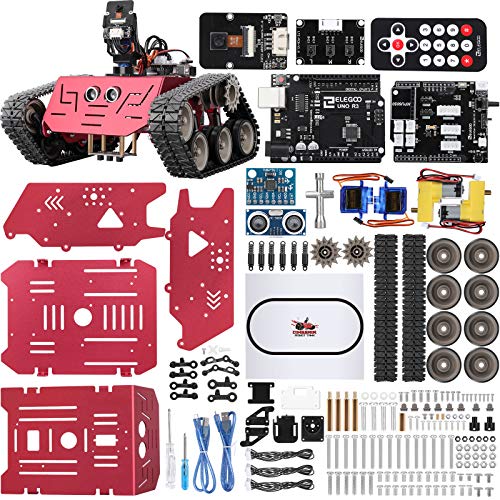
- Stainless-steel tracked robot chassis
- Five driving and navigation modes
- Visual coding plus Arduino IDE support
Best For: STEM learners age 10 and up interested in coding and robotics
Best Display Metal Robot Kit for Adults

- 157 stainless-steel parts
- No glue or solder required
- Designed for challenging tabletop assembly
Best For: Teens 16+ and adults who enjoy detailed model puzzles
Best App-Controlled Robot Building Kit for Kids

- Builds five different robot and vehicle models
- App and remote-control operation
- Includes motor and rechargeable battery
Best For: Kids seeking varied builds and interactive STEM play
Best for Sci-Fi Display

- 299-piece chrome-finish metal build
- Poseable joints and LED head
- About 8 inches tall when assembled
Best For: Adult and teen sci-fi displays
Best for Programmable Play
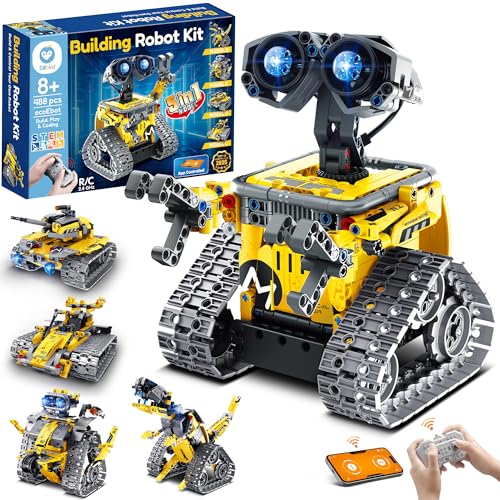
- 488-piece, five-model building set
- App and remote-control operation
- Up to 40 minutes per charge
Best For: Kids learning building and beginner programming
Best Beginner Metal Build

- 194 precision metal components
- Two off-road vehicle designs
- Includes screwdriver and wrench
Best For: Children learning hands-on mechanical assembly
All-Metal Engineering Choice
VANLINNY All-Metal Robotic Arm Kit

- Machined metal frame and alloy panels
- Four-DOF gripping arm with mecanum wheels
- About two hours to assemble
Best For: Kids and families wanting a substantial mechanical STEM project
Display Model Pick

- 832-piece futuristic bee design
- Gear-driven moving wings and LEDs
- Designed for ages 14 and up
Best For: Adults and teens building a mechanical collectible
Best Metal Robot Kit for Creative Builders – Robot or Excavator Erector Set
This 389-piece erector set is a hands-on option for shoppers comparing metal robot building kits for advanced kids, teens, or adults. Builders can follow the instructions to make either a robot or an excavator, or use the parts to create their own designs.
Best For: Advanced builders who want a challenging, displayable metal construction project and family build time.
Pros:
- Includes 389 metal pieces for building a robot or excavator.
- Detailed assembly instructions support the two featured models.
- Can also be used for custom vehicles and crafts.
Cons:
- Designed for advanced kids, teens, and adults rather than beginners.
- Sorting similar pieces before assembly is recommended.
Choose this set when the priority is a traditional metal building experience rather than remote control or coding. Its two-model format adds flexibility, while the finished builds can be displayed.
Best Programmable Metal Robot Kit – ELEGOO Conqueror Robot Tank
For shoppers seeking metal robot building kits with electronics, the ELEGOO Conqueror combines a stainless-steel tracked chassis with an UNO R3 controller, sensors, motors, and camera. It is designed for hands-on assembly followed by coding and robot-driving experiments.
Best For: STEM learners age 10 and up who want to build, program, and operate a tracked robot.
Pros:
- Includes a stainless-steel chassis, tracks, UNO R3, motors, sensors, and tools.
- Offers FPV driving, obstacle avoidance, line tracking, auto-follow, and IR remote modes.
- Supports visual programming through the app and more advanced work in Arduino IDE.
- No-solder project design includes illustrated instructions.
Cons:
- More involved than a basic construction-only kit.
- Its electronic features require batteries and setup before operation.
This is the strongest fit for buyers who want a functional metal robot rather than a static model. Its camera, sensors, and coding options provide room to progress from block-based programming to Arduino projects.
Best Display Metal Robot Kit for Adults – Piececool Titan Mecha Puzzle
The Piececool Titan is a compact 157-piece choice among metal robot building kits, focused on detailed manual assembly rather than electronics. Its stainless-steel parts form a mecha-style figure intended for tabletop display after construction.
Best For: Adults and teens 16+ who enjoy challenging model puzzles, crafting, and collectible-style desk decor.
Pros:
- Stainless-steel parts create a detailed mecha figure.
- No glue or solder is required during assembly.
- Detailed instructions support the multi-hour building process.
- Finished model works as tabletop or shelf decoration.
Cons:
- Recommended tools, including clippers and needle-nose pliers, are not included.
- Assembly may take more than eight hours depending on pace and patience.
- Recommended for ages 16 and up.
This kit suits patient builders who value the assembly process and the finished sculpture. It is less appropriate for children or shoppers looking for a motorized, programmable robot.
Best App-Controlled Robot Building Kit for Kids – Opmind 5-in-1 RC Robot Set
The Opmind 5-in-1 set is a versatile alternative for families comparing robot building kits with interactive play. Its 443-piece ABS construction system makes five models, while the included motor, remote, app control, and rechargeable battery add driving and programming activities.
Best For: Kids roughly ages 6–13 who want multiple builds plus app-controlled robot play.
Pros:
- Five build options include a warrior robot, ninja, boar, chariot, and buggy.
- App supports driving, gyroscope, navigation paths, and AI programming features.
- Remote control provides four-direction movement and 360-degree rotation.
- ABS construction is described as ASTM- and CPSIA-certified.
Cons:
- Uses ABS rather than metal construction.
- Age guidance varies across the supplied information, ranging from 6+ to 8–13.
- Requires the included rechargeable battery to operate its powered features.
Consider this kit when variety and interactive control matter more than metal materials. The five models and app features give children multiple ways to build, drive, and explore introductory STEM concepts.
Best for Sci-Fi Display – Terminator M Metal Robot
The Mostarle Terminator M is a strong pick among metal robot building kits for adults and teens who want a detailed, display-ready project. Its 299 chrome-finish pieces form an approximately 8-inch cyberpunk robot with articulated joints and an LED-lit head.
Best For: Sci-fi fans, collectors, and older builders who want a poseable desktop model.
Pros:
- 299 metal pieces create intricate mechanical detail.
- Poseable arms, legs, and joints support dynamic displays.
- Integrated head LED adds an illuminated presentation feature.
- Requires no glue or special tools for assembly.
Cons:
- Recommended for ages 14 and up, so it is not aimed at younger children.
- Its single robot design offers less rebuilding variety than multi-model kits.
Choose this kit when visual detail and display appeal matter more than remote control or programmable play. The compact size and articulated design make it especially suitable for a desk or collection shelf.
Best for Programmable Play – Sillbird 5-in-1 Robot Kit
The Sillbird kit stands out among metal robot building kits alternatives for children who want building, coding, and interactive play in one set. Its 488 interlocking pieces can be assembled into five models, including a robot, dinosaur, car, and tank, with app or remote control.
Best For: Kids ages 8 and up who enjoy progressive builds, remote-control play, and beginner programming.
Pros:
- Five build options provide variety and increasing difficulty.
- App and remote control offer dual operating modes.
- Clear, colorful instructions support independent or family assembly.
- Rechargeable battery provides up to 40 minutes of play per charge.
Cons:
- Made from ABS plastic rather than metal.
- Requires charging and app or remote-control setup for interactive features.
This is the most play-focused option in the group. It is a better fit than a static metal model for children who want to rebuild, program, and drive their creations after assembly.
Best Beginner Metal Build – 194-Piece Engineering Kit
This 194-piece engineering set is a practical entry point for metal robot building kits shoppers who want a hands-on mechanical project for children. The metal components can form two different designs, while illustrated instructions, a screwdriver, and a wrench help guide assembly.
Best For: Children ages 8 and up building a compact mechanical vehicle with adult support or independently.
Pros:
- Durable metal components support hands-on construction.
- Two model options add creative flexibility.
- Illustrated step-by-step instructions are beginner-friendly.
- No batteries or power source are required.
Cons:
- The kit builds one model at a time.
- It is an off-road vehicle kit rather than a programmable or articulated robot.
- The compact finished model measures about 4.9 by 3.7 by 3.2 inches.
Consider this set when the priority is learning basic mechanical assembly without electronics. Its manageable piece count and included tools make it a straightforward choice for logic, spatial-reasoning, and hands-on skill building.
Beginner Coding Pick – ACEBOTT ESP8266 Spider Robot
For shoppers comparing metal robot building kits with a coding focus, the ACEBOTT ESP8266 Spider Robot combines hands-on assembly with app-based control and guided lessons. Its metal servo, pre-burned program, and six movement modes make it a practical entry point for learners ages 12 and up.
Best For: Beginners, teens, and adults who want to learn robotics, programming, and electronics through an interactive walking robot.
Pros:
- Includes a paper manual and eight structured lessons for guided learning.
- Offers six movement modes and nine preset actions.
- Uses a metal MG90 servo and app remote control.
- Type-C charging supports extended play sessions.
Cons:
- The required flat-top battery is not included.
- Its acrylic-and-metal construction may not match an all-metal kit.
- The compact robot measures about 4 by 2 by 5 inches.
Choose this kit if programming and interactive movement matter more than a fully metal chassis. The included lessons and pre-burned program can reduce setup friction for first-time builders.
All-Metal Engineering Choice – VANLINNY All-Metal Robotic Arm Kit
Among metal robot building kits, the VANLINNY Robotic Arm stands out for its machined metal frame, alloy panels, metal gears, and functional grabbing arm. It adds mecanum-wheel movement and remote control to create a substantial assembly project for kids ages 8 to 14.
Best For: Children and families seeking a durable, hands-on STEM project with driving, mechanical assembly, and light object handling.
Pros:
- All-metal body uses a machined frame, alloy panels, and metal gears.
- Four-DOF arm can lift, rotate, lower, and clamp light objects.
- Mecanum wheels support sideways movement, spinning, and strafing.
- Includes numbered parts, hex tools, illustrated instructions, and a rechargeable battery.
Cons:
- The remote control requires four AA batteries, which are not included.
- Assembly takes about two hours and may require adult support.
- The arm is intended for light payloads rather than oversized loads.
This is the strongest match for shoppers specifically seeking an all-metal robot kit with meaningful mechanical functions. Its heavier construction and gripper make the finished robot feel more like an engineering project than a display model.
Display Model Pick – Mechanical Bee Building Set
If you prefer a collectible take on metal robot building kits, this 832-piece mechanical bee offers a futuristic build with gold, black, and silver detailing. Its gear-driven wings and LED lighting make it suited to hobbyists who want a display model with moving features rather than a remotely controlled robot.
Best For: Teens, adults, STEM enthusiasts, and mechanical-model collectors who enjoy detailed assembly and sci-fi-inspired décor.
Pros:
- 832-piece design creates a detailed futuristic mechanical bee.
- Gear mechanism moves the wings up and down.
- Built-in LEDs add a display effect in dim environments.
- Suitable for ages 14 and up and includes an instruction manual.
Cons:
- The model is made from ABS plastic rather than metal.
- Manual operation means it is not a remote-controlled robot.
- At about 5 by 3 by 7 inches, the completed model is relatively compact.
This bee is best viewed as a mechanical art and building set, not a functional robotic vehicle. Its moving wings, lighting, and metallic color scheme make it a compelling choice for display-focused builders.
How We Picked the Best Metal Robot Building Kits
We focused on kits that offer meaningful building experiences rather than simple snap-together assembly. Our selection considers construction quality, included parts, age suitability, learning value, movement or electronics, instructions, and the type of finished project each kit creates.
Because “robot kit” can mean anything from a static metal puzzle to a programmable vehicle, we included several categories. Some picks emphasize mechanical design and display value, while others are better for coding, remote control, or guided STEM exploration.
Quick Comparison
- Best for advanced builders: Detailed metal model and mechanical puzzle kits with intricate parts.
- Best for coding and robotics: Arduino- or ESP8266-compatible kits with motors, sensors, or app control.
- Best for younger learners: Guided STEM sets with manageable builds, colorful components, and remote controls.
- Best for display: Sculptural metal models featuring distinctive designs, lights, or moving details.
- Best for variety: Multi-build kits that let children create robots, vehicles, or other mechanical projects.
Key Buying Factors for Metal Robot Building Kits
Age and Difficulty
Check the recommended age, piece count, tool requirements, and expected build time. Younger children may need larger parts and adult supervision, while teens and adults often prefer precision parts and more complex mechanisms.
Metal Construction and Safety
Look for sturdy components, cleanly finished edges, and clear assembly instructions. Metal kits may include small parts, screws, gears, or tools, so confirm that the project suits the builder and workspace.
Electronics, Control, and Coding
Decide whether the goal is construction alone or active robotics. Remote-control models are accessible for beginners, while Arduino and ESP8266 kits provide more flexibility for programming and experimenting with sensors or motors.
Finished-Project Purpose
A moving robot offers interactive play, whereas a detailed metal puzzle may be better as a desk display or concentration activity. Consider whether the recipient values operation, customization, learning, or appearance most.
Who Should Buy Which Metal Robot Building Kits?
Choose a guided STEM or remote-control kit for a child’s first robotics project. For an older child who enjoys engineering challenges, select a higher-piece-count metal build or a multi-function kit. Teens and adults interested in coding should prioritize Arduino- or app-compatible robots. For collectors, hobbyists, or gift recipients who prefer visual detail over programming, a mechanical metal model with lights or moving features is likely the better fit.
Before ordering, verify included batteries, tools, software compatibility, and supervision requirements. These details can have a major effect on how quickly the builder can begin and how much support the project requires.