The right receiver can make an RC model easier to control, more reliable at distance, and better suited to upgrades. However, compatibility varies widely between surface vehicles, boats, fixed-wing aircraft, and telemetry-equipped systems.
We selected 10 popular RC receivers for hobbyists across Spektrum, Flysky, Radiolink, and other platforms. The guide below explains the most important differences so you can match a receiver to your transmitter, model, and intended use.
Best 10 Rc Receivers for Hobbyists Picks for 2026
Lightweight Airborne Control

- Six-channel receiver for RC aircraft
- Internal antenna in a compact hard case
- Supports telemetry with compatible Spektrum transmitters
Best For: Park flyers and indoor sport aircraft
Long-Range Surface Link

- 400-meter stated control range
- Six channels with 4096 resolution
- Compact, protected, push-button-binding design
Best For: Radiolink crawlers, trucks, buggies, and boats
Stabilized Telemetry Upgrade

- Eight-channel aircraft receiver
- Built-in AS3X+ and SAFE systems
- Altitude and vario telemetry from an integrated barometer
Best For: Spektrum pilots flying sport, park flyer, or larger aircraft
Built-In Gyro Surface Control

- Six-channel receiver with switchable gyro mode
- 400-meter stated range and 12 ms response
- Reverse-polarity protection and 4.8–10V support
Best For: DUMBORC cars, crawlers, trucks, tanks, and boats
Versatile 10-Channel Pick

- 10-channel AFHDS 2A system
- Bidirectional receiver-voltage data
- Frequency hopping for interference reduction
Best For: Multi-function RC aircraft and FPV projects
Compact Surface Receiver

- Three-channel surface receiver
- Compact lightweight hard case
- Push-to-bind and SmartSafe failsafe
Best For: Compatible RC cars and trucks
DIY-Friendly 6-Channel Set
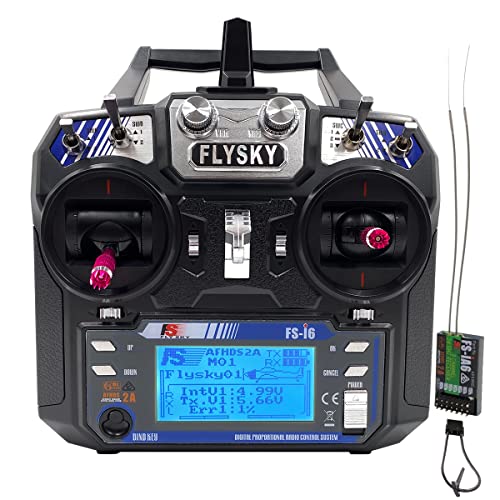
- Six-channel AFHDS 2A control
- Supports aircraft, boats, and cars
- Stores 20 model programming profiles
Best For: DIY builders using multiple RC model types
Long-Range Spektrum-Compatible Pick
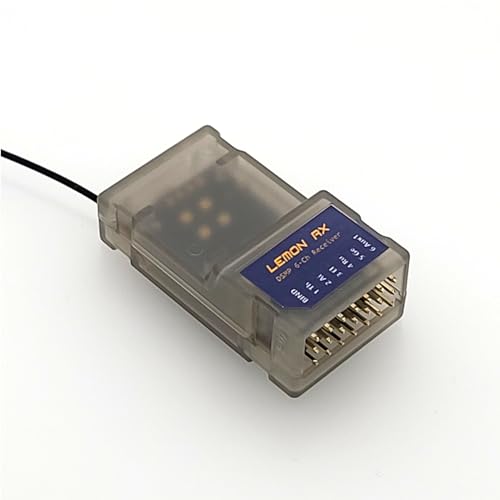
- Six-channel DSMX/DSM2-compatible design
- Long-range, anti-interference signal performance
- Lightweight form for aircraft installations
Best For: Aircraft hobbyists with compatible Spektrum-family transmitters
Complete Surface-Radio Starter
Flysky 3-Channel Transmitter Set

- Includes transmitter and FS-GR3E receiver
- Three-channel control for cars, trucks, and boats
- Frequency hopping helps reduce interference
Best For: Hobbyists needing a complete Flysky surface-control system
Replacement Receiver Value

- AFHDS 2.4GHz operation
- Compatible with several listed Flysky transmitters
- Compact and lightweight replacement design
Best For: Flysky owners needing a compatible three-channel receiver
Lightweight Airborne Control – Spektrum AR620
The Spektrum AR620 is a practical choice for hobbyists seeking rc receivers for hobbyists who fly indoor sport models, park flyers, and other RC aircraft. Its six channels, internal antenna, full-range performance, and automatic telemetry support make it a streamlined option for compatible Spektrum setups.
Best For: RC aircraft pilots who want a compact six-channel receiver with telemetry support and a protected internal antenna.
Pros:
- Lightweight, park flyer-size design with full-range performance.
- Internal antenna and hard case help avoid exposed-wire damage.
- Supports flight log and receiver battery voltage telemetry with compatible Spektrum transmitters.
- Offers two bind-sequence options and Smart Safe failsafe functionality.
Cons:
- Designed for air models rather than RC cars or boats.
- Telemetry features require a compatible Spektrum transmitter.
- Its six-channel layout may not suit aircraft needing more channels.
Choose the AR620 when low weight, clean installation, and straightforward Spektrum compatibility matter more than advanced stabilization or a higher channel count.
Long-Range Surface Link – Radiolink R6F
The Radiolink R6F is aimed at surface-model hobbyists comparing rc receivers for hobbyists, especially crawler, truck, buggy, and monster-truck drivers. It combines six-channel control, a stated 400-meter range, quick binding, and reverse-polarity protection in a compact case.
Best For: Radiolink surface-model users who need a small, long-range receiver without a built-in gyro.
Pros:
- FHSS communication supports a stated control distance of up to 400 meters.
- Six channels provide fast, high-resolution signal output.
- Push-button binding avoids a separate bind plug.
- Supports 3.0–15V DC and high-voltage servos, with reverse-polarity protection.
Cons:
- Compatible only with listed Radiolink transmitters.
- This version does not include a gyro.
- It is intended for surface models rather than aircraft.
The R6F is a sensible fit for Radiolink owners who value range, compact dimensions, and simple setup, provided their transmitter is on the compatibility list.
Stabilized Telemetry Upgrade – Spektrum AR8360T+
The Spektrum AR8360T+ is a feature-rich option for hobbyists evaluating rc receivers for hobbyists who fly park flyers, sport aircraft, or larger models. Along with eight channels, it includes AS3X+ stabilization, SAFE flight-envelope protection, full-range telemetry, and integrated altitude and vario data.
Best For: Spektrum aircraft pilots who want built-in stabilization, SAFE protection, and expanded telemetry without adding separate altitude or vario sensors.
Pros:
- Works with Spektrum DSM2 and DSMX transmitters.
- Built-in AS3X+ stabilization and SAFE flight-envelope protection.
- Eight channels provide more control capacity than a basic six-channel receiver.
- Integrated barometer supplies altitude and vario telemetry data.
Cons:
- Its advanced features depend on using compatible Spektrum equipment.
- More functionality may be unnecessary for simple aircraft installations.
- The supplied dimensions and compact-footprint description should be checked against the model before installation.
For pilots building a telemetry-focused aircraft, the AR8360T+ offers a broad feature set in one receiver; basic park-flyer setups may not need its additional stabilization and sensor functions.
Built-In Gyro Surface Control – ATA HOBBY DUMBORC X6FG
The ATA HOBBY X6FG gives vehicle and boat hobbyists a gyro-equipped choice among rc receivers for hobbyists. Its selectable normal and gyro modes, 400-meter stated control distance, 12 ms response speed, and broad DUMBORC compatibility suit a range of cars, crawlers, trucks, tanks, and boats.
Best For: DUMBORC users who want six-channel control with switchable gyro assistance for surface vehicles or boats.
Pros:
- Built-in gyro mode helps correct direction and reduce deviation or skidding.
- Normal and gyro modes provide installation flexibility.
- FHSS communication offers a stated 400-meter range and 12 ms response.
- Reverse-polarity protection and 4.8–10V support add wiring flexibility.
Cons:
- Gyro and transmitter compatibility is limited to listed DUMBORC equipment.
- It is intended for surface models and boats, not aircraft.
- Users seeking a basic receiver may not need the integrated gyro.
The X6FG is particularly appealing for drivers who want optional stabilization without installing a separate gyro, as long as they already use a compatible DUMBORC transmitter.
Versatile 10-Channel Pick – Flysky FS-i6X with FS-iA10B
For hobbyists comparing rc receivers for hobbyists, this Flysky set is a capable transmitter-and-receiver system for models that need more channels and telemetry. Its 10-channel layout, AFHDS 2A signal system, and bidirectional communication make it a flexible option for FPV quadcopters, fixed-wing aircraft, and other RC projects.
Best For: Hobbyists who want a versatile 10-channel setup with receiver-voltage feedback capability.
Pros:
- 10 channels support a range of RC model configurations.
- Frequency hopping across the 2.4GHz band is designed to reduce interference.
- Bidirectional communication can display receiver voltage data.
- Unique transmitter-receiver identification helps prevent accidental connections.
Cons:
- The voltage data feature requires the separate FS-CVT01 module for power-battery voltage collection.
- It uses four AA batteries, which are not included in the supplied details.
- The stated warranty is limited to 90 days for manufacturing defects.
Choose this package when channel capacity and feature flexibility matter more than keeping the system especially simple. The included FS-iA10B receiver and telemetry support give it room to grow with a hobbyist’s projects.
Compact Surface Receiver – Spektrum SR315 DSMR
Among rc receivers for hobbyists, the Spektrum SR315 is a straightforward choice for surface models. It is a compact, full-range three-channel receiver designed for many RC cars and trucks, with DSMR technology and a push-to-bind button for easier setup.
Best For: RC car and truck hobbyists who need a compact three-channel surface receiver.
Pros:
- Three channels suit many sport car and truck models.
- Compact, lightweight hard-case design helps simplify installation.
- Push-to-bind button avoids the need for a traditional bind plug.
- Includes SmartSafe failsafe and preset throttle failsafe features.
Cons:
- Three channels provide less expansion than the multi-channel Flysky systems.
- It is intended for surface applications rather than aircraft-focused setups.
- The supplied specifications do not identify a warranty period.
The SR315 is best viewed as a simple, installation-friendly receiver for compatible Spektrum DSMR surface equipment. Its compact case and failsafe functions make it practical for sport-oriented cars and trucks.
DIY-Friendly 6-Channel Set – Flysky FS-i6 with FS-iA6
For hobbyists seeking rc receivers for hobbyists with room for model programming, this Flysky FS-i6 package combines a six-channel transmitter with the FS-iA6 receiver. It supports fixed-wing aircraft, gliders, helicopters, boats, and compatible cars, while offering model memory and adjustable control functions for DIY builds.
Best For: DIY hobbyists working across aircraft and boat projects who want programmable six-channel control.
Pros:
- Six channels support fixed-wing, glider, helicopter, boat, and compatible car projects.
- Listed 500-meter maximum range applies in the air.
- Stores up to 20 sets of model programming data.
- Includes switches, knobs, mixing, throttle-curve, and elevon functions.
Cons:
- The package includes the FS-iA6 receiver, while other compatible receivers are sold separately.
- It requires four AA batteries.
- The stated warranty covers manufacturer defects for 90 days.
This set is a strong fit for hobbyists who frequently switch between DIY models and want programming flexibility without moving to a higher-channel system. Its broad model compatibility and stored model profiles add practical value for an active workshop.
Long-Range Spektrum-Compatible Pick – Compact 6-Channel Receiver
For hobbyists comparing rc receivers for hobbyists, this six-channel Buddy RC receiver is a compact option for compatible aircraft setups. It is designed for extended-range control, signal stability, and installation in models where space and weight matter.
Best For: Aircraft hobbyists using compatible Spektrum, DSMX, DSM2, Radiomaster, or other supported transmitters.
Pros:
- Supports six channels with broad transmitter compatibility.
- Designed for long-range control and stable signal transmission.
- Anti-interference technology and high reception sensitivity support responsive control.
- Compact, lightweight design suits tight installations and may help preserve flight performance.
Cons:
- Compatibility should be confirmed with the specific transmitter and protocol before purchase.
- Its focus is on aircraft applications rather than car- or boat-specific systems.
This receiver is a practical fit when compact dimensions, responsive handling, and compatibility with common Spektrum-family systems are priorities. Verify protocol support and channel requirements for your model before ordering.
Complete Surface-Radio Starter – Flysky 3-Channel Transmitter Set
Rather than buying a receiver alone, hobbyists looking for rc receivers for hobbyists can choose this Flysky transmitter-and-receiver combination for a ready-to-pair surface-control setup. The three-channel system is intended for RC cars, trucks, crawlers, and boats.
Best For: Hobbyists who need both a 2.4GHz transmitter and receiver for compatible surface models.
Pros:
- Includes the FS-GT3B transmitter and FS-GR3E receiver.
- Three channels suit many RC cars, trucks, crawlers, and boats.
- Frequency hopping across the 2.4GHz band is designed to reduce interference.
- Offers model memory, trim, dual-rate, endpoint, ABS, and exponential settings.
Cons:
- This is a full transmitter-and-receiver set, so it may be more than needed if you already own a compatible radio.
- The supplied details list a relatively substantial item weight of 1.34 pounds.
Choose this package when you want the radio and receiver together, along with adjustable control settings. Its three-channel layout and listed vehicle compatibility make it better suited to surface models than aircraft.
Replacement Receiver Value – Flysky AFHDS 3-Channel Unit
For hobbyists seeking replacement rc receivers for hobbyists, this compact Flysky-compatible FS-GR3E receiver offers three-channel control for selected RC cars, trucks, buggies, and boats. Its quick binding and AFHDS operation make protocol matching the key buying consideration.
Best For: Owners of compatible Flysky transmitters who need a single replacement or additional AFHDS receiver.
Pros:
- Supports AFHDS 2.4GHz operation with a quick, stable link-up.
- Compatible with listed FS-GT2, FS-GT2B, FS-GT3B, FS-GT3C, and FS-IT4S transmitters.
- Compact dimensions and a light 0.01 kg listed weight suit space-conscious installations.
- Works with a 4.0–6.5V DC input range.
Cons:
- It is limited to transmitters using the AFHDS protocol; AFHDS 2A users must change the transmitter setting if supported.
- Only three channels are available.
- Compatibility is limited to part of the Flysky transmitter range.
This is a sensible replacement-style receiver for a compatible Flysky setup, especially when low weight and straightforward binding are useful. Confirm both transmitter model and AFHDS protocol before purchase.
How We Picked These Rc Receivers for Hobbyists
We focused on receivers that cover the main hobby use cases: RC cars, crawlers, boats, fixed-wing aircraft, and general model applications. Selection criteria included channel count, transmitter compatibility, operating range, receiver features, installation practicality, and the availability of useful technologies such as telemetry, stabilization, or built-in gyros.
Because a receiver is part of a radio system, compatibility received particular attention. A receiver that looks suitable may not bind to a transmitter using a different protocol, so confirm the exact radio standard before buying.
Quick Comparison
| Best For | Typical Choice | What to Look For |
|---|---|---|
| Basic surface models | 3-channel receiver | Correct surface-radio protocol and sufficient range |
| Crawlers and cars | 4- to 6-channel receiver | Auxiliary channels, failsafe, and optional gyro support |
| Fixed-wing aircraft | 6- to 10-channel receiver | Channel capacity, full-range operation, and aircraft compatibility |
| Advanced aircraft setups | Telemetry or stabilization receiver | Sensor support, flight-assist configuration, and transmitter compatibility |
Key Buying Factors for Rc Receivers for Hobbyists
Protocol and Transmitter Compatibility
Check the receiver’s protocol before considering its channel count. DSMR, DSMX, DSM2, AFHDS, and other systems are not automatically interchangeable. Some receivers are designed for a specific transmitter family, while others are sold as compatible replacements. Binding instructions and transmitter support should be verified before purchase.
Channel Count
Three channels may be enough for steering, throttle, and one auxiliary function. Six channels provide more flexibility for lights, winches, differentials, gear changes, or aircraft controls. Eight or more channels are useful when operating multiple servos, telemetry, stabilization, or complex aircraft functions.
Range, Failsafe, and Installation
Choose a full-range model for larger fields, boats, aircraft, or any vehicle operated far from the driver. Failsafe settings can reduce risk if the signal is interrupted. Also check the receiver’s dimensions, antenna arrangement, connector layout, and power requirements so it fits cleanly inside the model.
Gyro and Telemetry Features
A built-in gyro can help stabilize a car, crawler, boat, or aircraft, but it may require careful calibration and adjustment. Telemetry receivers can report information such as signal quality, voltage, or sensor data to a compatible transmitter. These features are valuable only when the rest of the radio system supports them.
Who Should Buy Which Rc Receivers for Hobbyists?
Choose a simple three-channel receiver if you need a dependable replacement for a basic RC car, boat, or surface setup. A six-channel model is the better all-purpose option for hobbyists who expect to add accessories or move between different vehicle types.
Aircraft pilots should prioritize full-range performance, adequate channels, and compatibility with their flight controller or stabilization system. Choose a telemetry or AS3X-style receiver when you already use a compatible advanced transmitter and want integrated monitoring or assistance features.
For crawlers and custom vehicles, prioritize auxiliary channels, a reliable failsafe, and optional gyro functionality. Whatever your project, buy the receiver that matches your transmitter protocol first; features and channel count come second.