The best portable DACs with USB-C input can make a noticeable difference when a phone, tablet, or laptop sounds underpowered or lacks a traditional headphone jack. These compact adapters combine digital-to-analog conversion with headphone amplification, giving wired headphones and IEMs a practical upgrade without the bulk of a desktop setup.
We selected 10 models ranging from simple 3.5mm dongles to feature-rich options with balanced outputs, app-based tuning, high-resolution decoding, and extra power. Use the guide below to narrow the list by compatibility, output type, driving power, portability, and value.
Best 10 Portable Dacs with USB C Input Picks for 2026
Best Balanced Dongle

- Dual ESS Sabre DAC balanced circuit
- 4.4mm output with up to 241mW
- PCM 384kHz and native DSD256
Best For: High-resolution listening with balanced headphone support
Best Value 3.5mm Adapter

- CX31993 and MAX97220 chip combination
- Supports up to 32-bit/384kHz audio
- USB-A adapter and 20-month warranty
Best For: Everyday USB-C devices using 3.5mm headphones
Best Tube-Sound Option
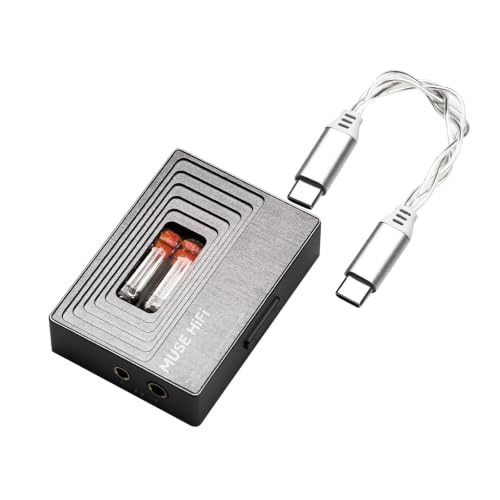
- JAN6418 vacuum tube amplification
- Up to 480mW balanced output
- PCM 384kHz and DSD256 support
Best For: Warm, powerful listening with 3.5mm and 4.4mm outputs
Best High-Power Compact DAC

- Up to 550mW in Desktop mode
- Dual CS43131 DACs and op-amps
- 3.5mm and 4.4mm outputs
Best For: Driving demanding headphones from a compact dongle
Feature-Rich Pick

- ESS ES9039Q2M DAC with 3.5mm and 4.4mm outputs
- Dual USB-C ports support charging and playback
- Screen, magnetic back panel, and broad device support
Best For: Phone listeners who want flexible outputs and onboard controls
Ultra-Light Pick
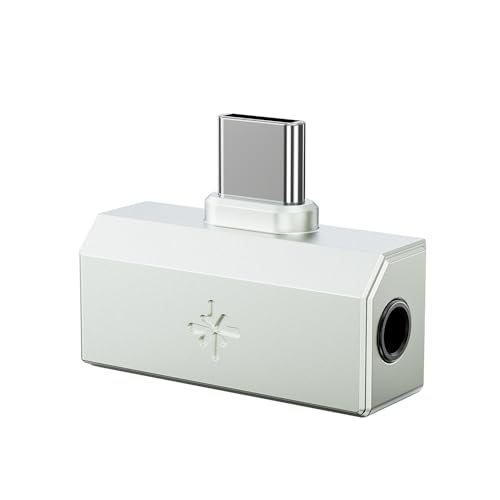
- Weighs just 7g with a direct plug-in design
- PCM 384kHz/32-bit and DSD256 support
- 10-band PEQ control through Android or PC
Best For: Travelers seeking a tiny 3.5mm USB-C DAC with sound tuning
High-Resolution Tuning Pick
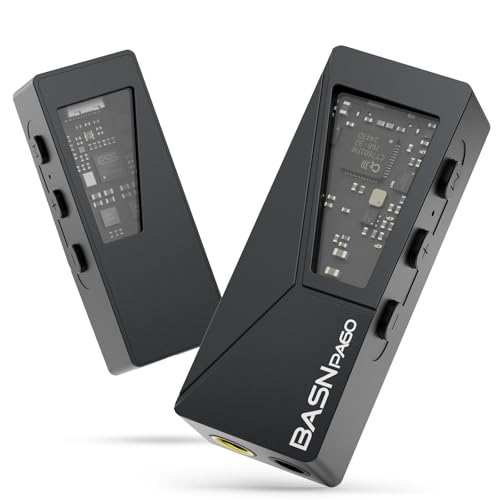
- PCM 768kHz/32-bit and DSD512 support
- 3.5mm and 4.4mm outputs with adjustable gain
- 60-step volume, eight filters, and impedance detection
Best For: Listeners wanting extensive tuning and broad headphone compatibility
Best Compact Pick

- Tiny 8.5g USB-C dongle
- 32-bit/384kHz support
- Up to 200mW at 32Ω
Best For: Everyday 3.5mm headphone listening on mobile and computer devices
Best Heavy-Duty Pick

- Dual CS43131 DAC architecture
- 3.5mm and 4.4mm outputs
- Physical controls and Android EQ
Best For: Listeners using standard and balanced wired headphones
Best Balanced-Output Pick

- 3.5mm and 4.4mm outputs
- DSD256 and 32-bit/384kHz support
- 60-step volume with memory
Best For: High-resolution listening with balanced headphones and IEMs
Best Balanced Dongle – iFi Audio Go Link Max
The iFi Audio Go Link Max is a strong choice among portable dacs with usb c input if you want both 3.5mm and balanced 4.4mm headphone connections. Its dual ESS Sabre DAC design supports high-resolution PCM and native DSD playback, while the flexible cable helps reduce strain on a phone or tablet’s USB-C port.
Best For: Listeners wanting a compact, high-resolution dongle with a balanced 4.4mm output.
Pros:
- Dual ESS Sabre DACs form a balanced circuit.
- 4.4mm balanced output provides up to 241mW of power.
- Supports PCM up to 32-bit/384kHz and native DSD256.
- Includes a USB-A male to USB-C female adapter.
Cons:
- Its 4.4mm balanced output may be unnecessary for users with only standard headphones.
- It requires a USB-C source device for direct plug-and-play use.
The Go Link Max stands out for combining dual-DAC processing, dynamic range enhancement, and two common headphone outputs in a 15g design. It is especially appealing when balanced connectivity and high-resolution support matter more than the simplest 3.5mm-only setup.
Best Value 3.5mm Adapter – BZINK CX31993 DAC Amp
For shoppers seeking portable dacs with usb c input on a simpler budget-friendly format, this BZINK adapter focuses on a 3.5mm headphone connection. Its CX31993 and MAX97220 chips support up to 32-bit/384kHz audio, and the included USB-A adapter broadens compatibility with older ports.
Best For: Phone, tablet, laptop, and car-stereo users who need a compact USB-C-to-3.5mm solution.
Pros:
- Uses CX31993 and MAX97220 DAC amplifier chips.
- Supports up to 32-bit/384kHz audio and carries Hi-Res Gold Label certification.
- Includes a USB-A adapter for broader device compatibility.
- Comes with a 20-month warranty and aluminum alloy casing.
Cons:
- Provides a 3.5mm output rather than a balanced 4.4mm connection.
- The extensive compatibility list does not guarantee support for every USB-C device.
This is a practical pick for everyday wired listening, calls, livestreams, and content creation. It prioritizes portability, broad connectivity, and a conventional 3.5mm output rather than high-power balanced headphone drive.
Best Tube-Sound Option – HiFiGo MUSEHiFi M3 Ultra
The HiFiGo MUSEHiFi M3 Ultra takes a distinctive approach to portable dacs with usb c input by pairing an ES9028Q2M DAC with a JAN6418 vacuum tube. It offers both 3.5mm and 4.4mm outputs, high-resolution file support, and substantial rated output power for a small wired DAC amp.
Best For: Listeners who want tube-style warmth, balanced output, and high power for IEMs or headphones.
Pros:
- JAN6418 tube is designed for richer harmonics and smoother mids.
- Rated output reaches 460mW through 3.5mm and 480mW through 4.4mm balanced.
- Supports PCM up to 32-bit/384kHz and DSD256.
- Triple noise-reduction system addresses tube microphonics.
Cons:
- A tube-equipped design is more specialized than a conventional solid-state dongle.
- Its high power may be unnecessary for very sensitive IEMs.
The M3 Ultra is the most characterful option in this group. Its tube amplification and microphonics-control features target listeners who want a warmer presentation without giving up balanced connectivity, high-resolution support, or strong output power.
Best High-Power Compact DAC – FiiO/JadeAudio KA13
The FiiO/JadeAudio KA13 is a compact contender among portable dacs with usb c input, but its optional Desktop mode gives it unusually high rated power for the size. Dual CS43131 DACs, dual op-amps, and both 3.5mm and 4.4mm outputs make it flexible for phones, PCs, and a range of wired headphones.
Best For: Users who want a small dongle that can provide strong balanced output and app-based controls.
Pros:
- Desktop mode raises balanced output power to 550mW.
- Uses dual CS43131 DACs and dual SGM8262 op-amps.
- Offers both 3.5mm and 4.4mm headphone outputs.
- Supports PCM up to 32-bit/384kHz and DSD256.
Cons:
- Desktop mode is likely more demanding than standard low-power operation.
- Users need compatible headphones and cables to benefit from the 4.4mm output.
The KA13 is a compelling choice when output power is the priority. Its dual-output layout, high-resolution support, and FiiO Control app features give it more flexibility than a basic USB-C-to-3.5mm adapter.
Feature-Rich Pick – Fosi Audio MD3
Fosi Audio MD3 Portable DAC Headphone Amplifier Magnetic USB C Mini Amp HiFi Black
Check Price On AmazonThe Fosi Audio MD3 is a practical choice among portable dacs with usb c input if you want a compact headphone amplifier with both single-ended and balanced outputs. Its dual USB-C ports support charging and playback, while the display and magnetic back panel add convenience for phone-based listening.
Best For: Listeners who want a portable DAC with a screen, magnetic phone attachment, and flexible device compatibility.
Pros:
- ESS ES9039Q2M DAC and four ES9603 amplifier chips
- 3.5mm and 4.4mm outputs with up to 180mW at 32Ω
- 50g aluminum design with 100-level volume control and memory
- Supports iPhone 15, Android, iPad, Mac, Windows, PS5, and Switch
Cons:
- The 1.28-inch display and interactive features may be more than some users need
- Its 12mm thickness is compact but not the smallest option listed
The MD3 stands out for combining strong stated audio hardware with useful everyday controls. Choose it if you value balanced output, visual feedback, and a secure magnetic setup as much as pocket-friendly size.
Ultra-Light Pick – FiiO/Snowsky Tiny A
The FiiO/Snowsky Tiny A is one of the most compact options among portable dacs with usb c input, weighing only 7g. Its plug-in design avoids a dangling cable, and the built-in DSP provides 10-band PEQ tuning for listeners who want software-based control from Android or PC.
Best For: Travelers and mobile listeners who prioritize minimum weight, direct plug-in portability, and adjustable sound.
Pros:
- 7g CNC-machined aluminum body
- Supports PCM 384kHz/32-bit and DSD256 decoding
- 10-band PEQ, preset switching, UAC mode switching, and volume control
- 3.5mm headphone output and Type-C charging port support playback and charging together
Cons:
- The control app is supported on Android, not iOS
- It provides a 3.5mm output rather than a 4.4mm balanced connection
The Tiny A is a strong fit when convenience and weight matter more than output variety. Its direct-connection format and PEQ features make it especially appealing for Android users who want a highly portable setup.
High-Resolution Tuning Pick – BASN PA60 USB-C DAC
The BASN PA60 is a versatile option among portable dacs with usb c input, pairing a USB-C dongle format with 3.5mm single-ended and 4.4mm balanced outputs. It supports very high stated decoding rates and adds independent volume control, filters, gain modes, and automatic impedance detection.
Best For: Headphone and IEM users who want extensive playback support and adjustable amplification in a small aluminum housing.
Pros:
- ESS ES9039Q2M and CT7601PR chips
- Supports PCM 768kHz/32-bit and DSD512
- 60-step independent volume control with eight filters and adjustable gain
- Includes USB-C to USB-C cable and USB-C to USB-A converter
Cons:
- The 3.5mm and 4.4mm outputs cannot be used simultaneously
- Lightning devices require an additional Lightning-to-USB-C cable
- At 17g, it is heavier than the FiiO/Snowsky Tiny A
The PA60 is the most adjustment-focused choice here, with more filters, gain options, and output flexibility than a basic dongle. It makes sense for listeners who want to fine-tune playback across headphones, IEMs, computers, and gaming consoles.
Best Compact Pick – FiiO KA11 USB-C DAC
For shoppers seeking portable dacs with usb c input, the FiiO KA11 is a particularly small option that combines a USB-C connection with a 3.5mm headphone output. It supports up to 32-bit/384kHz playback and offers enough output power for most headphones.
Best For: Everyday listeners who want a lightweight USB-C dongle for phones, tablets, and computers.
Pros:
- Compact 8.5g design is easy to carry.
- Supports up to 32-bit/384kHz decoding.
- 245mW at 16Ω and 200mW at 32Ω can drive most headphones.
- UAC1.0 support enables plug-and-play use with devices such as Switch and PS5 after setup in the FiiO Control app.
Cons:
- Only provides a 3.5mm headphone connection.
- UAC1.0 mode requires switching through the FiiO Control app.
The KA11 is a strong choice when portability and straightforward 3.5mm compatibility matter most. Its small size and high-resolution support make it well suited to daily mobile listening.
Best Heavy-Duty Pick – TRN Black Pearl USB-C DAC Amp
The TRN Black Pearl is one of the more versatile portable dacs with usb c input, pairing dual CS43131 chips with both 3.5mm single-ended and 4.4mm balanced outputs. It also adds physical controls, high-resolution playback, and Android EQ support.
Best For: Listeners who use both standard and balanced wired headphones and want on-device controls.
Pros:
- Dual DAC design supports PCM up to 32-bit/384kHz and DSD256.
- Offers 3.5mm and 4.4mm outputs, with up to 320mW at 32Ω through balanced output.
- Buttons control volume, playback, and track changes.
- Supports calls, recording, and compatible inline controls through the 3.5mm port.
Cons:
- At approximately 25g, it is heavier than a basic dongle.
- Only one output can be used at a time.
- Android EQ requires the WALK PLAY app and a wired USB-C connection.
Black Pearl stands out for users who want more than simple conversion. Its dual-output design and physical controls provide flexibility, while the metal construction adds a sturdy feel for everyday carrying.
Best Balanced-Output Pick – Fosi Audio DS2 USB-C DAC
For portable dacs with usb c input that need both flexibility and power, the Fosi Audio DS2 combines 3.5mm and 4.4mm outputs with DSD256 and 32-bit/384kHz support. Its dedicated volume buttons and metal housing make it practical for mobile and desktop use.
Best For: Users who want a powerful USB-C DAC amp with balanced-output compatibility and convenient volume control.
Pros:
- Supports DSD256 and PCM up to 32-bit/384kHz.
- Provides 3.5mm single-ended and 4.4mm balanced connections.
- Delivers up to 170mW at 32Ω per channel.
- Independent 60-step volume buttons include volume memory.
Cons:
- Its 4.4mm balanced output requires headphones with a compatible balanced cable.
- The product is designed for wired connectivity rather than wireless use.
The DS2 is a compelling option for listeners who want high-resolution support without sacrificing output flexibility. Its balanced connection, low-noise design, and tactile controls make it suitable for both portable and computer-based listening.
How We Picked the Best Portable Dacs with USB C Input
We compared these portable DACs with USB-C input by looking at the features that matter most in everyday use: output options, stated decoding support, headphone-driving power, size, controls, compatibility, and overall versatility. Models with 3.5mm outputs suit most wired headphones and IEMs, while 4.4mm balanced outputs can provide additional power when paired with compatible equipment.
We also considered how practical each device is outside a desk setup. A compact, plug-and-play dongle may be preferable for commuting, while a larger model with PEQ, app support, or a tube stage can appeal to listeners who want more control over sound and features.
Quick Comparison
| Best for | Look for | Typical advantage |
|---|---|---|
| Simple phone upgrade | USB-C and 3.5mm output | Small size and easy setup |
| High-power headphones | Balanced 4.4mm output | More available drive and headroom |
| Sound customization | PEQ or companion app | Fine-tuned listening profiles |
| Travel and daily carry | Low weight and durable cable | Less bulk in a pocket or bag |
| Maximum format support | High-resolution PCM and DSD decoding | Broader file compatibility |
Key Buying Factors for Portable DACs with USB-C Input
Connector and Device Compatibility
Confirm that the DAC works with your phone, tablet, computer, or music player. Android and Windows devices are generally straightforward, but iPhone compatibility depends on the phone’s connector and any required adapter. Check whether the USB-C port supports digital audio and whether the DAC’s cable or plug fits your case.
Output Type and Power
A 3.5mm single-ended output is the most universal choice. A 4.4mm balanced output is useful only with balanced headphones or IEM cables, and it should not be connected to incompatible adapters. Higher output power can help full-size or demanding headphones, but sensitive IEMs may benefit more from low noise and precise volume control than maximum wattage.
Sound Features and Controls
Look for hardware buttons, volume control, gain settings, PEQ, or app support if you want to adjust playback without reaching for your source device. High-resolution PCM or DSD specifications can be useful, but they should not outweigh reliable compatibility, clean output, and comfortable everyday operation.
Portability and Power Use
Smaller dongles are easier to carry and usually draw less power from a phone. More powerful amplifiers may consume battery faster or require additional settings. Consider cable flexibility, strain relief, heat, and whether the unit can remain attached without stressing the USB-C port.
Who Should Buy Which Portable Dacs with USB C Input?
Choose a Basic 3.5mm Dongle If…
You want an affordable, compact replacement for a missing headphone jack and use efficient earbuds or IEMs. Prioritize low noise, plug-and-play operation, and dependable device support.
Choose a Balanced DAC If…
You already own a 4.4mm cable and need more output capability for compatible headphones or IEMs. Balanced output is not automatically better, so buy it for the extra power or connectivity rather than the label alone.
Choose an Adjustable or Premium Model If…
You want PEQ, app controls, multiple outputs, unusual features such as a tube stage, or enough power for a wider range of headphones. These models make the most sense for enthusiasts who will actively use their added flexibility.