Your Android phone can deliver excellent sound, but its built-in audio hardware may limit volume, clarity, and headphone compatibility. A portable DAC can provide a cleaner signal and more power in a pocket-friendly package.
We compared 10 popular USB-C DAC dongles and headphone amplifiers across output options, decoding support, portability, controls, and everyday usability. Use the guide below to match the right model to your headphones, IEMs, and listening habits.
Best 10 Portable Dacs for Android Picks for 2026
Best Balanced Dongle

- Dual CS43131 DAC design
- 3.5mm and 4.4mm outputs
- 60-step onboard volume control
Best For: Android listeners seeking flexible balanced and single-ended audio
Best for High-Impedance Headphones

- Up to 227mW at 32Ω
- Supports headphones up to 600Ω
- USB-A adapter included
Best For: Android users needing extra power through a 3.5mm output
Best High-Power Option

- Up to 550mW in Desktop mode
- Dual 3.5mm and 4.4mm outputs
- FIIO Control app support
Best For: Android users pairing a dongle with demanding headphones
Best Lightweight Upgrade

- 11.5-gram portable design
- 241mW balanced 4.4mm output
- Nexis app filter customization
Best For: Android listeners wanting a light balanced-output dongle
Best Compact Hi-Fi Pick

- 32-bit/384kHz support
- About 8.5g and highly portable
- Up to 200mW at 32Ω
Best For: Android listeners wanting a tiny, capable 3.5mm DAC
Best Everyday Value

- Dual DACs with 32-bit/384kHz support
- Handles calls and inline controls
- Includes USB-A-to-USB-C adapter
Best For: Daily Android use, commuting, and multi-device setups
Best Feature-Rich Upgrade
FiiO/Snowsky Melody Portable DAC

- 4.4mm balanced and 3.5mm outputs
- DSD256 and 32-bit/384kHz support
- Customizable 10-band PEQ
Best For: Android audio enthusiasts wanting tuning and balanced output
Best Budget Dual-DAC Pick
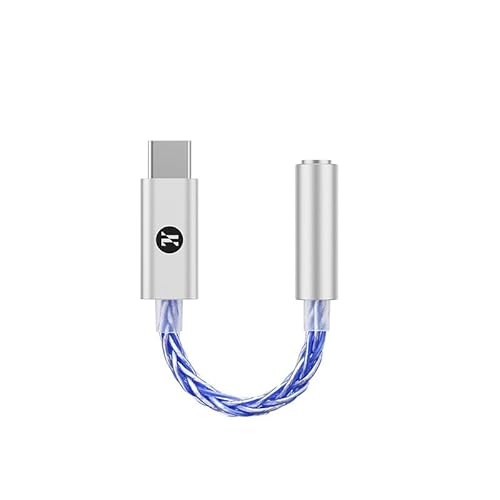
- Dual CX31993 and MAX97220 DAC chips
- Supports PCM up to 32-bit/384kHz
- Lightweight USB-C to 3.5mm design
Best For: Everyday Android headphone listening on a compact budget adapter
Best Dual-Output Upgrade
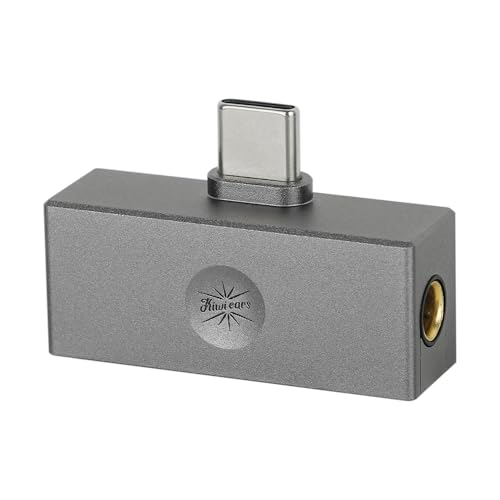
- Offers 3.5mm and 4.4mm outputs
- Supports PCM 384kHz and DSD128
- Compact all-aluminum alloy construction
Best For: Android users with standard and balanced IEMs
Best Feature-Rich Android Pick
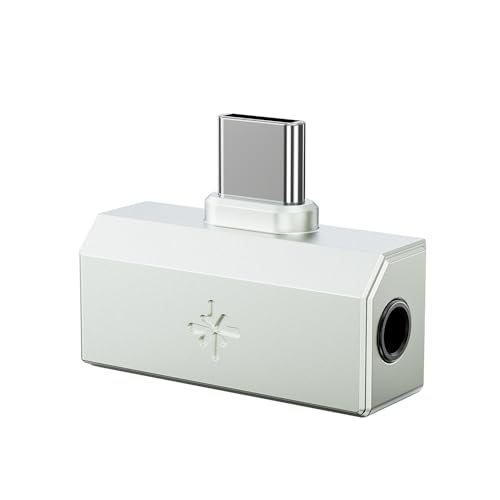
- Includes 10-band PEQ and Android app control
- Decodes PCM 384kHz and DSD256
- 7g direct plug-in aluminum design
Best For: Android users who want EQ and advanced playback controls
Best Balanced Dongle – Fosi Audio DS2
The Fosi Audio DS2 is a strong choice among portable dacs for android users who want both standard and balanced headphone outputs. Its dual CS43131 DACs, high-resolution decoding, onboard volume buttons, and compact metal body make it practical for phone listening and computer use.
Best For: Android listeners who want flexible 3.5mm and 4.4mm connectivity with detailed, low-noise playback.
Pros:
- Supports PCM up to 32-bit/384kHz and DSD256.
- Offers 3.5mm single-ended and 4.4mm balanced outputs.
- Includes independent 60-step volume controls and volume memory.
- Compact CNC-machined metal construction with a 24-month warranty.
Cons:
- Its advanced balanced output may be unnecessary for users with basic earbuds.
- It requires headphones or earphones with a compatible 4.4mm balanced connection to use that output.
With strong specifications, broad device compatibility, and convenient hardware controls, the DS2 is a well-rounded option for Android users upgrading from a phone’s built-in audio output.
Best for High-Impedance Headphones – BZINK BA36 USB-C DAC
The BZINK BA36 stands out among portable dacs for android with a claimed 227mW output and support for headphones from 16Ω to 600Ω. It combines dual CS43131 DACs with an SGM8262 amplifier chip in a compact USB-C adapter designed for phones, tablets, laptops, and travel.
Best For: Android users who need extra amplification for demanding headphones and want a USB-A adapter included.
Pros:
- Supports up to 32-bit/384kHz decoding.
- Provides up to 227mW at 32Ω and supports a 16Ω–600Ω range.
- Includes a USB-A adapter for broader device compatibility.
- Lightweight aluminum construction with a silver-plated oxygen-free copper cable.
Cons:
- This model provides a 3.5mm output rather than a 4.4mm balanced connection.
- The supplied notes list both a 20-month warranty and a one-year warranty, so buyers should verify the applicable coverage.
The BA36 is a practical pick when driving power matters more than multiple headphone-output formats, especially for Android owners using higher-impedance headphones.
Best High-Power Option – FiiO/JadeAudio KA13
The FiiO/JadeAudio KA13 is one of the most powerful portable dacs for android in this group. Its dual CS43131 DACs, dual SGM8262 op-amps, and selectable Desktop mode can deliver up to 550mW through the balanced output while retaining a compact USB-C form factor.
Best For: Android listeners with headphones that benefit from high output power and users who want both 3.5mm and 4.4mm connections.
Pros:
- Desktop mode provides up to 550mW through the balanced output.
- Offers both 3.5mm and 4.4mm headphone outputs.
- Supports PCM up to 32-bit/384kHz and DSD256.
- FIIO Control app supports light, filter, and S/PDIF settings.
Cons:
- Desktop mode may be more capability than casual mobile listeners need.
- Using the balanced output requires compatible 4.4mm headphones or a suitable cable.
The KA13 is the performance-focused choice here: it offers unusually high claimed power for a dongle, plus useful output and app-control flexibility for more involved Android setups.
Best Lightweight Upgrade – iFi GO Link 2 Max
The iFi GO Link 2 Max is a lightweight option for Android users seeking portable dacs for android with a balanced 4.4mm connection. It uses dual ESS Sabre DAC chips, adds customizable filtering through the iFi Nexis app, and weighs 11.5 grams.
Best For: Mobile listeners who prioritize a very light design, balanced output, and app-based sound customization.
Pros:
- Balanced 4.4mm output provides up to 241mW.
- Supports PCM up to 384kHz and DSD256.
- Dynamic Range Enhancement can add up to 6dB of dynamics.
- Includes customizable filtering through the iFi Nexis mobile app.
Cons:
- It is designed for devices with USB-C ports.
- The supplied notes emphasize the 4.4mm balanced output rather than a separate 3.5mm output.
Choose the GO Link 2 Max if portability and balanced headphone support are more important than having multiple analog output formats in one dongle.
Best Compact Hi-Fi Pick – FiiO KA11 USB-C DAC
If you want portable DACs for Android that take up almost no space, the FiiO KA11 is a strong 3.5mm headphone adapter to consider. Its CS43131 DAC and amplifier support up to 32-bit/384kHz playback, while the compact 8.5g design is easy to carry between devices.
Best For: Android users who want a tiny, high-resolution USB-C DAC with enough output for most headphones.
Pros:
- Supports up to 32-bit/384kHz decoding.
- Compact 44 x 9.7 x 10.5mm body weighs about 8.5g.
- Provides up to 200mW at 32Ω and supports Android, iOS, Windows, and Mac.
- UAC1.0 mode supports plug-and-play use with devices such as Switch and PS5.
Cons:
- Uses a 3.5mm output rather than a balanced headphone connection.
- UAC1.0 mode requires switching through the FiiO Control app.
The KA11 is a practical choice when portability and strong technical specifications matter more than extra controls or multiple outputs. It is especially appealing for everyday Android listening with wired headphones.
Best Everyday Value – MoKo Dual-DAC USB-C Adapter
The MoKo is one of the more practical portable DACs for Android if you need everyday convenience alongside improved wired audio. Its dual CX31993 and MAX97220 DAC design supports 32-bit/384kHz playback, while microphone input and inline controls keep calls and music management simple.
Best For: Commuters, students, and multi-device users who want a USB-C-to-3.5mm adapter with call support and included USB-A compatibility.
Pros:
- Dual DAC chips support up to 32-bit/384kHz audio.
- Built-in amplifier is designed to provide stronger output for higher-impedance headphones.
- Supports microphone input, calls, and inline headphone controls.
- Includes a USB-A-to-USB-C adapter and uses an aluminum shell with a silver-plated cable.
Cons:
- Only provides a single 3.5mm audio connection.
- The listed warranty is one month.
Choose the MoKo when ease of use is a priority. Its broad device compatibility, controls, and call support make it a flexible daily adapter, though it offers fewer specialized features than a larger portable amplifier.
Best Feature-Rich Upgrade – FiiO/Snowsky Melody Portable DAC
For listeners seeking portable DACs for Android with more flexibility than a basic dongle, the FiiO/Snowsky Melody adds dual DAC processing, 4.4mm balanced and 3.5mm outputs, and customizable equalization. Its detachable cables and UAC1.0/2.0 toggle also make it suitable for phones, computers, and selected gaming consoles.
Best For: Enthusiasts who want balanced output, app-based 10-band PEQ tuning, and a distinctive wooden portable design.
Pros:
- Dual CS43131 DACs support PCM up to 32-bit/384kHz and DSD256.
- Offers both 4.4mm balanced and 3.5mm outputs.
- Includes customizable 10-band PEQ tuning with three savable or shareable presets.
- Detachable cables and UAC1.0/2.0 support Android, iOS, Mac, Windows, PS5, and Switch use.
Cons:
- Headset controls may be restricted on iOS and some Android devices.
- Its wooden housing is not water resistant.
- It is more feature-heavy than users seeking a simple dongle may need.
The Melody is the most versatile option here for shaping sound and using different headphone connections. Its larger feature set makes it a better fit for audio enthusiasts than shoppers looking only for the smallest Android adapter.
Best Budget Dual-DAC Pick – JCALLY JM6 Pro
If you want portable DACs for Android without adding much bulk, the JCALLY JM6 Pro is a straightforward USB-C-to-3.5mm option. Its dual CX31993 and MAX97220 DAC design supports up to 32-bit/384kHz PCM and weighs approximately 6g, making it well suited to everyday wired headphone listening.
Best For: Android users who want a lightweight, compact 3.5mm headphone adapter with high-resolution PCM support.
Pros:
- Dual DAC chips with up to 32-bit/384kHz PCM support
- Lightweight design at approximately 6g
- Rated signal-to-noise ratio of 124dB and THD+N of -95dB
- Broad compatibility with listed Android phones, Pixel, Galaxy, OnePlus, Huawei, and other USB-C devices
Cons:
- Provides a 3.5mm output rather than a balanced 4.4mm connection
- Compatibility can vary among Android devices and USB-C implementations
The JM6 Pro is a sensible low-profile choice for replacing a phone’s basic audio adapter. Its main appeal is the combination of light weight, strong published specifications, and broad device support, though listeners seeking balanced output or advanced controls will need a different design.
Best Dual-Output Upgrade – Kiwi Ears Allegro Mini
The Kiwi Ears Allegro Mini stands out among portable DACs for Android by offering both 3.5mm single-ended and 4.4mm outputs. Its aluminum body, USB-C connection, and support for PCM up to 32-bit/384kHz and DSD128 make it a flexible choice for IEM users who want more connection options in a compact unit.
Best For: Android listeners who use both standard and balanced headphones or IEMs and want high-resolution playback.
Pros:
- Includes both 3.5mm and 4.4mm outputs
- Supports PCM up to 32-bit/384kHz and DSD up to DSD128
- Compact all-aluminum alloy body
- Designed for plug-and-play use with Android 5.1 and newer
Cons:
- Its two-output feature may be unnecessary for users with only standard 3.5mm headphones
- The supplied notes do not specify output power figures
The Allegro Mini is the most versatile pick here for headphones with different connector types. It offers a premium metal build and broad format support, while its value depends largely on whether you will use the 4.4mm balanced output.
Best Feature-Rich Android Pick – FiiO/Snowsky Tiny A
For shoppers seeking portable DACs for Android with more than basic conversion, the FiiO/Snowsky Tiny A adds 10-band PEQ control, app support, and a direct plug-in form factor. It supports PCM up to 32-bit/384kHz and DSD256 while using a lightweight CNC-machined aluminum body.
Best For: Android listeners who want onboard EQ, app-based control, and a compact USB-C DAC/headphone amplifier.
Pros:
- 10-band PEQ, preset switching, UAC mode switching, and volume control
- Supports PCM up to 32-bit/384kHz and DSD256
- Direct plug-in design avoids a separate cable
- Weighs only 7g and supports inline controls and call recording
Cons:
- The FiiO Control app is supported on Android and PC web, not iOS
- Tiny A Silver uses a 3.5mm headphone jack rather than a 4.4mm balanced output
The Tiny A is a strong fit when customization matters as much as sound conversion. Its PEQ and Android control support give it more flexibility than a simple adapter, while the direct plug-in design keeps the setup tidy for mobile use.
How We Picked the Best Portable Dacs for Android
We focused on practical features that matter when using a DAC with an Android phone: USB-C compatibility, output type, amplification, supported formats, portability, and ease of use. The roundup includes simple 3.5mm dongles for everyday headphones as well as more advanced models with 4.4mm balanced outputs, higher power, equalization, and app or web controls.
Specifications such as PCM and DSD support can indicate a DAC’s technical capability, but they do not guarantee better sound with every headphone. We therefore treated format support as one factor rather than the deciding factor. Reliability, sensible design, and matching the DAC to the connected headphones are equally important.
Quick Comparison
| Best For | What to Look For | Typical Choice |
|---|---|---|
| Everyday wired headphones | Compact body, 3.5mm output, low power draw | Basic USB-C DAC dongle |
| Power-hungry headphones | Higher output power and gain control | DAC/headphone amplifier combo |
| Balanced cables | Native 4.4mm balanced output | Dual-output portable DAC |
| High-resolution libraries | PCM and DSD support suitable for your files | Advanced Hi-Res DAC |
| Sound customization | PEQ, app support, or onboard controls | Feature-rich portable amplifier |
Key Buying Factors for Portable Dacs for Android
Connector and Android Compatibility
Most current phones use USB-C, but compatibility can still vary. Check whether the DAC is plug-and-play and whether your phone supports USB audio. Some Android devices may require USB OTG settings, a compatible music app, or additional power-management permissions.
3.5mm Versus 4.4mm Output
A 3.5mm jack is the most broadly compatible option for standard headphones and IEMs. A 4.4mm balanced output can offer more power and is useful if your headphones have a balanced cable, but it should not be used with an unsuitable adapter. Dual-output models provide greater flexibility.
Power, Sensitivity, and Noise
Efficient IEMs rarely need much power, while full-size or high-impedance headphones may benefit from a stronger amplifier. For sensitive earphones, look for low background noise and sensible volume control. More power is not automatically better if it reduces battery life or makes fine volume adjustments difficult.
Features and Portability
Consider cable durability, body size, buttons, volume controls, heat, and phone battery consumption. PEQ or app support is valuable if you want to tailor the sound, while a small, simple dongle may be preferable for commuting. Check whether the DAC includes the cable or connector arrangement you need.
Who Should Buy Which Portable Dacs for Android?
Choose a compact 3.5mm model if you want an inexpensive, low-hassle upgrade for wired earbuds or headphones. Select a dual-output DAC if you use both conventional and balanced cables or expect to upgrade your IEM setup. A higher-powered amplifier is the better fit for demanding over-ear headphones, while a model with PEQ and software controls suits listeners who want detailed sound customization.
Before buying, confirm your phone’s USB-C audio behavior, headphone connector, and power requirements. The best portable DAC for Android is the one that provides enough clean power and the features you will actually use without adding unnecessary bulk.