If you need a reliable way to copy drives without relying on software, hard drive duplicators for backups can save time and reduce risk. They’re ideal for drive migration, disaster recovery, and creating exact offline copies.
In this roundup, we focus on practical models that make backup cloning easier for both everyday users and small IT setups.
Best 10 Hard Drive Duplicators for Backups Picks for 2026
Compact Dual-Bay Cloner
Sabrent USB 3.0 Dual Bay Docking Station & Cloner
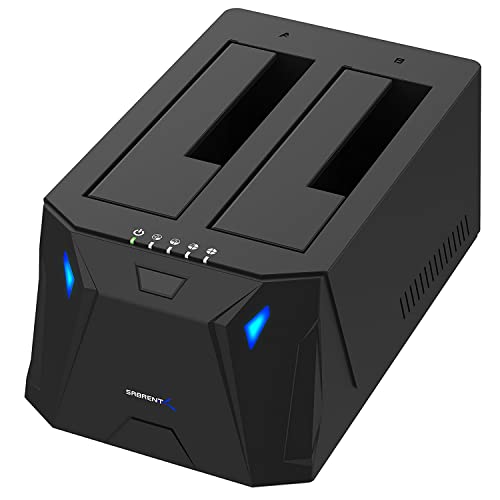
- Supports 2.5-inch and 3.5-inch SATA HDDs/SSDs.
- Offline cloning works without a computer.
- USB 3.0 transfers up to 5Gbps.
Best For: Easy plug-and-play backups and occasional offline cloning
Standalone Three-Drive Cloner
Vinpower HDDMINI 1-to-3 SATA Duplicator

- No PC required for cloning or erasing.
- Smart Copy and Raw Mode support different duplication needs.
- Read Error Skip helps with failing drives.
Best For: Portable standalone cloning and secure erase tasks
Fast Dock-Style Duplicator
StarTech Dual-Bay SATA Duplicator Dock
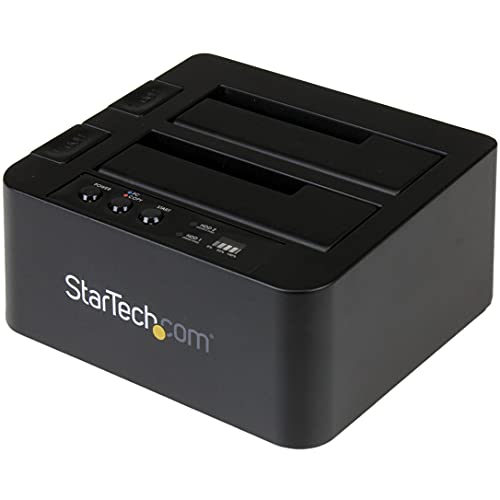
- Standalone sector-by-sector cloning without a PC.
- Also works as a USB-to-SATA docking adapter.
- Tool-less design with eject buttons.
Best For: IT workflows that need cloning and quick drive access
High-Capacity Four-Bay Backup Dock
Sabrent 4-Bay USB 3.0 Clone Dock

- Supports up to four 2.5-inch or 3.5-inch SATA drives.
- Offline cloning works without a computer.
- Trayless design simplifies drive swaps.
Best For: Multi-drive backup setups and standalone cloning
Standalone 1:1 Duplicator and Eraser

- Standalone cloning with no PC or software needed
- Supports 2.5-inch and 3.5-inch SATA HDDs and SSDs
- Can clone data or full drives and erase to DoD 5220.22-M
Best For: Users who need offline SATA backups and secure drive wiping
USB-C Dual-Bay Offline Cloner

- Offline one-button cloning with no computer needed
- USB-C dock mode mounts both bays as separate drives
- Supports 2.5-inch and 3.5-inch SATA HDDs and SSDs
Best For: People who want a SATA cloner and USB-C dock in one
Dual-Bay Cloner with USB Hub

- Offline cloning for SATA HDDs and SSDs
- Up to 48TB total capacity across two bays
- Includes 3 USB 3.0 hub ports plus 12V 3A power
Best For: Users who want backup duplication plus USB hub expansion
Triple-Bay NVMe Versatility
ICY BOX 3-Bay NVMe & SATA Cloner

- One-touch offline cloning without a PC
- Clones NVMe and SATA drive combinations
- Triple-bay, tool-free docking design
Best For: Mixed-drive backup and migration setups
Dual-Bay Backup Simple

- Offline clone button for stand-alone copying
- Supports 2.5"/3.5" SATA HDDs and SSDs
- Compact dual-bay dock with 36W power
Best For: Simple SATA backup and duplication
IT Pro 4-Bay Sanitizer
StarTech 4-Bay Duplicator and Eraser

- Standalone cloning plus secure drive erasing
- Supports SATA and older IDE drives
- 4-bay layout with LCD menu controls
Best For: IT pros needing backup and secure wipe tools
Compact Dual-Bay Cloner – Sabrent USB 3.0 Dual Bay Docking Station & Cloner
If you want hard drive duplicators for backups that are simple to use and flexible with drive types, this SABRENT dual-bay dock is a practical pick. It supports 2.5-inch and 3.5-inch SATA HDDs and SSDs, works without drivers, and can clone drives offline when you do not want to connect to a computer.
Best For: Users who want an easy plug-and-play dock for routine backup cloning and drive access.
Pros:
- Supports both 2.5-inch and 3.5-inch SATA HDDs and SSDs.
- Offline cloning lets you duplicate drives without a PC.
- USB 3.0 host connection supports transfer speeds up to 5Gbps.
- Rated for drives up to 10TB, with 20TB+ stated memory storage capacity.
Cons:
- Only supports two drives at a time.
- Offline cloning speed is listed at up to 60Mbps, which may be slower than some users want.
Overall, this is a straightforward dual-bay solution for backups, quick drive access, and occasional cloning. It fits best if you want a no-fuss dock that can handle common SATA drives and SSDs without extra software.
Standalone Three-Drive Cloner – Vinpower HDDMINI 1-to-3 SATA Duplicator
For hard drive duplicators for backups where standalone operation matters, this Vinpower unit is built to copy and erase drives without needing a PC. It supports both 2.5-inch and 3.5-inch HDDs and SSDs, offers Smart Copy and Raw Mode, and includes Read Error Skip for drives that are having trouble.
Best For: IT and field users who need a portable standalone duplicator with secure erase capability.
Pros:
- No computer required for operation.
- Smart Copy and Raw Mode cover both accessible-data and bit-by-bit duplication needs.
- Read Error Skip helps recover as much data as possible from failing drives.
- Secure Erase is designed to fully wipe drives using a DoD 5220.22-M-like process.
Cons:
- Listed copy speed is 90 MB/s, which is modest for larger backup jobs.
- Supports one source to up to three drives, but the product is compact rather than high-capacity.
This is a strong choice when you need cloning and secure wiping in a portable standalone format. It is especially useful for technicians who value error handling and data removal in the same tool.
Fast Dock-Style Duplicator – StarTech Dual-Bay SATA Duplicator Dock
If you are comparing hard drive duplicators for backups and want a dock that doubles as a drive access tool, this StarTech model is designed for IT-style use. It performs standalone sector-by-sector cloning of 2.5-inch and 3.5-inch SATA HDDs and SSDs, and it can also act as a USB-to-SATA adapter for quick drive access.
Best For: IT professionals who want a fast standalone cloner with dock functionality and technical support.
Pros:
- Standalone cloning works without a computer and copies entire drives sector by sector.
- Supports 2.5-inch and 3.5-inch SATA HDDs and SSDs of any capacity.
- Can also function as a USB-to-SATA adapter for drive access.
- Tool-less, tray-less design with eject buttons makes drive handling easier.
Cons:
- Target disk must be equal to or larger than the source disk.
- Only two drives are supported at once.
This model stands out if you want cloning plus everyday dock use in one unit. It is especially appealing for professional environments where support, speed, and standalone operation all matter.
High-Capacity Four-Bay Backup Dock – Sabrent 4-Bay USB 3.0 Clone Dock
For buyers shopping hard drive duplicators for backups with more drive flexibility, this SABRENT 4-bay dock is built for multi-drive management. It supports up to four 2.5-inch or 3.5-inch SATA HDDs and SSDs, connects over USB 3.0 for file transfers, and includes an offline clone function for direct drive-to-drive duplication.
Best For: Users who need a four-bay dock for backups, cloning, and managing multiple SATA drives.
Pros:
- Supports up to four SATA HDDs or SSDs in one dock.
- Offline clone function lets you duplicate drives without a computer.
- USB 3.0 connection supports transfers up to 5Gbps.
- Trayless design simplifies swapping drives when the dock is powered off.
Cons:
- Requires an external power adapter, so it is less portable than smaller docks.
- USB connection is limited to 5Gbps rather than newer higher-speed standards.
This is a practical option when you need more bays for backup work or drive rotation. It combines easy drive access with standalone cloning, making it a versatile choice for larger SATA-based setups.
Standalone 1:1 Duplicator and Eraser – Systor SYS101HS-DP
If you want hard drive duplicators for backups that work without tying up a PC, the Systor SYS101HS-DP is built for straightforward 1:1 copying and sanitizing. It handles both 2.5-inch and 3.5-inch SATA HDDs and SSDs, supports standalone operation, and keeps transfer performance up to 90MB per second.
Best For: IT users, offices, and home users who want a no-computer backup and erase station for SATA drives.
Pros:
- Complete standalone operation with no computer or software required
- Supports both 2.5-inch and 3.5-inch SATA HDDs and SSDs without an adapter
- Copies data-only or full drives, plus erases drives to DoD 5220.22-M sanitization standards
- Rated up to 90MB per second, with performance maintained even as load increases
Cons:
- Limited to SATA HDDs and SSDs
- Designed as a 1:1 duplicator rather than a multi-bay bulk cloning system
This is a practical choice when you need reliable, offline drive duplication and secure erasure in one metal standalone unit. The mix of cloning and sanitization makes it especially useful for backup workflows where data handling matters.
USB-C Dual-Bay Offline Cloner – SABRENT EC-CH2B
For hard drive duplicators for backups that double as a dock, the SABRENT EC-CH2B offers offline cloning plus regular USB-C connectivity. It can copy one SATA drive to another without a computer at up to 60MBps, and when connected by USB it mounts both bays as separate drives for easy file movement.
Best For: Users who want a dual-bay SATA dock that can also do simple offline cloning.
Pros:
- Offline 1-to-1 cloning with no computer required
- Dual bays mount as separate drives over USB-C for file access
- Tool-free, hot-swappable design with an HDD access LED per bay
- Supports 2.5-inch and 3.5-inch SATA HDDs and SATA SSDs
Cons:
- Does not support IDE/PATA, M.2, or NVMe drives
- Target drive must be the same size as the source or larger for cloning
This dock is a smart pick if you want backup duplication and a convenient USB-C dock in one device. Its speed is solid for offline cloning, but the drive-format limits make it best for SATA-only setups.
Dual-Bay Cloner with USB Hub – MAIWO K3082H
The MAIWO K3082H is aimed at hard drive duplicators for backups where you also want a docking station with extra USB ports. It supports offline cloning for 2.5-inch and 3.5-inch SATA HDDs and SSDs, offers up to 48TB total capacity, and includes a USB 3.0 interface plus three USB 3.0 hub ports for added flexibility.
Best For: Backup users who want a dual-bay cloner with built-in USB hub expansion.
Pros:
- Offline cloning works without connecting to a computer
- Supports 2.5-inch and 3.5-inch SATA HDDs and SSDs up to 48TB total
- Includes three USB 3.0 hub ports for extra peripherals or flash drives
- Uses a 12V 3A power supply for stable operation
Cons:
- Only supports SATA drives
- Bulkier than a simple single-function duplicator due to the hub layout
This model makes sense if your backup workflow benefits from a cloning dock and extra USB connectivity in the same unit. It is especially useful for batch work, file transfers, and general drive management alongside offline duplication.
Triple-Bay NVMe Versatility – ICY BOX 3-Bay NVMe & SATA Cloner
If you want hard drive duplicators for backups that can handle more than basic SATA drives, this ICY BOX unit stands out for its flexible cloning support. It can copy between M.2 PCIe NVMe SSDs and 2.5″/3.5″ SATA SSDs and HDDs, while the triple-bay design makes it easy to dock multiple drives at once.
Best For: Users who need a versatile standalone cloner for mixed NVMe and SATA backup workflows.
Pros:
- One-touch offline cloning with no software or PC setup required
- Supports NVMe-to-NVMe and SATA-to-NVMe cloning for broad compatibility
- Triple-bay, tool-free design lets you swap and access drives quickly
- USB 3.2 Gen 2 connection delivers up to 10 Gbps transfer speeds
Cons:
- More specialized than a basic SATA-only duplicator
- Requires the right drive type mix for the cloning job you want
For backup-minded users with both modern NVMe and traditional SATA drives, this is the most flexible option in the group. It combines standalone cloning convenience with fast USB-C performance and broad OS support.
Dual-Bay Backup Simple – ORICO SATA Offline Cloner
For straightforward hard drive duplicators for backups, this ORICO dual-bay dock keeps the process simple with offline cloning and broad SATA compatibility. It is built for 2.5″ and 3.5″ SATA HDDs and SSDs, making it a practical pick when you need quick duplication without connecting to a computer.
Best For: Users who want an easy dual-bay SATA cloner for everyday backup and drive copying.
Pros:
- Offline clone function works without a computer
- Supports 2.5″/3.5″ SATA I/II/III HDDs and SSDs
- Compact dock with tool-free hot-swapping
- Includes a 36W power supply for steady operation
Cons:
- Limited to SATA drives, so it does not handle NVMe storage
- USB 3.0 speeds top out at 5 Gbps
This is a sensible choice if your backup workflow centers on SATA drives and you want a simple standalone duplicator. It also adds useful compatibility across multiple platforms and devices.
IT Pro 4-Bay Sanitizer – StarTech 4-Bay Duplicator and Eraser
If your backup process also includes secure drive disposal, this StarTech model is one of the most capable hard drive duplicators for backups and wiping. It supports standalone cloning and erasing, and it is designed for 2.5″ and 3.5″ SATA drives, plus included IDE adapters for older hardware.
Best For: IT users who need a standalone duplicator that can also securely erase drives.
Pros:
- Duplicates, erases, docks, and supports backup/recovery workflows
- Standalone sector-by-sector cloning with up to 4.2 GB/min speed
- Quick Erase and Secure Erase options based on NIST SP 800-88 Rev 1
- 4-bay design with LCD menu and top-loading drive doors
Cons:
- Heavier and more workstation-like than simple dual-bay docks
- Focused on SATA and IDE drive types rather than NVMe
This is the strongest fit when backups are only part of the job and data sanitization matters too. The 4-bay layout, menu display, and broad legacy support make it especially useful in professional environments.
How We Picked the Best Hard Drive Duplicators for Backups
We focused on Hard Drive Duplicators for Backups that balance cloning speed, drive compatibility, and ease of use. Standalone operation mattered most, since the best units can duplicate drives without tying up a computer. We also looked at supported form factors, dock or bay design, and whether a model is better suited to occasional backups or repeated cloning jobs.
Quick Comparison
For simple two-drive copying, dual-bay docks are usually the easiest and most affordable choice. If you need to clone multiple drives at once or handle larger backup workflows, 4-bay and 1-to-3 duplicators are more efficient. Mixed-drive support is also worth noting: some units handle only SATA HDDs and SSDs, while others add NVMe or extra dock functionality for broader use.
Key Buying Factors for Hard Drive Duplicators for Backups
Clone Mode and Standalone Operation
Look for a duplicator that can copy from source to target without needing extra software. Hardware-based cloning is faster to set up and reduces the chance of OS or driver issues during backup jobs.
Drive Compatibility
Check support for 2.5-inch and 3.5-inch SATA drives, SSDs, and any newer formats you may use. If your backup strategy includes NVMe storage, make sure the unit explicitly supports it rather than assuming compatibility.
Speed and Workflow
Faster clone rates matter if you back up large drives often. Multi-bay designs can improve workflow, but only if you actually need to duplicate several drives in a row or at the same time.
Extra Features
Some models include erasing functions, USB hubs, or reader modes. These are useful, but they should not outweigh core cloning performance, stability, and drive fit.
Who Should Buy Which Hard Drive Duplicators for Backups?
Home users migrating one PC or making an occasional backup will usually be happiest with a dual-bay dock and cloner. Small businesses, repair shops, and IT teams should consider higher-capacity or faster standalone duplicators for backups, especially if they work with multiple drives or need regular erasure and deployment tasks. If you want the widest flexibility, choose a model that supports both SATA and SSD workflows, with NVMe only if you truly need it.