Video editors move large files constantly, so a dependable duplicator can save time and reduce downtime during upgrades, backups, and workflow changes.
Below, we focus on the best options for cloning, copying, and managing drives in editing setups, from compact dual-bay docks to higher-capacity multi-bay units.
Best 10 Hard Drive Duplicators for Video Editing Picks for 2026
Budget-Friendly Dual-Bay Cloner
SABRENT USB 3.0 Dual Bay Docking Station
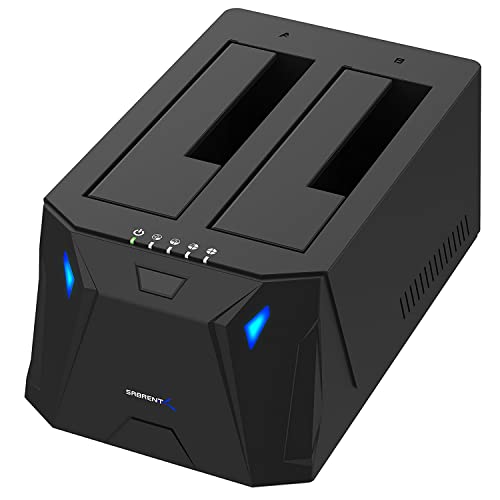
- Supports 2.5"/3.5" SATA HDDs and SSDs
- Offline cloning with no PC required
- USB 3.0 dock mode with plug-and-play setup
Best For: Editors who want a simple dual-bay cloner and USB drive dock
Standalone Sanitizing Duplicator
Systor 1:1 HDD/SSD Duplicator/Eraser

- Standalone cloning with no computer required
- Supports 2.5" and 3.5" SATA HDDs/SSDs
- Includes DoD-compliant drive erase mode
Best For: Studios needing duplication and sanitization in one standalone device
Five-Bay Offline Cloner
ORICO USB C 5 Bay Hard Drive Docking Station

- Offline duplication to four copies
- Five bays for 2.5"/3.5" SATA drives
- USB 3.2 Gen 1 Type-C connectivity
Best For: Editors with large libraries who need multi-bay capacity and cloning
Pro-Speed Dual-Bay Duplicator
StarTech Dual-Bay SATA Duplicator Dock
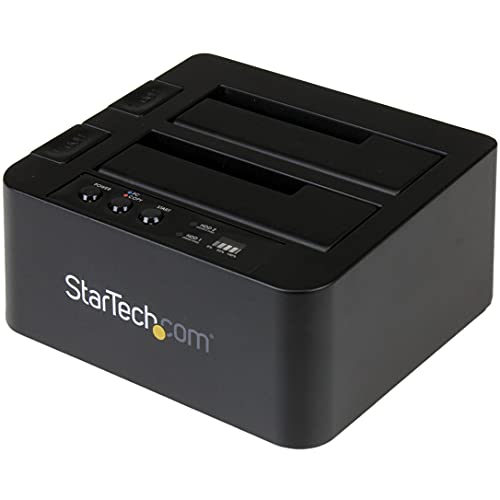
- Standalone sector-by-sector cloning
- Works as a USB-to-SATA dock too
- Supports 2.5"/3.5" SATA HDDs and SSDs
Best For: IT-oriented editors who want a fast dual-bay cloner and dock
5-Bay Offline Cloning Dock
MAIWO 5 Bay SATA Clone Station

- Offline cloning works without a computer.
- Supports 5 SATA HDDs/SSDs and up to 110TB.
- 5Gbps USB 3.1 with UASP and progress display.
Best For: Editors who need a multi-bay SATA dock for cloning and expansion.
IT-Pro Duplication and Erase Dock
StarTech 4-Bay Cloner and Eraser

- Standalone cloning plus Quick/Secure Erase.
- Supports SATA and IDE drives with adapters.
- LCD menu and USB/eSATA connectivity options.
Best For: Editors who also need secure drive wiping and mixed drive support.
Dual-Bay Offline Cloner

- Offline one-to-one cloning at the press of a button.
- Bays mount separately for file transfers over USB.
- Compact USB-C dock with hot-swap support.
Best For: Editors who want a compact, no-fuss SATA cloning dock.
Triple-Bay NVMe Cloner for Mixed Drive Workflows

- One-touch offline cloning
- Supports NVMe and SATA drives
- Three-slot tool-free design
Best For: Editors needing a versatile offline cloner for mixed drive types
Dual-Bay SATA Duplicator for Straightforward Cloning

- Offline clone from source to target
- Supports 2.5-inch and 3.5-inch SATA drives
- UASP up to 6Gbps with tool-free setup
Best For: SATA-based editing setups that need simple offline duplication
Budget-Friendly Dual-Bay Clone Dock

- One-button offline cloning
- Supports SATA HDDs and SSDs up to 44TB
- USB 3.0 with UASP and Trim
Best For: Editors who want an easy dual-bay SATA dock for backup and duplication
Budget-Friendly Dual-Bay Cloner – SABRENT USB 3.0 Dual Bay Docking Station
If you’re shopping for hard drive duplicators for video editing, this Sabrent dual-bay dock is a practical entry point for cloning SATA drives and using them as a simple USB storage dock. It supports 2.5″ and 3.5″ HDDs/SSDs, works without drivers, and offers offline cloning for straightforward drive-to-drive copies.
Best For: Editors who want a simple dual-bay dock that can clone and also double as a USB 3.0 drive reader.
Pros:
- Supports standard 2.5″ and 3.5″ SATA HDDs and SSDs
- Offline cloning mode with no computer required
- USB 3.0 transfer speeds up to 5Gbps for docked drives
- Plug-and-play design with no drivers needed
Cons:
- Offline cloning is rated up to 60Mbps, which is slower than higher-end duplicators
- Only supports cloning two drives at a time
- Best suited to basic duplication rather than high-volume workflows
For editors who need a low-friction way to copy SATA media drives and quickly access footage, this dock covers the essentials without adding complexity. It is a good fit when you want duplication plus everyday docking in one compact unit.
Standalone Sanitizing Duplicator – Systor 1:1 HDD/SSD Duplicator/Eraser
This Systor unit is a serious choice in hard drive duplicators for video editing when you need standalone copying and drive wiping in one box. It works without a computer or software, supports 2.5″ and 3.5″ SATA HDDs/SSDs, and can copy or erase disks at up to 90MB/s.
Best For: Editors or studios that need standalone duplication plus sanitization for SATA drives.
Pros:
- Standalone operation with no computer or software required
- Copies both HDDs and SSDs in 2.5″ and 3.5″ SATA formats
- Supports data-only or whole-drive duplication
- Includes erase function with DoD 5220.22-M compliant sanitization
Cons:
- Only supports SATA drives
- Rated transfer speed is up to 90MB/s, which is modest for large media sets
- Does not offer USB dock-style everyday drive access
If your workflow includes preparing, copying, and retiring drives, this model focuses on utility rather than extras. It makes sense for teams that value standalone operation and sanitization as much as cloning.
Five-Bay Offline Cloner – ORICO USB C 5 Bay Hard Drive Docking Station
For bigger media libraries, this ORICO dock stands out among hard drive duplicators for video editing because it can duplicate to multiple drives without a computer. Its five-bay design supports 2.5″ and 3.5″ SATA HDDs/SSDs, with offline copying for up to four copies and plenty of room for large project archives.
Best For: Video editors and photographers who need multi-bay capacity and offline duplication for large file libraries.
Pros:
- Five-bay design with offline duplication to four copies
- Supports 2.5″ and 3.5″ SATA SSDs and HDDs
- Up to 5x20TB capacity for large storage needs
- USB 3.2 Gen 1 Type-C connectivity with C-to-C/C-to-A cable included
Cons:
- Designed as a single-button offline cloner, so it is less specialized than dedicated duplicators
- Only one device is supported in the listed specs for supported devices quantity
- Best suited to bulk storage and cloning rather than ultra-fast production copying
This is a strong pick when your editing workflow involves moving and backing up large amounts of footage across several drives. The combination of capacity, multi-copy cloning, and USB-C convenience makes it especially versatile for bigger setups.
Pro-Speed Dual-Bay Duplicator – StarTech Dual-Bay SATA Duplicator Dock
This StarTech dock is built for hard drive duplicators for video editing when speed and professional features matter. It supports standalone sector-by-sector cloning of 2.5″ and 3.5″ SATA drives, while also functioning as a USB-to-SATA dock for quick drive access over USB.
Best For: IT-oriented editors and studios that want a fast dual-bay cloner with dock functionality.
Pros:
- Standalone cloning with no computer required
- Sector-by-sector copying works with any file format and includes empty sectors
- Supports 2.5″ and 3.5″ SATA HDDs and SSDs of any capacity
- Includes USB-C/A cables and a universal power adapter
Cons:
- Requires the target disk to be equal to or larger than the source disk
- Only duplicates two drives at a time
- Primarily focused on SATA workflows rather than broader storage formats
For editors who want a more polished duplicator with strong standalone cloning and dock flexibility, this StarTech model is well suited to repeated drive prep. It balances pro features with straightforward operation.
5-Bay Offline Cloning Dock – MAIWO 5 Bay SATA Clone Station
If you want hard drive duplicators for video editing that can also expand storage, the MAIWO 5-bay dock is built for bulk SATA workflows. It supports offline cloning without a computer, handles up to five 2.5-inch or 3.5-inch SATA HDDs/SSDs, and includes a digital cloning progress display for easier monitoring during large transfers.
Best For: Editors who need a multi-bay dock for offline cloning, storage expansion, and quick drive swaps.
Pros:
- Offline clone function works without a computer attached.
- Supports up to 5 SATA drives and up to 110TB total expansion.
- 5Gbps USB 3.1 connection with UASP support.
- Tool-free design with 360° heat dissipation and a 0%-100% progress display.
Cons:
- Limited to SATA HDDs and SSDs; no IDE, M.2, or NVMe support.
- Offline cloning is designed for one source to one target at a time.
- Best suited to SATA-based editing setups rather than mixed-drive systems.
For video editors building large media libraries, this MAIWO dock stands out more as a storage and duplication hub than a simple cloner. If your workflow revolves around SATA drives, it offers useful capacity, simple operation, and clone-status visibility in one unit.
IT-Pro Duplication and Erase Dock – StarTech 4-Bay Cloner and Eraser
For hard drive duplicators for video editing, the StarTech 4-bay dock is a strong choice when you need cloning, wiping, and direct drive access in one standalone tool. It supports sector-by-sector duplication, Quick Erase, and Secure Erase, while also functioning as a docking station for SATA and IDE drives over USB or eSATA.
Best For: Editors and technical users who need a standalone cloner plus secure drive eraser for SATA and IDE media.
Pros:
- Standalone cloning and erasing without a host computer.
- Supports 2.5-inch and 3.5-inch SATA drives plus IDE drives with adapters.
- LCD menu makes mode selection and drive checks straightforward.
- USB 3.2 Gen 1 or eSATA host connection options.
Cons:
- Target disk must be equal to or larger than the source disk for duplication.
- Bulkier four-bay design may be more than some editors need.
- Best suited to users who will use the erase features, not just cloning.
This model is especially useful when your editing workflow includes retiring old drives or sanitizing media after a project wraps. Its broad compatibility and built-in erase modes make it more versatile than a basic duplicator, though it is still centered on traditional SATA and IDE storage.
Dual-Bay Offline Cloner – SABRENT USB-C Drive Dock
The SABRENT dual-bay dock is a practical pick if you want hard drive duplicators for video editing in a compact, simple format. It clones one SATA drive to another offline at the press of a button, and when connected to a computer it mounts both bays separately for file transfers or working across two drives at once.
Best For: Editors who want a compact USB-C dock for easy offline cloning and everyday dual-drive access.
Pros:
- Offline cloning runs without a computer attached.
- Both bays can be used as separate drives over USB.
- Tool-free, hot-swappable design with per-bay activity LEDs.
- USB-C and USB 3.0 support up to 5Gbps.
Cons:
- Only supports SATA 2.5-inch and 3.5-inch drives and SSDs.
- Does not support IDE, M.2, NVMe, or 4-pin Molex drives.
- Offline cloning runs at up to 60MBps by design.
For editors who mainly need a straightforward clone dock rather than a high-capacity multi-bay hub, this SABRENT model keeps the workflow simple. It is compact, easy to use, and well suited to duplicating SATA media before or after a project without adding extra software steps.
Triple-Bay NVMe Cloner for Mixed Drive Workflows – ICY BOX 3-Bay Cloner
If you need hard drive duplicators for video editing, this ICY BOX dock is a flexible choice for moving footage between NVMe and SATA storage without opening a PC or installing software. The three-bay layout makes it useful for editors handling multiple drives, while the 10Gbps USB-C connection helps keep transfers moving quickly.
Best For: Editors who want an offline cloner that can handle NVMe and SATA drives in one compact dock.
Pros:
- One-touch offline cloning keeps the workflow simple and computer-free.
- Supports M.2 PCIe NVMe SSDs plus 2.5-inch and 3.5-inch SATA SSDs/HDDs.
- Three independent slots make it easier to manage multiple drives at once.
- USB 3.2 Gen 2 offers up to 10Gbps transfer performance.
Cons:
- The flexibility is great, but it is still a docking station rather than a dedicated multi-drive array.
- Only the supplied notes confirm the supported device mix, so advanced workflow features are limited to basic cloning and docking.
For editors who need a practical way to duplicate or access different drive types, this model stands out for versatility. The mix of offline cloning and multi-bay access makes it especially handy when dealing with mixed media drives.
Dual-Bay SATA Duplicator for Straightforward Cloning – WAVLINK SATA Dock
For hard drive duplicators for video editing built around SATA media, this WAVLINK dock keeps the process simple with offline cloning and plug-and-play operation. It supports 2.5-inch and 3.5-inch SATA HDDs and SSDs, making it a practical option for copying project drives without needing a computer connection.
Best For: Editors who mainly work with SATA drives and want a simple dual-bay offline duplicator.
Pros:
- Offline cloning works directly from source disk to target disk.
- Supports 2.5-inch and 3.5-inch SATA HDDs and SSDs.
- UASP support delivers up to 6Gbps transfer speeds.
- Tool-free setup and hot-swapping make everyday use easy.
Cons:
- Offline clone mode is limited to the target disk being equal to or larger than the source disk.
- Notes say it is not compatible with M1/M2-based Macs.
- It does not support online cloning.
This is a focused SATA dock for users who value straightforward duplication over advanced drive flexibility. If your edit bay relies on SATA SSDs or HDDs, it covers the essentials without unnecessary complexity.
Budget-Friendly Dual-Bay Clone Dock – ORICO Dual Bay Cloner
This ORICO dock is a straightforward option for hard drive duplicators for video editing when you want dual-bay SATA cloning and easy hot-swapping in a compact unit. It supports offline cloning without a computer, and the 5Gbps USB 3.0 connection with UASP and Trim is enough for basic file backup and disk imaging tasks.
Best For: Editors looking for a simple dual-bay SATA cloner for backup, imaging, and drive duplication.
Pros:
- Offline clone function works by pressing the CLONE button for about 3 seconds.
- Supports 2.5-inch and 3.5-inch SATA HDDs and SSDs up to 44TB total.
- USB 3.0 with UASP and Trim supports up to 5Gbps transfer speeds.
- Includes a dust-proof cover plate, anti-skid pad, and LED status indicators.
Cons:
- The target disk must be larger than the source disk for cloning.
- Notes indicate the dock will not power on if no hard drive is inserted.
- It supports only one offline clone setup at a time.
For editors who mainly need a reliable SATA duplicator for backups and project migrations, this ORICO model keeps the feature set focused. Its mix of tool-free access and offline cloning makes it easy to use in a busy workspace.
How We Picked the Best Hard Drive Duplicators for Video Editing
For Hard Drive Duplicators for Video Editing, we prioritized practical editing needs: offline cloning, support for both HDDs and SSDs, easy drive swapping, and transfer speeds that make sense for large media libraries. We also looked at bay count, connector flexibility, and whether the unit can work as a dock as well as a duplicator.
Quick Comparison
Dual-bay models are usually best for simple source-to-target cloning and quick drive turnaround. Four- and five-bay units are better if you manage multiple project drives, archive disks, or shared storage. USB-C and 10Gbps options are stronger picks for newer editing systems, while older USB 3.0 docks can still be a good value for straightforward HDD workflows.
Key Buying Factors for Hard Drive Duplicators for Video Editing
Clone Speed and Workflow
If you regularly duplicate large media drives, real-world cloning speed matters more than headline specs. Faster docks reduce waiting time when you are refreshing backup sets or moving project data between machines.
Drive Compatibility
Make sure the unit supports the drive types you use most often. Many editors still rely on 2.5-inch and 3.5-inch SATA drives, but SSD and NVMe support can be a major advantage if your edit machine uses newer storage.
Bay Count and Capacity
A dual-bay dock is ideal for simple one-to-one copies. A multi-bay duplicator is a better fit if you keep separate drives for active projects, backups, and long-term archives.
Standalone Cloning Vs. Docking
Some of the best Hard Drive Duplicators for Video Editing can clone without a computer, while also acting as everyday docks. That flexibility is useful when you need both fast duplication and easy access to project drives.
Connection Type
USB-C, USB 3.1, eSATA, and UASP support can improve compatibility and speed with modern workstations. Choose the connection that matches your editing rig so you do not bottleneck a fast SSD setup.
Who Should Buy Which Hard Drive Duplicators for Video Editing?
Choose a dual-bay duplicator if you want a simple, affordable way to clone edit drives and backups. Pick a multi-bay dock if you manage several active projects or need to duplicate drives in batches. If your workflow includes newer SSDs or NVMe media, look for higher-speed USB-C models with broader compatibility. For editors focused on reliable SATA backups, a standalone duplicator with offline cloning is often the most efficient choice.