The best field recorder with Bluetooth control can make remote operation, file transfer, monitoring, or mobile recording more convenient in the field. The right choice depends on whether you need professional XLR inputs, 32-bit float safety, built-in microphones, or simple voice-activated recording.
Our selection includes compact handheld models, multitrack production recorders, Bluetooth-enabled call recorders, and high-capacity devices for lectures and meetings. Use the guide below to match features to your workflow before buying.
Best 10 Field Recorder with Bluetooth Control Picks for 2026
Best Compact XLR Pick
Zoom F3 with Bluetooth Adapter

- 32-bit float recording with dual AD converters
- Two locking XLR inputs and low-noise preamps
- BTA-1 adapter enables wireless control
Best For: Portable two-track XLR recording
Best Versatile Stereo Recorder
Xvive XV1-R 32-Bit Float Recorder

- Built-in X/Y microphones with 32-bit float recording
- WAV up to 96 kHz plus AAC recording
- USB-C microphone functionality for mobile devices
Best For: Stereo capture and USB recording
Best for Bluetooth Calls

- Records both sides of compatible Bluetooth calls
- Works as a standalone voice recorder
- Built-in USB plug and speaker simplify playback and transfer
Best For: Phone calls, meetings, and voice memos
Best Professional Multitrack Pick
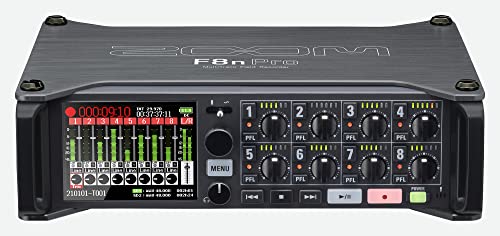
- Eight inputs and ten tracks with 32-bit float
- 0.2 ppm timecode accuracy for production sync
- Dual SD slots support redundant recording
Best For: Professional film and location audio
Smart Touchscreen Pick

- Touchscreen and physical-button control
- Offline speech-to-text and automatic recording
- Expandable storage up to 1TB
Best For: Students, journalists, and office recording
Versatile Wireless Sync Pick

- Three microphones with nine recording patterns
- 32-bit float clip-free recording
- Bluetooth control and multi-unit timecode sync
Best For: Musicians, podcasters, and synchronized field recording
Videographer’s Timecode Pick

- Dual XLR/TRS inputs for production microphones
- 32-bit float no-clip recording
- Built-in timecode generation and sync
Best For: Videographers and professional audio-video crews
Best Lightweight Pick

- 72GB storage with up to 4,800 hours at 192Kbps
- Voice activation and AI noise reduction
- One-ounce body with up to 48 hours of recording
Best For: Portable lecture, meeting, and interview recording
Best Feature-Rich Option
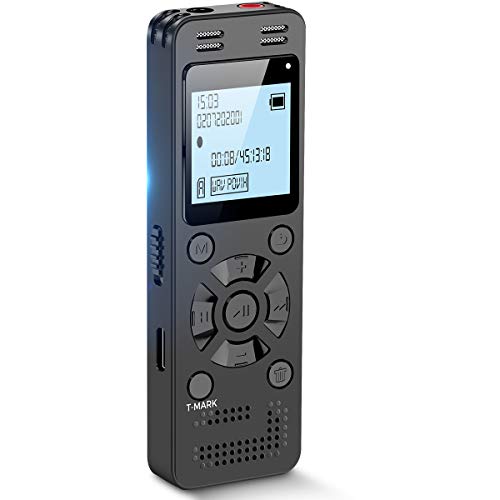
- 128GB capacity with up to 9,296 recording hours
- 1536Kbps PCM plus MP3 recording options
- Playback, password protection, bookmarks, and folder management
Best For: Organized lectures, meetings, speeches, and interviews
Best for Mobile Transfers

- 72GB storage rated for up to 10,860 hours
- DSP 6.0 noise reduction with voice activation
- OTG transfer to compatible phones and tablets
Best For: High-capacity recording with direct mobile file transfer
Best Compact XLR Pick – Zoom F3 with Bluetooth Adapter
The Zoom F3 bundle is a strong choice if you need a compact field recorder with Bluetooth control and professional XLR connectivity. Its 32-bit float recording and dual AD converters reduce the need to manage gain while recording, making it practical for sound design, podcasting, and portable field work.
Best For: Portable two-track recording with locking XLR inputs and wireless control.
Pros:
- 32-bit float recording helps capture a wide dynamic range without setting gain.
- Two locking XLR inputs and low-noise preamps support clean professional audio.
- Included BTA-1 adapter enables wireless control with compatible Zoom recorders.
- Compact metal casing, mounting bars, and tripod mount suit mobile setups.
Cons:
- Limited to two recording tracks and two XLR inputs.
- Bluetooth control is intended for compatible Zoom devices and requires the adapter.
Choose the F3 bundle when portability, clean preamps, and straightforward 32-bit float recording matter more than a large input count.
Best Versatile Stereo Recorder – Xvive XV1-R 32-Bit Float Recorder
The Xvive XV1-R is a flexible option for shoppers seeking a portable recorder with Bluetooth-oriented mobile compatibility, built-in X/Y microphones, and 32-bit float capture. It also works as a USB microphone, giving musicians, podcasters, and creators several ways to record.
Best For: Stereo recording, USB microphone use, and compact everyday production.
Pros:
- 32-bit float recording avoids gain adjustments in high-dynamic-range situations.
- X/Y microphones capture up to 130 dB SPL without distortion, according to the supplied specifications.
- Supports WAV recording up to 96 kHz plus compressed AAC recording.
- USB-C connectivity supports use with computers, tablets, smartphones, and mobile devices.
Cons:
- No headphone jack is listed in the specifications.
- USB audio operation uses a fixed 48 kHz sample rate.
- It is a stereo recorder rather than a multichannel XLR field mixer.
The XV1-R makes the most sense when you want a small built-in-mic recorder that can also handle USB calls, streaming, and other computer-based audio tasks.
Best for Bluetooth Calls – RecorderGear PR200
The RecorderGear PR200 is designed primarily as a Bluetooth call recorder rather than a conventional production field recorder. It wirelessly records both sides of calls on compatible phones and can also function as a standalone voice recorder for meetings, lectures, dictation, and memos.
Best For: Recording mobile-phone conversations and everyday voice notes.
Pros:
- Records both sides of conversations through Bluetooth with compatible mobile phones.
- Standalone voice-recorder mode supports meetings, lectures, dictation, and memos.
- Built-in speaker allows playback directly from the device.
- Built-in USB plug connects directly to Mac or Windows computers without extra cables.
Cons:
- Records in MP3 rather than higher-resolution WAV formats.
- It is intended for calls and voice recording, not professional multitrack field audio.
- Its listed internal storage is 4 GB, despite the supplied bullet mentioning an 8GB capacity.
If your priority is Bluetooth call recording with simple computer transfer, the PR200 is more suitable than a traditional field recorder with microphone inputs.
Best Professional Multitrack Pick – Zoom F8n Pro Field Recorder
The Zoom F8n Pro is built for professional film and location production, combining eight inputs, ten tracks, 32-bit float recording, and wireless Bluetooth control. Its accurate timecode, high-gain low-noise preamps, and redundant dual SD recording make it a substantial field recorder with Bluetooth control for demanding crews.
Best For: Film sets and field productions requiring multiple inputs, timecode, and backup recording.
Pros:
- Eight-channel, ten-track recording with 32-bit float capture helps prevent clipped takes.
- Preamps provide up to 75 dB of gain with a rated -127 dBu EIN for quiet audio sources.
- 0.2 ppm timecode accuracy supports reliable synchronization with picture.
- Dual SD slots support redundant recording, while the unit can operate as an 8-in/4-out USB interface.
Cons:
- At 1.8 kg, it is substantially less portable than compact two-track recorders.
- Its listed battery life is approximately 8.5 hours.
- The larger feature set may be excessive for simple stereo voice recording.
The F8n Pro is the clear fit for productions that need extensive input capacity, dependable synchronization, and recording redundancy, though smaller projects may benefit from a simpler recorder.
Smart Touchscreen Pick – Innioasis R1 Voice Recorder
If you want a field recorder with Bluetooth control plus everyday convenience features, the Innioasis R1 combines Bluetooth connectivity with a touchscreen interface, multiple recording modes, and offline speech-to-text. Its dual microphones, noise-reduction processing, and expandable storage make it adaptable for interviews, meetings, lectures, and extended recording sessions.
Best For: Students, journalists, office workers, writers, and anyone who wants touchscreen control, transcription, and large expandable storage.
Pros:
- Dual microphones and DSP/RTC noise reduction support clearer recordings.
- Offers General, Interview, Meeting, Lecture, Pocket, scheduled, and automatic recording modes.
- Includes offline speech-to-text, optional backup, password protection, and storage expansion up to 1TB.
- Its 3.69-inch touchscreen works alongside traditional physical buttons.
Cons:
- Its 8GB internal capacity is smaller than the maximum expandable storage.
- It uses a built-in microphone rather than professional external microphone inputs.
- Fast charging is not supported.
The R1 is a feature-rich choice for practical voice recording rather than a dedicated pro audio workflow. Its transcription, scheduling, security, and touchscreen controls make it especially useful for work and study.
Versatile Wireless Sync Pick – Zoom H2essential Recorder
The Zoom H2 Essential is a strong field recorder with Bluetooth control for users who need flexible microphone coverage and clip-free capture. Its three built-in microphones provide nine recording patterns, while 32-bit float recording reduces the need to adjust gain during changing sound levels.
Best For: Musicians, podcasters, journalists, filmmakers, and multi-recorder setups requiring wireless timecode synchronization.
Pros:
- Three microphones and nine selectable patterns support mono, stereo, and wider recording applications.
- 32-bit float recording is designed for clip-free audio without manual gain adjustment.
- Bluetooth enables wireless recorder control and timecode synchronization between multiple H2essential units.
- Can operate as a USB microphone while recording a backup to an SD card.
Cons:
- Bluetooth features focus on control and timecode synchronization rather than built-in wireless monitoring.
- The compact 1.3-inch screen may offer less viewing space than touchscreen recorders.
- It requires two AA batteries.
The H2essential offers an unusually broad range of built-in microphone patterns in a compact recorder. It is particularly compelling when automatic gain protection, USB use, or synchronized multi-unit recording matters more than touchscreen operation.
Videographer’s Timecode Pick – TASCAM FR-AV2 Field Recorder
For production crews seeking a field recorder with Bluetooth control, the TASCAM FR-AV2 provides wireless audio monitoring when paired with the optional AK-BT2 adapter. It is built around videography needs, combining 32-bit float recording, dual XLR/TRS inputs, timecode generation, and high-resolution recording formats.
Best For: Videographers and production teams using professional microphones and needing integrated timecode for synchronized audio.
Pros:
- Dual XLR/TRS combo inputs accommodate professional audio connections.
- 32-bit float recording with dual ADCs supports fast setup and no-clip capture.
- Built-in timecode generation and timecode input/output simplify synchronization with video gear.
- Supports 48kHz, 96kHz, and 192kHz recording rates.
Cons:
- Bluetooth monitoring requires the optional AK-BT2 adapter.
- The Bluetooth function is specifically compatible with the AK-BT2 adapter.
- It requires three AA batteries.
The FR-AV2 is the most production-focused option here, especially for cameras and microphones that benefit from XLR/TRS connectivity and timecode. Buyers should budget for the optional Bluetooth adapter if wireless monitoring is important.
Best Lightweight Pick – Xelarvex 72GB Voice Recorder
If you want a field recorder with bluetooth control, verify connectivity before buying; this Xelarvex model instead focuses on simple, portable recording with voice activation, AI noise reduction, and substantial onboard storage. Its one-ounce design is easy to carry for classes, meetings, interviews, and travel.
Best For: Students and professionals who prioritize long battery life, compact size, and hands-off voice-activated recording.
Pros:
- 72GB capacity supports up to 4,800 hours of recording at 192Kbps.
- Voice activation helps reduce silent gaps and conserve storage.
- Up to 48 hours of continuous recording on a full charge.
- AI sound processing is designed to reduce ambient noise, while the one-ounce body clips easily to a bag or lanyard.
Cons:
- The supplied details do not mention Bluetooth or remote control.
- The built-in microphone may offer less flexibility than an external-microphone recorder.
This is a practical choice for discreet everyday recording rather than a Bluetooth-controlled field setup. Its combination of storage, battery endurance, and lightweight portability makes it especially convenient for extended lecture or meeting use.
Best Feature-Rich Option – EVIDA 128GB Digital Recorder
For shoppers comparing a field recorder with bluetooth control, this EVIDA model does not list Bluetooth, but it offers a broad set of built-in controls for organized recording. PCM capture, adjustable voice activation, playback, password protection, bookmarks, and multiple recording formats make it suited to structured lecture and meeting workflows.
Best For: Users who want high-capacity storage, selectable recording quality, playback, and file-management features in one device.
Pros:
- 128GB memory stores up to 9,296 hours of recordings.
- Supports MP3 at 128Kbps or 192Kbps and WAV at 1536Kbps.
- Six voice-activation sensitivity levels help limit blank or whispering segments.
- Includes playback, password protection, A-B repeat, bookmarks, four-folder organization, and USB flash drive functionality.
Cons:
- Bluetooth control is not listed in the supplied specifications.
- No headphones jack is listed.
- At 3.35 ounces, it is less lightweight than the smallest recorders.
The EVIDA is a strong general-purpose recorder when organization and format flexibility matter more than wireless operation. Its 54-hour battery life and direct computer transfer support longer-term use for students, teachers, and business users.
Best for Mobile Transfers – NekSide DSP 6.0 Recorder
If your ideal field recorder with bluetooth control is meant to move files quickly to a mobile device, this NekSide model offers a wired alternative through OTG. It combines DSP 6.0 noise reduction, voice activation, playback, and high-capacity storage for lectures, meetings, interviews, and personal memos.
Best For: Users who want large storage and direct smartphone or tablet transfers without relying on a computer.
Pros:
- 72GB built-in memory is rated for up to 10,860 hours of audio.
- DSP 6.0 processing is designed to filter background noise and preserve clear sound.
- OTG supports direct file transfer to compatible smartphones or tablets.
- Portable design includes voice activation and playback.
Cons:
- Bluetooth control is not mentioned; mobile transfer uses the OTG function instead.
- Recordings default to WAV, and MP3 requires conversion through a computer.
- The long, narrow six-inch body may be less convenient than smaller clip-style designs.
This recorder stands out for mobile file handling and exceptionally high stated storage capacity. It is a good fit for buyers who can work with WAV files and prefer direct OTG transfer over wireless Bluetooth control.
How We Picked the Best Field Recorder with Bluetooth Control
We focused on recording flexibility, control options, portability, storage, input design, and practical use cases. The lineup covers professional recorders such as the Zoom F3, Zoom F8n Pro, and TASCAM FR-AV2, along with handheld, call-recording, and voice-activated models. We also considered whether each device supports features such as 32-bit float recording, timecode, USB microphone operation, built-in microphones, playback, and noise reduction.
Bluetooth does not mean the same thing on every device. Some models use an adapter or wireless connection for remote control, while others support phone-call recording or Bluetooth playback. Check the product specifications carefully to confirm that the wireless function matches your intended workflow.
Quick Comparison
| Best For | Look For | Recommended Type |
|---|---|---|
| Film and production audio | XLR inputs, timecode, multitrack recording | Professional field recorder |
| Music and interviews | 32-bit float, quality microphones, compact design | Handheld or two-channel recorder |
| Phone calls | Bluetooth compatibility, call-recording support | Dedicated mobile recorder |
| Lectures and meetings | Voice activation, long battery life, large storage | Digital voice recorder |
| Remote operation | Bluetooth adapter or wireless control app | Bluetooth-capable field recorder |
Key Buying Factors for a Field Recorder with Bluetooth Control
Wireless Function and Compatibility
Verify what Bluetooth actually controls. A remote adapter may let you start, stop, or monitor a recorder, while a mobile recorder may be designed mainly for phone calls or audio playback. Confirm compatibility with your phone, operating system, adapter, and recording application before purchasing.
Inputs, Microphones, and Recording Format
Built-in stereo microphones are convenient for quick recordings, but XLR/TRS inputs provide more flexibility with professional microphones and line-level sources. For unpredictable volume, 32-bit float recording can reduce the risk of clipped takes and simplify production. WAV is preferred for editing, while AAC and compressed formats can save storage for basic voice recordings.
Storage, Battery, and Portability
Large-capacity voice recorders are useful for lectures and meetings, but advertised recording hours vary with format, sample rate, and battery conditions. For field work, also consider removable media, USB charging, battery replacement, screen visibility, physical controls, and protection from accidental button presses.
Production Features
Filmmakers may need timecode, multiple simultaneous inputs, isolated tracks, headphone monitoring, and reliable gain control. Musicians and podcasters may value overdub-friendly workflows, USB microphone functionality, and fast file transfer more than a high input count.
Who Should Buy Which Field Recorder with Bluetooth Control?
Choose a professional multitrack recorder if you are recording film sets, live sessions, or several microphones at once. Models with multiple inputs and timecode are better suited to organized production workflows.
Choose a compact 32-bit float recorder if you want portable recording for interviews, music, sound effects, or documentaries without constantly adjusting levels. A two-channel model is often easier to carry and operate.
Choose a Bluetooth call recorder if your main goal is capturing phone conversations or mobile audio. Confirm legal requirements for recording calls in your location and notify participants when required.
Choose a high-capacity voice recorder for lectures, meetings, notes, or unattended recording. Voice activation and noise reduction can help conserve storage, but they should not replace careful microphone placement and a test recording.