Choosing among digital soldering microscopes is easier when you focus on the details that affect real bench work: screen size, camera clarity, working distance, lighting, and adjustment flexibility.
This roundup compares 10 options ranging from compact LCD scopes to autofocus, 3D, HDMI, and soldering-station models, helping you match the microscope to your repair projects and workspace.
Best 10 Digital Soldering Microscopes Picks for 2026
Top-Tier Versatility

- Three lenses for soldering, coins, and slides
- 2160P HDMI output with 7-inch monitor
- Expanded station with helping hands and storage
Best For: Multi-purpose users who want a complete soldering and inspection workstation
Best for 3D Inspection
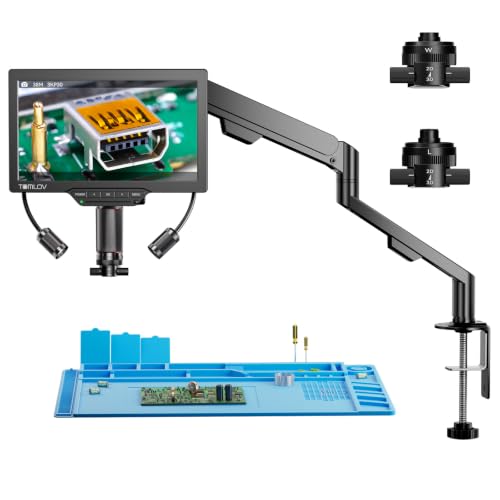
- Side-viewing with 360-degree 3D rotation
- Magnetic dual lenses switch without tools
- 3K 7-inch IPS display with flexible outputs
Best For: PCB repair and inspection tasks requiring multiple viewing angles
Best Large-Screen Value

- 10.1-inch IPS display with 178-degree viewing angle
- Stable metal stand with up to 12.6-inch height
- Three lighting types for repairs, coins, and slides
Best For: Soldering and coin viewing with a large, stable display
Best Autofocus Upgrade

- TOF-assisted autofocus with two preset focus points
- 4K video and 52MP images on an 8-inch screen
- Flexible arm, dual spotlights, and 64GB storage
Best For: Detailed soldering and inspection with minimal manual focusing
Versatile Three-Lens Pick
Andonstar AD246S-M 2160P Digital Microscope

- Three lenses for soldering, general objects, and slides
- 2160P video with HDMI and Windows measurement software
- Adjustable boom arm with remote and LED lighting
Best For: Multi-purpose electronics repair and educational viewing
Autofocus Convenience Pick
TOMLOV TM3K-AF Max Soldering Microscope

- Autofocus with two saved focus-height presets
- 3K imaging, 38MP sensor, and 10.1-inch IPS display
- Flexible arm, dual lights, mat, and multi-screen output
Best For: Hands-free soldering and repeated inspection tasks
Complete Soldering Station Pick
Andonstar AD249S-M Plus Soldering Microscope

- Three lenses with 2160P HDMI viewing and a 10.1-inch monitor
- Expanded base adds storage and 230% more soldering area
- Includes helping hands, tool holder, mat, and 32GB card
Best For: Organized electronics repair benches and detailed soldering work
Best Budget Pick
5-Inch C-Clamp Soldering Microscope

- 5-inch IPS display for standalone viewing
- Flexible arm and C-clamp keep both hands free
- PC camera connection works without extra software
Best For: Hobby PCB repair and solder-joint inspection
Best for Coin Collectors
TOMLOV DM9 7-Inch Digital Microscope

- Large 7-inch screen for comfortable viewing
- Stable metal stand supports detailed inspection
- Includes 16GB card, PC connection, and adjustable lighting
Best For: Coin collections plus light PCB and hobby inspection
Best Professional Setup
Andonstar AD409 Max Soldering Station

- Large Max station with integrated repair accessories
- 10.1-inch display with 2160P, HDMI, PC, and Wi-Fi output
- UV-filtered lens, endoscope, and measurement software
Best For: Dedicated electronics repair benches and advanced workflows
Top-Tier Versatility – Andonstar AD246S-M Plus
The Andonstar AD246S-M Plus is a highly versatile choice among digital soldering microscopes. Its three interchangeable lenses, 2160P HDMI output, expanded soldering station, and included helping hands make it suitable for electronics repair and broader inspection tasks.
Best For: Users who want one microscope for soldering, coin viewing, and biological slides.
Pros:
- Includes long-distance, general-purpose, and biological-slide lenses with magnification up to 2040x.
- 2160P output, a 7-inch monitor, remote control, and 32GB SD card support convenient viewing and recording.
- Expanded work area, storage boxes, tool holder, helping hands, and anti-static mat create a well-equipped soldering station.
Cons:
- The extensive lens and accessory package may be more than users need for basic soldering.
- Lens changes require removing and installing screws.
This is the strongest all-purpose option in the group for buyers who value a complete workstation and multiple observation modes. It is especially appealing when soldering is only one part of the intended use.
Best for 3D Inspection – TOMLOV TM3K-3D
The TOMLOV TM3K-3D stands out among digital soldering microscopes with side-viewing and 360-degree 3D rotation. Its magnetic dual lenses, 3K display, flexible arm, and adjustable spotlight are designed for examining components and solder joints from useful angles.
Best For: PCB repair, jewelry inspection, watchmaking, and other work where side views matter.
Pros:
- 3D side-viewing and 360-degree rotation reveal components and details from multiple perspectives.
- Tool-free magnetic switching between the long-distance L lens and wide-angle W lens is convenient.
- 7-inch IPS screen, HDMI, USB, flexible arm, and adjustable gooseneck lighting offer flexible setup options.
Cons:
- The specialized 3D design may be unnecessary for users who only need a conventional top-down view.
- The supplied notes identify a 16GB card, providing less storage than some alternatives in this group.
Choose this model when viewing angle and workspace access are priorities. Its unusual 3D perspective makes it particularly distinctive for complex repairs and detailed inspection.
Best Large-Screen Value – Andonstar AD210
The Andonstar AD210 offers a large 10.1-inch screen and a sturdy metal stand for buyers comparing digital soldering microscopes. It combines 1080P video, 12MP photos, adjustable working distance, and dedicated lighting for electronics, coins, and slides.
Best For: Soldering and coin collectors who prefer a large display and a stable stand.
Pros:
- Large 10.1-inch IPS screen provides a wide 178-degree viewing angle.
- Metal stand reaches up to 12.6 inches and supports a working distance from 1cm to 26cm.
- Top, side, and bottom LED illumination supports soldering, coin viewing, and biological slides.
Cons:
- Its 1080P video output is lower resolution than the 2160P and 4K options listed here.
- It does not include the specialized 3D or autofocus features of the TOMLOV models.
The AD210 is a practical, broad-use choice with an especially spacious viewing screen. It makes sense for buyers who prioritize stand height, coin visibility, and straightforward operation over the newest imaging features.
Best Autofocus Upgrade – TOMLOV TM4K-AF Flex
The TOMLOV TM4K-AF Flex is a feature-rich option among digital soldering microscopes, pairing TOF-assisted autofocus with 4K video and a flexible arm. Preset focus points, dual gooseneck lights, grid lines, and a 64GB card support detailed electronics inspection and recording.
Best For: Users who want autofocus and high-resolution imaging for soldering, inspection, and teaching.
Pros:
- TOF-assisted autofocus and two preset focus points simplify work on uneven surfaces.
- 4K video, 52MP images, an 8-inch screen, and up to 2000x zoom provide detailed viewing.
- Flexible arm, adjustable dual spotlights, HDMI/USB display support, and 64GB storage add practical versatility.
Cons:
- The feature-rich design may be more complex than necessary for simple soldering tasks.
- Autofocus-focused functionality may appeal less to users who prefer fully manual control.
This is the most advanced pick for buyers who want to reduce manual focusing while retaining strong control over lighting and viewing. Its high-resolution capture and multi-screen support also suit demonstration or documentation work.
Versatile Three-Lens Pick – Andonstar AD246S-M 2160P Digital Microscope
For shoppers comparing digital soldering microscopes, the Andonstar AD246S-M stands out as a flexible three-lens system with a 7-inch display, 2160P video, HDMI output, and a boom arm designed for electronics repair. Its interchangeable lenses also support coin, plant, stone, and slide viewing.
Best For: Electronics repairers, hobbyists, and families who want one microscope for soldering, general inspection, and educational viewing.
Pros:
- Three included lenses cover soldering, general objects, and biological slides.
- 2160P recording, HDMI output, a supplied 32GB microSD card, and Windows measurement software support documentation and analysis.
- Adjustable metal boom arm, eight LED brightness levels, and wireless remote improve workspace flexibility.
- Includes prepared slides, tweezers, an observation box, and other accessories.
Cons:
- Changing lenses requires removing and installing screws.
- The included display is smaller than the 10.1-inch screens on some alternatives.
The AD246S-M is a practical all-purpose option when you need soldering capability without giving up broader microscope use. Its included accessories and measurement software add value for users who want to inspect, record, and demonstrate their work.
Autofocus Convenience Pick – TOMLOV TM3K-AF Max Soldering Microscope
The TOMLOV TM3K-AF Max adds autofocus to the digital soldering microscopes category, helping users maintain a sharp view during repair and inspection. It combines a 10.1-inch IPS display, 3K imaging from a 38MP sensor, a flexible arm, dual gooseneck lights, and simultaneous HDMI/USB display output.
Best For: Soldering users who prioritize hands-free focusing, repeatable viewing positions, and a large screen for electronics, coins, or jewelry.
Pros:
- Autofocus and two saved focus-height presets can simplify repeated inspection tasks.
- 3K imaging with a 38MP sensor and 4X digital magnification supports detailed viewing.
- 10.1-inch IPS display, flexible arm, and dual adjustable gooseneck LEDs improve ergonomics and illumination.
- Includes a heat-resistant silicone soldering mat, remote control, and HDMI/USB three-screen output.
Cons:
- The feature-rich system may be more than users need for basic magnified soldering.
- Its listed maximum magnification is 2000x, while the practical viewing setup depends on the selected zoom and display.
Choose the TM3K-AF Max if autofocus and a comfortable, shareable viewing setup matter more than a multi-lens biological kit. The preset focus positions, large IPS screen, and included work-mat accessories make it especially suited to repeated bench work.
Complete Soldering Station Pick – Andonstar AD249S-M Plus Soldering Microscope
Among digital soldering microscopes, the Andonstar AD249S-M Plus is aimed at users who want a more complete repair station. It pairs three lenses and 2160P HDMI viewing with a 10.1-inch monitor, an expanded work area, tool holder, soldering helping hands, storage boxes, and an anti-static mat.
Best For: Electronics repairers who want microscope magnification and an organized soldering workstation in one package.
Pros:
- Three lenses provide dedicated ranges for soldering, general inspection, and biological slides.
- Extension base increases the soldering area by 230% and adds component storage boxes.
- Includes a tool holder, rotatable soldering helping hands, mat, 10.1-inch monitor, and 32GB SD card.
- Supports 2160P video, HDMI output, eight LED brightness levels, remote control, and Windows measurement software.
Cons:
- The larger station footprint may require more bench space.
- Lens changes require removing and installing screws.
The AD249S-M Plus is the strongest fit for a dedicated repair bench where organization and hands-free assistance are important. Its expanded base and included tools make it more workstation-oriented than a basic digital microscope, while the three-lens design preserves general-purpose versatility.
Best Budget Pick – 5-Inch C-Clamp Soldering Microscope
This compact option among digital soldering microscopes is designed for PCB repair and solder-joint inspection. Its 5-inch IPS display works without a computer, while the flexible arm and C-clamp help position small projects and keep both hands available.
Best For: Hobbyists who want a simple, space-conscious microscope for soldering checks and electronics repair.
Pros:
- Built-in 5-inch IPS screen reduces the need to work hunched over a separate monitor.
- C-clamp and flexible arm help keep the work area steady and hands free.
- Connects to Windows or Mac as a PC camera without requiring third-party software.
- Offers up to 1000X digital magnification and a one-year manufacturer warranty.
Cons:
- Focus and magnification require manual distance and focus-wheel adjustments; it is not autofocus.
- A Micro SD card is required for saving photos and 1080P videos and is not included.
- The compact setup is intended for micro-details rather than full-screen views of large objects.
This is a practical starter choice when easy viewing and a hands-free clamp matter more than advanced imaging features. Plan on adding a compatible Micro SD card if recording is part of your workflow.
Best for Coin Collectors – TOMLOV DM9 7-Inch Digital Microscope
The TOMLOV DM9 combines coin-focused inspection features with enough flexibility for light electronics work. Among digital soldering microscopes, it stands out for its large 7-inch screen, metal stand, included storage card, and adjustable lighting.
Best For: Coin collectors and hobbyists who also inspect small PCB components, solder joints, jewelry, or other detailed objects.
Pros:
- Large 7-inch LCD screen supports comfortable viewing and shared demonstrations.
- Solid metal base and adjustable 8.5-inch stand help reduce shaking during inspection.
- Includes a 16GB memory card for saving photos and inspection records.
- 12MP still images, 1080P video, PC connectivity, and adjustable LED and gooseneck lighting add versatility.
Cons:
- Its coin-collector orientation may be less specialized for demanding professional soldering than a dedicated repair station.
- Changing viewing height and focus manually takes more setup than an autofocus system.
The DM9 is a versatile choice for users whose work extends beyond circuit boards. Its stable stand and generous screen make it especially appealing for collection documentation, while the lighting and PC connection support occasional electronics projects.
Best Professional Setup – Andonstar AD409 Max Soldering Station
The Andonstar AD409 Max is a full workstation among digital soldering microscopes, pairing a 10.1-inch IPS display with a large metal station, soldering accessories, and an endoscope. Its UV-filtered metal lens is designed to help protect the optics from soldering heat, smoke, and dust.
Best For: Serious electronics repair users who need a spacious soldering area, multiple viewing options, and integrated workholding tools.
Pros:
- Large 18.1-by-14.6-by-18.7-inch Max station provides substantially more workspace than compact stands.
- 10.1-inch IPS display supports 2160P video recording and HDMI, PC, and Wi-Fi output options.
- Includes helping hands, tool holder, repair mat, remote, and endoscope for side and inside-pipe viewing.
- UV filter, adjustable lighting, measurement software, and support for Micro SD cards up to 64GB suit detailed repair workflows.
Cons:
- The large station requires considerably more bench space than compact digital microscopes.
- Professional measurement software requires a Windows PC, and the endoscope is not supported in PC output mode.
- A Micro SD card is not listed among the supplied accessories.
This is the strongest fit for a dedicated repair bench rather than occasional inspection. The expansive station and included tools can streamline soldering, while the endoscope and multiple outputs broaden its usefulness for diagnostics and demonstrations.
How We Picked These Digital Soldering Microscopes
We selected models that cover the main needs of electronics hobbyists, repair technicians, makers, and inspection users. Our comparison considers image resolution, display size, lens and magnification flexibility, working distance, stand stability, lighting, camera controls, and useful outputs such as HDMI. We also included different form factors, from compact 5-inch and 7-inch LCD microscopes to larger autofocus systems and models with integrated soldering accessories.
Magnification claims can vary by display size and digital zoom, so image usability matters more than the largest advertised number. For soldering, a clear view with enough room beneath the lens is generally more valuable than extreme magnification alone.
Quick Comparison
| Best For | Look For |
|---|---|
| General PCB repair | Adjustable stand, bright LEDs, and a comfortable working distance |
| Detailed inspection | Higher-resolution imaging, multiple lenses, or autofocus |
| Teaching and demonstrations | Large built-in display and HDMI output |
| Small workspaces | Compact base, integrated screen, and simple controls |
| Hands-on soldering | Stable arm, open access beneath the lens, and glare control |
Key Buying Factors for Digital Soldering Microscopes
Resolution and Display
A 2160P or 4K-rated camera can provide sharper detail, but the result also depends on lens quality, lighting, and screen size. A larger 8-inch or 10.1-inch display may be more comfortable for extended sessions, while HDMI connectivity is useful when you want a separate monitor or recording setup.
Working Distance and Stand Design
Check how much room the lens leaves for tweezers, a soldering iron, and components. A flexible arm or stable boom can improve access, but a lightweight stand may vibrate when you work. Choose a solid base and easy height adjustment for repeatable positioning.
Focus, Lenses, and Magnification
Autofocus is convenient for changing inspection distances, while manual focus can be predictable for fixed bench work. Multi-lens systems offer more viewing options, and 3D or dual-lens designs may improve depth perception. Treat digital zoom as a convenience rather than a substitute for optical detail.
Lighting and Connectivity
Adjustable LED lighting helps reveal solder joints, traces, and component markings, but glare can obscure shiny surfaces. Look for brightness control and, where possible, flexible or auxiliary lighting. HDMI, USB, photo, and video functions add value if you document repairs or share live views.
Who Should Buy Which Digital Soldering Microscopes?
For occasional repairs and beginners, a compact LCD microscope with straightforward controls is usually the easiest starting point. Users who spend long hours inspecting boards may prefer a larger display, autofocus, or a more adjustable flex arm. Technicians working with small components should prioritize sharp imaging, stable positioning, and generous working distance over maximum digital magnification.
If you teach, stream, or demonstrate repairs, choose a model with HDMI or recording support and a screen large enough for viewers to follow. For a dedicated electronics bench, an integrated soldering station or endoscope-style setup may justify its additional size and cost. Before buying, measure your available bench space and confirm that the stand can position the lens over the board without blocking your hands.