The best desktop microphone preamps can add clean gain, reduce noise, and help microphones perform properly in podcasting, streaming, voiceover, and home-recording setups. The right choice depends on your microphone type, required gain, connectivity, and whether you need a simple booster or a complete USB interface.
We’ve assembled 10 options ranging from compact XLR gain boosters to versatile desktop interfaces, including models with phantom power, multiple inputs, Hi-Z connectivity, and mobile-device compatibility.
Best 10 Desktop Microphone Preamps Picks for 2026
Transformer-Toned Choice

- Single-channel mic and instrument preamp
- Ultra-high-speed input stage
- Transformer-balanced output
Best For: Desktop setups needing one dedicated preamp channel
Mobile Recording Pick
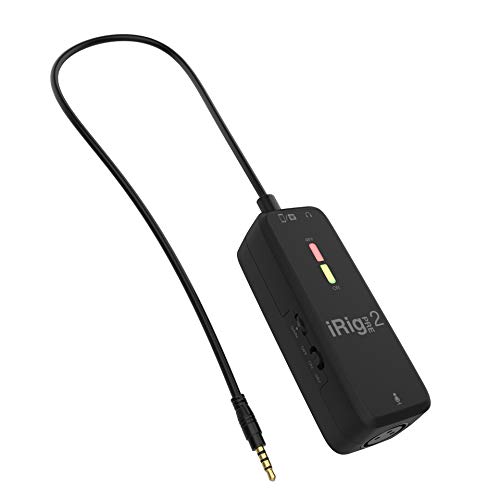
- XLR preamp for mobile devices and cameras
- +48V phantom power with adjustable gain
- Direct headphone monitoring
Best For: Portable recording, streaming, and camera setups
High-Gain Streaming Option

- Up to +75 dB clean gain
- Dual inputs for dynamic and condenser microphones
- XLR and 3.5mm outputs
Best For: Podcasting, streaming, and mixed-microphone setups
Full Desktop Interface Pick

- Two Class-A microphone preamps
- USB-C audio interface connectivity
- Two headphone outputs and monitor controls
Best For: Computer-based recording with two microphone channels
Best Overall Value

- Up to 75dB gain and -120dB EIN
- 48V phantom power for condenser microphones
- Balanced XLR plus dual 3.5mm outputs
Best For: Low-output dynamics, vocals, and flexible desktop connections
Best Compact Booster

- 20dB balanced gain boost
- 48V power for dynamic and condenser mics
- Compact 8.8-ounce metal design
Best For: Simple home studio, podcasting, and streaming setups
Best for Flexible Setups

- 0–72dB adjustable gain and -120dBV EIN
- Independent mic and 1MΩ instrument inputs
- USB-C power-bank support with 48V phantom power
Best For: Streaming, mobile recording, and mic-plus-instrument setups
Best Dual-Channel Booster

- Two channels with +25dB clean gain
- Low-noise design with balanced XLR I/O
- Phantom-powered; not for condenser mics
Best For: Dynamic and passive ribbon microphone setups needing two channels
Best Versatile Connectivity
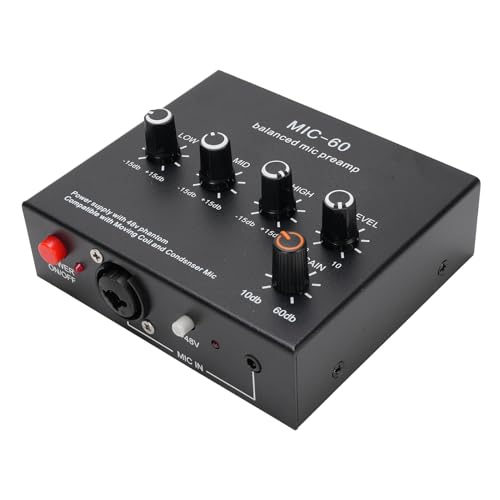
- Up to +60dB of gain
- Supports dynamic and condenser microphones
- XLR, 3.5mm, and 6.35mm connections
Best For: Flexible home recording, streaming, and multi-device setups
Best Compact Single-Channel Pick

- Adds +25dB of clean gain
- Balanced XLR input and output
- Small metal chassis for desktop use
Best For: Single dynamic or passive ribbon microphone setups
Transformer-Toned Choice – Auteur DT
The Black Lion Audio Auteur DT is a focused option for shoppers comparing desktop microphone preamps and wanting a single-channel design for microphone or instrument sources. Its ultra-high-speed input stage and transformer-balanced output are suited to a straightforward desktop recording setup.
Best For: Home studios and desktop rigs needing one microphone or instrument preamp channel.
Pros:
- Dedicated single-channel microphone and instrument preamp
- Ultra-high-speed input stage
- Transformer-balanced output
Cons:
- Only one channel
- At 5.1 pounds, it is less portable than compact alternatives
The Auteur DT makes the most sense when you prefer a purpose-built desktop unit and do not need multiple simultaneous channels. Its channel count and desktop dimensions are the main factors to weigh before buying.
Mobile Recording Pick – iRig Pre 2
The IK Multimedia iRig Pre 2 is a compact choice among desktop microphone preamps when mobile compatibility matters. It connects an XLR microphone to phones, tablets, Android devices, and DSLR cameras, while offering adjustable gain, +48V phantom power, and direct headphone monitoring.
Best For: Mobile recording, podcasting, streaming, and camera-based setups using dynamic, condenser, or ribbon microphones.
Pros:
- Works with iPhone, iPad, Android devices, and DSLR cameras
- True +48V phantom power and adjustable gain
- Headphone output for real-time, no-latency monitoring
- Very lightweight at 100 g
Cons:
- Single-channel design
- Plastic enclosure
- Requires two AA batteries
The iRig Pre 2 is a practical fit if portability and broad device compatibility are more important than a traditional studio desktop format. Its battery-powered design and headphone monitoring make it especially flexible for recording away from a computer.
High-Gain Streaming Option – XTUGA XIC1
The XTUGA XIC1 stands out among desktop microphone preamps for its dual-channel layout and up to +75 dB of clean, transparent gain. It supports dynamic and condenser microphones, adds 48V phantom power, and provides balanced XLR plus 3.5mm outputs for recording and streaming equipment.
Best For: Home studios, podcasting, live streaming, and users combining a dynamic microphone with a condenser microphone.
Pros:
- Up to +75 dB of stated gain
- Dual-channel inputs for a condenser and dynamic microphone
- 48V phantom power and balanced XLR output
- 3.5mm line and microphone outputs for streaming devices
Cons:
- The supplied notes do not specify separate control details for each channel
- Designed as a preamp rather than a complete audio interface
The XIC1 is a versatile choice when you need substantial gain and more than one input type in a compact metal enclosure. Confirm that your wider setup provides any additional interface or monitoring features you may need.
Full Desktop Interface Pick – Audient iD14 MKII
The Audient iD14 MKII is a strong option for shoppers comparing desktop microphone preamps with the added functionality of a USB audio interface. It combines two Class-A microphone preamps, USB-C connectivity, two headphone outputs, and monitor mix and panning functions in an all-metal desktop housing.
Best For: Computer-based home recording where two high-performance microphone preamps and interface features are useful.
Pros:
- Two Class-A microphone preamps based on Audient’s ASP8024 console technology
- USB-C connectivity for Mac, PC, and iOS compatibility
- Two headphone outputs
- All-metal desktop housing
Cons:
- More than a standalone single-channel preamp if you only need one input
- Computer or compatible host device required for its USB interface functions
The iD14 MKII is the most complete desktop-oriented choice in this group for recording into a computer or iOS device. Its two preamps and interface features add flexibility, while the compact metal enclosure supports a stable workstation setup.
Best Overall Value – JCANOL MIC-1
For shoppers comparing desktop microphone preamps, the JCANOL MIC-1 stands out with substantial gain, very low stated input noise, and flexible output options. Its compact metal housing and broad device compatibility make it suitable for home recording, podcasting, and computer-based audio setups.
Best For: Low-output dynamic microphones, vocal recording, and setups needing both balanced XLR and 3.5mm outputs.
Pros:
- Up to 75dB of clean, transparent gain with a stated -120dB EIN.
- Supports dynamic and condenser microphones with 48V phantom power.
- Offers balanced XLR, 3.5mm mic, and 3.5mm line outputs.
- Includes a 1MΩ high-impedance instrument input and a 3-year warranty.
Cons:
- The two input ports cannot be used simultaneously.
- The many output formats may be more than a simple desktop setup requires.
The MIC-1 is a versatile choice when you want strong gain for demanding microphones without giving up convenient connections. Just note that its mic and instrument inputs are alternate options rather than simultaneous channels.
Best Compact Booster – FOSASDY Mic Preamplifier
This compact microphone preamp is a straightforward option for desktop microphone preamps when you need a modest gain boost in a small enclosure. Its balanced circuitry, 48V power, and XLR output are aimed at home studios, podcasting, recording, and live streaming.
Best For: Simple vocal, podcast, and streaming setups using dynamic or condenser microphones.
Pros:
- Provides a stated 20dB gain boost with balanced amplification circuitry.
- Includes 48V power for dynamic and condenser microphone compatibility.
- Fully balanced circuit is designed for low-noise, uncolored sound.
- Lightweight 8.8-ounce design with a rugged black metal case.
Cons:
- Its 20dB gain is less extensive than the higher-gain models in this roundup.
- The supplied notes specify an XLR output but do not list additional output formats.
The FOSASDY is best viewed as a compact, uncomplicated booster rather than a feature-heavy preamp. It makes sense for users who value portability and basic balanced operation over wide gain adjustment or multiple outputs.
Best for Flexible Setups – RO-04 Mic Preamp
The RO-04 is a strong candidate among desktop microphone preamps for users who need adjustable gain, instrument support, and mobile-friendly power. Its 0–72dB range, stated -120dBV EIN, dual output levels, and USB-C power design support studio, streaming, and portable recording workflows.
Best For: Home studios, live streaming, mobile recording, and users switching between microphones and instruments.
Pros:
- Adjustable 0–72dB gain accommodates low-output microphones and quieter sources.
- Stated -120dBV EIN helps maintain a low noise floor at higher gain.
- Dedicated mic and 1MΩ instrument inputs can operate simultaneously.
- Includes 48V phantom power, HPF, phase control, dual outputs, and USB-C power-bank support.
Cons:
- At 2.42 pounds, it is less lightweight than the compact alternatives.
- Its broader feature set may be unnecessary for users seeking only a basic gain boost.
Choose the RO-04 when signal matching and portability matter as much as clean gain. The independent microphone and instrument paths are particularly useful for combined vocal-and-instrument setups, while USB-C power expands where you can use it.
Best Dual-Channel Booster – StudioMan CL-200 XLR Preamp
The StudioMan CL-200 is a practical choice among desktop microphone preamps when you need clean extra gain for two dynamic or passive ribbon microphones. Its compact metal housing, balanced XLR connections, and phantom-power operation make it easy to add to a home studio, podcast, or live sound chain.
Best For: Users who need two channels of clean gain for dynamic or passive ribbon microphones.
Pros:
- Provides +25dB of gain across two channels.
- Offers low-noise, low-distortion performance with a 10Hz–20kHz response.
- Uses balanced XLR input and output and standard 48V phantom power.
- Compact metal housing suits desktop and portable setups.
Cons:
- Does not pass phantom power to condenser microphones.
- Requires 48V phantom power from a mixer, interface, or preamp.
- The mic-to-booster cable is recommended to be shorter than 30 feet.
Choose the CL-200 if you want a two-channel signal lift without adding a separate power adapter. It is especially well suited to low-output dynamic microphones and setups with longer balanced cable runs after the booster.
Best Versatile Connectivity – VBESTLIFE 3-Input Mic Preamp
For shoppers comparing desktop microphone preamps with flexible routing, this VBESTLIFE model combines up to +60dB of gain with three inputs and several output formats. Its 48V power, balanced XLR output, and 3.5mm and 6.35mm connections make it suitable for varied home recording and streaming equipment.
Best For: Home studios, vocal recording, podcasts, and live streaming setups that need multiple connection options.
Pros:
- Offers up to +60dB of gain for low-level microphone signals.
- Supports both dynamic and condenser microphones with 48V power.
- Provides XLR balanced, 3.5mm, and 6.35mm microphone or line outputs.
- Compact black metal housing helps reduce interference and is easy to carry.
Cons:
- The supplied warranty is listed as 90 days.
- Its broad connector selection may require more setup decisions than a dedicated XLR booster.
This is the more adaptable option for users connecting microphones to different types of interfaces, mixers, speakers, or consoles. Consider it when connectivity and substantial gain range matter more than a simple single-purpose signal booster.
Best Compact Single-Channel Pick – StudioMan CL-100 XLR Preamp
The StudioMan CL-100 is a straightforward desktop microphone preamp for adding +25dB of clean gain to a dynamic or passive ribbon microphone. With balanced XLR connections, phantom-power compatibility, and a small metal chassis, it fits neatly into home studios, broadcast desks, and mobile recording rigs.
Best For: Single-microphone setups using dynamic or passive ribbon microphones.
Pros:
- Delivers +25dB of gain to strengthen low-level microphone signals.
- Uses dual balanced XLR input and output connections.
- Compact metal construction provides a desk-friendly, portable design.
- Offers a 10Hz–20kHz frequency response and high headroom.
Cons:
- It is designed for one microphone channel rather than dual-channel use.
- It is intended for dynamic and passive ribbon microphones, not a broad range of microphone types.
- Requires 48V phantom power from connected equipment.
The CL-100 makes sense when you want a simple, compact gain stage without extra outputs or controls. Its single-channel XLR design keeps the signal path easy to integrate into a focused recording or live-sound setup.
How We Picked the Best Desktop Microphone Preamps
We evaluated these Desktop Microphone Preamps by focusing on practical performance and setup flexibility. Key considerations included available gain, noise performance, phantom-power support, input and output connections, channel count, controls, portability, and compatibility with dynamic and condenser microphones. We also considered whether each unit is best suited to a dedicated recording chain, a compact streaming desk, mobile recording, or a broader USB audio setup.
Because product specifications and included accessories can vary, confirm the current listing details before buying—particularly power requirements, connector types, and whether a USB cable, power supply, or adapter is included.
Quick Comparison
| Best For | What to Look For |
|---|---|
| Dynamic microphones | High, clean gain and low self-noise |
| Condenser microphones | Reliable 48V phantom power |
| Podcasting and streaming | Simple controls, balanced XLR connections, and easy monitoring |
| Mobile recording | Phone, tablet, or camera compatibility and suitable adapters |
| Home studios | Multiple inputs, USB connectivity, Hi-Z input, and flexible routing |
Key Buying Factors for Desktop Microphone Preamps
Gain Range and Noise
Dynamic microphones often need substantially more gain than condenser models, especially when positioned away from the speaker. Look for enough headroom to reach a healthy recording level without turning the gain control fully up. A low equivalent input noise figure, when provided, can help preserve quiet sources and spoken-word detail.
Phantom Power
Condenser microphones generally require 48V phantom power. Choose a preamp with dependable phantom power if you use condenser microphones, active ribbon microphones, or certain inline accessories. Do not enable phantom power indiscriminately with equipment that is not designed to accept it.
Connections and Workflow
XLR inputs and balanced outputs are preferable for longer cable runs and lower interference. A standalone preamp may require a separate audio interface or mixer, while a USB interface can connect directly to a computer and often adds headphone monitoring, conversion, and recording software compatibility. Check whether the outputs match your existing equipment.
Useful Controls and Features
Adjustable gain is essential, while features such as a high-pass filter, phase switch, Hi-Z input, multiple channels, and direct monitoring can make a larger difference in real-world use than headline specifications. For mobile or camera recording, verify device compatibility and power limitations before purchase.
Who Should Buy Which Desktop Microphone Preamps?
Choose a Simple Single-Channel Preamp If:
You already own an interface or mixer and primarily need extra clean gain for one microphone. This is often the most focused solution for a dynamic microphone used in a podcast or voiceover chain.
Choose a Compact Multi-Input Model If:
You need to connect more than one microphone, switch between connectors, or add flexible outputs for a small streaming or recording setup. Confirm the gain available on every channel.
Choose a USB Audio Interface If:
You want one desktop device for microphones, headphones, monitors, and computer recording. Interfaces are generally the better long-term choice for home studios and users who need reliable monitoring or instrument inputs.
Choose a Mobile-Compatible Adapter If:
You record with an iPhone, iPad, Android device, or DSLR camera and value portability over extensive controls. Check the required adapter, device support, and phantom-power behavior before ordering.