Adding an ADAT-equipped microphone preamp is one of the simplest ways to expand a compatible audio interface without replacing your existing setup. The right unit can add eight or more input channels while matching your needs for clean gain, compression, conversion, or premium analog character.
These 10 options cover affordable channel expanders, versatile USB interfaces, dynamics-equipped preamps, and high-end studio hardware. Use the guide below to narrow the choices by workflow, channel count, sound, and budget.
Best 10 Microphone Preamp with Adat Output Picks for 2026
Flexible Tracking Expansion
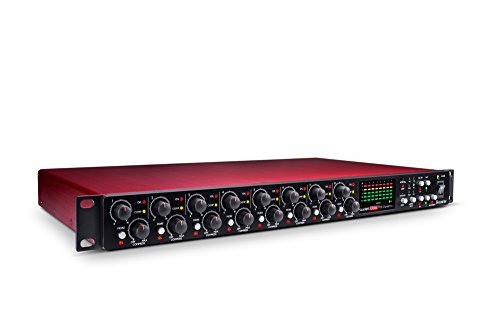
- Eight mic preamps with per-channel analogue compression
- ADAT connectivity with conversion up to 192 kHz
- Eight balanced line outputs plus Word Clock I/O
Best For: Studio and live tracking with flexible signal routing
Transparent Rackmount Expansion

- Eight HDIA preamps in a rugged 1U-style enclosure
- Individual phantom power and analogue compression
- Dual S/MUX optical outputs support eight channels up to 96 kHz
Best For: Professional rack systems and flexible studio routing
Budget ADAT Channel Expansion

- Eight-channel microphone preamplifier with Midas preamps
- 24-bit ADAT conversion at 44.1/48 kHz
- Simple option for expanding compatible interfaces
Best For: Affordable multichannel recording at standard sample rates
Classic Transformer Preamps

- Eight ISA preamps with Lundahl input transformers
- Selectable impedance includes the ISA 110 setting
- Optional card adds ADAT, Dante, and AES3 up to 192 kHz
Best For: Premium tracking with classic transformer-based preamp character
Best All-in-One Expansion

- Eight MIDAS-designed mic preamps
- 18x20 USB audio/MIDI with ADAT I/O
- 24-bit/96 kHz support
Best For: Home studios needing multiple inputs and computer connectivity
Best Channel-Strip Flexibility
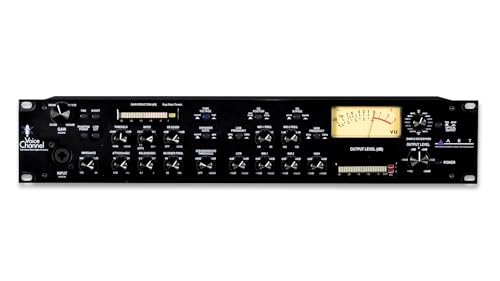
- Tube preamp with warmth-focused design
- Compressor, expander, de-esser, and gate
- ADAT plus AES/EBU, S/PDIF, TOSLink, and USB
Best For: Single-channel vocal and voiceover recording
Best Premium Eight-Channel Expander

- Eight Clarett preamps with switchable Air mode
- ADAT outputs, balanced outputs, and inserts
- 24-bit/192 kHz conversion
Best For: ADAT-equipped studios tracking drums and multiple sources
Expandable Analog Front End

- Eight Class-A mic preamps
- 24-bit/48 kHz digital operation
- Word clock I/O and +48V phantom power
Best For: Adding eight mic inputs to a studio setup
Modern All-in-One Expansion Hub
Focusrite Scarlett 18i20 4th Gen

- Eight mic preamps with 69 dB gain
- Dual ADAT, S/PDIF, MIDI, and word clock
- 24-bit/192 kHz USB interface
Best For: Expandable computer-based recording systems
Premium Character and Conversion

- Class A preamp/EQ channel strip
- ADAT I/O and 24-bit/192 kHz conversion
- Insert loop and headphone amplifier
Best For: Character-focused two-channel recording
Flexible Tracking Expansion – Scarlett OctoPre Dynamic
The Focusrite Scarlett OctoPre Dynamic is a practical microphone preamp with ADAT output for expanding an ADAT-equipped interface by eight channels. Its eight mic preamps, per-channel compression, 192 kHz conversion, and Word Clock I/O make it suitable for detailed studio tracking and synchronized setups.
Best For: Home studios, drum tracking, and users who need flexible analogue compression and additional line outputs.
Pros:
- Eight natural-sounding mic preamps with 48V phantom power on every channel
- Analogue compression on every channel helps manage loud sources
- Supports sample rates up to 192 kHz and includes Word Clock I/O
- Eight balanced line outputs are useful for live or hardware routing
Cons:
- It requires an ADAT-equipped interface or compatible digital device
- The unit weighs 7.5 pounds, making it less portable than compact expanders
Choose the OctoPre Dynamic when compression and flexible analogue routing matter as much as adding eight ADAT channels. Its high-resolution conversion and broad connectivity make it a versatile expansion unit.
Transparent Rackmount Expansion – Tascam SERIES 8P Dyna
Tascam Series 8P Dyna 8 Channel Microphone Preamplifier with Analog Compressor
Check Price On AmazonThe Tascam SERIES 8P Dyna is a microphone preamp with ADAT output designed for professional rack setups. It combines eight HDIA preamps with individual phantom power, single-control analogue compression, dual S/MUX optical outputs, and eight analogue line outputs.
Best For: Rack-based studios needing transparent preamps, flexible input types, and eight-channel expansion at up to 96 kHz.
Pros:
- Eight stated ultra-low-noise HDIA preamps provide a transparent, natural signal path
- Two front combo inputs accommodate instruments or microphones
- Individual +48V phantom power supports different microphone types
- Dual S/MUX optical outputs send all eight channels at up to 96 kHz
Cons:
- Its S/MUX optical configuration may require compatible equipment for higher sample rates
- The listed warranty is one year for parts and 90 days for labor
The SERIES 8P Dyna is a strong choice for users who want professional construction and transparent preamps alongside analogue compression. Its combination of optical and line-level outputs supports varied studio and console-routing needs.
Budget ADAT Channel Expansion – Behringer ADA8200
Behringer ADA8200 Audiophile 8 In/8 Out ADAT Audio Interface with Midas Mic Preamplifiers
Check Price On AmazonThe Behringer ADA8200 is a straightforward microphone preamp with ADAT output for adding eight inputs and outputs to a compatible setup. It provides Midas mic preamplifiers and 24-bit AD/DA conversion at 44.1 or 48 kHz through ADAT optical connectivity.
Best For: Cost-conscious studios that need eight additional mic channels at standard sample rates.
Pros:
- Provides eight microphone preamp channels in one unit
- Includes Midas preamplifiers and ADAT optical output
- Offers eight-channel 24-bit conversion at 44.1/48 kHz
Cons:
- Maximum sample rate is limited to 48 kHz
- The supplied notes specify ADAT optical output but do not list advanced clocking or compression features
The ADA8200 focuses on the essentials: eight mic inputs, ADAT expansion, and standard-rate conversion. It is best suited to simple multichannel recording systems where affordability and channel count take priority over high-resolution features.
Classic Transformer Preamps – Focusrite ISA 828 MkII
The Focusrite ISA 828 MkII is an eight-channel microphone preamplifier built around the classic ISA design and Lundahl LL1538 input transformers. For ADAT expansion, it requires the optional A-D card, which adds digital conversion to ADAT, Dante, and AES3 at up to 192 kHz and 24-bit resolution.
Best For: Engineers seeking transformer-based ISA tone, selectable impedance, and a premium eight-channel preamp platform with optional digital expansion.
Pros:
- Classic ISA circuitry uses Lundahl LL1538 input transformers
- Switchable input impedance includes the classic ISA 110 setting
- Optional A-D card supports ADAT, Dante, and AES3 up to 192 kHz/24-bit
- Per-channel six-segment LED peak meters aid level monitoring
Cons:
- ADAT output requires the optional A-D card
- The supplied notes do not specify included digital conversion hardware
The ISA 828 MkII is the premium, character-focused option in this group. It makes the most sense when transformer-based preamps and selectable impedance are central to the setup, and when the optional digital card fits the expansion budget.
Best All-in-One Expansion – Behringer UMC1820
If you need a microphone preamp with ADAT output plus a broad computer recording setup, the Behringer UMC1820 combines eight MIDAS-designed mic preamps, USB connectivity, and ADAT I/O in one interface. It supports up to 24-bit/96 kHz recording and streams 18 inputs and 20 outputs to compatible Mac or Windows systems.
Best For: Home studios and project rooms that need multiple microphone inputs, USB recording, and ADAT-based expansion.
Pros:
- Eight MIDAS-designed mic preamps with +48V phantom power.
- 18×20 USB audio/MIDI interface with ADAT I/O.
- Supports 24-bit/96 kHz audio and popular recording software.
Cons:
- Its 96 kHz maximum sample rate is below the 192 kHz capability of some dedicated expanders.
- It may provide more I/O than needed for a small, one- or two-microphone setup.
The UMC1820 is a practical choice when you want preamps, ADAT connectivity, and a complete USB interface rather than a standalone ADAT expander.
Best Channel-Strip Flexibility – ART VoiceChannel
The ART VoiceChannel is a single-channel microphone preamp with ADAT output and built-in processing for recording-focused setups. Its tube preamp design is paired with compressor, expander, de-esser, and gate functions, while digital connectivity includes ADAT Lightpipe, AES/EBU, S/PDIF, and TOSLink.
Best For: Vocalists, voiceover artists, and engineers who want tube-style preamp character and dynamics processing on one input.
Pros:
- Tube preamp design aimed at warmth and definition.
- Integrated compressor, expander, de-esser, and gate.
- Offers ADAT, AES/EBU, S/PDIF, TOSLink, and USB connectivity.
Cons:
- Provides one channel rather than multichannel microphone expansion.
- Its processing-focused design may be unnecessary if you only need basic ADAT conversion.
Choose the VoiceChannel when tone shaping and dynamics control are as important as digital routing. It is less suited to recording several microphones at once.
Best Premium Eight-Channel Expander – Focusrite Clarett OctoPre
For adding high-quality inputs to an existing interface, the Focusrite Clarett OctoPre is a dedicated microphone preamp with ADAT output and eight Clarett mic preamps. It supports up to 24-bit/192 kHz conversion, includes switchable Air mode, and adds inserts, instrument inputs, and balanced line outputs for flexible studio routing.
Best For: Studios expanding an ADAT-equipped interface for drum tracking, multi-microphone recording, and outboard processing.
Pros:
- Eight Clarett mic preamps with switchable analogue Air effect.
- Twin ADAT outputs and eight balanced line outputs.
- Up to 24-bit/192 kHz conversion with high stated dynamic range.
- Dedicated inserts, clip indicators, and two high-headroom instrument inputs.
Cons:
- Requires an ADAT-equipped interface or compatible digital setup for expansion.
- Its eight-channel feature set may be excessive for users needing only one or two preamps.
The Clarett OctoPre is the strongest fit when you need eight channels, higher-resolution conversion, and studio-friendly monitoring and insert options in a dedicated ADAT expander.
Expandable Analog Front End – PreSonus DigiMax LT
The PreSonus DigiMax LT is a practical choice when you need a microphone preamp with ADAT output and eight Class-A preamps for expanding a recording setup. It also provides balanced analog outputs, word clock I/O, 24-bit/48 kHz operation, and useful gain-staging features.
Best For: Home studios and project rooms needing eight additional mic inputs with digital expansion.
Pros:
- Eight Class-A microphone preamps with balanced analog outputs
- 24-bit/48 kHz digital operation
- 20 dB pad and +48V phantom power support
- Word clock I/O for system synchronization
Cons:
- Limited to 48 kHz operation
- Does not include the broader interface features found on larger USB systems
The DigiMax LT focuses on straightforward multi-channel preamp expansion. Choose it when eight inputs, dependable synchronization, and balanced analog connectivity matter more than higher sample rates or integrated computer-interface features.
Modern All-in-One Expansion Hub – Focusrite Scarlett 18i20 4th Gen
The Focusrite Scarlett 18i20 4th Gen combines a microphone preamp with ADAT output and a full USB-C interface. With eight mic preamps, dual ADAT, S/PDIF, MIDI, word clock, 18 inputs, and 20 outputs, it suits recording systems that need substantial routing and expansion flexibility.
Best For: Project and professional studios building a versatile computer-based recording rig.
Pros:
- Eight mic preamps with up to 69 dB of gain
- Dual ADAT, S/PDIF, MIDI, and word clock connectivity
- 24-bit/192 kHz converters with a stated 122 dB dynamic range
- Auto Gain, Clip Safe, Air modes, and included recording software
Cons:
- Requires a computer-centered workflow for its USB interface features
- More functionality than needed for users seeking only basic ADAT preamp expansion
The Scarlett 18i20 is the most complete option here for users who want preamps, conversion, monitoring connections, and digital expansion in one rack-style unit. Its ADAT and word-clock features leave room to grow as the system becomes more complex.
Premium Character and Conversion – Neve 1073SPX-D Channel Strip
The Neve 1073SPX-D is a specialized microphone preamp with ADAT output built around Class A circuitry and a 1073-style channel-strip concept. It adds EQ, insert send/return, a headphone amplifier, USB connectivity, and 24-bit/192 kHz AD/DA conversion.
Best For: Engineers who want distinctive preamp and channel-strip processing alongside digital expansion.
Pros:
- Class A preamp/EQ channel-strip design
- ADAT I/O with 24-bit/192 kHz AD/DA conversion
- Insert send/return and headphone amplifier included
- USB interface compatibility with major recording software
Cons:
- Two-channel design offers fewer mic inputs than eight-channel expanders
- Heavier and more specialized than a basic digital preamp
The 1073SPX-D prioritizes channel-strip character and hands-on processing rather than maximum input count. It is a strong fit when two carefully featured channels and Neve-style Class A circuitry are more valuable than broad multi-mic expansion.
How We Picked the Best Microphone Preamp with Adat Output
We focused on units that provide ADAT connectivity or digital expansion in a practical recording workflow. The selection spans dedicated eight-channel preamps, USB interfaces with ADAT I/O, channel strips, and premium models with onboard processing or distinctive analog circuits. We considered channel count, preamp design, conversion capability, gain control, latency-related features, expansion flexibility, and suitability for vocals, instruments, drums, and project-studio recording.
Because these products serve different budgets and purposes, the best choice is not necessarily the most expensive or the one with the highest input count. Compatibility with your existing interface and the type of recording you do matter just as much.
Quick Comparison
- Best for straightforward expansion: An eight-channel ADAT preamp is usually the simplest way to add microphones to an interface.
- Best for tracking control: Models with analog compressors can help manage vocal, bass, and drum dynamics before conversion.
- Best for premium character: High-end preamps and channel strips may offer more distinctive transformer, tube, or console-style coloration.
- Best all-in-one option: A USB interface with ADAT I/O can serve as both a computer interface and an expandable recording hub.
- Best for larger sessions: Check whether the unit offers eight simultaneous analog inputs and whether your main interface can receive all channels over ADAT.
Key Buying Factors for a Microphone Preamp with Adat Output
Compatibility and ADAT Format
Confirm that your primary interface has an optical ADAT input and supports the sample rate you plan to use. At standard sample rates, one ADAT connection commonly carries eight channels; higher sample rates may reduce the available channel count through S/MUX. Check clocking options, optical cable requirements, and whether the unit sends all desired inputs digitally.
Preamp Quality and Gain Range
Look for enough clean gain for dynamic and ribbon microphones, plus low noise when recording quiet sources. Transparent preamps suit multi-mic tracking and detailed acoustic instruments, while transformer, tube, or console-inspired designs can add color. Phantom power, polarity reversal, and high-pass filtering are also useful for varied sessions.
Compression and Extra I/O
Built-in compression can be valuable when recording vocals or bass, but it also adds cost and complexity. Decide whether you need inserts, line inputs, instrument inputs, MIDI, USB recording, or digital outputs beyond ADAT. Avoid paying for features that duplicate equipment you already own.
Build, Controls, and Workflow
Front-panel meters and accessible gain controls make live tracking easier. For rack systems, verify dimensions, power requirements, and heat management. A unit that is easy to monitor and configure is often more useful than one with better specifications but a slower workflow.
Who Should Buy Which Microphone Preamp with Adat Output?
Choose a basic eight-channel ADAT expander if you need more microphone inputs for drums, ensembles, or rehearsals at a sensible cost. Pick a compressor-equipped model if you want hands-on dynamics control while tracking. A USB interface with ADAT I/O makes more sense for a compact studio that needs a primary computer interface plus future expansion.
Choose a premium preamp or channel strip when the sound of the front end is central to your work, especially for lead vocals, voiceover, and exposed instruments. Before buying any Microphone Preamp with Adat Output, map your complete signal path—from microphone to preamp, optical cable, interface, clock source, and recording software—to ensure every channel will operate at the sample rate and format you need.