If you want cleaner recordings without fighting hiss, harshness, or weak gain, the right interface makes a bigger difference than most people expect. The best audio interfaces with better preamps can give you more usable headroom, smoother vocal capture, and a quieter signal path from the start.
This roundup focuses on 10 strong options for musicians, podcasters, streamers, and home studio users who want dependable sound quality and practical features.
Best 10 Audio Interfaces with Better Preamps Picks for 2026
Compact SSL Pick
Compact 2x4 Interface with SSL Tone
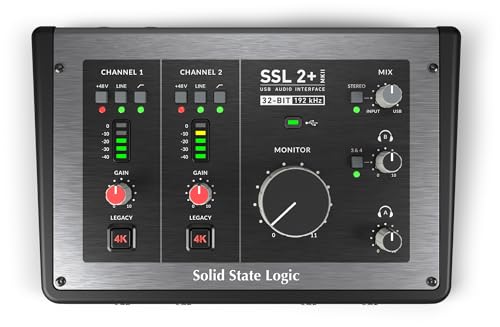
- Two XLR mic preamps
- 32-bit / 192 kHz conversion
- Legacy 4K, loopback, MIDI I/O
Best For: Podcasters and musicians wanting a compact, bus-powered interface
Premium Tone Option
Unison Preamp Desktop Interface

- Unison preamps with analog emulations
- Thunderbolt 3 and 192 kHz support
- 200+ UAD DSP and Native plug-ins
Best For: Producers who want classic preamp color and UAD processing
Clean Recording Choice
High-Headroom USB-C Recording Interface

- Two low-noise Clarett+ preamps
- All-analogue Air mode and better converters
- USB-C bus powered with ADAT expansion
Best For: Home studios wanting clean, transparent preamps and flexible expansion
Routing Power Pick

- 18x22 I/O with digital expansion
- DSP mixing with six mix busses
- Two combo mic/line/hi-Z inputs
Best For: Producers needing flexible routing, monitoring, and compact I/O
Studio-Grade Upgrade
Audient iD14 MKII USB-C Interface

- Two Class-A mic preamps
- USB-C for simpler power and connection
- All-metal desktop build
Best For: Home studios wanting cleaner mic capture in a compact interface
High-Input Value
Behringer UMC404HD MIDAS Interface

- Four MIDAS mic preamps
- 4x4 audio/MIDI with 24-bit/192 kHz
- Metal chassis for rugged use
Best For: Budget-minded users needing four preamps and MIDI
Creator Console Pick
Antelope Zenith 2 Streaming Interface

- Two console-grade preamps with 75 dB gain
- Built-in DSP for vocals, guitar, and monitoring
- Two headphone outputs with independent mixes
Best For: Streamers and podcasters who want premium preamps and DSP
Compact Desktop Pick
Audient iD4 MKII Class A USB-C Interface

- Class-A console microphone preamp
- High-speed USB-C connection
- All-metal desktop housing
Best For: Solo creators and home recording
Best Multi-I/O Upgrade
Focusrite Scarlett 18i16 4th Gen USB-C Interface

- Four 4th Gen mic preamps with 69dB gain
- 24-bit/192kHz converters, 122dB dynamic range
- ADAT, S/PDIF, MIDI, Hi-Z, and line inputs
Best For: Producers and studios needing flexible expansion
Best Simple Starter
Audient EVO 8 USB Audio Interface

- Four EVO mic preamps
- One JFET instrument input
- Two headphone outputs
Best For: Beginners and compact home studios
Compact SSL Pick – Compact 2×4 Interface with SSL Tone
If you want audio interfaces with better preamps in a compact USB-C format, the SSL 2 MKII Plus is built around two XLR mic preamps, 32-bit/192 kHz conversion, and practical studio features like zero-latency monitoring. It also adds Legacy 4K analog enhancement, high-pass filters, MIDI I/O, and stereo loopback, making it a flexible pick for recording, streaming, and small live-studio setups.
Best For: Podcasters, producers, and musicians who want a bus-powered interface with SSL character and straightforward I/O.
Pros:
- Two XLR mic preamps for dual-input recording
- 32-bit / 192 kHz AD/DA converters for high-resolution capture
- Zero-latency monitoring plus two discrete headphone outputs
- Legacy 4K analog enhancement and stereo loopback for creative routing
Cons:
- Only two mic preamps, so it is not ideal for larger tracking sessions
- Bus-powered design may limit expansion compared with larger desktop units
This is a strong fit if you value SSL’s focused feature set and want a portable interface that still covers the essentials for recording and monitoring. The included MIDI I/O and line outputs add flexibility without making the unit bulky.
Premium Tone Option – Unison Preamp Desktop Interface
Universal Audio Apollo Twin X DUO Gen 2 with UAD Analog Classics Thunderbolt 3 Audio Interface
Check Price On AmazonFor buyers comparing audio interfaces with better preamps, the Apollo Twin X DUO Gen 2 stands out for its Unison preamps and realtime analog-style emulations from names like Neve, API, Avalon, Manley, and Fender. It pairs that front-end character with Thunderbolt 3 connectivity, 192 kHz support, and UAD DSP for tracking and mixing through a large plug-in ecosystem.
Best For: Recordists who want preamp coloration, low-latency monitoring, and access to UAD plug-ins on a desktop Thunderbolt interface.
Pros:
- Unison preamps with realtime emulations of classic analog gear
- Thunderbolt 3 connection for desktop workflow
- Includes 200+ UAD DSP and Native plug-ins
- Auto-Gain and Apollo Monitor Correction add practical session tools
Cons:
- Designed around Thunderbolt 3, so compatibility is more specific than USB interfaces
- Two-input desktop format may be limiting for larger sessions
This is the most feature-rich pick in the group if your priority is preamp tone and UAD processing rather than simple I/O count. The included monitoring tools and DSP make it especially appealing for serious home or project studios.
Clean Recording Choice – High-Headroom USB-C Recording Interface
The Focusrite Clarett+ 2Pre is a smart choice if you are shopping for audio interfaces with better preamps and want a clean, detailed front end. It uses two Clarett+ preamps with high headroom and ultra-low noise, plus all-analogue Air mode, improved converters, and a transparent headphone output for accurate monitoring.
Best For: Home studios and singer-songwriters who want clean preamps, strong dynamics, and easy USB-C bus power.
Pros:
- Two Clarett+ preamps with low distortion and very low noise
- All-analogue Air mode adds a useful high-frequency lift
- Improved A-D and D-A converters for more accurate recording and playback
- Bus-powered USB-C design with ADAT expansion
Cons:
- Only two mic preamps on the main unit
- Requires a 15W USB-C port for bus power
Overall, this interface is aimed at users who want a transparent recording path with a little extra sheen available when needed. The JFET instrument inputs and expanded digital connectivity make it more versatile than its small footprint suggests.
Routing Power Pick – Flexible 18×22 DSP Interface
MOTU UltraLite-mk5 18x22 USB Audio Interface 3 for Mac, Windows and iOS with mixing and effects
Check Price On AmazonIf you need audio interfaces with better preamps plus a lot more routing power, the MOTU UltraLite-mk5 delivers two combo mic/line/hi-Z inputs, 18×22 I/O, and DSP mixing in a portable design. It also adds onboard effects, six monitor mixes, high-resolution metering, and broad compatibility across Mac, Windows, and iOS.
Best For: Musicians and producers who want compact hardware, strong monitoring tools, and extensive I/O for bigger sessions.
Pros:
- Two combo inputs with mic, line, and hi-Z support
- 18×22 I/O with S/PDIF and 8-channel optical expansion
- DSP-driven monitor mixing with six separate mix busses
- On-board reverb, EQ, and dynamics processing
Cons:
- Only two mic inputs on the front end
- Feature depth may be more than casual users need
This is the most routing-heavy option here, so it suits users who care about monitoring, effects, and expansion as much as preamp quality. The OLED metering and CueMix 5 control add a polished workflow for recording and playback.
Studio-Grade Upgrade – Audient iD14 MKII USB-C Interface
If you’re shopping for audio interfaces with better preamps, the Audient iD14 MKII is a strong desktop option focused on cleaner front-end capture. It pairs two Class-A microphone preamps with Audient’s high-end ASP8024 HE console heritage, and the USB-C connection simplifies hookup and power delivery for a more streamlined home-recording setup.
Best For: Home recordists who want a compact interface with proven Class-A preamps and easy USB-C connectivity.
Pros:
- Two Class-A microphone preamps designed from Audient’s ASP8024 HE console
- USB-C connector for easier handling and improved power supply
- All-metal desktop housing for stability and durability
- Mac, PC, and iOS compatible
Cons:
- Only provides two mic preamps, so larger sessions may need expansion
- Desktop design is less portable than ultra-compact interfaces
The iD14 MKII is a straightforward pick if your priority is better preamps without overcomplicating the setup. It’s built as a dependable two-channel interface with a clean connection path and a sturdy chassis, making it a practical step up for vocal and instrument recording.
High-Input Value – Behringer UMC404HD MIDAS Interface
For buyers comparing audio interfaces with better preamps on a budget, the Behringer U-PHORIA UMC404HD stands out for its four MIDAS-designed mic preamps and 24-bit/192 kHz recording support. It’s built to handle multi-source sessions with 4×4 I/O plus MIDI, making it useful when you need more inputs without moving up to a larger recording rig.
Best For: Recordists who need four mic preamps and flexible I/O at an accessible price point.
Pros:
- Four MIDAS designed mic preamplifiers with +48V phantom power
- 4×4 USB audio/MIDI interface with 1x MIDI I/O
- 24-bit/192 kHz resolution for high-quality recording
- Impact-resistant metal chassis
Cons:
- USB 2.0 design is older than newer USB-C options
- Larger footprint than simple two-input desktop interfaces
This is a practical choice when input count matters as much as preamp quality. The UMC404HD gives you four mic channels and solid build quality in one box, so it fits well for project studios, band tracking, or any setup that needs more channels right away.
Creator Console Pick – Antelope Zenith 2 Streaming Interface
If your search for audio interfaces with better preamps also includes streaming and vocal processing, the Antelope Audio Zenith 2 brings a lot to the table. It combines two discrete, console-grade preamps with 75 dB of clean gain, plus onboard DSP tools for vocals, guitar, monitoring, and loopback-based content creation.
Best For: Streamers, podcasters, and home recordists who want strong preamps plus built-in DSP processing.
Pros:
- Two discrete, console-grade preamps with 75 dB of clean gain
- 123 dB, 192 kHz/32-bit conversion for detailed audio clarity
- Built-in DSP features for vocals, guitar, and zero-latency monitoring
- Two independent headphone outputs with separate mixes
Cons:
- Feature set may be more complex than a basic plug-and-play interface
- Some control options rely on optional software control
The Zenith 2 is best suited to creators who want an interface that does more than cleanly amplify a microphone. Its preamps, conversion, and onboard effects make it a versatile desk companion for streaming, podcasting, guitar work, and studio recording.
Compact Desktop Pick – Audient iD4 MKII Class A USB-C Interface
If you’re shopping for audio interfaces with better preamps, the Audient iD4 MKII is a strong compact option built around a Class-A console microphone preamp taken from Audient’s high-end ASP8024 HE console. It pairs that sound-focused design with high-speed USB-C, a durable all-metal desktop body, and Mac/PC/iOS compatibility for straightforward home recording.
Best For: Solo creators and home recording setups that want a simple interface with a console-style preamp.
Pros:
- Class-A microphone preamp designed for a higher-end console-style sound
- High-speed USB-C connector improves power and simplifies cabling
- All-metal desktop housing adds durability for portable use
- Includes two headphone outputs and monitor mix/panning functions
Cons:
- Only a 2-channel interface, so it is not built for larger multi-input sessions
- Best suited to compact recording needs rather than full studio expansion
The iD4 MKII focuses on core recording quality over channel count, which makes it easy to recommend when preamp quality matters more than extra I/O. For a streamlined desktop interface with a premium mic preamp, it fits the brief well.
Best Multi-I/O Upgrade – Focusrite Scarlett 18i16 4th Gen USB-C Interface
The Scarlett 18i16 4th Gen is a practical choice if you want audio interfaces with better preamps and also need plenty of connectivity. It offers four 4th Generation mic preamps with up to 69dB of gain, plus Hi-Z, line inputs, ADAT, S/PDIF, and MIDI I/O for a flexible recording setup.
Best For: Producers and home studios that need stronger preamps with lots of input and output options.
Pros:
- Four 4th Generation mic preamps with 69dB of gain
- 24-bit/192kHz converters with 122dB dynamic range
- Air modes add presence and harmonic drive
- Auto Gain and Clip Safe help with fast, reliable level setting
Cons:
- Larger unit with a more studio-oriented footprint
- More interface than you need for very simple solo recording
With its mix of higher-gain preamps and wide I/O support, the 18i16 is aimed at users who want one interface to handle growth over time. It stands out most when you want better preamps without giving up expandability.
Best Simple Starter – Audient EVO 8 USB Audio Interface
The Audient EVO 8 is a straightforward option for buyers comparing audio interfaces with better preamps in a compact package. It includes four EVO mic preamps, one JFET instrument input, and two headphone outputs, making it a practical choice for small recording setups.
Best For: Beginners and compact home studios that want a clean, simple interface with multiple mic preamps.
Pros:
- Four EVO mic preamps for multi-mic recording in a small format
- Includes one JFET instrument input
- Two headphone outputs support monitoring for more than one listener
- USB 2.0 interface keeps the design simple
Cons:
- Uses USB 2.0 rather than newer USB-C connectivity
- Less feature-rich than larger interfaces in this roundup
The EVO 8 keeps the focus on a clean, practical recording setup rather than extra studio extras. If you want a modest interface with multiple mic preamps and easy day-to-day use, it is a solid entry point.
How We Picked These Audio Interfaces with Better Preamps
We focused on interfaces known for stronger mic gain, lower self-noise, and cleaner conversion, along with real-world usability. That means looking at preamp quality, available inputs and outputs, monitoring features, driver stability, and whether the interface fits a solo creator, small band, or desktop studio.
We also favored models that offer enough flexibility to grow with your setup, whether you record one vocal at a time or need more channels for instruments and collaboration.
Quick Comparison
If you need the simplest choice, a compact 2-in/2-out interface is usually best for solo recording. If you track drums, full band demos, or multiple mics, a larger multichannel unit is more practical. For desktop creators and streamers, strong loopback, low-latency monitoring, and easy controls can matter as much as preamp specs.
Key Buying Factors for Audio Interfaces with Better Preamps
Preamp Noise and Gain Range
Look for interfaces that can cleanly power dynamic and condenser microphones without adding noticeable hiss. More gain is helpful, but clean gain is the real priority.
Input Count and Expansion
Match the interface to your current recording needs. Two inputs suit solo work; four or more are better if you record guests, stereo sources, or multiple instruments.
Monitoring and Latency
Direct monitoring, flexible mix control, and low-latency drivers make recording easier and reduce frustration during takes.
Connectivity and Workflow
USB-C is common and convenient, while Thunderbolt models can be appealing for Mac-based users who want very tight performance. Make sure the interface works well with your computer and software.
Extras That Add Real Value
Features like MIDI I/O, loopback, onboard DSP, and monitor control can be genuinely useful if they fit your workflow. Don’t pay for extras you will never use.
Who Should Buy Which Audio Interfaces with Better Preamps?
Solo vocalists, streamers, and podcasters should prioritize a compact interface with quiet preamps and simple monitoring. Singer-songwriters and project studios will usually benefit from 2-channel models with better headroom and instrument inputs. If you record multiple sources at once, choose a 4-input or larger unit for more flexibility. For users who want the most polished desktop experience, higher-end options with premium conversion and advanced routing can be worth the extra cost.
In short, the best choice is the one that matches your input needs, your computer setup, and how often you need truly clean gain at usable recording levels.