If you need one source feeding several listeners, a headphone amplifier with multiple outputs is the cleanest way to share audio without losing volume or clarity. It’s a smart upgrade for studios, podcast setups, classrooms, and gaming stations.
Below, you’ll find 10 options chosen for output count, connection flexibility, build quality, and everyday usability, so you can match the right amp to your setup with confidence.
Best 10 Headphone Amplifier with Multiple Outputs Picks for 2026
Compact 4-Channel Session Amp
Mackie HM-4 4-Channel Headphone Amp

- Four independent headphone outputs
- Per-listener volume control
- Compact metal, plug-and-play design
Best For: Small studios and rehearsals needing simple multi-output monitoring
Gaming DAC Combo
Fosi Audio K5 Pro DAC Headphone Amp
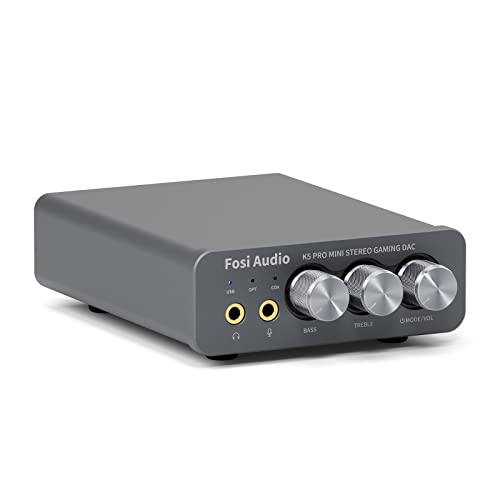
- USB-C, optical, and coaxial inputs
- RCA plus 3.5mm output options
- Mic support with bass and treble control
Best For: Gaming and desktop setups that need a compact DAC/amp hub
Eight-Output Monitor Hub
Bolanle PH400 8-Output Headphone Amp

- Eight outputs across 3.5mm and 6.35mm jacks
- Mono/stereo monitoring switch
- Compact metal desktop design
Best For: Small bands and studios needing flexible mixed-jack monitoring
Metal 4-Way Splitter Amp
FIFINE N6 4-Channel Headphone Amp
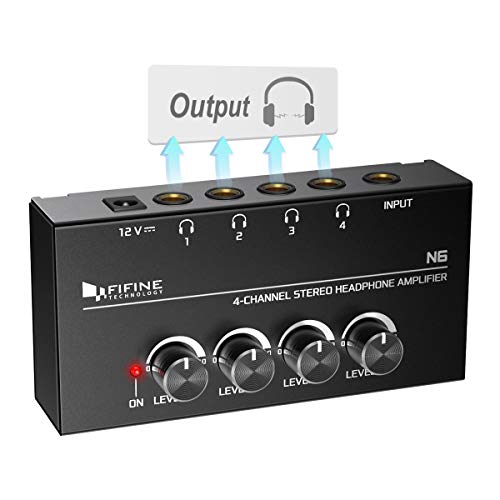
- Four outputs with individual volume knobs
- Rugged metal build
- Includes 12V adapter and power indicator
Best For: Studio and stage users sharing one stereo source with quarter-inch cables
8-Channel Studio Power
Bolanle PH800 16-Output Headphone Amp

- 16 headphone outputs for group monitoring
- Supports high-impedance headphones up to 250Ω
- Mono/stereo switch plus 7-color LED knob
Best For: Band rehearsals, studio monitoring, and live sessions
Compact 4-Way Control
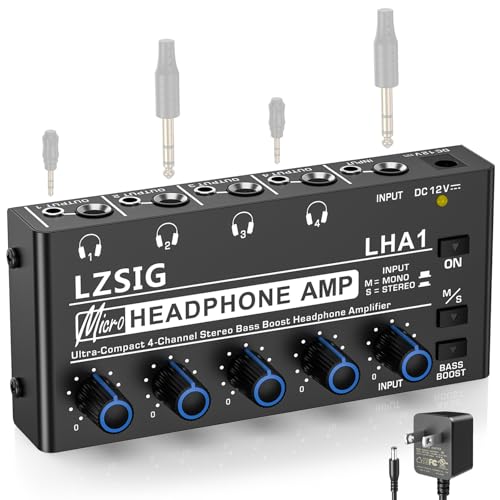
- 4 channels with independent volume control
- Bass boost and stereo/mono switching
- Metal chassis for home studio and stage use
Best For: Small studios and shared listening with 4 headphones
Eight-Output Splitter Rig
STABCL 8-Channel Headphone Amp

- 8 stereo channels with independent volume control
- Also works as a 1-in/8-out audio distributor
- Mono/stereo switch and metal unibody build
Best For: Studios and practice rooms needing eight headphone feeds
6-Channel Studio Monitor Pick
LZSIG Bass Boost Multi-OUT Amp

- Six independent headphone outputs with separate volume control
- Supports 3.5mm and 6.35mm headphones and sources
- Metal build with bass boost and stereo/mono switching
Best For: Home studios and shared monitoring for up to six listeners
Flexible 4-Output Mixer Choice
4-Channel Stereo/Mono Headphone Amp

- Eight total outputs with 3.5mm and 6.35mm jacks
- RCA, 3.5mm, and 6.35mm inputs for broad compatibility
- Four independent volume controls plus mute switches
Best For: Studios and mobile recording setups needing versatile connectivity
Compact Four-Listener Pick
Pyle PHA40 Portable Headphone Amp

- Powers up to four headphones simultaneously
- Independent volume knob for each listener
- Compact, portable metal design with low-noise audio
Best For: Simple four-person monitoring in studios or on stage
Compact 4-Channel Session Amp – Mackie HM-4 4-Channel Headphone Amp
If you need a headphone amplifier with multiple outputs for rehearsals or tracking, the Mackie HM-4 keeps things simple: one source in, four independent headphone feeds out. It accepts either a 1/4-inch or 1/8-inch source and gives each listener their own volume control, making it a practical fit for small sessions where everyone needs a personal mix level.
Best For: Small studio sessions, rehearsals, and quick plug-and-play monitoring setups.
Pros:
- Drives four headphones from a single source
- Each output has its own level control
- Works with 1/4-inch or 1/8-inch inputs
- Compact metal build for desk, rack, or stand use
Cons:
- Limited to four outputs
- No extra feature set beyond basic distribution
- Designed for straightforward monitoring, not advanced routing
This is a no-fuss option if your priority is clean, separate headphone volume control in a small footprint. It is best suited to users who want reliable multi-listener monitoring without adding setup complexity.
Gaming DAC Combo – Fosi Audio K5 Pro DAC Headphone Amp
The Fosi Audio K5 Pro is a headphone amplifier with multiple outputs in the sense that it can feed both 3.5mm AUX and RCA connections from a USB, optical, or coaxial source. It is built as a gaming DAC/headphone amp combo with mic support, bass and treble controls, and enough output power to drive headphones from 16 to 300 ohms, so it works well when you want a compact desktop hub for PC, console, or speaker setups.
Best For: Gaming desktops, PC setups, and compact headphone-plus-speaker listening stations.
Pros:
- USB-C, optical, and coaxial inputs
- RCA and 3.5mm outputs for flexible desktop use
- Mic input plus bass and treble controls
- Drives headphones from 16 ohms to 300 ohms
Cons:
- Not a true multi-headphone distribution amp
- Best suited to desktop use rather than session sharing
- Requires the proper USB-A/C to USB-C connection for audio source input
For buyers who want a compact DAC/amp with extra connectivity instead of a dedicated four-person headphone splitter, the K5 Pro offers a lot in one box. Its strength is versatile source conversion and tidy desktop integration.
Eight-Output Monitor Hub – Bolanle PH400 8-Output Headphone Amp
If you want a headphone amplifier with multiple outputs for group monitoring, the Bolanle PH400 is built for flexible shared listening. It provides 8 individual outputs split across 4 x 3.5mm and 4 x 6.35mm jacks, plus mono/stereo switching for different monitoring needs. The compact metal housing and included DC 5V/3A power supply make it a practical desktop choice for small bands, podcasts, and home recording.
Best For: Small bands, home studios, podcasting, and multi-listener monitoring with mixed jack sizes.
Pros:
- 8 outputs total: 4 x 3.5mm and 4 x 6.35mm
- Mono and stereo monitoring modes
- Compact metal build for desktop or portable use
- Includes power adapter and user manual
Cons:
- Requires external power via DC 5V/3A input
- Not aimed at wireless or battery-powered use
- Best fit is monitoring, not source switching or mixing
The PH400 stands out when jack compatibility matters, since it supports both small and quarter-inch headphone plugs in one unit. It is a strong pick for users who need more outputs than a typical 4-channel amp provides.
Metal 4-Way Splitter Amp – FIFINE N6 4-Channel Headphone Amp
The FIFINE N6 is a headphone amplifier with multiple outputs designed to share one stereo source across up to four listeners. Each output has its own volume knob, and the unit uses 4 x 1/4-inch stereo headphone jacks with a 1/4-inch TRS source input. It is a straightforward choice for studio, stage, or shared listening setups where low noise and a rugged metal build matter.
Best For: Four-person monitoring, studio tracking, and simple multi-headphone listening from one stereo source.
Pros:
- Four separate output level controls
- Supports up to four headphones from one source
- Solid metal construction with compact size
- Includes 12V DC power adapter and power light
Cons:
- Uses 1/4-inch TRS/TS cabling for input and output
- TRS/TS cables are not included
- Limited to four outputs
For buyers who already use quarter-inch studio cables, the N6 is an easy way to split a stereo feed without adding clutter. Its main appeal is simple, durable distribution with individual volume control for each listener.
8-Channel Studio Power – Bolanle PH800 16-Output Headphone Amp
If you need a headphone amplifier with multiple outputs for rehearsals, recording, or live monitoring, the Bolanle PH800 is built for high-demand shared listening. With 16 total headphone outputs and support for high-impedance headphones up to 250Ω, it is aimed at situations where several listeners need a strong, clean signal from one source.
Best For: Band rehearsals, studio monitoring, and live performance setups that need lots of headphone connections.
Pros:
- 16 outputs total: 8 x 3.5mm and 8 x 6.35mm.
- Drives professional headphones up to 250Ω.
- Mono/stereo switching adds flexibility for different monitoring jobs.
- 7-color LED volume knob offers quick visual feedback in low light.
Cons:
- Wired-only design with no wireless support.
- Uses a DC 12V/2A power input, so it is not as portable as smaller bus-powered units.
This is the strongest choice in the group when output count matters most. If your priority is connecting many people at once without sacrificing drive for studio-style headphones, the PH800 is the most expansive option here.
Compact 4-Way Control – LZSIG 4-Channel Headphone Amp
The LZSIG is a practical headphone amplifier with multiple outputs for home studio use, shared listening, and small monitoring setups. It combines four independent channels with low-noise stereo sound, plus a bass boost function and mono/stereo switching for more flexible day-to-day use.
Best For: Home studios, small groups, and desk setups that need independent volume control on up to four headphones.
Pros:
- 4-channel design with independent volume control on each output.
- Compatible with 3.5mm and 6.35mm headphones without an adapter.
- Bass boost mode adds extra emphasis in the 400~600 Hz and 3000~7200 Hz ranges.
- Metal chassis and heavy-duty knobs are built for regular use.
Cons:
- Limited to 4 channels, so it is not ideal for larger crews.
- Listed as a headphone amplifier, not a mixer.
This model makes sense if you want a straightforward, compact monitoring amp with individual level control. It is less about scale and more about useful features in a sturdy, easy-to-place format.
Eight-Output Splitter Rig – STABCL 8-Channel Headphone Amp
The STABCL is designed for buyers who want a headphone amplifier with multiple outputs and simple routing in a compact metal unit. It offers eight stereo amplifier channels, independent volume control, and mono/stereo switching, making it suitable for recording rooms, practice spaces, and other multi-listener setups.
Best For: Recording studios, home practice rooms, and portable setups that need up to eight individually controlled headphone feeds.
Pros:
- 8 high-power stereo channels with independent volume control.
- Works as both a headphone amp and a 1-in/8-out audio distributor.
- Mono/stereo switch helps adapt to different source material.
- Aluminium alloy CNC unibody construction adds durability.
Cons:
- 1/8-inch devices require a conversion plug.
- Includes 12V AC adapter power, so it is not a cable-free portable solution.
This is the most versatile pick for users who want eight outputs without moving into a larger rack-style system. It balances output count, simple controls, and a rugged build for everyday studio or stage use.
6-Channel Studio Monitor Pick – LZSIG Bass Boost Multi-OUT Amp
If you need a headphone amplifier with multiple outputs for a small studio or shared listening setup, the LZSIG LHA2 is built around six independent channels and simple source distribution. It supports both 3.5mm and 6.35mm headphones, includes a stereo/mono switch, and adds bass boost for situations where you want vocals and low end to stand out more clearly.
Best For: Home studios, stage monitoring, and shared listening with up to six headphones
Pros:
- 6-channel design with independent volume control per output
- Supports up to 6 pairs of 32~100Ω headphones
- Works with 3.5mm and 6.35mm headphones and audio sources
- Metal chassis and durable knobs for more rugged use
Cons:
- Bass boost is broad and may not suit every mix
- Designed for wired monitoring rather than portable wireless use
This is a practical pick if your priority is clean multi-person monitoring with separate level control on each channel. The low-noise design and flexible input compatibility make it a strong fit for studio desks, rehearsal spaces, and other setups where reliability matters.
Flexible 4-Output Mixer Choice – 4-Channel Stereo/Mono Headphone Amp
This headphone amplifier with multiple outputs is aimed at recording and small performance setups that need lots of connection options. It offers RCA, 3.5mm, and 6.35mm inputs, plus four 3.5mm outputs and four 6.35mm outputs, so it can handle several listeners while giving each channel its own level control.
Best For: Recording studios and portable monitoring rigs that need wide input/output compatibility
Pros:
- 8 total outputs across 3.5mm and 6.35mm connections
- Four independent volume knobs for channel-level control
- Stereo/mono switching with separate mute switches on inputs
- Metal body with 5V adapter power for stable use
Cons:
- Uses a 5V adapter, so it is not battery powered
- Best suited to wired setups rather than casual desktop listening
For buyers who need an amplifier that can adapt to different gear, this model stands out for its broad input support and dual-format outputs. It is a sensible choice when you want one compact unit to distribute sound cleanly to multiple headphones.
Compact Four-Listener Pick – Pyle PHA40 Portable Headphone Amp
The Pyle PHA40 is a straightforward headphone amplifier with multiple outputs for small groups that need to monitor the same mix. It powers up to four headphones at once through 1/4-inch TRS output jacks, and each listener gets a dedicated volume control for a more personalized monitoring setup.
Best For: Small studios, on-stage monitoring, and simple four-person headphone sharing
Pros:
- Supports up to four headphones at the same time
- Independent rotary volume control for each output
- Compact metal design is easy to carry
- Ultra-low-noise amplification for cleaner audio
Cons:
- Uses only 1/4-inch TRS headphone outputs
- Less flexible than models with multiple input formats
If you want a no-fuss distribution amp for four listeners, this Pyle model keeps the layout simple and portable. It is best when you need dependable shared monitoring rather than extra input variety or advanced controls.
How We Picked the Best Headphone Amplifier with Multiple Outputs
We focused on models that make sense for real-world shared listening: enough output channels for your group size, useful input options, stable volume performance, and a design that fits either desktop or rack-style use. We also prioritized units that are easy to integrate with mixers, PCs, interfaces, and media players.
Quick Comparison: Which Type Fits Best?
If you only need a few listeners, a compact 4-channel unit is usually the simplest and most affordable choice. If you’re running a studio session, rehearsal, or teaching environment, an 8-output or higher-capacity model gives you more flexibility. Bass-boost and converter-equipped models are better when you want extra tone control or need USB/optical/coaxial compatibility.
Key Buying Factors for a Headphone Amplifier with Multiple Outputs
Output Count Vs. Real Use
Check how many people will listen at once, then add a little margin. A Headphone Amplifier with Multiple Outputs should comfortably cover your normal setup without forcing you to daisy-chain splitters.
Impedance and Power
Higher-impedance headphones need more drive to reach clean listening levels. Look for power specs and supported impedance ranges if you use studio cans rather than basic earbuds.
Input Compatibility
Match the amplifier to your source. Common inputs include 3.5mm, 6.35mm, RCA, USB, optical, and coaxial. The best choice is the one that connects directly to your mixer, interface, console, or computer with minimal adapters.
Channel Control and Independence
Independent level control can matter a lot when several people share one source. Separate knobs or balanced output design help reduce frustration and make monitoring easier.
Build and Portability
Metal housings tend to hold up better in studios and mobile rigs, while compact plastic units can be fine for light desktop use. If you move equipment often, look for a sturdy chassis and simple power setup.
Who Should Buy Which Headphone Amplifier with Multiple Outputs?
Buy a compact 4-channel model if you want an affordable desktop solution for small groups. Choose an 8-channel or higher-output amp if you’re managing a larger team, band, or classroom. Pick a converter-style Headphone Amplifier with Multiple Outputs if you need both DAC features and flexible digital inputs. For the most straightforward setup, match the amp to your existing source and choose the smallest output count that still covers your needs.