Choosing the right subwoofer can make low-end decisions easier, but more bass is not automatically more accurate bass. Room size, monitor matching, connection options, and placement all affect whether a sub improves your mixes or creates confusing peaks and nulls.
This roundup compares 10 subwoofers for home studios, including compact desktop models, studio-focused designs, wireless-ready options, and budget-friendly home-theater alternatives. Use the guide below to narrow the list by room, workflow, and bass requirements.
Best 10 Subwoofers for Home Studios Picks for 2026
Deep-Bass Studio Anchor
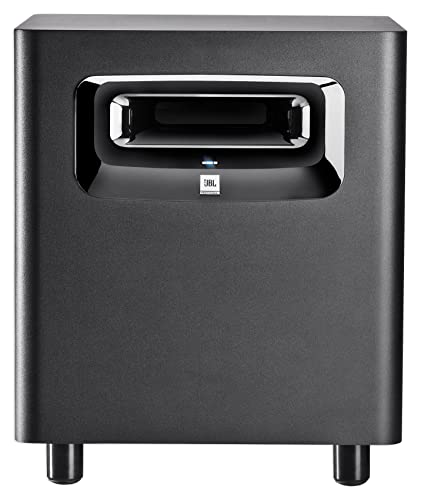
- 10-inch driver reaches into the 20 Hz region
- Balanced XLR and 1/4-inch studio connections
- XLF mode adds club-style bass tuning
Best For: Bass-heavy production and professional studio monitor systems
Flexible Room Calibration

- Downward-facing 10-inch woofer aids placement flexibility
- Adjustable crossover, phase, and volume controls
- Footswitch bypass supports quick mix comparisons
Best For: ADAM T-Series monitors and adjustable studio setups
Compact Connectivity Choice

- 8-inch woofer reaches down to 30 Hz
- Bluetooth 5.0 plus TRS, RCA, and aux inputs
- Crossover and tuning controls aid monitor integration
Best For: Desktop studios, multimedia listening, and flexible connectivity
Small-Room Bass Extension
Audioengine S8 Powered Subwoofer
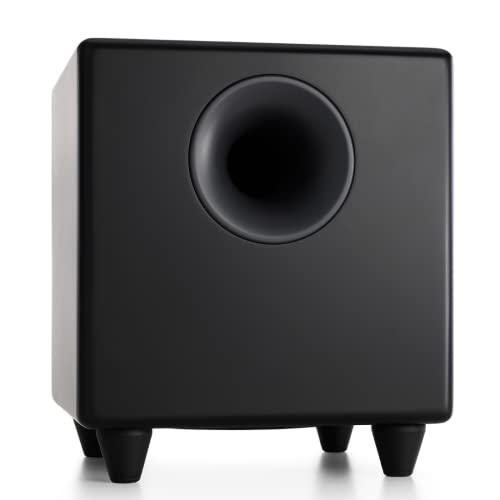
- Compact 8-inch down-firing design
- 250 watts of stated output
- W3 wireless adapter compatibility and sleep mode
Best For: Small home studios, desktops, gaming, and home theater
Desktop Studio Bass Upgrade
Mackie CR8SBT 8-inch Subwoofer

- Built for CR Series monitors
- TRS, RCA, and Bluetooth connectivity
- Remote, crossover, and sub-bypass controls
Best For: CR Series desktop studio setups
High-Output Flexible Bass
Rockville Rock Shaker 10-inch Subwoofer

- 300W RMS and 600W peak ratings
- Adjustable volume, crossover, and phase
- RCA and high-level speaker connections
Best For: Multipurpose studio and home-theater rooms
Stylish Room-Filling Bass

- 10-inch polyfiber woofer
- 150W bottom-mounted Class-D amplifier
- Slot-port bass-reflex enclosure
Best For: Stylish multipurpose studio and listening rooms
Best Compact Powered Pick
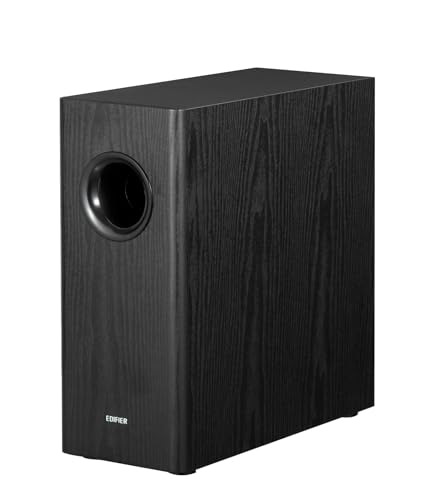
- 70W RMS powered 8-inch woofer
- 35Hz bass with adjustable low-pass filter
- Compact cabinet with included RCA cables
Best For: Small home studios using RCA-equipped speakers
Best Deep-Bass Home Studio Option

- 100W dynamic power from an 8-inch woofer
- 28Hz frequency response
- Twisted flare port for clear, tight bass
Best For: Hybrid home studios used for music and home theater
Best Passive Studio-Building-Block

- 100W RMS, 150W peak passive subwoofer
- Compact 6.5-inch down-firing woofer
- MDF cabinet with anti-shock base
Best For: DIY setups with a compatible external amplifier
Deep-Bass Studio Anchor – JBL Professional LSR310S
For home studios that need extended low end, the JBL Professional LSR310S combines a 10-inch driver with balanced studio connections and a dedicated XLF mode. Its response reaches into the 20 Hz region, making it a substantial option for monitoring bass-heavy productions.
Best For: Producers who want powerful, deep bass extension and balanced integration with an existing studio monitor system.
Pros:
- 10-inch driver delivers low-frequency response into the 20 Hz region.
- Balanced XLR and 1/4-inch inputs plus XLR outputs support studio setups.
- XLF setting provides a club-style bass tuning for dance production.
- 113 dB peak output is designed for sustained high-power use.
Cons:
- The floor-standing cabinet may be more subwoofer than a very compact room needs.
- XLF mode is specialized and may not suit accuracy-focused everyday monitoring.
The LSR310S is a strong choice when deep, energetic bass and professional balanced connectivity matter most. Its sensitivity switch also helps accommodate different signal levels.
Flexible Room Calibration – ADAM Audio T10S
The ADAM Audio T10S is a compact active subwoofer for home studios that need clearer insight into the lowest frequencies. Its downward-facing 10-inch woofer, adjustable crossover, phase rotation, and dedicated volume control make it practical to tune for different rooms and monitor setups.
Best For: T-Series monitor users and producers who want adjustable low-end integration in a flexible studio layout.
Pros:
- Designed to complement ADAM Audio T5V and T7V monitors.
- Downward-facing woofer allows more placement flexibility.
- Adjustable crossover, phase rotation, and volume support room calibration.
- Footswitch bypass makes checking mixes with and without sub-bass quick.
Cons:
- Its RCA connectivity may be less convenient for setups centered on balanced inputs.
- The 28 Hz frequency rating does not extend quite as low as some larger studio subs.
The T10S focuses on controllable integration rather than unnecessary complexity. It is especially appealing if you already use ADAM T-Series monitors or want an easy way to compare a mix with and without bass extension.
Compact Connectivity Choice – PreSonus Eris Sub 8BT
The PreSonus Eris Sub 8BT is a compact option for home studios, desktop systems, and music listening. It combines an 8-inch front-firing woofer with Bluetooth 5.0, balanced TRS inputs, RCA connections, crossover controls, and a front headphone output.
Best For: Desktop producers and multimedia listeners who want flexible wired and wireless connections in a compact subwoofer.
Pros:
- Reaches down to 30 Hz with a woven-composite 8-inch woofer.
- Bluetooth 5.0 supports convenient wireless playback.
- Balanced TRS, RCA, and front-panel aux inputs cover varied sources.
- Highpass and lowpass controls help integrate it with main monitors.
Cons:
- The 8-inch design may provide less low-end authority than larger studio subwoofers.
- Bluetooth is convenient for playback but may not be the first choice for critical wired monitoring.
With room-tuning controls, flexible inputs, and an easy-access headphone amplifier, the Eris Sub 8BT is a versatile fit for smaller production spaces and mixed work-and-listening setups.
Small-Room Bass Extension – Audioengine S8 Powered Subwoofer
The Audioengine S8 adds substantial bass to home studios, desktop systems, and home theaters without requiring a large cabinet. Its 8-inch down-firing design supports flexible positioning, while the wired RCA connection and compatibility with the W3 wireless subwoofer adapter kit allow different setup approaches.
Best For: Small-room studio, desktop, gaming, and home-theater systems seeking compact down-firing bass.
Pros:
- Down-firing 8-inch driver produces deep bass in a compact enclosure.
- 250 watts of stated output provides considerable power for its size.
- Compatible with the Audioengine W3 wireless subwoofer adapter kit.
- Sleep mode powers down automatically when not in use.
Cons:
- RCA connectivity is less comprehensive than a subwoofer with balanced studio I/O.
- Its stated use spans home audio and gaming, so it offers fewer studio-specific adjustment features than some alternatives.
The S8 makes sense when placement flexibility and broad home-audio compatibility matter more than extensive monitor-calibration controls. It is a compact, powerful addition to a small home studio or mixed-use listening space.
Desktop Studio Bass Upgrade – Mackie CR8SBT 8-inch Subwoofer
For creators seeking subwoofers for home studios, the Mackie CR8SBT is a compact, CR Series-focused option that adds low-end response to desktop monitors. TRS and RCA connectivity, Bluetooth input, adjustable crossover, and a desktop remote make it easy to integrate into a nearfield setup.
Best For: CR Series monitor users who want convenient desktop bass control and flexible wired or Bluetooth input.
Pros:
- Designed to pair with Mackie CR Series monitors.
- Offers TRS, RCA, and Bluetooth connectivity.
- Includes adjustable crossover and a desktop remote with sub-bypass control.
- 200-watt maximum output from an 8-inch woofer.
Cons:
- Its stated 40 Hz frequency response may not satisfy users seeking very deep sub-bass.
- At 32.4 pounds, it is not especially portable.
- Bluetooth may be unnecessary in a strictly wired studio monitoring chain.
The CR8SBT is a practical choice when desktop convenience matters as much as added bass. Its monitor-oriented connections and quick-access controls make it particularly suitable for compact CR-based production spaces.
High-Output Flexible Bass – Rockville Rock Shaker 10-inch Subwoofer
The Rockville Rock Shaker is a powered 10-inch model for buyers comparing subwoofers for home studios and mixed entertainment setups. Its built-in Class-D amplifier, adjustable volume, crossover, and phase controls provide useful tuning flexibility, while RCA and high-level connections support varied systems.
Best For: Home studios that also handle movies, gaming, or home-theater playback and need a larger, high-output wired subwoofer.
Pros:
- 10-inch woofer with 300-watt RMS and 600-watt peak output ratings.
- Built-in Class-D amplifier is matched to the woofer and enclosure.
- Volume, crossover, and phase controls allow setup adjustments.
- Provides RCA line and high-level speaker inputs and outputs.
Cons:
- Its home-theater-oriented design may be less focused than a dedicated studio subwoofer.
- It uses wired RCA connectivity with no wireless communication.
- The listed frequency response is 200 Hz, which may require careful crossover setup.
The Rock Shaker stands out for output and connection flexibility rather than compactness. It makes sense for a multipurpose room where studio work shares space with TV, gaming, or home-theater use.
Stylish Room-Filling Bass – Jamo S 810 10-inch Subwoofer
The Jamo Studio Series S 810 is a slim-looking 10-inch powered subwoofer to consider among subwoofers for home studios and multipurpose listening rooms. It combines a bottom-mounted 150-watt Class-D amplifier with a slot-port bass-reflex design and a black finish.
Best For: Users who want a stylish 10-inch subwoofer for a studio, desktop, gaming, or home-theater environment.
Pros:
- Uses a 10-inch polyfiber woofer.
- Includes a bottom-mounted 150-watt Class-D amplifier.
- Slot-port bass-reflex design supports the enclosure’s low-frequency output.
- Compatible-device listings include desktops, laptops, projectors, and televisions.
Cons:
- The supplied notes do not specify detailed input options.
- Its listed 110-watt maximum output is lower than the Rockville model’s ratings.
- The 19-inch depth may require meaningful floor or shelf space.
The S 810 is a reasonable fit when appearance and broad device compatibility matter. Buyers seeking studio-specific connection details should verify the available inputs before committing to it as a primary monitoring sub.
Best Compact Powered Pick – Edifier T5s
The Edifier T5s is a practical choice among subwoofers for home studios when you want easy setup, adjustable bass, and a compact cabinet. Its powered design provides 70W RMS without requiring a separate amplifier, while the 8-inch woofer reaches down to 35Hz.
Best For: Small home studios and desktop or bookshelf-speaker setups that have RCA connectivity.
Pros:
- Powered 8-inch woofer with 70W RMS output and 35Hz frequency response
- Adjustable 30Hz–160Hz low-pass filter and 0°/180° phase selector
- Compact MDF cabinet with front-firing driver and auto-standby
- Includes 3.5mm-to-RCA and RCA cables for straightforward installation
Cons:
- Uses wired RCA connections and has no wireless communication technology
- Series connection requires main speakers with a LINE IN
The T5s stands out for plug-and-play convenience and flexible tuning. It is particularly suitable when your studio monitors or speakers already provide a sub-out or RCA input and you want to avoid adding an external receiver.
Best Deep-Bass Home Studio Option – Yamaha NS-SW050BL
The Yamaha NS-SW050BL is a strong contender among subwoofers for home studios if you want an 8-inch powered model with a low 28Hz frequency response. Its 100W dynamic power and twisted flare port are designed to support clear, tight bass for music and home theater listening.
Best For: Home studios that also serve as music-listening or home-theater spaces and need a powered subwoofer.
Pros:
- 8-inch cone woofer with 100W dynamic power
- 28Hz frequency response for extended low-end output
- Twisted flare port is designed to contribute to clear, tight bass
- Floor-standing design with a room-friendly black finish
Cons:
- The supplied specifications do not identify a low-pass filter or phase control
- Wired subwoofer connectivity may require careful cable planning
Yamaha’s NS-SW050BL prioritizes deep extension and simple powered operation. It makes sense for a hybrid room where studio music work, general listening, and home-theater use overlap, though buyers wanting extensive integration controls may prefer a model with more documented adjustments.
Best Passive Studio-Building-Block – Audio Fantasy SUB65
The Audio Fantasy SUB65 is a compact passive option for subwoofers for home studios, but it requires an external amplifier or receiver. Its 6.5-inch down-firing woofer delivers 100W RMS and 150W peak power, while the MDF cabinet and anti-shock base are designed to support stable bass reproduction.
Best For: DIY-oriented studio setups that already have a compatible amplifier or receiver and standard speaker-wire connections.
Pros:
- 100W RMS and 150W peak power handling from a 6.5-inch woofer
- Down-firing design with a 40mm anti-shock base
- MDF cabinet helps reduce acoustic resonance
- Compact 8.6-inch by 8.6-inch by 13.1-inch footprint
Cons:
- Passive design cannot be used alone and requires an external amplifier or receiver
- Uses 4-ohm impedance, so amplifier compatibility must be checked
- Supplied specifications list a 200Hz frequency response rather than deep-bass extension
The SUB65 is best viewed as an affordable system component rather than a plug-and-play studio subwoofer. Its compact enclosure and down-firing layout may suit a carefully matched setup, but the amplifier requirement adds complexity compared with powered alternatives.
How We Picked These Subwoofers for Home Studios
We focused on models that fit realistic home-studio setups, from compact desks and bedrooms to larger control rooms. The selection includes studio subwoofers designed to pair with nearfield monitors, consumer powered subwoofers that may suit hybrid music and entertainment systems, and one passive option for buyers who already have a compatible amplifier.
Our comparison emphasizes woofer size, rated output, low-frequency extension, connection flexibility, controls, and practical placement considerations. Specifications can vary by manufacturer and measurement method, so treat published frequency ranges as useful reference points rather than guarantees of in-room performance.
Quick Comparison
| Best For | Recommended Type | What to Prioritize |
|---|---|---|
| Small desk or bedroom studio | 8-inch compact powered subwoofer | Adjustable crossover, manageable output, small footprint |
| Nearfield monitor mixing | Studio-focused subwoofer | Balanced response, phase control, monitor-compatible inputs |
| Large room or heavier bass | 10-inch powered model | Headroom, low extension, placement flexibility |
| Music and home entertainment | Consumer powered subwoofer | Input compatibility, remote control, convenient setup |
| Existing amplifier system | Passive subwoofer | Impedance, amplifier power, wiring requirements |
Key Buying Factors for Subwoofers for Home Studios
Size and Output
An 8-inch subwoofer is often a sensible starting point for a small or medium room. Ten-inch models can deliver more impact and headroom, but they also excite room modes more strongly. Choose output you can control, not simply the largest cabinet available.
Crossover and Phase Controls
A variable crossover helps blend the sub with your main monitors instead of creating an obvious bass bump. Phase adjustment is equally important because the sub and monitors must arrive at the listening position in alignment. If possible, use measurement software or test tones to fine-tune the result.
Inputs, Outputs, and System Matching
Studio models commonly provide balanced connections, which can reduce noise in professional monitor chains. Consumer models may use RCA, speaker-level, Bluetooth, or other connection types. Check your interface, monitor outputs, and available cables before buying.
Room Placement and Calibration
Placement can matter more than a small difference in specifications. Start with the sub near the front wall, avoid placing it directly in a corner unless you need additional output, and test several positions. Keep the level modest enough that the sub supports the monitors rather than dominating them.
Who Should Buy Which Subwoofers for Home Studios?
Choose a studio-focused model if mixing accuracy, balanced integration, and monitor connectivity are your priorities. These are generally the safest choices for dedicated production work.
Choose a compact 8-inch powered subwoofer for a small room, desktop setup, or modest listening levels. It can add useful low-end information without overwhelming limited space.
Choose a 10-inch model if your room is larger, your monitors can support extended bass, and you need more headroom for electronic, hip-hop, film, or sound-design work. Plan to measure and calibrate carefully.
Choose a consumer or Bluetooth-ready option when convenience and mixed-use listening matter as much as strict monitoring accuracy. These can work well in flexible entertainment-oriented setups, but verify their connections and crossover behavior.
Choose the passive model only if you already own an amplifier that matches its impedance and power requirements. Otherwise, a powered subwoofer is simpler, safer, and easier to integrate.