The right subwoofer can give music convincing depth, cleaner midrange, and physical impact without overwhelming the rest of your system. Whether you need a compact desktop model or a full-size powered sub for a living room, the best choice depends on room size, speaker matching, and listening habits.
We’ve selected 10 powered subwoofers and soundbar systems covering different budgets and setups. Use the guide below to compare bass performance, connectivity, placement flexibility, and the features that matter most for music.
Best 10 Subwoofers for Music Picks for 2026
Power Pick
Klipsch R-12SW 12-inch Subwoofer

- 12-inch copper-spun woofer
- 400 watts of dynamic power
- Wired line/LFE inputs and phase control
Best For: Powerful music and home theater bass
Compact Wireless Choice
- Compact 10-inch cube
- Wireless Bose Soundbar connection
- Easy, inconspicuous placement
Best For: Bose Soundbar-based music systems
Balanced Performer
Fluance DB10 Powered Subwoofer

- 10-inch long-throw driver
- Ported MDF cabinet
- Auto power-on convenience
Best For: Music and home theater systems needing controlled bass
Small-Room Value
- 10-inch Dynamic Balance woofer
- Up to 100 watts of power
- Adjustable crossover and speaker-level outputs
Best For: Affordable bass upgrades in small-to-mid-size rooms
Studio Bass Precision

- 8-inch front-firing driver reaches down to 30 Hz
- Bluetooth 5.0, TRS, RCA, and auxiliary inputs
- Adjustable crossover and room-tuning controls
Best For: Music production and compact hi-fi listening setups
Flexible Wireless Bass

- Wireless subwoofer supports flexible placement
- 10-band app EQ with 121 preset matrices
- Bluetooth 6.0, HDMI ARC, and optical connections
Best For: Streaming music and mixed TV, gaming, and audio use
Immersive Room-Filling Sound

- Wireless 6.5-inch subwoofer and surround speakers
- Dolby Atmos and DTS:X immersive audio support
- AI Sonic automatic room calibration
Best For: Music, movies, and gaming in a full living-room surround system
Deep-Bass Foundation

- 12-inch woofer with 200W Class-D power
- Tight, accurate bass from a braced cabinet
- RCA, LFE, and speaker-level inputs
Best For: Music and home theater systems needing powerful, controlled bass
Wireless TV Upgrade

- Wireless subwoofer adds room-filling bass
- Dolby Atmos and DTS Virtual:X support
- HDMI eARC/ARC, optical, Bluetooth, and AUX
Best For: Compact TV and music setups needing simple wireless bass
Compact Music Bass

- 10-inch woofer with 180W Class-D power
- Braced cabinet targets clean, controlled bass
- RCA, LFE, and speaker-level inputs
Best For: Music systems needing dedicated bass in a smaller cabinet
Power Pick – Klipsch R-12SW 12-inch Subwoofer
The Klipsch R-12SW is a strong choice for shoppers comparing subwoofers for music and home theater. Its 12-inch front-firing woofer, 400 watts of dynamic power, and wired line/LFE inputs provide substantial low-end output for compatible receiver-based systems.
Best For: Listeners who want powerful bass for both music and movies in a wired home theater setup.
Pros:
- 12-inch copper-spun front-firing woofer
- 400 watts of dynamic amplifier power
- Includes low-pass crossover and phase controls
- Line/LFE inputs support compatibility with many receivers
Cons:
- The cabinet is relatively large at 20 by 20 by 17.75 inches
- Wired connectivity may be less convenient than wireless designs
Choose the R-12SW when output and driver size matter more than a compact footprint. Its controls and receiver-friendly inputs also make it adaptable for a traditional audio system.
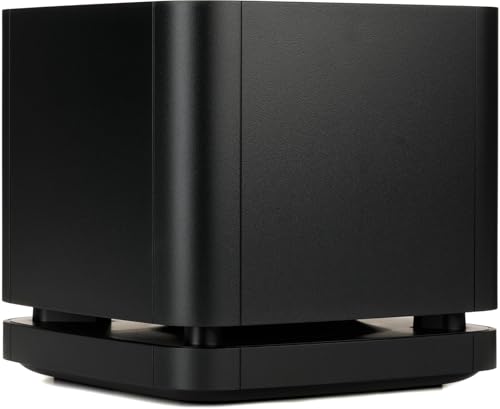
Compact Wireless Choice – Bose Bass Module 500
The Bose Bass Module 500 is a compact option for shoppers seeking subwoofers for music without adding a large cabinet to the room. Its 10-inch cube connects wirelessly to compatible Bose Soundbar Smart and Ultra models for straightforward placement.
Best For: Bose Soundbar owners who want an easy-to-place wireless bass module.
Pros:
- Compact 10-inch cube design
- Wireless connection to compatible Bose Soundbars
- Designed for easy, inconspicuous placement
- Premium-material construction
Cons:
- Its wireless compatibility is centered on Bose Soundbar systems
- The 10-inch driver is smaller than the Klipsch model in this roundup
The Bass Module 500 makes the most sense within a Bose ecosystem. Its small footprint and wireless setup can simplify placement while adding theater-style bass to compatible music and entertainment systems.
Balanced Performer – Fluance DB10 Powered Subwoofer
Fluance DB10 10-inch Low Frequency Ported Front Firing Powered Subwoofer for Home Theater & Music
Check Price On AmazonThe Fluance DB10 is a practical candidate among subwoofers for music, combining a 10-inch long-throw driver with a ported MDF cabinet. Its powered design is intended to deliver deep, controlled bass, while auto power-on helps reduce the need for manual switching.
Best For: Music and home theater listeners who want a ported, wired subwoofer with automatic power management.
Pros:
- 10-inch long-throw driver for deep bass reproduction
- Ported engineered-MDF cabinet
- Auto power-on detects the audio signal
- Includes a two-year manufacturer warranty and lifetime customer support
Cons:
- Its 24.7-pound cabinet is not especially lightweight
- Wired connectivity requires placement near the audio connection and power source
The DB10 offers a useful balance of driver size, cabinet construction, and convenience features. It is a solid fit for shoppers who prefer a traditional powered subwoofer for both music and movies.
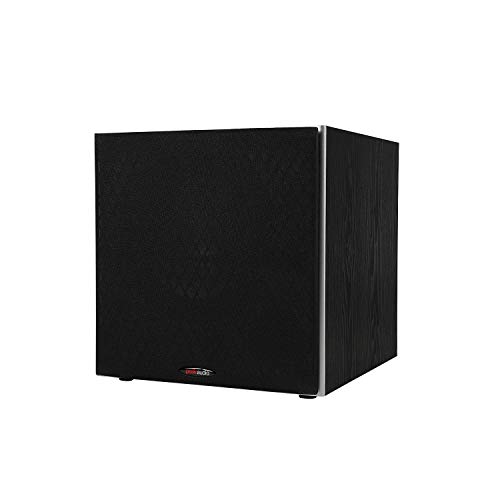
Small-Room Value – Polk Audio PSW10
The Polk Audio PSW10 is a compact, accessible option for shoppers comparing subwoofers for music in small-to-mid-size rooms. Its 10-inch woofer, 50-watt RMS amplifier, adjustable 80–160 Hz crossover, and multiple connection options make it easy to integrate with an existing system.
Best For: Small-to-mid-size rooms and buyers seeking an easy wired bass upgrade for home audio.
Pros:
- 10-inch Dynamic Balance woofer
- Up to 100 watts of stated power
- Variable 80–160 Hz crossover
- RCA, speaker-level inputs, and speaker-level outputs
Cons:
- Lower power output than the Klipsch R-12SW
- Wired design offers less placement flexibility than a wireless model
- Designed for home audio rather than portable use
The PSW10 is a sensible choice when you want added bass without moving to a larger 12-inch model. Its crossover adjustment and speaker-level connectivity are particularly useful for integrating it with an established stereo or home theater system.
Studio Bass Precision – PreSonus Eris Sub 8BT
For shoppers seeking subwoofers for music, the PreSonus Eris Sub 8BT is a compact studio-focused option with an 8-inch front-firing driver, Bluetooth 5.0, and bass extension down to 30 Hz. Its crossover and tuning controls make it especially practical for integrating with desktop monitors or refining a listening setup.
Best For: Music production, hi-fi listening, and compact desktop monitoring setups.
Pros:
- Reaches down to 30 Hz for extended low-frequency reproduction.
- Includes Bluetooth 5.0 plus balanced TRS and unbalanced RCA inputs.
- Highpass, lowpass, and frequency-tuning controls help match the room and main monitors.
- Front-panel headphone output and automatic power-saving mode add convenience.
Cons:
- Its compact 8-inch design may be better suited to smaller rooms than large listening spaces.
- The setup is most useful when paired with compatible monitors and properly adjusted crossover controls.
The Eris Sub 8BT stands out when accurate, adjustable bass matters more than a home-theater feature set. It offers flexible connectivity and a focused studio design in a relatively compact enclosure.
Flexible Wireless Bass – ULTIMEA Poseidon M30 Soundbar
The ULTIMEA Poseidon M30 is a 2.1 soundbar system for listeners who want subwoofers for music alongside television, gaming, and everyday streaming. Its wireless subwoofer can be placed without an audio cable, while app-based equalizer controls make it easier to tailor the presentation.
Best For: Music streaming, TV audio, gaming, and simple living-room setups.
Pros:
- Wireless subwoofer placement reduces cable clutter and setup restrictions.
- App control provides a 10-band equalizer and 121 preset EQ matrices.
- Bluetooth 6.0 supports wireless streaming from phones, tablets, and laptops.
- VoiceMX processing is designed to improve vocal clarity while BassMX targets the 45–150 Hz range.
Cons:
- It is a complete soundbar system rather than a standalone music-focused subwoofer.
- The listed frequency response begins at 45 Hz, so it does not extend as low as the PreSonus option.
Choose the Poseidon M30 if convenience and versatility are priorities. The wireless subwoofer, broad app control, and HDMI ARC, optical, and Bluetooth connections make it a practical all-in-one entertainment system.
Immersive Room-Filling Sound – TCL S65K 5.1 Soundbar System
The TCL S65K is a 5.1-channel soundbar system that combines a wireless subwoofer, wireless surround speakers, and Bluetooth music streaming. For buyers comparing subwoofers for music in a broader home-entertainment system, its 6.5-inch woofer, Bass Boost, and room-calibration features prioritize an immersive presentation.
Best For: Living-room music listening, movies, games, and surround-sound entertainment.
Pros:
- Wireless subwoofer and surround speakers help create a more flexible installation.
- Dolby Atmos and DTS:X support immersive sound from compatible content.
- AI Sonic auto room calibration tailors the system to the listening space.
- Bluetooth streaming makes it easy to play music from compatible devices.
Cons:
- Its 5.1 surround design is more elaborate than needed for shoppers seeking only a music subwoofer.
- The 6.5-inch subwoofer driver is smaller than the PreSonus Eris Sub 8BT’s 8-inch driver.
The S65K makes the most sense for listeners who want bass as part of a complete surround setup rather than a dedicated studio-monitor system. Its wireless components and automatic calibration simplify creating a wide, room-filling soundstage.
Deep-Bass Foundation – Dayton Audio Classic CS1200
If you want subwoofers for music that add depth without overwhelming the rest of your system, the Dayton Audio Classic CS1200 is a strong option. Its 12-inch driver, 200W Class-D amplifier, and braced cabinet are designed for tight, accurate low end, while RCA, LFE, and speaker-level inputs make integration straightforward.
Best For: Home music and theater systems that need powerful, controlled bass and flexible wired connectivity.
Pros:
- 12-inch woofer and 200W Class-D amplification provide substantial low-end output.
- Rigid, braced cabinet is designed to reduce boominess and distortion.
- RCA, LFE, and speaker-level inputs support a range of audio setups.
- Includes auto-on functionality and a five-year manufacturer warranty.
Cons:
- The floor-standing cabinet is relatively large at 18 inches deep.
- Wired connectivity may be less convenient than a wireless subwoofer.
- The wood finish includes a gray grille; the black grille is sold separately.
The CS1200 is a practical choice when music playback benefits from deeper, fuller bass and you have room for a larger cabinet. Its multiple inputs and simple controls make it easy to add to an existing system.
Wireless TV Upgrade – TCL S55H Sound Bar
The TCL S55H is a convenient choice for shoppers considering subwoofers for music but also want a complete TV audio system. Its wireless subwoofer adds room-filling bass to a 2.1 soundbar setup, while Dolby Atmos, DTS Virtual:X, Bluetooth, HDMI eARC/ARC, optical, and AUX connections broaden its use beyond television.
Best For: Apartments, bedrooms, and small-to-medium rooms where simple setup and wireless bass are priorities.
Pros:
- Wireless subwoofer delivers deep, punchy bass without a cable running to the soundbar.
- Supports Dolby Atmos and DTS Virtual:X for an immersive listening experience.
- AI Sonic auto room calibration adjusts sound to the room and listening position.
- Includes HDMI cable, remote, batteries, power cord, and wall-mount kit.
Cons:
- It is a complete soundbar system rather than a standalone music subwoofer.
- Its one-year manufacturer warranty is shorter than the five-year coverage on the Dayton models.
- The wireless subwoofer depends on the included system rather than offering broad speaker-level integration.
The S55H makes the most sense when you want bass enhancement with a low-profile, plug-and-play TV setup. It is less suited to buyers building a traditional component music system around a dedicated subwoofer.
Compact Music Bass – Dayton Audio Classic CS1000
For shoppers seeking subwoofers for music in a more manageable cabinet, the Dayton Audio Classic CS1000 offers a 10-inch driver and 180W Class-D amplifier. Its braced enclosure is designed for tight, clean bass, and RCA, LFE, and speaker-level inputs make it compatible with many home audio and theater systems.
Best For: Music and home theater setups that need controlled bass in a smaller floor-standing enclosure.
Pros:
- 10-inch woofer and 180W amplification deliver a substantial bass foundation.
- Braced cabinet is designed to provide accurate low end without excessive boominess.
- RCA, LFE, and speaker-level inputs simplify system integration.
- Compact dimensions and black finish suit a variety of setups.
Cons:
- Its 28Hz frequency-response specification does not extend as low as the CS1200’s listed 26Hz response.
- It uses wired connectivity rather than a wireless connection.
- The black grille is included, while the gray grille is sold separately.
The CS1000 is a balanced pick for listeners who want a dedicated subwoofer without stepping up to a larger 12-inch cabinet. It provides flexible connections and useful output for music-focused systems while taking up less space than the CS1200.
How We Picked the Best Subwoofers for Music
We focused on powered subwoofers and complete soundbar systems that can add useful low-frequency energy to music without requiring a separate amplifier. Our selection includes compact models for desks and small rooms, 10- and 12-inch subwoofers for stereo systems, and wireless packages for buyers who want a simple TV-and-music setup.
We considered driver size, amplifier output, enclosure design, connection options, placement flexibility, brand support, and suitability for different room sizes. Because specifications such as wattage do not fully predict sound quality, the final choice should also account for crossover controls, room acoustics, and compatibility with your existing speakers.
Quick Comparison
- Best for larger rooms: A 12-inch powered subwoofer generally provides greater output and deeper-feeling bass.
- Best for compact spaces: An 8- or 10-inch model is easier to place and can integrate more naturally at moderate listening levels.
- Best for desktops: Choose a compact studio-oriented subwoofer with appropriate inputs and level controls.
- Best for simple TV systems: Wireless soundbar packages reduce setup complexity and combine the subwoofer with the required main speakers.
- Best for flexible stereo systems: A conventional powered subwoofer with line-level or speaker-level connectivity gives you more equipment-matching options.
Key Buying Factors for Subwoofers for Music
Driver Size and Room Output
Larger drivers can move more air and often deliver stronger low bass, but they also need more floor space. For a bedroom, office, or small apartment, a compact sub may be easier to blend. Larger rooms and louder listening typically benefit from a 12-inch design or a higher-output enclosure.
Connections and System Compatibility
Check whether your amplifier, receiver, soundbar, or powered speakers provide the required input. RCA and LFE connections are common on traditional subwoofers, while soundbar systems may use proprietary wireless pairing. A wireless subwoofer is convenient, but it may not work with equipment outside its intended ecosystem.
Controls and Placement
Volume and crossover controls make integration easier, while phase adjustment can help the subwoofer blend with the main speakers. Place it near the front of the room when possible, then adjust its level so bass sounds balanced rather than obviously localized. Avoid assuming that maximum volume produces better results.
Music-First Performance
For music, look for controlled bass, low distortion, and a smooth handoff to the main speakers—not just the highest advertised wattage. Sealed and ported designs can both work well; room size, placement, and tuning usually matter more than enclosure style alone.
Who Should Buy Which Subwoofers for Music?
Choose a compact studio or desktop model if you listen near a desk or use small powered monitors. Pick a 10-inch powered subwoofer for a versatile balance of size, output, and cost in a small-to-medium room. A 12-inch model is better suited to larger spaces or listeners who want more headroom for electronic, hip-hop, orchestral, and cinematic recordings.
If your priority is easy installation with a television, choose a soundbar package with a wireless subwoofer. For a traditional stereo system, select a standalone powered subwoofer and confirm its inputs, crossover range, and available placement space before buying.