Choosing an audio mixer for beginners can be confusing when compact analog consoles, USB interfaces, sound cards, and streaming-focused mixers all look similar. The right option depends on your microphone, inputs, computer setup, and whether you need effects or live controls.
We’ve gathered 10 accessible choices for podcasting, gaming, streaming, DJing, and basic home recording. Use the guide below to narrow the list by features, connection type, and intended use before buying.
Best 10 Audio Mixer for Beginners Picks for 2026
Best Streaming Starter
MAONO G1 Neo Gaming Audio Mixer

- XLR input with 48V phantom power
- Voice effects, sound pads, and RGB lighting
- Loopback, mute, monitoring, and noise reduction
Best For: New gamers and streamers wanting an effects-focused mixer
Best Simple Analog Mixer

- Five-channel compact design
- Mic/line input with two-band EQ
- RCA playback and recording connections
Best For: Basic home audio, playback, and small mixing setups
Best Complete Podcast Bundle
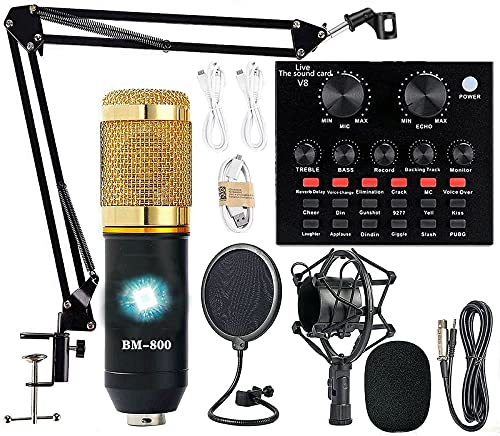
- Microphone and essential mounting accessories included
- Live sound card with voice-changing effects
- Supports computers, phones, consoles, and tablets
Best For: First-time podcasters, vloggers, and livestreamers
Best Compact Line Mixer
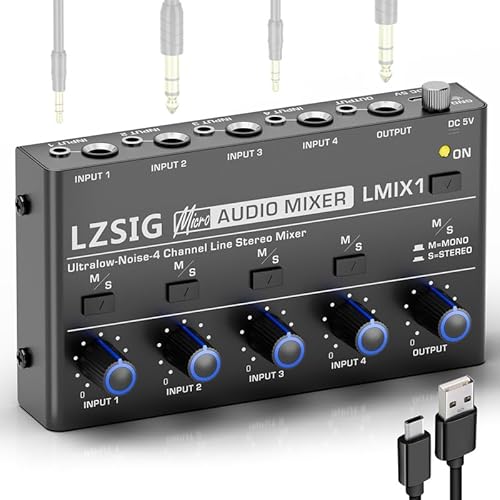
- Combines up to four line-level sources
- Mono/stereo switching
- 3.5mm and 6.35mm input support
Best For: Small multi-source instrument, gaming, or playback setups
Best Beginner Podcast Mixer

- Seven volume controls and two faders
- 16 effects with noise reduction
- Portable battery-powered design
Best For: Beginner podcasting, streaming, gaming, and karaoke
Best Mini Line Mixer

- Six inputs combined into one output
- Stereo/mono mode with 3.5mm and 6.35mm support
- Low-noise operation with dedicated mic mode
Best For: Compact instrument, playback, and dynamic-mic sub-mixing
Best Gaming Mixer for Beginners

- Four custom sound pads and voice changer
- Noise reduction with adjustable reverb
- Bluetooth input for background audio
Best For: Beginner PC gaming and live-streaming setups
Best with Extra Features

- 48V phantom power for condenser microphones
- USB recording and Bluetooth 5.0 playback
- 99 DSP effects plus EQ, PAD, and high-pass filter
Best For: Beginner podcasting, home recording, and streaming
Best Portable Beginner Mixer
4-Channel Bluetooth Sound Board

- Compact design for mobile setups
- Plug-and-play USB recording and streaming
- Supports microphones, instruments, Bluetooth, and USB MP3
Best For: Portable podcasting, karaoke, and simple live streams
Best Expandable Beginner Mixer

- Six channels for microphones, instruments, and stereo sources
- Four XLR inputs with switchable 48V phantom power
- Three-band EQ, 16 DSP effects, USB, and Bluetooth
Best For: Multi-source karaoke, small live performances, and streaming
Best Streaming Starter – MAONO G1 Neo Gaming Audio Mixer
For beginners looking for an audio mixer for beginners, the MAONO G1 Neo is designed around gaming and livestreaming. It combines an XLR input, 48V phantom power, one-click noise reduction, sound pads, Bluetooth accompaniment, and loopback in a compact interface.
Best For: New gamers and streamers who want voice controls, effects, and RGB lighting in one setup.
Pros:
- XLR input with built-in preamp and 48V phantom power for compatible condenser microphones
- One-click mute, direct monitoring, noise reduction, and loopback simplify live streaming
- Voice changer, customizable sound pads, reverb, sidechain, Bluetooth, and RGB effects add creative options
- Works with computers, phones, tablets, PS4, and PS5, plus OBS, Discord, Twitch, TikTok, YouTube, and other listed platforms
Cons:
- Not compatible with USB microphones or Xbox
- Setup requires keeping phantom power off for XLR dynamic microphones
- Its feature set is more gaming-focused than a basic music mixer
The G1 Neo is a strong choice if your priority is interactive streaming rather than traditional multi-channel mixing. Its guided controls and built-in effects make it approachable, while the XLR input leaves room to improve microphone quality later.
Best Simple Analog Mixer – Mackie Mix5 Compact Mixer
The Mackie Mix5 is a straightforward option for beginners choosing an audio mixer for beginners. Its five-channel layout provides one mic/line input, two stereo 1/4-inch line inputs, RCA playback and recording connections, and simple tone shaping in a small enclosure.
Best For: Beginners who need dependable basic mixing for microphones, stereo sources, playback, or recording.
Pros:
- Compact five-channel design with high-headroom, low-noise performance
- One mic/line input includes two-band EQ for basic tone adjustment
- Phantom power supports compatible studio condenser microphones
- Dedicated stereo RCA inputs and outputs support playback or recording
Cons:
- Only one mic/line input is provided
- It lacks the built-in voice effects, pads, and streaming controls found on gaming-focused interfaces
- Its corded-electric design is less portable than USB-powered options
The Mix5 keeps the learning curve low by focusing on core mixing functions. It is a practical fit for small, uncomplicated setups, but users planning multi-microphone podcasts or effect-heavy streams may need a more specialized interface.
Best Complete Podcast Bundle – BM-800 AM100-V8 Podcast Kit
This BM-800 bundle is aimed at beginners who want an audio mixer for beginners together with the main recording accessories. The package includes a condenser microphone, suspension arm, shock mount, pop filter, foam cover, cables, and a live sound card with voice-changing effects.
Best For: First-time podcasters, vloggers, and livestreamers who need a microphone-and-accessories starter package.
Pros:
- Includes microphone, adjustable arm, shock mount, pop filter, foam cover, cables, and live sound card
- Cardioid condenser microphone is designed to capture sound from the front for voice work
- Voice-changing effects support calls, chats, live sessions, and short-form video
- Compatible with Windows, Mac OS, phones, tablets, PS4, Xbox, Switch, and other listed platforms
Cons:
- The condenser setup requires charging before use
- Its listed audio input is a 3.5mm jack and the package is centered on a single-channel interface
- The many included components may require more initial setup than a standalone mixer
As a bundle, the AM100-V8 reduces the need to buy separate beginner accessories. It makes the most sense for someone starting a voice-based setup from scratch, especially when microphone positioning and basic recording extras are also needed.
Best Compact Line Mixer – LZSIG 4-Channel Mini Mixer
The LZSIG Mini Audio Mixer is a useful audio mixer for beginners who need to combine several line-level sources. It accepts up to four inputs from equipment such as keyboards, electronic drums, guitars, computers, CD players, or gaming consoles and sends them to a single mono or stereo output.
Best For: Beginners building a small multi-source audio setup or sub-mixing several instruments and playback devices.
Pros:
- Four-input design combines multiple audio sources into one output
- Supports both mono and stereo mixer modes
- Accepts 3.5mm and 6.35mm TS/TRS connections without requiring adapters
- Compact design uses low-noise components and a DC 5V power system
Cons:
- Power adapter is sold separately
- It is a line mixer rather than a microphone-focused interface with preamp or phantom power
- It provides basic routing rather than built-in streaming effects or voice processing
The LZSIG is best understood as a compact routing tool, not a full podcast or livestream control surface. Its flexible input formats and mono/stereo switching make it a sensible starting point for combining instruments, game audio, and other line sources.
Best Beginner Podcast Mixer – Facmogu F998
The Facmogu F998 is an approachable audio mixer for beginners who want an all-in-one setup for podcasting, live streaming, gaming, or karaoke. Its dedicated controls, built-in effects, Bluetooth accompaniment, and compact rechargeable design make it easy to add personality to live audio without a large studio footprint.
Best For: Beginners building a portable podcast, streaming, or live-recording setup.
Pros:
- Offers seven independent volume controls, two fader controls, and 16 personalized sound effects.
- Includes intelligent noise reduction, USB connectivity, and Bluetooth input for accompaniment.
- Supports up to two people and three devices broadcasting simultaneously.
- Compact, lightweight, and equipped with a built-in 1,200 mAh battery.
Cons:
- Its single-channel specification may be limiting for more advanced multi-microphone setups.
- The listed inputs are 1/4-inch and 3.5mm, so users should confirm connector compatibility before buying.
For newcomers who prioritize simple controls and streaming-focused effects, the F998 is a versatile starting point. It is especially practical when portability and plug-and-play operation matter more than extensive studio routing.
Best Mini Line Mixer – COKYIS MIX600
The COKYIS MIX600 is a straightforward audio mixer for beginners who need to combine several line-level sources into one output. Its six-channel layout, stereo/mono switching, dedicated dynamic-microphone mode, and low-noise design suit small music, rehearsal, stage, and home-audio setups.
Best For: Beginners expanding a compact system with multiple instruments, playback devices, or a dynamic microphone.
Pros:
- Combines six audio inputs into one channel output for convenient sub-mixing.
- Supports both 3.5mm and 6.35mm connections.
- Provides stereo/mono switching for flexible source compatibility.
- Uses a 12V power supply, WPS power-management chip, and low-noise operational amplifiers.
Cons:
- It is a corded mixer and does not offer the portable battery operation found on some compact interfaces.
- The design is focused on blending sources rather than providing podcast-style effects or voice processing.
The MIX600 is a sensible choice when the main goal is adding more inputs without complicated software. Beginners should view it as a compact line mixer and verify that their microphones and devices match its supported connections.
Best Gaming Mixer for Beginners – PUPGSIS T12S Gaming Mixer
The PUPGSIS T12S is an audio mixer for beginners focused on PC gaming, streaming, and interactive broadcasts. It combines a 1/4-inch TRS dynamic-microphone input with noise cancellation, reverb, programmable sound pads, a voice changer, RGB features, and Bluetooth input for background audio.
Best For: New streamers who want real-time voice effects and quick access to custom sound clips.
Pros:
- Includes four programmable sound-effect buttons for clips such as laughs, claps, or alarms.
- Offers adjustable reverb, voice changing, mute controls, and noise reduction.
- Bluetooth can bring music, backing tracks, or sound effects into the mixer.
- Designed as an all-in-one hub for gaming, podcasting, and live streaming.
Cons:
- It supports XLR microphones only through a 1/4-inch TRS-to-XLR cable and does not support USB or 48V microphones.
- Bluetooth is input-only; wired monitoring is required for listening without latency.
- The supplied specifications list a 1/4-inch TRS microphone input, so users should check their microphone and cable setup carefully.
The T12S is appealing for beginners who want entertaining stream controls without relying on software effects. Its microphone and monitoring limitations make compatibility checks essential before purchase.
Best with Extra Features – Compact 4-Channel DSP Console
If you want an audio mixer for beginners that can grow with a basic podcast or streaming setup, this four-channel console offers useful controls without taking up much desk space. It combines XLR inputs, 48V phantom power, USB connectivity, Bluetooth playback, and a large selection of built-in effects.
Best For: Beginner podcasters, home recording, and live streaming with condenser microphones.
Pros:
- 48V phantom power supports condenser microphones.
- Three-band EQ, PAD, and an 80Hz high-pass filter provide practical sound-shaping control.
- USB recording, mobile-device support, and Bluetooth 5.0 add flexible playback and streaming options.
- Includes 99 DSP effects, including reverb and delay.
Cons:
- Only four channels may limit larger multi-microphone setups.
- Bluetooth is specified for wireless streaming, so wired connections may still be preferable for recording-critical work.
For beginners who want more than basic volume control, this compact mixer delivers a strong feature set. Its combination of microphone support, cleanup tools, effects, and USB recording makes it especially practical for starting a content-creation setup.
Best Portable Beginner Mixer – 4-Channel Bluetooth Sound Board
This audio mixer for beginners keeps the controls and connections straightforward while covering common home audio tasks. Its compact design, USB audio interface, Bluetooth input, and microphone and instrument compatibility make it a convenient starting point for podcasting, karaoke, online meetings, or small live events.
Best For: Portable podcasting, home karaoke, live streaming, and simple four-channel setups.
Pros:
- Compact 7.87-by-6.7-by-1.57-inch design fits easily in a backpack.
- USB supports plug-and-play computer recording and live streaming without extra drivers.
- Accepts microphones, electric guitars, bass, keyboards, Bluetooth audio, and USB MP3 playback.
- Provides +48V phantom power and headphone monitoring.
Cons:
- Bluetooth supports input only and does not connect to a speaker as an output.
- Four channels may be restrictive for larger performances or multi-person productions.
This is a sensible choice when portability and ease of connection matter more than extensive processing. The clear controls and USB interface make it approachable, while its input variety lets beginners experiment with microphones, instruments, and background music.
Best Expandable Beginner Mixer – 6-Channel DSP Audio Console
For beginners who expect to connect several sources, this six-channel audio mixer offers more input capacity than a typical starter board. It includes four XLR inputs with 48V phantom power, stereo channels, USB playback, Bluetooth streaming, three-band EQ, and 16 DSP effects.
Best For: Beginners who need multiple microphones or instruments for karaoke, small live performances, and studio-style streaming.
Pros:
- Six channels provide room for multiple microphones, instruments, and stereo sources.
- Four XLR inputs support condenser and dynamic microphones with switchable 48V phantom power.
- Three-band EQ and 16 DSP effects offer hands-on control over the mix.
- USB and Bluetooth support playback and mixing from compatible devices.
Cons:
- The supplied details describe a traditional analog mixer, so operation may require more hands-on setup than a software-driven interface.
- At 2.3 kg, it is less portable than the smaller four-channel options.
- The listed manufacturer warranty is 90 days.
This mixer suits beginners who value extra channels and want to learn traditional hands-on mixing. Its broader input layout and onboard effects make it more adaptable for group audio, although its larger size and analog workflow may be less convenient for highly portable setups.
How We Picked the Best Audio Mixer for Beginners
We focused on mixers and compact audio interfaces that offer a straightforward learning curve, useful input and output options, and features suited to common beginner setups. The selection includes simple analog mixers, USB-capable interfaces, podcast sound cards, gaming boards, and models with Bluetooth, DSP effects, or voice-changing controls.
We also considered practical setup concerns: microphone compatibility, phantom power, monitoring, portability, control layout, and whether the mixer is better suited to a computer-based workflow or standalone audio sources. Product descriptions and specifications should be checked carefully before purchase, particularly for USB compatibility, driver requirements, and the exact number of simultaneous inputs.
Quick Comparison
| Best For | Look For | Most Suitable Type |
|---|---|---|
| Simple home mixing | Physical level controls and line inputs | Compact analog mixer |
| Podcasting and recording | XLR input, USB connection, and 48V phantom power | USB mixer or audio interface |
| Gaming and streaming | Headset support, sound pads, monitoring, and voice effects | Streaming audio mixer |
| DJing and playback | Bluetooth, USB MP3 input, and multiple stereo channels | DJ or line mixer |
| Small multi-source setups | Enough independent channels and low-noise operation | Mini line mixer |
Key Buying Factors for an Audio Mixer for Beginners
Inputs and Microphone Support
Count the sources you plan to use at the same time. A basic mixer may be enough for one microphone and a music source, while interviews, instruments, or multiple guests require more channels. If you use a condenser microphone, confirm that the mixer provides 48V phantom power and that the XLR input supports it.
USB Recording Versus Analog Mixing
An analog mixer is useful for combining sources and sending audio to speakers or another recorder, but it may not connect directly to a computer for multitrack recording. A USB mixer or audio interface is generally the more convenient choice for podcasts, voice recording, livestreaming, and video calls.
Monitoring and Controls
Look for a headphone output, independent volume control, and clear level meters or indicators. Direct monitoring can help reduce distracting delay while recording. Physical knobs are often easier for beginners to adjust quickly than software-only controls.
Effects and Streaming Features
DSP effects, sound pads, Bluetooth, and voice changers can make live content more engaging, but they are not essential for clean recording. Prioritize reliable inputs, monitoring, and low noise before paying extra for novelty effects.
Who Should Buy Which Audio Mixer for Beginners?
- Choose a compact analog mixer if you mainly need simple source blending for speakers, practice, or a small home setup.
- Choose a USB mixer or audio interface if recording to a laptop, podcasting, or using an XLR microphone is your main goal.
- Choose a streaming sound card if you need instant effects, sound triggers, headset controls, or voice processing during live broadcasts.
- Choose a mini line mixer if you are combining several stereo playback devices and do not need computer recording or microphone preamp features.
- Choose a DJ-oriented mixer if Bluetooth, USB music playback, and hands-on control of multiple line sources matter most.
Before ordering, verify the included cables, connector types, power requirements, and operating-system compatibility. A slightly simpler mixer with the right connections will usually be easier to learn and more useful than a feature-heavy model that does not match your equipment.