The right audio mixer can make a podcast studio easier to control, record, and expand. These 10 picks cover streamlined production consoles, traditional analog mixers, portable recorder-mixers, and budget-friendly starter setups.
Whether you record solo interviews, multi-person conversations, live streams, or music, the best choice depends on inputs, routing, recording features, monitoring, and how much hands-on control you want.
Best 10 Audio Mixer for Podcast Studio Picks for 2026
Compact Podcast Hub
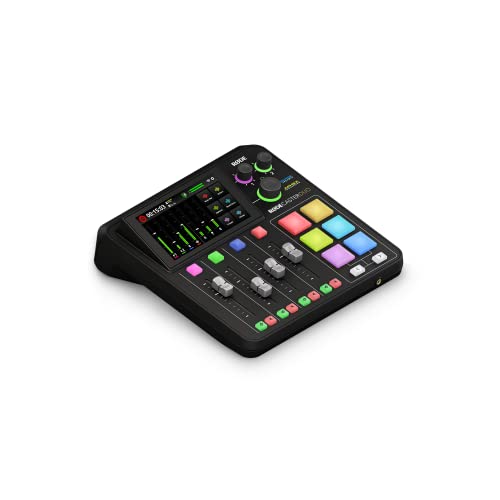
- Two combo inputs with high-gain Revolution Preamps
- Touchscreen, four faders, and six SMART pads
- APHEX processing plus USB and headset monitoring
Best For: Solo creators and small podcast teams
Flexible 10-Channel Workhorse

- 10 channels for microphones, instruments, and devices
- Bluetooth playback and multi-mode USB recording
- Onyx preamps and 24 GigFX+ effects
Best For: Multi-source podcast and streaming setups
Full-Featured Podcast Console

- Four XLR inputs and APHEX voice processing
- Records to computer, microSD, or USB drive
- Eight SMART pads for effects and mix-minus calls
Best For: Multi-person podcasts and live show production
Traditional Analog Control

- 10-input layout with USB and SPX effects
- Class A D-PRE preamps for natural sound
- EQ, high-pass filters, and one-knob compressors
Best For: Hands-on podcast and general audio mixing
Most Versatile Audio Mixer

- 12 channels and up to 14-track SD recording
- AI noise reduction and clip-free 32-bit float capture
- Battery, USB, or mobile-battery operation
Best For: Multitrack podcasting and mobile production
Best Starter Bundle
MAONO Podcast Equipment Bundle

- Includes mixer, condenser mic, stand, cable, and windscreen
- Built-in effects, voice changing, reverb, and monitoring
- Works with computers, smartphones, and tablets
Best For: Beginners building a simple podcast or streaming setup
Best Compact Recorder

- Records 10 tracks plus stereo mix to SD
- Works as a 32-bit float computer audio interface
- Full channel controls, effects, MIDI, and sound pads
Best For: Portable podcast recording with standalone backup
Versatile Studio Mixer
8-Channel Bluetooth Podcast Mixer

- Eight combo inputs with gain and 3-band EQ
- USB stereo recording and Bluetooth playback
- 48V phantom power plus 24 DSP effects
Best For: Multi-mic podcasts, streaming, and home studios
Creator Sound Card

- Voice effects, denoise, and seven recording modes
- Supports computers, phones, and tablets
- Connects up to three phones for live streaming
Best For: Mobile livestreaming, gaming, and voice content
Compact Recording Board

- Four XLR inputs with 48V phantom power
- Bluetooth and USB playback support
- 3-band EQ and 16 built-in DSP effects
Best For: Small studios, karaoke, streaming, and mixed-source setups
Compact Podcast Hub – RØDECaster Duo
The RØDECaster Duo is an audio mixer for podcast studio setups that want recording, monitoring, effects, and content-production controls in one compact unit. It provides two Neutrik combo inputs, four broadcast-quality faders, SMART pads, and USB connectivity.
Best For: Solo creators and small podcast teams that prioritize a compact all-in-one production workflow.
Pros:
- Two combo inputs use high-gain, ultra-low-noise Revolution Preamps.
- Includes four faders, a touchscreen, and six SMART pads with bank switching.
- APHEX processing and studio-grade effects support broadcast-style voice shaping.
- Supports USB audio and headset monitoring through a 3.5mm TRRS input.
Cons:
- Only two combo microphone/instrument inputs are provided.
- It is a corded-electric unit rather than a portable, battery-powered mixer.
The Duo is a strong fit when simplicity and integrated podcast controls matter more than a larger input count. Its compact design and dedicated production features make it easy to position at a small studio desk.
Flexible 10-Channel Workhorse – Mackie ProFX10v3+
The Mackie ProFX10v3+ is an audio mixer for podcast studio and live-streaming workflows that need more channel capacity. It combines 10 channels with Bluetooth playback, USB recording, Onyx preamps, and an effects engine with 24 effects and tap tempo.
Best For: Podcasters and creators who need to connect multiple microphones, instruments, phones, or computers from one desk.
Pros:
- Offers 10 channels for broader studio and live-session flexibility.
- Supports Bluetooth playback and multi-mode USB recording.
- Onyx preamps are included on every microphone channel.
- GigFX+ provides 24 effects with tap tempo.
Cons:
- Its larger channel layout may be more mixer than a simple two-person podcast requires.
- The unit is corded electric and weighs 4.9 pounds.
The ProFX10v3+ is a practical choice for a growing studio that mixes podcasting with streaming, music, or band practice. Its combination of analog controls and Bluetooth/USB connectivity keeps several source types accessible.
Full-Featured Podcast Console – RØDECaster Pro II
The RØDECaster Pro II is an audio mixer for podcast studio production when standalone recording and live show control are priorities. It includes four XLR microphone inputs, headphone outputs, APHEX processing, SMART pads, and multitrack recording to a computer, microSD card, or USB drive.
Best For: Podcast studios producing multi-person shows, streams, and live segments with sound effects or phone-call mixing.
Pros:
- Four studio preamps support multi-microphone podcast sessions.
- Can record multitrack to a computer, microSD card, or USB drive.
- Eight customizable SMART pads trigger music, effects, and mix-minus calls.
- APHEX presets are designed to make voices broadcast-ready with one tap.
Cons:
- It may be excessive for a basic single-microphone recording setup.
- Microphones are not included in the box.
The Pro II is built for creators who want a central console rather than a separate interface and computer mixer. Its four inputs, standalone recording options, and show-control features give complex podcast productions a streamlined workflow.
Traditional Analog Control – Yamaha MG10XU
The Yamaha MG10XU is an audio mixer for podcast studio users who prefer familiar analog controls and straightforward signal shaping. This 10-input mixer adds USB connectivity, SPX digital effects, three-band EQ, high-pass filters, and one-knob compressors.
Best For: Studios that want hands-on mixing for podcasts, instruments, and other connected sources.
Pros:
- Provides 10 inputs with USB connectivity and SPX digital effects.
- Discrete Class A D-PRE preamps are designed for natural-sounding audio.
- Three-band EQ and high-pass filters help shape and clean the mix.
- One-knob compressors simplify control of vocals and instruments.
Cons:
- It lacks the integrated SMART pads and standalone podcast features of production consoles.
- It is relatively heavy at 7.7 pounds.
- It uses a corded-electric power source.
The MG10XU is a sensible option for buyers who value durable analog operation over dedicated podcast automation. Its input count, onboard effects, and basic dynamics controls suit a studio that also handles instruments or general audio mixing.
Most Versatile Audio Mixer – Zoom LiveTrak L6max
The Zoom LiveTrak L6max is a flexible audio mixer for podcast studio setups that need substantial input capacity, portable recording, and built-in processing. It combines four combo inputs, eight line inputs, 14-track recording, AI noise reduction, and clip-free 32-bit float capture in a compact, battery-powered design.
Best For: Podcasters, musicians, and mobile production teams that need multitrack recording and flexible power options.
Pros:
- 12 channels with four combo inputs and eight line inputs
- Records up to 14 tracks to SD cards up to 2TB
- AI reduction targets hum, hiss, and background noise
- Runs on AA batteries, USB power, or a mobile battery pack
Cons:
- Its larger channel count may be more than a simple voice-only podcast requires
- SD card recording media is not included in the supplied details
The L6max is a strong choice when your audio mixer for podcast studio workflow needs to expand beyond a basic two-microphone setup. Its multitrack recording, sound pads, MIDI support, and portable power make it particularly useful for more involved productions.
Best Starter Bundle – MAONO Podcast Equipment Bundle
The MAONO Podcast Equipment Bundle is an approachable audio mixer for podcast studio beginners who want the core gear in one package. It includes the mixer, a condenser microphone, cable, tripod, windscreen, and charging cable, with support for smartphones, computers, and live-streaming workflows.
Best For: New podcasters and streamers who want a ready-to-use microphone and mixer bundle.
Pros:
- Includes a condenser microphone and basic accessories
- Offers four recordable and eight built-in sound effects
- Supports up to two people, four devices, and four platforms simultaneously
- Provides voice effects, reverb, music controls, and real-time monitoring
Cons:
- The AM200 supports 3.5mm microphone input and does not support phantom power
- Instruments requiring a 6.35mm connection need an adapter, which is not included
- Phones without a 3.5mm jack require a separate OTG adapter
This bundle prioritizes convenience over advanced studio expansion. It is a practical audio mixer for podcast studio newcomers, especially those recording or streaming from a phone or computer and wanting built-in effects without assembling a separate equipment list.
Best Compact Recorder – Zoom LiveTrak L6
The Zoom LiveTrak L6 is a compact audio mixer for podcast studio use when you want standalone SD recording plus computer connectivity. It records 10 discrete tracks and a stereo mix, supports clip-free 32-bit float recording, and includes channel EQ, effects, MIDI, and sound pads.
Best For: Podcasters, streamers, and solo performers who want a small mixer with recorder and audio-interface functions.
Pros:
- Records 10 tracks plus a stereo mix to SD cards up to 1TB
- Can record to an SD card and computer simultaneously
- Provides EQ, AUX sends, pan, delay, echo, and reverb on every channel
- Includes MIDI, USB, and four assignable sound pads
Cons:
- Its 10-channel capacity is lower than the L6max in this roundup
- SD card recording is limited to cards up to 1TB
The LiveTrak L6 is a well-rounded option for a compact audio mixer for podcast studio setups. Its simultaneous card-and-computer recording and full channel strips make it more capable than a basic interface while keeping the unit portable and battery powered.
Versatile Studio Mixer – 8-Channel Bluetooth Podcast Mixer
For creators building an audio mixer for podcast studio setup, the W IN-MIX offers eight combo inputs, USB stereo recording, Bluetooth playback, and hands-on channel controls. Its 3-band EQ, gain controls, phantom power, and onboard effects make it suitable for a flexible desk or small live-production rig.
Best For: Podcasters, streamers, vocalists, DJs, and home studios needing multiple mic or instrument inputs.
Pros:
- Eight XLR/6.35mm combo inputs with independent gain and 3-band EQ.
- USB stereo recording and Bluetooth audio streaming.
- 48V phantom power for all eight channels and 24 one-knob DSP effects.
- Includes zero-latency headphone monitoring and a metal chassis.
Cons:
- Phantom power is provided to all eight channels rather than selected channels individually.
- USB recording is stereo mix recording, not described as multitrack recording.
- Its 4.9-pound size may be more than needed for a highly portable setup.
This is the most expandable option of the three for a podcast studio that may grow beyond a single microphone. Choose it when input count, conventional mixer controls, and flexible connectivity matter more than a compact sound-card format.
Creator Sound Card – F988 Podcast Production Mixer
The SINWE F988 is a compact choice for an audio mixer for podcast studio workflows focused on voice effects, mobile streaming, and easy accompaniment. It combines a four-channel sound card with fixed sound effects, voice changing, denoise functions, and connections for computers, phones, and tablets.
Best For: Livestreamers, gaming creators, mobile podcasters, and voice-focused recording setups.
Pros:
- Offers 16 background effects, seven podcast and recording modes, and four voice-changer modes.
- Includes denoise, voice-over, and internal-play functions.
- Supports Windows, Mac OS, iPad, iPhone, and smartphones, with adapters potentially required.
- Can connect up to three mobile phones for multi-platform live streaming.
Cons:
- Four channels and 3.5mm headphone output provide less conventional studio expansion than larger mixers.
- Adapters may be required for iPads, iPhones, or smartphones.
- The supplied notes list a 90-day manufacturer warranty, despite a separate satisfaction statement mentioning 12 months.
The F988 is better suited to interactive content than a traditional multi-microphone recording console. Its strongest appeal is the built-in creative processing and mobile-oriented connectivity for creators who want effects without separate software tools.
Compact Recording Board – 6-Channel DSP Bluetooth Mixer
This six-channel board is a practical audio mixer for podcast studio users who want traditional faders, Bluetooth playback, USB media support, and basic vocal processing in one console. It provides four XLR inputs with 48V phantom power, stereo channels, 3-band EQ, and 16 built-in DSP effects.
Best For: Small podcast setups, karaoke, streaming, rehearsals, and users mixing microphones with instruments or playback sources.
Pros:
- Six-channel layout with four XLR inputs and additional 1/4-inch stereo inputs.
- Selectable 48V phantom power for condenser microphones on channels 1-4.
- Bluetooth playback and USB support for flash-drive or MP3 playback and mixing.
- Includes per-channel 3-band EQ, gain controls, faders, and 16 DSP effects.
Cons:
- The supplied warranty information lists only 90 days.
- The traditional analog design may require more manual setup than a computer-focused interface.
- The notes caution that operation errors may result in no sound, so setup familiarity is useful.
This mixer balances core studio controls with playback and effects at a smaller channel count than the W IN-MIX. It is a reasonable fit for a compact studio or mixed-use room, especially when Bluetooth, USB media playback, and straightforward faders are priorities.
How We Picked the Best Audio Mixer for Podcast Studio
We compared these mixers by looking at the features that matter most in real podcast workflows: microphone input count, preamp and phantom-power support, USB or multitrack recording, headphone monitoring, routing flexibility, onboard effects, portability, and ease of use. We also considered whether each model suits beginners, growing creators, or established studios.
A good Audio Mixer for Podcast Studio use should match your current setup without making future upgrades difficult. A compact console may be ideal for a solo host, while a larger mixer or production station can better support several microphones, remote guests, sound effects, and live broadcasting.
Quick Comparison
- Best all-in-one production options: RØDE RØDECaster Duo and RØDECaster Pro II.
- Best traditional mixer flexibility: Mackie ProFX10v3+ and Yamaha MG10XU.
- Best portable recording approach: Zoom LiveTrak L6 and L6max.
- Best budget starter bundles: MAONO and the compact sound-card-style mixers.
- Best for hands-on live control: the W IN-MIX and larger channel-count consoles.
Key Buying Factors for an Audio Mixer for Podcast Studio
Inputs and Microphone Compatibility
Count how many people may speak at once, then leave room for growth. XLR inputs are important for professional microphones, while combo inputs can accommodate instruments or line-level sources. If you use condenser microphones, confirm that the mixer provides 48V phantom power.
Recording and Computer Connectivity
USB connectivity can send audio to recording or streaming software, but implementations vary. Some mixers provide a simple stereo feed, while recorder-mixers and production consoles may offer multitrack recording, onboard storage, or more advanced routing. Choose the workflow you actually plan to use.
Monitoring, Routing, and Control
Separate headphone outputs, independent level controls, mute buttons, cue functions, and sound-effect pads can make interviews and live shows easier to manage. For edited podcasts, clean preamps and reliable monitoring may matter more than a large effects library.
Size, Software, and Expansion
Portable models work well for mobile recording, but compact designs may sacrifice inputs or controls. Check included software, driver compatibility, power requirements, and whether the mixer can support future microphones, guests, or streaming hardware.
Who Should Buy Which Audio Mixer for Podcast Studio?
Choose an all-in-one production studio if you want integrated recording, routing, effects, and fast access to podcast controls. These models are especially useful for creators who record regularly or livestream.
Choose a conventional analog mixer if you prefer physical faders, straightforward signal flow, and flexible connections for microphones, instruments, and external gear.
Choose a portable mixer-recorder if you record in different locations or want standalone recording without relying entirely on a computer.
Choose a budget sound-card mixer or bundle for casual streaming, learning, or a basic starter studio. Before buying, verify microphone connectors, monitoring features, and whether the included accessories meet your recording needs.