The right interface can make a home studio easier to connect, monitor, and expand. This roundup compares 10 practical options for recording vocals, instruments, MIDI gear, and software-based music.
We focus on connection needs, recording quality, workflow, included accessories, and overall value so you can choose confidently without paying for features you will not use.
Best 10 Midi Interfaces for Home Studios Picks for 2026
Flexible Hub

- 4-in/4-out USB-C design with MIDI I/O
- Two mic preamps, loopback, and low-latency monitoring
- Works with Mac, PC, and iOS
Best For: Expandable home studios and multi-source recording
Simple Starter

- Plug-and-play USB-C with bus-powered operation
- Two combo inputs with phantom power
- 24-bit/192kHz recording and direct monitoring
Best For: Beginners and portable two-source recording
Studio Workhorse
Focusrite Scarlett 4i4 4th Gen

- 4-in/4-out connectivity with MIDI I/O
- 120dB dynamic range and 24-bit/192kHz support
- Auto Gain, Clip Safe, and Air mode
Best For: Producers with microphones, instruments, and MIDI hardware
Compact Creator
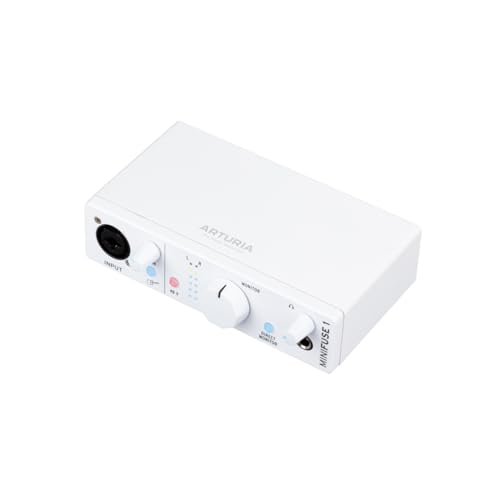
- One combo input plus 5-pin MIDI I/O
- Loopback, balanced outputs, and headphone control
- Includes Ableton Live Lite and creative software
Best For: Solo musicians and beginners with limited desk space
Versatile Pick
Focusrite Scarlett 2i2 4th Gen

- Two mic and instrument inputs
- 24-bit/192kHz with 120dB dynamic range
- Auto Gain, Clip Safe, Air, and software bundle
Best For: Home producers recording vocals and instruments together
Complete Starter Kit

- 24-bit/96kHz USB and MIDI interface
- Includes microphone, stand, headphones, and accessories
- Studio One Artist and Studio Magic included
Best For: First-time creators wanting an all-in-one studio setup
Compact Choice
Focusrite Scarlett Solo 4th Gen

- One mic input and one Hi-Z instrument input
- 24-bit/192kHz and 120dB dynamic range
- Compact design with Air mode and software bundle
Best For: Solo performers and small home or mobile studios
Best Value MIDI Interface
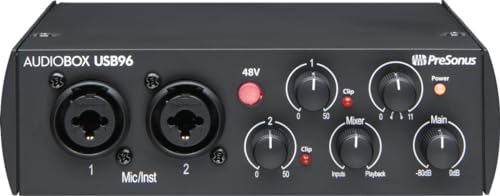
- MIDI I/O with two mic preamps and instrument inputs
- 24-bit/96 kHz recording with USB bus power
- Includes Studio One Artist, Ableton Live Lite, and plugins
Best For: Budget-conscious home musicians building a portable MIDI and recording setup
Compact Recording Pick
Focusrite Scarlett Solo 3rd Gen

- Air-mode mic preamp and dedicated Hi-Z instrument input
- 24-bit/192 kHz recording with low-noise outputs
- Compact setup with a broad included software bundle
Best For: Solo vocalists, guitarists, and podcasters with simple recording needs
Complete Studio Bundle
Focusrite Scarlett 2i2 Studio 4th Gen

- Two mic preamps and two Hi-Z inputs with Auto Gain
- Includes condenser mic, headphones, and recording software
- 24-bit/192 kHz recording with 120 dB dynamic range
Best For: First-time home-studio creators wanting an all-in-one recording package
Flexible Hub – MOTU M4
For home studios needing room to grow, the MOTU M4 is a versatile choice among midi interfaces for home studios. Its 4-in/4-out USB-C design combines microphone inputs, MIDI I/O, loopback, and low-latency monitoring in a compact interface suited to recording, mixing, and podcasting.
Best For: Home producers who need multiple inputs and outputs, MIDI connectivity, and loopback functionality.
Pros:
- 4-in/4-out USB-C connectivity with MIDI I/O
- Two microphone preamps and support for up to 192 kHz recording
- Hardware monitoring LCD screen and low-latency monitoring
- Compatible with Mac, PC, and iOS devices
Cons:
- More capability than needed for simple one-microphone setups
- Its larger I/O layout may be less portable than a compact one-input interface
The M4 stands out when your setup includes several sources, external MIDI gear, or streaming and podcasting needs. Its 4×4 layout provides useful flexibility without moving into a much larger studio interface.
Simple Starter – PIYONE Q2 Alloy Red
The PIYONE Q2 is a straightforward option for creators comparing midi interfaces for home studios on a budget. This plug-and-play 2×2 USB-C interface offers two combo inputs, 24-bit/192kHz recording, direct monitoring, and bus-powered operation for a portable setup.
Best For: Beginners, mobile creators, and musicians recording one or two sources at a time.
Pros:
- Class-compliant USB-C setup with no drivers required
- Two XLR/TRS combo inputs with 48V phantom power
- 24-bit/192kHz recording and zero-latency direct monitoring
- Compact bus-powered design with illuminated gain controls
Cons:
- Only two input channels for larger recording sessions
- Supplied notes list Windows compatibility but do not specify macOS support
The Q2 keeps the workflow uncomplicated: connect it by USB-C, plug in a microphone or instrument, and monitor through the headphone output. It is best suited to smaller recording rigs rather than studios that require extensive routing.
Studio Workhorse – Focusrite Scarlett 4i4 4th Gen
The Focusrite Scarlett 4i4 4th Gen is a strong all-around pick among midi interfaces for home studios. It pairs two microphone preamps, two Hi-Z inputs, four line inputs, four outputs, and MIDI I/O with features designed to make recording easier, including Auto Gain, Clip Safe, and Air mode.
Best For: Producers connecting microphones, guitars, synths, drum machines, and other studio hardware.
Pros:
- 4-in/4-out interface with MIDI In/Out
- Two mic preamps, two Hi-Z inputs, and four line inputs
- 120dB dynamic range with 24-bit/192kHz support
- Auto Gain, Clip Safe, Air mode, and substantial included software
Cons:
- May be more interface than needed for basic vocal or guitar recording
- Requires the included power supply for setups needing that connection
With its broad input mix and MIDI connectivity, the Scarlett 4i4 is built for a growing home studio. Auto Gain and Clip Safe are particularly useful when you want to focus on performance instead of constantly watching levels.
Compact Creator – Arturia MiniFuse 1
The Arturia MiniFuse 1 is a compact entry point for shoppers seeking midi interfaces for home studios. It provides a combo microphone, instrument, and line input, MIDI In/Out, loopback, balanced outputs, and a generous software bundle in a small USB interface.
Best For: Solo musicians, vocalists, guitarists, and beginners who want a compact interface with MIDI and creative software.
Pros:
- Compact design with one combo input and 5-pin MIDI In/Out
- 48V phantom power, balanced outputs, and headphone volume control
- Loopback supports capturing voice alongside in-app or in-game audio
- Includes Ableton Live Lite, Analog Lab Intro, effects, and other software
Cons:
- One primary input limits simultaneous recording
- Not ideal for multi-microphone or larger ensemble sessions
The MiniFuse 1 makes sense when desk space and simplicity matter more than channel count. Its MIDI connections and included software give beginners a practical way to start recording synths, guitars, vocals, and other sources.
Versatile Pick – Focusrite Scarlett 2i2 4th Gen
The Focusrite Scarlett 2i2 4th Gen is a strong all-around choice among midi interfaces for home studios. Its two inputs accommodate a microphone and instrument at the same time, while Auto Gain and Clip Safe help simplify recording levels.
Best For: Home producers, singer-songwriters, and small recording setups needing two simultaneous inputs.
Pros:
- Two mic preamps and two Hi-Z instrument inputs.
- 24-bit/192kHz recording with a 120dB dynamic range.
- Auto Gain, Clip Safe, and Air modes support easier, more polished takes.
- Includes Ableton Live Lite, Pro Tools Intro+, Cubase LE, and Hitmaker Expansion.
Cons:
- It has only two audio inputs, which may limit larger recording sessions.
- The included USB-A to USB-C cable may require an adapter for some setups.
Choose the 2i2 when flexibility matters more than the smallest possible footprint. It offers useful recording assistance and a broad software bundle without moving beyond a compact two-input design.
Complete Starter Kit – PreSonus AudioBox 96 Bundle
The PreSonus AudioBox 96 bundle is designed for buyers who want more than an interface. For home studios exploring midi interfaces for home studios, it combines a two-channel USB and MIDI interface with a microphone, stand, headphones, recording software, and essential accessories.
Best For: Beginners, podcasters, streamers, and musicians who need a ready-to-use recording package.
Pros:
- Includes a 24-bit/96kHz USB 2.0 audio and MIDI interface.
- Provides dual XLR/TRS combo inputs, Class-A preamps, and zero-latency monitoring.
- Bundle includes a condenser microphone, shockmount, pop filter, XLR cable, stand, and headphones.
- Includes Studio One Artist and the Studio Magic Plug-In Suite.
Cons:
- Its 96kHz maximum sample rate is lower than some competing interfaces.
- The bundled microphone and accessories may be less useful for buyers who already own studio gear.
This is the most convenient option for building a basic studio in one purchase. Its broad accessory package reduces setup friction, while the two-channel interface supports vocals, instruments, livestreams, and podcasts.
Compact Choice – Focusrite Scarlett Solo 4th Gen
The Focusrite Scarlett Solo 4th Gen keeps the setup compact while still delivering a dedicated mic input and Hi-Z instrument input. It is a practical option among midi interfaces for home studios when you typically record one microphone or instrument at a time.
Best For: Solo musicians, vocalists, and mobile creators with straightforward one-person recording needs.
Pros:
- Compact 14.4-ounce design for small workspaces and mobile setups.
- One XLR mic preamp and one Hi-Z instrument input.
- 24-bit/192kHz conversion and 120dB dynamic range.
- Includes Air mode, recording software, plugins, and PC/Mac/iPad compatibility.
Cons:
- One audio input limits simultaneous microphone and instrument recording flexibility.
- It does not provide the two mic preamps found on the Scarlett 2i2.
The Solo is a sensible fit when space, simplicity, and single-performer recording are priorities. Choose it over a larger interface if you do not need to track two sources at once.
Best Value MIDI Interface – PreSonus AudioBox 96
For home studios seeking midi interfaces for home studios on a practical budget, the PreSonus AudioBox 96 combines MIDI I/O with two mic preamps, instrument inputs, and USB bus power. It is a straightforward choice for recording vocals, guitars, keyboards, and other MIDI hardware without adding an external power supply.
Best For: Budget-conscious home musicians who want MIDI connectivity, two-channel recording, and portable USB operation.
Pros:
- Includes MIDI I/O alongside two mic preamps and two instrument inputs.
- Supports recording and playback up to 24-bit/96 kHz.
- USB bus-powered design, zero-latency mixer control, and a high-powered headphone output.
- Includes Studio One Artist, Ableton Live Lite, and the Studio Magic Plug-In suite.
Cons:
- Its two-channel design may be limiting for larger recording setups.
- Global +48V phantom power offers less flexibility than independently switchable phantom power.
The AudioBox 96 is a well-rounded entry-level interface when MIDI I/O and a useful software bundle matter as much as basic audio recording. Its portable, bus-powered format makes it especially convenient for compact home or mobile rigs.
Compact Recording Pick – Focusrite Scarlett Solo 3rd Gen
The Focusrite Scarlett Solo 3rd Gen is a compact option for home studios comparing midi interfaces for home studios with a focus on vocal and guitar recording. Its dedicated XLR mic preamp, Hi-Z instrument input, Air mode, and USB-C connectivity support a simple two-source workflow.
Best For: Solo artists, vocalists, guitarists, and podcasters who need a small interface for one microphone and one instrument.
Pros:
- High-performance mic preamp with switchable Air mode for added clarity.
- Dedicated Hi-Z instrument input for guitar or bass.
- 24-bit/192 kHz converters and low-noise balanced outputs.
- Includes Pro Tools Intro+, Ableton Live Lite, Cubase LE, and Hitmaker Expansion.
Cons:
- Provides one XLR mic input and one instrument input, limiting simultaneous recording options.
- The supplied notes do not list MIDI I/O, so it may not suit setups requiring direct MIDI hardware connectivity.
Choose the Scarlett Solo when clean, focused audio recording is more important than multiple inputs or dedicated MIDI connections. Its compact design and broad software support make it easy to add to a small home setup.
Complete Studio Bundle – Focusrite Scarlett 2i2 Studio 4th Gen
For creators assembling a home setup around midi interfaces for home studios, the Focusrite Scarlett 2i2 Studio 4th Gen adds a two-channel interface, condenser microphone, and headphones in one package. Its Auto Gain and Clip Safe features help simplify level setting while recording vocals or instruments.
Best For: New home-studio users who want an all-in-one recording bundle with two inputs and monitoring included.
Pros:
- Includes two mic preamps, two Hi-Z inputs, the CM25 MkIII condenser mic, and SH-450 headphones.
- 120 dB dynamic range and recording up to 24-bit/192 kHz.
- Auto Gain and Clip Safe help manage recording levels and reduce clipping concerns.
- Includes Air modes plus Pro Tools Intro+, Ableton Live Lite, Cubase LE, and Hitmaker Expansion.
Cons:
- The bundle is less compact and heavier than an interface-only setup.
- The supplied notes do not list dedicated MIDI I/O.
The Scarlett 2i2 Studio 4th Gen is the most complete starting point here for users who need an interface, microphone, and headphones together. It is particularly appealing when convenient setup features and included recording essentials outweigh the need for dedicated MIDI ports.
How We Picked the Best Midi Interfaces for Home Studios
We evaluated these interfaces by looking at the needs most common in bedroom, project, and compact professional studios: input and output flexibility, computer connectivity, monitoring controls, portability, bundled software or accessories, and ease of setup. We also considered whether each model suits a beginner, a solo creator, or a musician who expects to connect several instruments at once.
Although product naming varies, some options in this roundup are primarily audio interfaces with MIDI-oriented studio workflows. Check the specifications carefully if you need dedicated five-pin MIDI input and output rather than USB MIDI support through a separate controller or device.
Quick Comparison
| Studio need | Best fit to consider | Why |
|---|---|---|
| Solo vocals or instruments | Focusrite Scarlett Solo | Compact, straightforward, and easy to use |
| Two microphones or stereo recording | Focusrite Scarlett 2i2 | Two versatile combination inputs |
| More simultaneous connections | Focusrite Scarlett 4i4 or MOTU M4 | More routing and I/O flexibility |
| Portable minimal setup | Arturia MiniFuse 1 | Small footprint for mobile or desktop use |
| Starter recording bundle | PreSonus AudioBox 96 bundle | Includes accessories and software-oriented extras |
Key Buying Factors for Midi Interfaces for Home Studios
Inputs and Outputs
Count the sources you will record at the same time. One input can work for a singer-songwriter, while two inputs are more suitable for stereo instruments, two microphones, or collaborative recording. Choose four or more inputs if you regularly use hardware synths, drum machines, microphones, and external effects together.
Connection and Compatibility
USB-C models are convenient for newer computers, but confirm whether the supplied cable matches your computer and whether an adapter is required. Also check compatibility with Windows, macOS, iOS, and your preferred digital audio workstation before buying.
Monitoring and Latency
Direct monitoring helps you hear an input with minimal delay while recording. Look for a clear headphone control, monitor output control, and practical routing if you plan to overdub vocals or play software instruments.
Portability, Power, and Extras
A compact bus-powered interface is useful for small desks and mobile recording. Bundles can be worthwhile for beginners who also need a microphone, headphones, cables, or recording software, but experienced users may get better value from an interface alone.
Who Should Buy Which Midi Interfaces for Home Studios?
Choose a Solo-class interface if you mainly record one microphone or instrument at a time and want the simplest setup. A 2i2-style model is the better all-purpose choice for two-channel recording, while a 4i4 or MOTU M4 makes more sense for producers who need additional outputs, routing, or hardware connections.
Pick the MiniFuse 1 when desk space and portability matter most. Consider an AudioBox 96 bundle if you are building your first studio and want several essentials in one purchase. Before ordering, verify the exact input type, MIDI connectivity, included cables, and operating-system support for your setup.