The best compact MIDI interfaces make it easier to connect classic 5-pin hardware, modern USB devices, and computers without sacrificing valuable desk space. The right model can simplify recording, expand a live rig, or solve compatibility problems between newer and older gear.
This roundup compares 10 compact MIDI interfaces across different use cases, including multi-port routing, USB host connections, wireless transmission, MIDI mixing, and straightforward computer-to-keyboard control.
Best 10 Compact Midi Interfaces Picks for 2026
Versatile Routing Hub

- 3-in/3-out MIDI routing
- USB-C and broad OS support
- Standalone merge, split, and filtering
Best For: Flexible multi-device MIDI rigs
Hands-On DAW Control

- Eight channel and master faders
- 24 knobs and 16 control buttons
- Ableton Live integration
Best For: Hands-on home-studio mixing
Pedalboard MIDI Specialist

- 2-in/2-out MIDI I/O
- Standalone USB or 9V power
- Pedalboard-friendly compact casing
Best For: Guitar pedals and portable MIDI rigs
Simple Cable-Style Connection

- 1-in/1-out MIDI connection
- Plug-and-play USB-C design
- LED power and signal indicators
Best For: Basic keyboard-to-computer MIDI connections
Best MIDI Thru Expander

- 1-in-5-out DIN MIDI distribution
- Supports clock, SysEx, MPE, and all MIDI channels
- Compact USB-C-powered design
Best For: Expanding one MIDI source across multiple traditional hardware devices
Best Compact Recording Interface
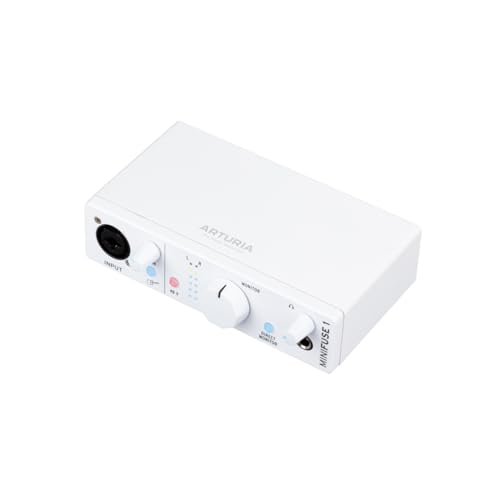
- USB audio interface with 5-pin MIDI I/O
- Combo input with 48V phantom power
- Includes software and a five-year warranty
Best For: Portable voice, guitar, synth, and MIDI recording
Best USB MIDI Host

- Standalone USB host for DIN MIDI hardware
- Expandable to eight USB MIDI devices
- Routing, filtering, mapping, and presets
Best For: Hybrid USB and 5-pin MIDI rigs with advanced routing needs
Wireless Freedom
M-VAVE Wireless MIDI Transmission System

- Wireless 5-pin MIDI connection
- Ultra-low-latency transmission
- Up to 48 hours of stated battery use
Best For: Portable performers reducing stage cable clutter
Routing Powerhouse
CME H4MIDI WC USB Host Interface

- Standalone USB host for multiple devices
- Built-in routing, filtering, and mapping
- USB or 9V DC standalone power
Best For: Complex studio, pedalboard, and performance MIDI rigs
Simple Computer Link

- Plug-and-play USB-to-MIDI connection
- Supports all 16 MIDI channels
- Includes routing and filtering tools
Best For: One-to-one computer and MIDI instrument connections
Versatile Routing Hub – CME U6MIDI Pro
The CME U6MIDI Pro is a strong choice for shoppers comparing compact midi interfaces for multi-device setups. Its 3-in/3-out design, USB-C connectivity, and standalone routing tools make it suitable for keyboards, synthesizers, drum machines, and computer-based rigs.
Best For: Musicians who need flexible MIDI routing, merging, splitting, and filtering in a compact interface.
Pros:
- 3-in/3-out MIDI connectivity with support for standard 5-pin DIN devices.
- Works with macOS, iOS, Windows, Android, Linux, and Chrome OS.
- Standalone router and filter support through UxMIDI Tools.
- Designed for low-latency, jitter-free transmission across all MIDI channels and messages.
Cons:
- It handles MIDI only, not audio input or output.
- Advanced routing configuration requires the UxMIDI Tools software.
Choose this model when you want more routing capacity than a basic one-in/one-out cable can provide. Its small 3.49-ounce enclosure and broad operating-system compatibility suit both portable and permanent MIDI setups.
Hands-On DAW Control – Akai Professional MIDImix
The Akai Professional MIDImix takes a different approach to compact midi interfaces by focusing on hands-on mixing rather than DIN MIDI routing. Its faders, knobs, and buttons provide direct control over DAW mixer settings, effects, instruments, and track functions.
Best For: Home-studio producers who want a compact physical controller for DAW mixing and Ableton Live workflows.
Pros:
- Eight channel faders plus a master fader for practical mix control.
- Twenty-four assignable knobs support EQ, sends, instruments, and effects.
- Sixteen buttons provide mute, solo, and record-arm functions.
- Offers instant one-to-one Ableton Live mapping, with Ableton Live Lite included.
Cons:
- It connects by USB and is not a 5-pin DIN MIDI interface.
- The supplied notes list supported platforms as Mac OS Mojave 10.14 and Windows 7.
- Its 1.5-pound body is less lightweight than smaller cable-style options.
This is best viewed as a compact MIDI mixer and DAW controller, not a traditional hardware MIDI patch bay. Pick it when tactile volume, parameter, and track control matter more than standalone MIDI routing.
Pedalboard MIDI Specialist – CME U4MIDI WC
For compact midi interfaces built around guitar rigs, the CME U4MIDI WC combines 2-in/2-out connectivity with a pedalboard-friendly enclosure. USB-C operation supports computers and mobile devices, while optional 5V USB or 9V DC power allows standalone use.
Best For: Guitarists and pedalboard users who need compact MIDI routing, editing, and standalone power options.
Pros:
- Slim, lightweight casing is designed to fit compact pedalboard setups.
- Supports 2-in/2-out MIDI with low-latency, jitter-free transmission.
- Offers standalone 9V DC or 5V USB power without requiring a computer.
- UxMIDI Tools enables thru, split, merge, mapper, and filter configurations.
Cons:
- Its two-in/two-out layout provides less I/O than the U6MIDI Pro.
- Optional WIDI Bluetooth MIDI depends on the WIDI Core feature rather than standard wired MIDI alone.
The U4MIDI WC is a practical match for portable guitar and pedal systems where space and power flexibility are priorities. Its 5.51-by-1.5-by-1.3-inch form factor also keeps it unobtrusive in a compact rig.
Simple Cable-Style Connection – LEKATO MIDI to USB-C Cable
The LEKATO MIDI to USB-C cable is a straightforward option for compact midi interfaces when you need to connect one standard MIDI device to a computer or iPad. Its 1-in/1-out layout, built-in driver, and LED indicators keep setup and signal monitoring simple.
Best For: Keyboard, synthesizer, digital piano, and drum-pad users who need a basic USB-C MIDI connection.
Pros:
- Provides one MIDI input and one MIDI output with support for up to 16 channels.
- Plug-and-play design requires no special drivers according to the supplied notes.
- Red power and blue signal LEDs make connection activity easy to monitor.
- Compatible with Windows, macOS, and iPad setups using standard MIDI connections.
Cons:
- It offers only one input and one output, limiting larger MIDI routing setups.
- Compatibility may require checking for older, vintage, or proprietary devices.
- It is a cable-style interface rather than a standalone MIDI router or filter.
This LEKATO model makes sense when simplicity, a 6.5-foot reach, and direct computer connection are the priorities. Choose a multi-port interface instead if you need merging, splitting, filtering, or several hardware devices connected at once.
Best MIDI Thru Expander – CME MIDI Thru5 WC
CME MIDI Thru5 WC 1-in-5-out MIDI Thru | 5-pin DIN, High-speed, Optional Bluetooth
Check Price On AmazonThe CME MIDI Thru5 WC is a practical choice for musicians seeking compact midi interfaces for distributing one MIDI input to multiple traditional MIDI devices. Its 1-in-5-out design, USB-C power, and sturdy low-profile housing suit crowded studio setups, pedalboards, and live rigs.
Best For: Expanding a single 5-pin MIDI output to control up to five MIDI devices without a computer.
Pros:
- Distributes MIDI from one input to five outputs.
- Supports all MIDI channels and messages, including clock, SysEx, timecode, and MPE.
- High-speed optocoupler transmission is designed to reduce errors, jitter, and signal dropouts.
- Compact, lightweight housing and USB-C power work well in space-limited setups.
Cons:
- USB-C is for power only, not computer MIDI connectivity.
- It does not provide audio interfacing or MIDI routing controls.
Choose the MIDI Thru5 WC when reliable one-to-many MIDI distribution matters more than computer integration. It is especially useful for traditional DIN-based hardware systems that need a simple, low-latency expansion point.
Best Compact Recording Interface – Arturia MiniFuse 1
The Arturia MiniFuse 1 combines USB audio recording with 5-pin MIDI input and output, making it a versatile option among compact midi interfaces. Its single combo input, balanced outputs, headphone control, and bundled software support portable voice, guitar, synth, and content-creation workflows.
Best For: Beginners and mobile producers who need a compact audio interface with MIDI connectivity for synths, controllers, and drum machines.
Pros:
- Includes 5-pin MIDI input and output alongside USB audio connectivity.
- Combo microphone/instrument/line input includes 48V phantom power.
- Provides balanced line outputs, a headphone output, and a USB hub.
- Includes recording, instrument, effects, and sample software, plus a five-year warranty.
Cons:
- Only one audio input is available for simultaneous recording.
- Its feature set is focused on basic recording rather than extensive MIDI routing.
The MiniFuse 1 is the strongest fit here if MIDI is part of a broader home-recording setup. It adds useful DIN MIDI I/O without giving up an easy-to-use audio interface for vocals, guitar, or synths.
Best USB MIDI Host – CME H2MIDI Pro
The CME H2MIDI Pro is one of the most flexible compact midi interfaces for connecting modern USB MIDI equipment with legacy 5-pin DIN hardware. It can operate standalone, connect to a computer or mobile device, and provide advanced routing, filtering, mapping, and preset control.
Best For: Hybrid hardware rigs that combine USB MIDI controllers, keyboards, synths, pedals, and traditional DIN MIDI equipment.
Pros:
- Works as a standalone USB host without requiring a computer.
- Supports up to eight USB MIDI devices through a USB hub.
- Offers computer connectivity with virtual 2-in-2-out MIDI ports across major operating systems.
- HxMIDI Tools enables routing, filtering, mapping, splitting, and four saved presets.
Cons:
- Advanced configuration requires the HxMIDI Tools software.
- It provides MIDI connectivity rather than audio interfacing.
- Only one 5-pin DIN MIDI input and output are built in.
The H2MIDI Pro is the best choice for complex, evolving MIDI systems. Its tiny footprint and broad USB-host capabilities make it particularly useful for performers and producers combining computer-free and computer-based workflows.
Wireless Freedom – M-VAVE Wireless MIDI Transmission System
For performers and arrangers who want compact MIDI interfaces without another cable running across the stage, the M-VAVE wireless system offers a portable connection between MIDI instruments, computers, and mobile devices. Its rechargeable design and stated ultra-low-latency operation suit mobile creation and live setups.
Best For: Performers and producers seeking a wireless 5-pin MIDI connection with rechargeable operation.
Pros:
- Wireless connection helps reduce cable clutter on stage.
- Designed for ultra-low-latency MIDI transmission.
- Built-in battery is rated for up to 48 hours after a full charge.
- Supports connections involving Mac, iOS, and Windows devices.
Cons:
- Requires charging for the battery-powered unit.
- Wireless operation may be less suitable when a fully wired setup is preferred.
This is a focused choice for cutting down MIDI cabling rather than expanding routing options. The rechargeable, compact format makes it appealing for portable musicians who value freedom of movement.
Routing Powerhouse – CME H4MIDI WC USB Host Interface
The CME H4MIDI WC stands out among compact MIDI interfaces for users who need more than basic computer connectivity. It can host class-compliant USB MIDI devices without a computer, while also providing DIN, USB-C, routing, filtering, mapping, and preset functions in a small enclosure.
Best For: Producers, guitarists, and performers building flexible standalone or computer-based MIDI rigs.
Pros:
- Standalone USB host mode supports up to eight USB MIDI device ports through a hub.
- Offers MIDI thru, split, merge, mapper, and filter functions.
- Works with MacOS, Windows, iOS, Android, Linux, and ChromeOS.
- Supports USB or 9V DC power for standalone use.
Cons:
- Advanced routing features may require setup through HxMIDI Tools.
- Optional WIDI Bluetooth MIDI requires the separate WIDI Core module.
- Its extensive feature set may be more than simple one-to-one MIDI setups need.
With multiple connection modes and four onboard presets, the H4MIDI WC is a versatile compact hub for complex rigs. It is particularly compelling when standalone USB hosting and MIDI processing matter as much as portability.
Simple Computer Link – CME U2MIDI Pro USB MIDI Cable
The CME U2MIDI Pro is a straightforward option among compact MIDI interfaces for connecting one MIDI instrument to a computer or compatible mobile device. Its 6.5-foot cable combines the USB and MIDI connection in one unit, with plug-and-play operation and software support for routing and filtering.
Best For: Home producers and performers needing a simple one-in, one-out computer-to-MIDI connection.
Pros:
- Plug-and-play operation requires no drivers on major operating systems.
- Supports all 16 MIDI channels and a broad range of MIDI messages.
- Works with keyboards, synthesizers, digital pianos, drum devices, and grooveboxes.
- UxMIDI Tools adds filtering, mapping, routing, merge, and split functions.
Cons:
- Provides one-in, one-out MIDI connectivity rather than multi-device expansion.
- The 6.5-foot cable may be longer than needed for very compact desktop setups.
- Uses USB-A, which may require an adapter with some newer devices.
This cable-style interface is a practical fit when you want dependable computer connectivity without a separate hardware box. It keeps the setup simple while adding useful MIDI-management tools for users who need them.
How We Picked These Compact Midi Interfaces
We focused on practical connectivity, portability, compatibility, and the type of MIDI routing each device supports. The selection includes simple USB-to-MIDI cables, multi-port interfaces, MIDI thru boxes, USB host devices, wireless systems, and an audio interface with built-in MIDI. We also considered whether each option suits recording, live performance, hardware sequencing, editing, or expanding a small studio.
Because MIDI setups vary widely, there is no single best design for everyone. A two-port interface may be ideal for one keyboard and one computer, while a larger multi-output unit is better for controlling several synthesizers at once.
Quick Comparison
- Best for multiple MIDI connections: CME U6MIDI Pro
- Best for MIDI mixing: Akai Professional MIDImix
- Best for simple computer connectivity: CME U2MIDI Pro or LEKATO MIDI-to-USB-C cable
- Best for expanding one MIDI output: CME MIDI Thru5 WC
- Best for USB host operation: CME H2MIDI Pro or H4MIDI WC
- Best for wireless setups: M-VAVE Wireless MIDI Transmission System
- Best for combined audio and MIDI recording: Arturia MiniFuse 1
Key Buying Factors for Compact Midi Interfaces
Ports and Routing
Count the MIDI inputs and outputs you actually need, then allow room for expansion. A 1-in/1-out cable handles a single connection, while multi-port interfaces can manage several keyboards, modules, or controllers. If you need one source to feed multiple devices, choose a dedicated MIDI thru unit rather than a basic interface.
USB Host Compatibility
Many USB MIDI controllers expect a computer or host device. A USB host interface can bridge that controller to traditional 5-pin MIDI hardware without requiring a computer. Check the connector types and supported operating systems before buying, especially when using tablets or mobile devices.
Power and Portability
Compact equipment is useful for travel and crowded desktops, but power requirements still matter. Confirm whether the unit draws power from USB, requires an adapter, or supports the host and controller combination you plan to use. Wireless models can reduce cable clutter but may introduce battery, pairing, or range considerations.
Timing and Reliability
For live playing and tightly synchronized hardware, stable MIDI timing and dependable connections are more important than a long feature list. Look for filtering, mapping, or routing functions if your setup involves older equipment, unwanted MIDI data, or complex signal paths.
Who Should Buy Which Compact Midi Interfaces?
Choose a basic USB-to-MIDI cable if you only need to connect one keyboard or synthesizer to a computer. Choose a multi-port interface if you regularly record or control several pieces of hardware. Choose a MIDI thru box when one controller must send the same performance to multiple destinations.
USB host models are the better fit for computer-free rigs that combine USB controllers with 5-pin MIDI equipment. A wireless system makes sense when reducing cable runs is a priority and your devices support the required connections. If you also need microphone or instrument recording, an audio/MIDI interface such as the MiniFuse 1 can consolidate essential studio functions in one small unit.