The best MIDI interfaces under $1,000 can do far more than translate notes between a keyboard and computer. Depending on the model, you can connect multiple synthesizers, route MIDI through hardware, record microphones and instruments, or build a compact production and streaming setup.
This roundup compares dedicated MIDI boxes and USB audio/MIDI interfaces across different workflows, from simple two-port rigs to expanded studio systems. Focus on the connections, routing, latency, and audio features you actually need rather than paying for unused capacity.
Best 10 Midi Interfaces Under 1000 Picks for 2026
Best Compact Audio Pick
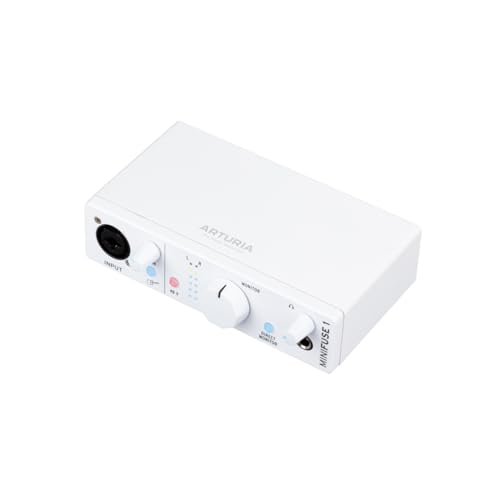
- 5-pin MIDI in and out
- 192 kHz audio and Loopback
- 5-year warranty and software bundle
Best For: Beginners and solo creators needing compact audio plus MIDI
Best Pedalboard MIDI Router

- 2-in/2-out MIDI over USB-C
- Standalone USB or 9V power
- Advanced routing and filtering tools
Best For: Guitarists and pedalboard-based MIDI setups
Best Full-Featured Audio Interface

- 4-in/4-out USB-C audio
- MIDI I/O and low-latency monitoring
- LCD screen and Loopback
Best For: Home studios needing multiple audio connections plus MIDI
Best MIDI Distribution Box
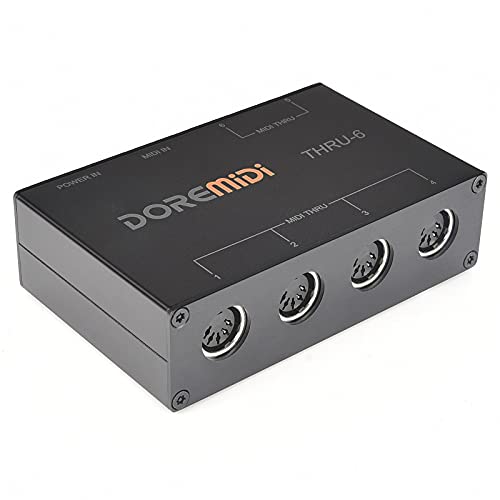
- One MIDI input and six outputs
- Standard 16-channel MIDI support
- USB-powered, battery-free operation
Best For: Sending one controller's MIDI data to multiple devices
Studio-Ready Starter
Focusrite Scarlett Solo 4th Gen

- 120dB dynamic range with 24-bit/192kHz recording
- Air modes enhance vocals and guitar
- Includes several recording software and plugin bundles
Best For: Songwriters and solo vocal or guitar recording
MIDI Routing Hub
XMSJSIY USB MIDI 4x4 Interface
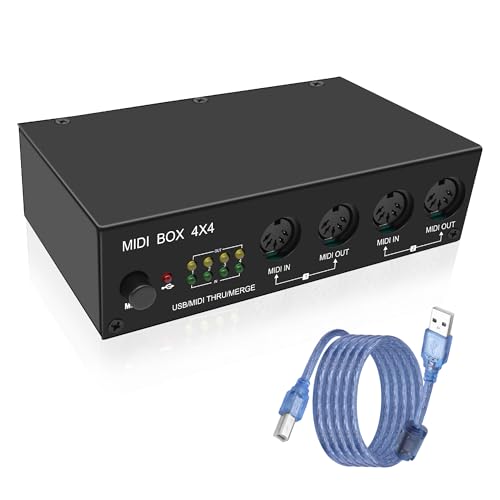
- Four MIDI inputs and four MIDI outputs
- Merge, split, thru, hub, and USB operating modes
- LED indicators and durable aluminum-alloy housing
Best For: Multi-instrument MIDI hardware setups
Flexible Recording Value
M-AUDIO M-Track Duo USB Audio Interface

- Two combo XLR/line/instrument inputs with phantom power
- Zero-latency USB/Direct monitoring switch
- Includes MPC Beats for recording and production
Best For: Two-source recording, podcasting, and streaming
Flexible 4-Channel Pick

- 4x4 USB audio plus MIDI I/O
- 24-bit/192 kHz recording
- Four MIDAS mic preamps with phantom power
Best For: Home studios recording multiple microphones, instruments, and MIDI gear
Beginner Streaming Pick

- 24-bit/192 kHz recording in a compact design
- Mic, instrument, and direct-monitoring support
- Routing software with virtual channels and loopback
Best For: Beginners, podcasters, guitarists, vocalists, and streamers
Premium DSP 2-In/2-Out Pick

- 32-bit integer/192 kHz USB 3.0 audio
- Class-A D-PRE preamps and MIDI I/O
- DSP monitoring with reverb and amp effects
Best For: Solo musicians and producers needing two-channel recording with monitoring effects
Best Compact Audio Pick – Arturia MiniFuse 1
For shoppers comparing midi interfaces under 1000, the Arturia MiniFuse 1 is a compact choice that combines USB audio recording with traditional 5-pin MIDI input and output. It suits simple home-studio, guitar, vocal, synth, and content-creation setups.
Best For: Beginners and solo creators who need a small audio interface with MIDI connectivity.
Pros:
- Includes 5-pin MIDI input and output alongside audio connections.
- Offers 192 kHz maximum sample rate, 48V phantom power, balanced outputs, and headphone volume control.
- Includes Loopback and a broad software bundle, including Ableton Live Lite and Analog Lab Intro.
- Backed by a 5-year warranty and extensive reliability testing.
Cons:
- Its single-channel design is less suitable for larger simultaneous recording setups.
- The compact format provides fewer audio inputs than the MOTU M4.
The MiniFuse 1 is a practical entry point when MIDI is important but you also want microphone, instrument, and headphone functionality in one portable unit.
Best Pedalboard MIDI Router – CME U4MIDI WC
Among midi interfaces under 1000, the CME U4MIDI WC stands out for pedalboards and flexible MIDI routing. Its 2-in/2-out design supports USB-C operation across major desktop and mobile operating systems, with optional standalone power.
Best For: Guitarists, pedalboard users, and musicians who need routing, filtering, mapping, or merging options.
Pros:
- Provides 2 MIDI inputs and 2 MIDI outputs with zero-latency, jitter-free transmission.
- Supports USB-C connections with macOS, Windows, iOS, Android, Linux, and Chrome OS.
- Can run from 5V USB or 9V DC power without a computer connected.
- UxMIDI Tools enables MIDI thru, split, merge, mapper, and filter configurations.
Cons:
- It is a MIDI-focused interface rather than an audio interface with microphone or instrument inputs.
- Optional Bluetooth MIDI requires the WIDI Core feature.
- The listed manufacturer warranty is one year.
The U4MIDI WC is a strong fit for compact, configurable rigs, especially when standalone pedalboard operation and advanced MIDI processing matter more than audio recording.
Best Full-Featured Audio Interface – MOTU M4
For buyers evaluating midi interfaces under 1000 who also need substantial audio I/O, the MOTU M4 offers 4-in/4-out USB-C connectivity with MIDI I/O. It is designed for recording, mixing, podcasting, and low-latency monitoring.
Best For: Home studios and creators needing multiple inputs, outputs, monitoring, and MIDI in one interface.
Pros:
- Provides 4-in/4-out USB-C audio connectivity and MIDI I/O.
- Includes two microphone preamps and hardware monitoring.
- Features an LCD screen and Loopback for monitoring and content workflows.
- Supports up to 192 kHz and includes more than 6 GB of free content.
Cons:
- Its larger footprint is less convenient than compact one-channel or pedalboard interfaces.
- The supplied compatibility details list specific older operating-system versions.
- It has a two-year warranty, shorter than the MiniFuse 1 warranty.
The M4 is the most capable audio-centered option in this group for users who need multiple simultaneous connections without giving up MIDI functionality.
Best MIDI Distribution Box – MIDI Thru-6
If your search for midi interfaces under 1000 is focused on sending one controller’s data to several devices, the MIDI Thru-6 Box is a straightforward distribution solution. It accepts one standard 5-pin MIDI input and sends the messages to six MIDI outputs.
Best For: Live rigs and studios that need to connect one MIDI controller or synth to up to six devices.
Pros:
- Offers one MIDI input and six MIDI Thru outputs.
- Passes standard 16-channel MIDI messages to connected devices.
- Uses a 5V DC USB power supply and requires no batteries.
- Works with listed software including Ableton Live, FL Studio, Logic Pro, Pro Tools, and Cubase.
Cons:
- It distributes MIDI rather than providing audio recording inputs or outputs.
- The one-input design does not provide bidirectional MIDI routing.
- The supplied notes do not list a warranty.
The MIDI Thru-6 is best understood as a dedicated splitter: a useful, simple choice when reliable one-to-many MIDI distribution is the main requirement.
Studio-Ready Starter – Focusrite Scarlett Solo 4th Gen
If you need a compact option among midi interfaces under 1000 for recording vocals, guitar, or other solo parts, the Focusrite Scarlett Solo 4th Gen combines a mic preamp, Hi-Z instrument input, and USB-C connectivity with 24-bit/192kHz recording.
Best For: Songwriters, vocalists, and guitarists recording on Mac, Windows, or iPad.
Pros:
- 120dB dynamic range and up to 192kHz sample rate.
- Air mode adds presence and harmonic drive to vocals and guitars.
- Includes Pro Tools Intro+, Ableton Live Lite, Cubase LE, and Hitmaker Expansion.
- Compact 14.4-ounce design with a three-year manufacturer warranty.
Cons:
- Provides one XLR mic preamp and one Hi-Z instrument input, limiting simultaneous sources.
- Its focus is recording audio rather than providing multiple dedicated MIDI ports.
The Scarlett Solo is a strong choice when your setup centers on one microphone and one instrument. Its high-resolution converters, Air modes, and bundled software make it particularly practical for home recording and songwriting.
MIDI Routing Hub – XMSJSIY USB MIDI 4×4 Interface
For buyers comparing midi interfaces under 1000 that prioritize hardware routing, the XMSJSIY USB MIDI Interface Box offers four inputs and four outputs, plus merge, split, thru, and hub functions for connecting multiple MIDI instruments.
Best For: Multi-device MIDI setups using keyboards, synthesizers, drum machines, controllers, or other class-compliant USB MIDI instruments.
Pros:
- 4-in/4-out design supports MIDI splitting and merging.
- Offers five operating modes, including USB and MIDI thru functionality.
- LED indicators show power, USB activity, and MIDI input/output status.
- Aluminum-alloy construction and silicone feet support durability and stability.
Cons:
- It is a MIDI routing interface rather than an analog audio recording interface.
- The supplied details list Android as the operating system, so platform compatibility should be checked for your setup.
This model is best suited to musicians who need to organize several MIDI connections rather than record microphones or instruments. Its routing modes, status LEDs, and four-by-four layout make it useful for more involved hardware rigs.
Flexible Recording Value – M-AUDIO M-Track Duo USB Audio Interface
If you are shopping midi interfaces under 1000 but also need straightforward audio recording, the M-AUDIO M-Track Duo provides two combo XLR/line/instrument inputs, phantom power, and simple monitoring for recording, podcasting, and streaming.
Best For: Home recordists, podcasters, and streamers who need two inputs and flexible headphone or speaker monitoring.
Pros:
- Two combo inputs accept microphones, line-level sources, and instruments.
- Phantom power supports condenser microphones.
- USB/Direct monitoring switch enables zero-latency monitoring.
- Includes MPC Beats and supports Mac, Windows, iOS, and Android.
Cons:
- Maximum sample rate is 48kHz, lower than some recording interfaces.
- Uses USB Type-B connectivity rather than USB-C.
- Includes a one-year manufacturer warranty.
The M-Track Duo is a practical entry-level audio interface for two-source recording and live content. Its dual inputs and direct-monitoring switch add versatility, while the 48kHz limit keeps it aimed at basic recording, podcasting, and streaming workflows.
Flexible 4-Channel Pick – Behringer U-PHORIA UMC404HD
For musicians who need several connections without moving into a higher-priced studio setup, the Behringer U-PHORIA UMC404HD is a practical choice among MIDI interfaces under 1000. It combines four analog inputs and outputs with MIDI I/O, 24-bit/192 kHz recording, and four MIDAS-designed mic preamps in a metal chassis.
Best For: Home studios recording multiple microphones or instruments while using MIDI hardware.
Pros:
- 4×4 USB audio connectivity plus MIDI input and output
- 24-bit/192 kHz resolution and four MIDAS mic preamps
- +48V phantom power supports condenser microphones
- Impact-resistant metal construction
Cons:
- Larger and heavier than compact two-channel interfaces
- USB connectivity may be less convenient for newer USB-C-only setups
The UMC404HD stands out when channel count matters more than portability. Its four inputs, direct MIDI connection, and broad DAW compatibility make it a versatile foundation for a small recording rig.
Beginner Streaming Pick – MAONO PS22 Lite
The MAONO PS22 Lite is a compact option for shoppers comparing MIDI interfaces under 1000 alongside accessible USB recording gear. It focuses on guitar, vocals, streaming, and beginner-friendly operation, with 24-bit/192 kHz recording, direct monitoring, and software-based routing.
Best For: Beginners, podcasters, vocalists, guitarists, and streamers who want a small plug-and-play interface.
Pros:
- Compact design with 24-bit/192 kHz recording and 106 dB dynamic range
- Supports condenser and dynamic microphones with up to 56 dB of preamp gain
- Dedicated instrument input with impedance adjustment
- ProStudio Routing Software adds virtual channels and loopback functions
Cons:
- Designed around a more compact setup than a multi-input studio interface
- Some routing features depend on the included software and ASIO driver selection
Choose the PS22 Lite if simple setup and streaming flexibility are priorities. Its compact form, direct monitoring, and routing tools make it approachable for creators building their first recording or broadcast system.
Premium DSP 2-In/2-Out Pick – Yamaha URX22C
The Yamaha URX22C is a strong choice for buyers evaluating MIDI interfaces under 1000 who want a refined two-channel setup. It pairs 32-bit integer/192 kHz USB 3.0 audio with Class-A D-PRE preamps, MIDI I/O, rugged construction, and DSP-powered latency-free monitoring.
Best For: Solo musicians and producers who need two quality inputs, MIDI connectivity, and onboard monitoring effects.
Pros:
- 32-bit integer/192 kHz recording with 2-in/2-out connectivity
- Two XLR/TRS combo inputs with Class-A D-PRE preamps
- DSP monitoring includes REV-X reverb, Channel Strip, and Guitar Amp Classics
- Compatible with Windows, macOS, and iOS
Cons:
- Only two analog inputs and two main outputs
- Its advanced features may be more than a basic recording setup requires
The URX22C is best suited to focused, high-quality two-channel work rather than large tracking sessions. Its DSP effects, full-metal housing, MIDI I/O, and cross-platform support give it a polished feature set for producers and performers.
How We Picked the Best Midi Interfaces Under 1000
We evaluated these interfaces by looking at MIDI input and output counts, USB compatibility, routing flexibility, hardware-throughput features, and suitability for common studio tasks. We also considered whether an interface adds useful audio recording, monitoring, DSP, or streaming capabilities.
The selection includes compact units for keyboards and controllers, dedicated MIDI splitters and interfaces for hardware-heavy setups, and audio interfaces with integrated MIDI ports. Since “under $1,000” covers a wide range of equipment, the right choice depends more on your workflow than on price alone.
Quick Comparison
- For basic computer MIDI: Choose a compact two-in/two-out interface such as the CME U4MIDI WC.
- For recording and MIDI together: Consider the MOTU M4, Yamaha interface, Focusrite Scarlett Solo, or Arturia MiniFuse.
- For multiple hardware synths: Look at the MIDI Thru 6 Box or XMSJSIY 4-in/4-out unit.
- For four-input recording: The Behringer UMC404HD provides expanded audio connectivity alongside MIDI.
- For simple, affordable recording: M-Audio M-Track Duo and MAONO PS22 Lite emphasize accessible audio I/O.
Key Buying Factors for Midi Interfaces Under 1000
MIDI Ports and Routing
Count the physical MIDI inputs and outputs you need today, then allow room for expansion. One input and one output may suit a single keyboard, while several synths benefit from multiple independent outputs or a dedicated MIDI thru box. A thru box duplicates one MIDI signal to several devices, but it is not the same as having independently addressable ports.
Audio I/O and Recording Needs
If you also record vocals, guitars, or microphones, an audio/MIDI interface may offer better overall value than a dedicated MIDI box. Check the number of combo inputs, microphone preamps, phantom power, headphone monitoring, and line outputs. Four audio inputs are useful for stereo instruments, multiple microphones, or small ensembles.
Computer Connection and Compatibility
USB-C can describe the connector rather than a specific performance level, so verify the included cable and your computer’s ports. Confirm operating-system support, driver requirements, and compatibility with your DAW. Class-compliant models are generally convenient for mobile or mixed-device setups.
Latency, Clocking, and Reliability
Low latency matters when playing software instruments or monitoring recorded signals. For larger hardware rigs, stable timing, dependable optocouplers, and reliable power are especially important. Look for clear status indicators and sturdy connectors if the interface will remain permanently wired.
Who Should Buy Which Midi Interfaces Under 1000?
Keyboard Players and Beginners
Choose a compact two-port interface or an affordable audio/MIDI model if you need straightforward computer integration and occasional recording.
Home Producers
An interface such as the MOTU, Yamaha, Arturia, or Focusrite option is a strong fit when MIDI control and microphone or instrument recording belong in the same setup.
Hardware Synth Collectors
Prioritize multiple independent MIDI ports or thru outputs. Dedicated boxes are often the cleanest solution when several external instruments must stay connected and accessible.
Streamers and Content Creators
Look for simple gain control, headphone monitoring, reliable USB operation, and enough inputs for a microphone and instrument. Extra MIDI ports are valuable only if they support your actual production workflow.