The best multitrack recorders for musicians make it easier to capture ideas, build arrangements, and finish songs without relying entirely on a computer. This lineup covers compact battery-powered recorders, modern touchscreen-style workflows, and full-featured mixer-based studios.
Whether you record rehearsals, demos, live instruments, or complete productions, the right model depends on input count, portability, editing tools, and how much hands-on control you want.
Best 10 Multitrack Recorders for Musicians Picks for 2026
Best Portable 32-Bit Float Recorder

- Four-track recording with layering and bouncing
- 32-bit float capture helps prevent clipping
- Battery-powered with built-in rhythms and effects
Best For: Mobile songwriting, demos, and quick musical ideas
Best Feature-Rich Legacy Recorder

- Four-track simultaneous recording
- Built-in BOSS effects and drum machine
- USB audio interface and DAW control surface
Best For: Guitarists, vocalists, and portable songwriters
Best Touchscreen Multitrack Recorder
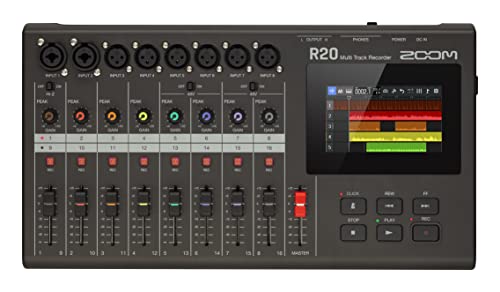
- 16-track recorder with up to eight simultaneous inputs
- Touchscreen recording, editing, and mixing
- 150 rhythms, synth sounds, and onboard effects
Best For: Full demos, rehearsals, and computer-free production
Best Mixer-Style Studio Recorder

- 12-track recorder with 12-in/10-out USB interface
- Mixer, DAW controller, and onboard MIDI
- Compressor, EQ, and dual headphone outputs
Best For: Home studios, bands, and hands-on mixing
Best All-in-One Workstation

- Eight-track recording with touchscreen editing
- Built-in drum loops, FM synths, and MIDI
- USB-C interface and DAW control
Best For: Musicians wanting a feature-rich portable studio
Best Straightforward Songwriting Recorder

- Eight-track WAV recording
- Built-in stereo microphones
- Battery-operated with included 2GB SD card
Best For: Songwriters capturing portable demos and ideas
Best Compact Layering Recorder

- Four tracks with bounce layering
- Built-in microphone and 32-bit float recording
- Effects, rhythms, and USB-C interface
Best For: Mobile musicians and solo multitrack demos
Portable Songwriter
Tascam DP-006 6-Track Pocketstudio

- Six-track recording with CD-quality WAV audio
- Built-in stereo microphones
- Battery-powered compact design
Best For: Mobile songwriting and quick demos
All-in-One Practice Rig
Boss BR-600 Digital Multitrack Recorder

- Eight-track simultaneous playback
- Built-in effects and drum machine
- Stereo microphone with battery operation
Best For: Portable practice, demos, and effects-driven recording
Expanded Tabletop Studio

- Eight-track simultaneous recording
- 16-track playback with SDHC storage
- USB interface, sampler, and rhythm machine
Best For: Bands and multi-source home recording
Best Portable 32-Bit Float Recorder – Zoom R4
The Zoom R4 is a compact choice for musicians who want multitrack recorders for musicians that can capture ideas without complicated gain setup. It records up to four tracks, supports layering and bouncing, and includes two XLR/TRS combo inputs for microphones, instruments, and other sources.
Best For: Mobile songwriting, demos, practice sessions, and musicians who value clip-resistant recording and battery operation.
Pros:
- 32-bit float recording helps avoid clipping without constant gain adjustments.
- Records, layers, and bounces tracks with undo support.
- Includes more than 80 rhythm patterns, built-in effects, and a stereo microphone.
- Works as a USB audio interface and runs on AA batteries or USB-C.
Cons:
- Limited to four recording tracks.
- Only two XLR/TRS combo inputs are provided.
The R4 is especially practical when portability and fast idea capture matter more than a large track count. Its built-in rhythms and flexible power options make it a strong sketching and rehearsal tool.
Best Feature-Rich Legacy Recorder – BOSS BR-800
The BOSS BR-800 offers a broad set of songwriting and performance tools for musicians comparing multitrack recorders for musicians. It records four tracks simultaneously, plays back up to eight tracks plus a stereo rhythm track, and combines effects, drum programming, and USB connectivity in a portable unit.
Best For: Guitarists, vocalists, and songwriters who want built-in effects, rhythms, and flexible battery-powered recording.
Pros:
- Supports four-track simultaneous recording and eight-track simultaneous playback.
- Includes BOSS-derived guitar, bass, and vocal effects.
- Built-in stereo condenser microphone enables instant recording.
- Functions as a USB audio interface and DAW control surface.
Cons:
- Uses six AA batteries, which is more than some compact alternatives.
- SDHC storage support is limited to cards up to 32GB.
- Heavier than the Zoom R4 at 890g.
The BR-800 remains useful for musicians who prefer an all-in-one workflow with effects and rhythm tools onboard. Its simultaneous track capacity is modest, but its recording and USB features cover a wide range of home and mobile projects.
Best Touchscreen Multitrack Recorder – Zoom R20
The Zoom R20 is designed for musicians who want multitrack recorders for musicians with a hands-on, computer-free workflow. Its touchscreen interface supports recording, editing, and mixing directly on the unit, while the 16-track design can record up to eight tracks simultaneously.
Best For: Complete demos, rehearsals, and home projects requiring more inputs, tracks, and onboard editing than compact four-track recorders provide.
Pros:
- Offers 16 tracks and up to eight simultaneous recording tracks.
- Touchscreen controls make arranging and editing direct and intuitive.
- Includes EQ, compression, other effects, 150 rhythm patterns, and an 18-sound synth.
- Provides multiple XLR and combo inputs plus USB interface functionality.
Cons:
- Weighs 4.3 pounds, making it less portable than compact handheld recorders.
- Maximum sample rate is 44.1 kHz.
- Its larger feature set may be more than needed for simple demos.
With its touchscreen editing and eight-input simultaneous recording capacity, the R20 is a capable centerpiece for larger song sketches and demos. It is a better fit than a basic handheld recorder when onboard arrangement tools are a priority.
Best Mixer-Style Studio Recorder – Tascam Model 12
The Tascam Model 12 is a mixer-centered option for musicians seeking multitrack recorders for musicians that can also anchor a studio setup. It combines 12-track digital recording and mixing with a 12-in/10-out USB audio interface, onboard MIDI, and DAW controller functionality.
Best For: Home studios, bands, and producers who want a full-size mixer workflow with computer connectivity and hands-on channel controls.
Pros:
- Combines a 12-track recorder, mixer, USB interface, and DAW controller.
- Provides 12 inputs and 10 USB outputs for DAW connectivity.
- Each input module includes a one-knob compressor and three-band EQ.
- Offers dual headphone outputs with individual volume and source selection.
Cons:
- At 13.3 pounds, it is substantially less portable than handheld recorders.
- Requires corded electric power.
- Its mixer format takes up more space than compact tabletop recorders.
The Model 12 makes the most sense when tactile mixing and studio connectivity are as important as standalone recording. Choose it over a handheld unit if you need a larger mixer-style control surface and multiple monitoring options.
Best All-in-One Workstation – Zoom R12
The Zoom R12 is a strong choice among multitrack recorders for musicians who want touchscreen editing, onboard sounds, and computer-free recording in one portable unit. It records up to eight tracks and combines two combo inputs with useful songwriting tools.
Best For: Musicians who want an eight-track recorder with built-in effects, drum loops, synths, and DAW connectivity.
Pros:
- Eight-track recording with a full-color touchscreen and DAW-style editing.
- Includes 150 drum loops, 18 FM synth instruments, and MIDI support.
- Both inputs provide phantom power; input 1 also offers Hi-Z guitar and bass connection.
- Works as a stereo USB-C audio interface and DAW control surface.
Cons:
- Battery life is rated at up to five hours, so extended sessions may require spare AA batteries.
- Its feature-rich design may be more than needed for simple four-track recording.
Choose the R12 if you value flexible production features and hands-on editing as much as portability. It is especially versatile for demos, arrangements, and musicians who want to add rhythm or synthesized parts without separate hardware.
Best Straightforward Songwriting Recorder – TASCAM DP-008EX
The TASCAM DP-008EX is a practical option among multitrack recorders for musicians who prefer a dedicated pocketstudio for capturing songs. Its eight-track format, built-in stereo microphones, WAV recording, and AA battery operation suit mobile songwriting and basic demos.
Best For: Songwriters who want an eight-track, battery-operated recorder with built-in microphones and simple computer transfer through USB.
Pros:
- Provides eight-track digital recording in a compact 610-gram design.
- Built-in stereo microphones make quick idea capture convenient.
- Records in WAV format and includes a 2GB SD card.
- Uses four AA batteries and offers up to 6.5 hours of digital recording time.
Cons:
- Its 2-inch screen is smaller than touchscreen-based alternatives.
- The supplied notes do not list onboard drum loops, synths, or effects.
- It uses a 3.5mm headphone connection, which may require an adapter for some headphones.
The DP-008EX makes the most sense when the priority is uncomplicated, self-contained recording rather than an extensive production workstation. Built-in microphones and battery power help it stay ready for spontaneous writing sessions.
Best Compact Layering Recorder – Zoom R4
The Zoom R4 is a compact pick among multitrack recorders for musicians who want to layer parts quickly at home or on the move. It combines four-track recording with bounce functionality, a built-in microphone, two combo inputs, and 32-bit float recording.
Best For: Mobile musicians, solo performers, and creators who need a small recorder for demos, layered arrangements, or field ideas.
Pros:
- Supports four-track recording plus bounce recording for additional layers.
- Combines two XLR/TS combo inputs with a built-in omnidirectional microphone.
- Offers 32-bit float recording and a USB-C 2-in/2-out audio interface.
- Includes 50 effects, over 80 rhythm patterns, and per-track EQ, pan, echo, and reverb.
Cons:
- Four dedicated tracks provide less simultaneous track capacity than eight-track models.
- The supplied notes specify a maximum sample rate of 48 kHz.
- Four AA batteries power the unit, so mobile users should plan for replacements.
The R4 is a particularly appealing fit for solo layering and fast idea capture. Its bounce workflow expands the practical number of parts, while the built-in microphone, effects, rhythms, and USB interface keep the setup compact.
Portable Songwriter – Tascam DP-006 6-Track Pocketstudio
The Tascam DP-006 is a compact choice for musicians seeking multitrack recorders for musicians who want to capture song ideas away from a computer. It records up to six tracks at CD-quality 16-bit/44.1kHz, includes built-in microphones, and runs on four AA batteries.
Best For: Songwriters and mobile musicians who need a simple, battery-powered recorder for demos and ideas.
Pros:
- Records up to six tracks with two-track simultaneous recording.
- Built-in stereo omni-directional condenser microphones simplify quick recording.
- Compact 1.8-pound design and included AA batteries support portable use.
- Provides a dedicated stereo master track.
Cons:
- Recording is limited to 16-bit/44.1kHz WAV quality.
- Its 2.5mm headphone jack may require an adapter for some headphones.
- The included storage capacity is 4GB.
The DP-006 prioritizes straightforward, portable songwriting over extensive studio features. It is a practical fit when built-in microphones, battery operation, and basic six-track recording matter most.
All-in-One Practice Rig – Boss BR-600 Digital Multitrack Recorder
The Boss BR-600 combines multitrack recording with built-in production tools, making it a versatile option among multitrack recorders for musicians. It offers eight simultaneous playback tracks, 64 V-Tracks, a built-in stereo microphone, guitar and vocal effects, and a drum machine.
Best For: Musicians who want portable recording with onboard effects, drum patterns, and pitch-correction tools.
Pros:
- Provides eight simultaneous playback tracks and 64 V-Tracks.
- Includes guitar effects, vocal effects, and a pitch corrector.
- Built-in drum machine features velocity-sensitive pads.
- Built-in stereo microphone and battery operation support recording anywhere.
Cons:
- Supplied 128MB CompactFlash media allows about 2 hours and 16 minutes of digital recording time.
- Requires four 9V batteries.
- Uses a 3.5mm headphone jack rather than a larger studio-style jack.
The BR-600 is more feature-focused than a basic pocket recorder, especially for musicians who want effects and rhythm tools without separate hardware. Its included storage is limited, so media capacity is an important consideration.
Expanded Tabletop Studio – Zoom R8 Multitrack Recorder
The Zoom R8 is a strong option for musicians comparing multitrack recorders for musicians who need more simultaneous input capacity. It supports up to eight-track simultaneous recording, 16-track playback, SDHC storage up to 32GB, built-in stereo condenser microphones, and USB audio-interface functionality.
Best For: Bands and home-recording musicians who need multiple inputs, expanded playback, and built-in rhythm and sampling tools.
Pros:
- Records up to eight tracks simultaneously and supports 16-track playback.
- Offers two XLR combo inputs for microphone or instrument connections.
- Supports 16- or 24-bit/44.1kHz WAV recording.
- Includes stereo condenser microphones, a pad sampler, and a rhythm machine.
Cons:
- Its maximum sample rate is 44.1kHz.
- The unit weighs 2.7 pounds, making it less pocketable than a compact recorder.
- SDHC storage cards are required for recording media.
The R8 is the most capable choice of these three for multi-source recording, with eight simultaneous inputs and useful tabletop production features. Choose it when connectivity and track capacity are more important than the smallest possible form factor.
How We Picked the Best Multitrack Recorders for Musicians
We compared these recorders by examining the features that most affect real-world recording: simultaneous inputs, track capacity, microphone connectivity, portability, onboard effects, editing workflow, storage, and computer integration. We also considered whether each model suits quick songwriting, live capture, overdubbing, or more structured studio production.
The selection includes current-style digital recorders alongside established pocket studios and versatile tabletop units. That range matters because a six-track battery-powered recorder serves a different musician than a 12-track mixer with USB connectivity.
Quick Comparison
| Best For | Prioritize |
|---|---|
| Portable songwriting | Battery operation, built-in microphones, compact controls |
| Band rehearsal and live recording | Multiple inputs, simultaneous recording, durable construction |
| Layered home demos | Track count, overdubbing, effects, and editing tools |
| Hybrid studio workflows | USB audio, mixer controls, DAW compatibility |
Key Buying Factors for Multitrack Recorders for Musicians
Inputs and Simultaneous Recording
Count the inputs you can record at the same time, not only the total number of tracks. Two combo inputs may be enough for vocals and guitar, while a full band or drum setup benefits from six or more microphone inputs. Check whether inputs accept microphones, line-level sources, instruments, or phantom power.
Track Count and Workflow
More tracks provide flexibility for overdubs, harmonies, percussion, and alternate takes. However, a simpler recorder can be faster for songwriting. Consider whether you prefer physical faders and buttons, a screen-based interface, or a computer-assisted workflow.
Portability and Recording Environment
Built-in microphones and battery operation are valuable for capturing ideas away from a desk. For a permanent setup, larger controls, more connections, and mixer-style routing may matter more than compact size.
Effects, Editing, and Connectivity
Onboard reverb, compression, amp effects, drum patterns, and bouncing can reduce the need for extra gear. USB connectivity is important if you plan to transfer tracks, use a DAW, or treat the recorder as an audio interface. Verify the included storage and expansion options before buying.
Who Should Buy Which Multitrack Recorders for Musicians?
Choose a compact pocketstudio if you mainly write songs, record acoustic ideas, or need a battery-powered tool. A portable recorder with effects and drum loops is a strong fit for solo performers building arrangements quickly. Musicians recording several sources at once should look for models with more XLR inputs and higher simultaneous-track capacity.
Choose a tabletop multitrack recorder when you want hands-on mixing, flexible overdubbing, and a more studio-like layout. A mixer-style model is best for home studios that need USB recording, live sound control, and DAW integration in one unit. Before deciding, match the recorder’s input count and workflow to your typical session rather than paying solely for the highest track number.