If you’re shopping for vr headsets with eye tracking, the right choice depends on how you plan to play, work, and connect to a PC. Some models prioritize visual clarity and wide field of view, while others focus on mixed reality versatility or premium tracking for simulators.
This roundup highlights 10 of the best options in 2026, with a focus on display quality, tracking performance, comfort, and the features that matter most before you buy.
Best 10 Vr Headsets with Eye Tracking Picks for 2026
Elite Sim Racing Clarity
Pimax Crystal Super VR Headset

- 50 PPD optics reduce screen-door effect.
- 3840 x 3840 per eye with Mini-LED local dimming.
- 140° FOV and eye tracking suit cockpit sims.
Best For: PC sim racers and flight sim fans prioritizing sharpness and wide peripheral vision.
Premium Work and Mixed Reality
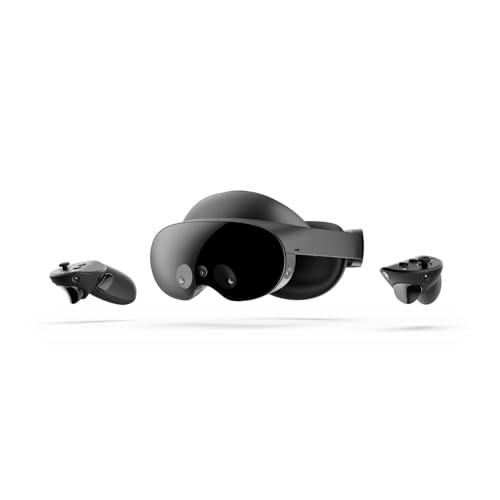
- Mixed reality passthrough supports work and collaboration.
- Touch Pro controllers add self-tracking and precise input.
- Pancake lenses and local dimming improve visual clarity.
Best For: Professionals and mixed reality users who want a premium all-rounder.
Face and Eye Tracking VR

- Built-in eye tracking and facial tracker support.
- 5K display with 2448 x 2448 per eye.
- Works for standalone and PC VR use.
Best For: VRChat, social VR, and creators who need expression tracking.
Ultra-Clarity Sim Bundle
Pimax Crystal Super Micro-OLED

- Micro-OLED panels with 3840 x 3552 per eye.
- 53 PPD optics for sharp simulation visuals.
- Eye tracking and 116° FOV improve immersion.
Best For: PC sim players who want ultra-sharp visuals and eye tracking.
Precision Eye Tracking PC VR

- Consistent eye tracking for analysis and gaze data
- Foveated rendering helps ease GPU load
- Comfort-oriented PC VR design for longer sessions
Best For: PC VR analytics, simulations, and eye-tracking-focused workflows
All-in-One XR Streaming Bundle

- Built-in eye and hand tracking for natural interactions
- DisplayPort streaming for PC VR visuals
- Hot-swappable battery for longer sessions
Best For: Standalone and PC VR users who want flexible tracking and streaming
Ultra-High-Res PC VR

- Micro-OLED panels with 3840 x 3552 per eye
- Eye tracking with DFR-ready support
- Compact PC VR design with spatial audio
Best For: Enthusiasts who want sharp visuals and advanced PC VR tracking
Editor’s Pick
HTC Vive Focus Vision PC VR Streaming Kit
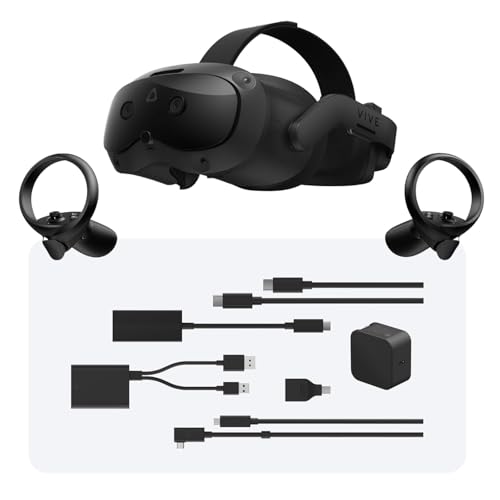
- Built-in eye tracking and low-light hand tracking
- DisplayPort mode for lossless PC VR visuals
- 5K per-eye display with hot-swappable battery
Best For: Gamers wanting eye tracking and wired PC VR
Premium Compact Pick

- Compact mixed reality and PC VR headset
- Includes deluxe comfort accessories
- Stepless IPD and diopter adjustment
Best For: Buyers wanting a compact premium VR headset
Value PC VR Pick
HTC Vive Focus Vision Consumer Edition

- Built-in eye tracking and low-light hand tracking
- DisplayPort mode for lossless PC VR streaming
- 5K display with hot-swappable battery
Best For: PC VR users wanting eye tracking and mixed reality
Elite Sim Racing Clarity – Pimax Crystal Super VR Headset
If you want vr headsets with eye tracking for flight or racing sims, the Pimax Crystal Super is built around sheer visual precision and a very wide view. Its 3840 x 3840-per-eye display, 50 PPD optics, and 140° FOV are aimed at reducing screen-door effect and increasing peripheral awareness, while eye tracking and dynamic FOV optimization help tailor performance to your hardware.
Best For: Sim racers and flight sim players who want maximum sharpness, wide situational awareness, and PC-tethered performance.
Pros:
- 50 PPD aspherical lenses are designed for edge-to-edge sharpness with less screen-door effect.
- 3840 x 3840 per eye QLED and Mini-LED display includes local dimming for bright images and deep blacks.
- 140° ultra-wide field of view improves peripheral vision in cockpit-style games.
- Dynamic FOV optimization can adjust performance based on your GPU.
Cons:
- Designed for PC use with DisplayPort connection, so it is not a standalone headset.
- Its feature set is heavily tuned toward simulation and high-end VR use.
This headset makes the most sense if image clarity and immersion matter more than portability. For players with a strong PC setup, it combines eye tracking, wide FOV, and high-resolution visuals into a focused sim-first package.
Premium Work and Mixed Reality – Meta Quest Pro
The Meta Quest Pro is a strong pick if you’re comparing vr headsets with eye tracking for work, mixed reality, and social VR. It combines full-color passthrough, pancake lenses, local dimming, and advanced sensors with self-tracking controllers, making it a flexible option for multitasking, collaboration, and immersive apps.
Best For: Professionals and mixed reality users who want a premium headset for work, creativity, and social VR.
Pros:
- High-resolution mixed reality passthrough helps you see the physical world while using VR.
- Meta Quest Touch Pro controllers use self-tracking cameras and precision controls.
- Pancake lenses, increased pixel density, local dimming, and quantum dot tech improve clarity.
- Counter-balanced ergonomics are designed for long wearing comfort.
Cons:
- Listed field of view is 106 degrees, which is narrower than some sim-focused headsets.
- Requires a Meta account to use.
For users who care about productivity and mixed reality as much as gaming, the Quest Pro offers a well-rounded feature set. It is less specialized for ultra-wide simulation, but its tracking, passthrough, and comfort make it highly versatile.
Face and Eye Tracking VR – HTC Vive Focus Vision
The HTC Vive Focus Vision is a compelling choice if you want vr headsets with eye tracking plus facial tracking in one package. It supports both standalone and PC VR, adds DisplayPort mode for lossless PC visuals, and pairs a 5K display with a 120° field of view for broad immersion in games and social experiences.
Best For: VRChat, mixed reality, and PC VR users who want built-in eye tracking and facial expression capture.
Pros:
- Built-in eye tracking and low-light hand tracking support more natural interactions.
- Facial tracker captures 38 blend shapes across the lips, jaw, cheeks, chin, teeth, and tongue.
- 5K display at 2448 x 2448 per eye and 120° FOV create a sharp, immersive view.
- Standalone and PC VR support make it flexible for different setups.
Cons:
- Some PC VR features depend on DisplayPort mode or network setup for streaming.
- Its strength is interaction tracking, so it may be more than casual players need.
If expression tracking matters to your use case, this headset stands out from simpler VR options. It is especially appealing for social VR, training, and capture workflows where face and eye movement add value.
Ultra-Clarity Sim Bundle – Pimax Crystal Super Micro-OLED
For buyers looking at vr headsets with eye tracking and a strong focus on visual fidelity, this Pimax Crystal Super bundle goes all-in on sharp imagery. Its Micro-OLED panels, 3840 x 3552 per eye resolution, 53 PPD optics, and 116° FOV are aimed at reducing the tunnel effect while keeping PC VR imagery crisp and detailed.
Best For: Sim enthusiasts who want a high-resolution PC VR headset with eye tracking and a wide, immersive view.
Pros:
- Micro-OLED displays deliver 3840 x 3552 pixels per eye for very sharp detail.
- 53 PPD optics are tuned for clarity and realism in simulation-heavy games.
- 116° field of view helps reduce the tunnel effect.
- Includes eye tracking and a face cushion accessory in the bundle.
Cons:
- PC VR only, with DisplayPort connectivity instead of standalone operation.
- The 116° FOV is wide, but not as expansive as some ultra-wide alternatives.
This bundle is best viewed as a clarity-first option for serious PC VR players. If your priority is crisp visuals over portability, it offers a very focused mix of resolution, eye tracking, and simulation-friendly optics.
Precision Eye Tracking PC VR – HTC Vive Pro Eye
If you want vr headsets with eye tracking for research, simulation, or content analysis, the HTC Vive Pro Eye is built around accurate gaze measurement and rendering efficiency. Its eye tracking is designed for consistent movement analysis, while foveated rendering helps reduce GPU workload by focusing detail where the user is looking.
Best For: PC VR users who need eye tracking for analytics, simulations, or professional VR workflows.
Pros:
- Precision eye tracking supports gaze tracking, heatmapping, and user experience analysis.
- Foveated rendering can reduce rendering demands on the GPU.
- Top-tier visual fidelity for graphics, text, and textures in simulations.
- Comfort-focused design for extended sessions across different head sizes and vision types.
Cons:
- PC VR setup with USB and DisplayPort is less flexible than standalone headsets.
- Resolution is lower than some newer high-end headsets.
This is a strong pick if your priority is dependable eye tracking for practical VR use rather than a standalone all-in-one design. It leans toward professional and simulation workflows where tracking data and visual clarity matter.
All-in-One XR Streaming Bundle – HTC Vive Focus Vision
The HTC Vive Focus Vision is one of the more versatile vr headsets with eye tracking if you want standalone convenience plus PC VR support. It combines built-in eye tracking, low-light hand tracking, and support for face and body tracking accessories, while the DisplayPort streaming kit is aimed at lossless PC visuals.
Best For: Buyers who want a flexible headset for standalone VR, PC streaming, and social or mixed reality experiences.
Pros:
- Built-in eye tracking plus hand tracking for more natural interactions.
- DisplayPort mode is designed for high-fidelity PC VR streaming.
- 5K total resolution and 90 Hz refresh rate support sharp visuals.
- Hot-swappable battery helps extend play sessions.
Cons:
- Some advanced tracking features depend on separate accessories.
- Best PC VR use relies on the included streaming setup and wired configuration.
This bundle stands out if you want a headset that can do more than one job without giving up eye tracking. It is especially appealing for users who split time between standalone VR, PC-connected play, and immersive social apps.
Ultra-High-Res PC VR – Pimax Dream Air Slam
If you are shopping for vr headsets with eye tracking and want a very sharp PC VR display, the Pimax Dream Air Slam is aimed at high-end users. It pairs micro-OLED panels with eye tracking, SLAM tracking, and DFR-ready support, making it a performance-focused headset for advanced PC VR setups.
Best For: PC VR enthusiasts who want high-resolution visuals, compact hardware, and eye-tracking support.
Pros:
- Very high 3840 x 3552 per-eye resolution with micro-OLED display.
- Eye tracking is included and DFR-ready for performance-focused use.
- ConcaveView optics and pancake lenses are built for a compact high-end design.
- Integrated spatial audio and 6DOF controllers round out the package.
Cons:
- Requires a capable PC and supported DisplayPort/USB setup.
- Shorter feature list suggests a more enthusiast-focused experience than a broad all-in-one system.
This headset makes the most sense when display quality and advanced tracking matter more than simplicity. It is a strong fit for users who already have a capable PC and want an eye-tracked, high-resolution VR setup.
Editor’s Pick – HTC Vive Focus Vision PC VR Streaming Kit
HTC Vive Focus Vision Wired Bundle — XR Headset with DisplayPort PC VR Streaming Kit
Check Price On AmazonIf you want one of the more versatile vr headsets with eye tracking, the HTC Vive Focus Vision Wired Bundle is built for both standalone use and PC VR streaming. It combines DisplayPort mode for lossless PC visuals, 5K-class per-eye resolution, and built-in eye tracking with low-light hand tracking, making it a strong choice for players who want immersion plus practical flexibility.
Best For: Gamers who want eye tracking, strong mixed reality features, and PC VR with a wired DisplayPort connection.
Pros:
- Built-in eye tracking plus low-light hand tracking for more natural interactions.
- DisplayPort mode delivers lossless, high-fidelity PC VR visuals.
- 5K resolution, 120° field of view, and 90 Hz refresh rate.
- Hot-swappable battery helps extend longer play sessions.
Cons:
- Best PC VR performance depends on a direct router connection and setup.
- Bundle is geared toward gaming and mixed reality, not a lightweight travel-first headset.
Overall, this bundle stands out if eye tracking is a must-have and you also want strong PC VR streaming and mixed reality support. It is a practical all-in-one option for users who value fidelity, tracking, and longer sessions.
Premium Compact Pick – HTC Vive XR Elite Deluxe Pack
HTC Vive XR Elite with Deluxe Pack — Mixed Reality and PC VR Headset + Controllers
Check Price On AmazonThe HTC Vive XR Elite with Deluxe Pack is a compact mixed reality headset that also works for PC VR, making it a strong option to consider when comparing vr headsets with eye tracking features. It does not list eye tracking itself, but it does include wide tracking cameras, full-color passthrough, and a stepless IPD plus diopter adjustment system for a more personalized fit.
Best For: Users who want a compact mixed reality and PC VR headset with premium comfort accessories.
Pros:
- Includes Deluxe Pack accessories like face gasket, deluxe strap, temple clips, and MR gasket.
- Standalone and PC VR support with base-station-free tracking.
- Full-color passthrough and depth sensor for mixed reality use.
- Stepless IPD and diopter adjustments help refine clarity and comfort.
Cons:
- Battery life is listed at up to about 2 hours.
- No built-in eye tracking is listed in the supplied notes.
This is a strong pick if you want a smaller headset with premium accessories and flexible VR modes. It is especially appealing for users who care more about comfort and mixed reality than eye-tracking-specific features.
Value PC VR Pick – HTC Vive Focus Vision Consumer Edition
HTC Vive Focus Vision — Mixed Reality and PC VR Headset + Controllers — Consumer Edition
Check Price On AmazonThe HTC Vive Focus Vision Consumer Edition is a focused option in the category of vr headsets with eye tracking because it includes built-in eye tracking along with low-light hand tracking and PC VR support. With DisplayPort mode, 5K per-eye resolution, and a hot-swappable battery, it is built for users who want strong visuals and long sessions without base stations.
Best For: PC VR and mixed reality users who want eye tracking and a consumer-oriented standalone headset.
Pros:
- Built-in eye tracking plus low-light hand tracking for more lifelike interaction.
- DisplayPort mode for lossless PC VR streaming from a connected PC.
- 5K display, 120° field of view, and 90 Hz refresh rate.
- Hot-swappable battery supports longer gaming sessions.
Cons:
- Best PC VR use still depends on the right network and connection setup.
- It is a feature-rich headset, so it may be more than casual users need.
If eye tracking is a priority, this consumer edition hits the key features without changing the core strengths of the Focus Vision platform. It is a sensible choice for buyers who want a strong balance of tracking, display quality, and mixed reality support.
How We Picked These Vr Headsets with Eye Tracking
We selected headsets based on eye-tracking support, display sharpness, lens quality, tracking ecosystem, PC VR compatibility, mixed reality features, and overall value for different types of buyers. We also favored models with clear use cases, such as sim racing, productivity, and immersive gaming.
Quick Comparison
At a high level, the lineup splits into two camps: premium PC-focused headsets that emphasize resolution, optics, and FOV, and more flexible standalone or mixed reality models that trade some raw image quality for convenience and broader use. If your priority is the sharpest possible image in PC VR, look closely at the high-end Pimax and HTC options. If you want portability or mixed reality, Meta and HTC’s standalone-oriented models deserve attention.
Key Buying Factors for Vr Headsets with Eye Tracking
Display Resolution and Lens Quality
Higher resolution helps reduce screen-door effect and improve readability, but the lens system matters just as much. For Vr Headsets with Eye Tracking, sharp optics and good edge-to-edge clarity can make the feature feel more useful in real gameplay and productivity tasks.
Tracking and Software Support
Eye tracking is only as good as the headset’s overall tracking stack. Check whether the system supports inside-out tracking, external accessories, or PC streaming, and make sure the software supports the games or apps you plan to use.
Field of View and Comfort
A wider field of view can make simulation and exploration experiences feel more natural, but it may also increase the size or weight of the headset. Comfort, fit adjustment, and balance are especially important if you plan to wear the headset for long sessions.
Standalone Vs. PC VR
Some buyers want a headset that can work on its own, while others want the best PC VR image quality possible. Standalone flexibility is great for convenience, but PC-tethered headsets often deliver the strongest visuals and the most demanding simulation performance.
Facial Tracking and Accessories
Several models in this roundup bundle facial tracking or PC streaming accessories. These extras can improve immersion, social presence, and PC connectivity, but they also affect price and setup complexity.
Who Should Buy Which Vr Headsets with Eye Tracking?
Choose a premium PC VR headset if your top priorities are image clarity, large FOV, and high-end simulation use. Pick a mixed reality headset if you want broader everyday utility, easier setup, and more flexible content options. Go for a more affordable or all-purpose option if you’re new to VR and want a balanced entry point without committing to a specialized rig.
In short, the best choice depends on whether you value visual fidelity, portability, or versatility most. The strongest Vr Headsets with Eye Tracking deliver a mix of precision tracking, great optics, and a comfortable fit for the way you actually use VR.