If you want cleaner text, sharper cockpit gauges, and less visible screen-door effect, VR headsets with 4K resolution are worth a serious look. The best options pair high pixel density with comfortable optics and a display setup that matches how you play.
This roundup focuses on 10 standout picks for 2026, including premium PC VR models and more versatile standalone headsets. Use it to narrow down the right balance of clarity, tracking, content access, and budget.
Best 10 Vr Headsets with 4K Resolution Picks for 2026
Elite PCVR Clarity
Pimax Crystal Super for Sim Racing

- 3840x3840 per eye for high-detail PCVR
- 140° FOV supports simulator immersion
- QLED + Mini-LED with local dimming
Best For: Flight and racing sim enthusiasts
Standalone 4K Class
Meta Quest 3 512GB Wireless VR
- Wireless standalone design for easy use
- 4K Infinite Display with sharper visuals
- Mixed reality passthrough with RGB cameras
Best For: Wireless gaming and mixed reality
Ultra-Sharp PCVR Pick

- 57PPD optics emphasize image clarity
- 3840x3840 per eye for detailed visuals
- QLED + MiniLED with local dimming
Best For: Sim racers and detail-focused PCVR users
Mixed Reality Bundle
Meta Quest 3 Gorilla Tag Edition

- 4K+ Infinite Display in a standalone headset
- Wireless play with mixed reality support
- Includes Gorilla Tag items and 3-month Horizon+
Best For: Value buyers and mixed reality beginners
Ultra-High-Resolution PC VR Pick
Pimax Crystal Super with Studioform Pad

- 3840 x 3840 resolution per eye
- 106° FOV with aspheric glass lenses
- PC VR headset with Studioform face pad
Best For: PC VR simulation fans who want maximum visual clarity
Standalone Value Pick
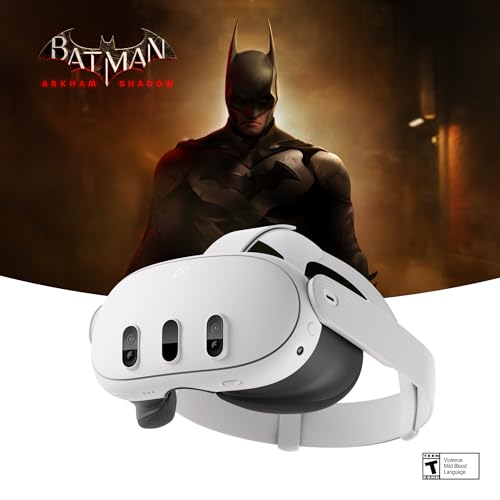
Meta Quest 3S 256GB with Batman Bundle

- Standalone VR with no wires
- 3664 x 3840 max display resolution
- Dual RGB passthrough cameras
Best For: Easy-to-use VR and mixed reality on a standalone headset
Simulation Clarity Pick
Pimax Crystal Super Micro-OLED Bundle

- 3840 x 3552 Micro-OLED per eye
- 116° FOV with eye tracking
- 90Hz PC VR setup for sims
Best For: Flight and racing sim players who want sharp visuals and tracking
Refreshed Standalone Pick
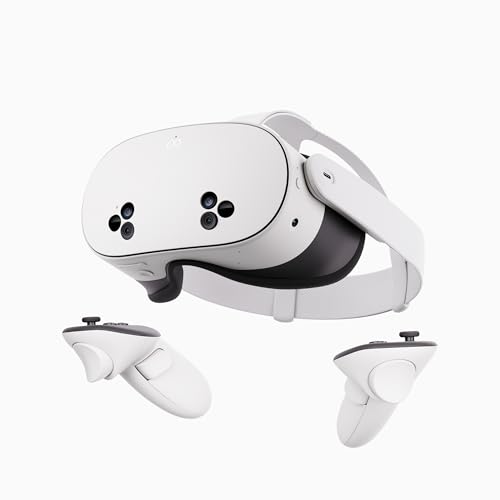
- Wireless standalone VR with mixed reality passthrough
- Snapdragon XR2 Gen 2 and 8GB RAM for smoother play
- 2064 x 2208 per eye; not a true 4K headset
Best For: Standalone VR buyers who want convenience and solid performance
High-Resolution PC VR Pick

- 3840 x 3552 per eye Micro-OLED display
- 110-degree FOV with eye tracking and passthrough
- Requires a Windows PC and PC VR setup
Best For: PC VR users prioritizing top-end resolution and advanced optics
Premium Mixed Reality Pick

- High-resolution color passthrough and mixed reality tools
- Pancake lenses with pixel-density and local-dimming upgrades
- 1920 x 1080 per eye, so not true 4K
Best For: Mixed reality buyers who want premium features and multitasking
Elite PCVR Clarity – Pimax Crystal Super for Sim Racing
If you’re comparing vr headsets with 4k resolution for sim racing or flight, the Pimax Crystal Super is built around raw image clarity. Its 3840×3840-per-eye panel, QLED + Mini-LED display, and aspherical lenses are aimed at users who want sharp instruments, distant detail, and a wide in-cockpit view on a PCVR setup.
Best For: Flight and racing sim players who want ultra-sharp PC VR visuals and a wide field of view.
Pros:
- 3840×3840 per eye with 50 PPD for very sharp detail and reduced screen-door effect.
- 140° field of view helps increase peripheral awareness in simulators.
- QLED + Mini-LED display with local dimming for strong brightness and contrast.
- Eye tracking, adjustable IPD, and inside-out tracking add flexibility for PC VR use.
Cons:
- Wired DisplayPort and USB connection means it is not a standalone headset.
- Designed primarily for Windows PC VR, so it is less versatile for casual mobile use.
- High-end visual settings may require a strong GPU to make the most of it.
Overall, this is a specialist choice for users who care more about precision and immersion than portability. If your priority is sim performance and maximum clarity, it stands out in the 4K-class VR segment.
Standalone 4K Class – Meta Quest 3 512GB Wireless VR
The Meta Quest 3 is a practical pick if you want vr headsets with 4k resolution without being tied to a PC. Its sharp display, Snapdragon XR2 Gen 2 processor, and full-color passthrough make it a flexible option for gaming, fitness, and mixed reality in a standalone design.
Best For: Users who want a wireless, all-in-one headset for gaming and mixed reality.
Pros:
- Standalone design with no wires, making it easy to use anywhere.
- Sharp 4K Infinite Display and improved resolution for clearer visuals.
- Snapdragon XR2 Gen 2 and 8GB RAM support smoother performance.
- Dual RGB cameras enable full-color passthrough for mixed reality.
Cons:
- Battery life is listed at a little over 2 hours, so longer sessions may need charging.
- Display maximum resolution is lower than high-end PC-only headsets in this roundup.
- Best features depend on the standalone Meta Horizon OS ecosystem.
This is the most versatile everyday option here, especially if you want a balanced mix of portability, performance, and mixed reality. It is a strong choice for users who value convenience as much as visual quality.
Ultra-Sharp PCVR Pick – Pimax Crystal Super 57PPD
For buyers focused on vr headsets with 4k resolution and sharper-than-average PC VR image quality, this Pimax Crystal Super variant puts clarity first. Its 3840×3840-per-eye display, 57PPD optics, and QLED + Mini-LED panel are tailored for simulation and gaming where fine detail matters most.
Best For: PC VR players who want maximum sharpness for sim titles and detailed game worlds.
Pros:
- 3840×3840 resolution per eye with 57PPD for very fine image detail.
- QLED + MiniLED display with local dimming for improved contrast.
- 106° horizontal field of view keeps immersion strong for PCVR.
- Eye tracking and automatic IPD adjustment support personalized comfort.
Cons:
- Wired USB PCVR setup limits portability.
- Listed refresh rate is 72Hz, which is lower than some alternatives.
- Best suited to users with a capable gaming rig and a focus on simulation.
This headset is clearly aimed at users who want the crispest possible view rather than a casual standalone experience. If image precision is your top priority, it deserves serious consideration.
Mixed Reality Bundle – Meta Quest 3 Gorilla Tag Edition
If you want vr headsets with 4k resolution in a more mainstream standalone package, this Meta Quest 3 bundle keeps the formula simple: wireless play, mixed reality support, and sharp 4K+ Infinite Display visuals. It adds a Gorilla Tag bundle bonus, making it especially appealing for players who want immediate value out of the box.
Best For: Families, casual gamers, and mixed reality players who want a bundled Quest 3 package.
Pros:
- 4K+ Infinite Display and improved resolution for clear standalone VR.
- Wireless design makes it easy to play, move, and explore without cables.
- Snapdragon XR2 Gen 2 and 8GB RAM support responsive performance.
- Includes Gorilla Tag extras plus 3 months of Meta Horizon+.
Cons:
- Battery life is a little over 2 hours, so long sessions may require charging.
- This bundle focuses on value extras rather than upgraded headset hardware.
- Resolution is solid for standalone VR, but it is not a PC-driven ultra-high-res headset.
As a bundle, this version of the Quest 3 is most attractive for buyers who want convenience and included content. It is a practical way to get into modern standalone VR with a little extra on top.
Ultra-High-Resolution PC VR Pick – Pimax Crystal Super with Studioform Pad
If you want one of the sharpest vr headsets with 4k resolution for PC VR, the Pimax Crystal Super is built around extreme pixel density and a large, immersive image. Its 3840 x 3840 resolution per eye, 106° field of view, and aspheric glass lenses make it a strong fit for users who care most about clarity, detailed cockpit views, and a wide sweet spot.
Best For: PC VR players who want ultra-sharp visuals for simulation-heavy gaming and immersion-focused sessions.
Pros:
- 3840 x 3840 resolution per eye for very fine image detail.
- 106° field of view with large sweet spot aspheric glass lenses.
- Variable refresh rate options at 72Hz and 90Hz.
- Includes a Studioform VR Face Pad Kit for added comfort.
Cons:
- PC VR compatibility only, so it is not a standalone headset.
- Refresh rate tops out at 90Hz rather than higher gaming-focused rates.
Overall, this headset is aimed at buyers who prioritize raw image sharpness over portability. If your main goal is seeing the finest detail in PC VR content, it stands out on resolution alone.
Standalone Value Pick – Meta Quest 3S 256GB with Batman Bundle
The Meta Quest 3S is a practical option if you want a flexible headset in the vr headsets with 4k resolution conversation without needing a PC tether. It offers standalone VR, a 110° field of view, full-color passthrough with dual RGB cameras, and a display maximum resolution listed at 3664 x 3840 pixels, making it a solid everyday choice for gaming, fitness, and mixed reality.
Best For: Buyers who want an untethered VR headset with mixed reality features and broad game support.
Pros:
- Standalone headset with no wires and built-in Meta Horizon OS.
- Display maximum resolution reaches 3664 x 3840 pixels.
- Dual RGB cameras support full-color passthrough.
- 256GB storage and 8GB RAM for a roomy, responsive experience.
Cons:
- Resolution is lower than the highest-end 4K-per-eye PC VR headsets.
- Battery life is listed at about 2.5 hours.
This is the more convenient pick for people who want simple setup and untethered play. It is less about pushing absolute display fidelity and more about ease of use and versatility.
Simulation Clarity Pick – Pimax Crystal Super Micro-OLED Bundle
For shoppers comparing vr headsets with 4k resolution for sim racing or flight, this Pimax Crystal Super bundle focuses on crisp detail and wide immersion. The Micro-OLED display uses 3840 x 3552 pixels per eye, paired with a 116° field of view, eye tracking, and a 90Hz refresh rate for a sharp, stable viewing experience in PC VR.
Best For: Flight and racing sim users who want high-resolution visuals and accurate tracking.
Pros:
- Micro-OLED panels with 3840 x 3552 pixels per eye.
- 116° horizontal field of view for a more natural view.
- Eye tracking plus inside-out tracking for precise interaction.
- 90Hz refresh rate helps reduce ghosting in fast motion.
Cons:
- PC VR only, so it requires compatible desktop hardware.
- DisplayPort connection means it is less portable than standalone headsets.
This bundle is tailored to users who care most about visual precision in detailed simulators. If clarity and tracking matter more than standalone convenience, it is a strong specialist pick.
Refreshed Standalone Pick – Meta Quest 3S 128GB Renewed
If you’re comparing vr headsets with 4k resolution, the Meta Quest 3S is better thought of as a fast, wireless standalone headset than a true 4K display option. It focuses on smooth gameplay, mixed reality, and easy setup, making it a practical choice for players who value convenience and untethered use over raw panel resolution.
Best For: Standalone VR users who want cordless play, mixed reality features, and strong everyday performance.
Pros:
- Snapdragon XR2 Gen 2 processor for faster load times and improved graphics.
- Dual RGB color cameras support full-color passthrough for mixed reality use.
- 8GB of RAM and 128GB storage help with responsiveness and installed apps.
- Renewed Premium listing can be a value-focused way to buy into Meta VR.
Cons:
- Display resolution is 2064 x 2208 per eye, so it is not a 4K-per-eye headset.
- Battery life is listed at about 2 to 3 hours, which may require frequent charging.
- Best suited to Meta’s standalone ecosystem rather than PC VR enthusiasts.
This headset makes sense if you want a modern, wireless Meta experience with mixed reality support and good performance. If your main goal is true 4K-class sharpness, the resolution here will not be the main draw.
High-Resolution PC VR Pick – Pimax Dream Air Slam PC VR
For shoppers focused on vr headsets with 4k resolution, the Pimax Dream Air Slam is the closest match in this set thanks to its 3840 x 3552 per-eye Micro-OLED display. It is built for PC VR and SteamVR users who want high detail, a wide 110-degree field of view, and advanced features like eye tracking and passthrough.
Best For: PC VR and SteamVR users who want very high per-eye resolution and premium visual features.
Pros:
- 3840 x 3552 per eye resolution delivers the highest image detail in this roundup.
- Micro-OLED panel with Pimax ConcaveView optics for sharp visual presentation.
- 110-degree field of view plus eye tracking, hand tracking, and passthrough camera.
- Includes 6DOF controllers, integrated spatial audio, and dual-fan cooling.
Cons:
- Requires a compatible Windows PC and DisplayPort/USB setup.
- It has demanding system requirements, including supported GPU and RAM specs.
- Primarily aimed at PC VR, so it is not a standalone headset.
If your priority is near-4K-class clarity or better in each eye, this is the strongest option here. The tradeoff is that it demands a capable gaming PC and a wired PC VR workflow.
Premium Mixed Reality Pick – Meta Quest Pro 256GB
The Meta Quest Pro is worth a look if you want vr headsets with 4k resolution-style clarity in a premium mixed-reality design, even though its listed resolution is 1920 x 1080 per eye. It stands out for high-resolution color passthrough, pancake lenses, and strong multitasking features that make it useful for both work and play.
Best For: Mixed reality users who want premium comfort, strong passthrough, and multitasking features.
Pros:
- High-resolution mixed reality passthrough with full-color sensors.
- Pancake lenses, increased pixel density, local dimming, and quantum dot tech for clearer visuals.
- 256GB storage, 12GB RAM, and 10 advanced VR/MR sensors for capable performance.
- Meta Quest Touch Pro Controllers add self-tracking cameras and precision controls.
Cons:
- Resolution is listed at 1920 x 1080 per eye, not true 4K.
- Battery life is about 8 hours, but intensive VR/MR use can vary.
- More focused on mixed reality and productivity than pure gaming value.
This is a premium choice for users who care more about visual refinement, passthrough quality, and productivity tools than headline resolution numbers. If 4K is your only metric, the display spec may not meet your expectation.
How We Picked the Best Vr Headsets with 4K Resolution
For this roundup of Vr Headsets with 4K Resolution, we prioritized display clarity, field of view, tracking quality, platform flexibility, and overall value. We also looked at whether a headset is better suited for PC VR, standalone use, or sim-focused play, since the best high-resolution headset is not always the most versatile one.
Quick Comparison
In simple terms, premium Pimax models lean toward maximum clarity and wide immersion for flight and racing sims, while Meta Quest models emphasize convenience, content access, and lower setup friction. If you want the sharpest image for seated PC VR, look first at the higher-end dedicated options. If you want easy all-in-one use, standalone headsets are usually the better fit.
Key Buying Factors for Vr Headsets with 4K Resolution
Resolution Is Only Part of the Picture
4K-class panels can look excellent, but lens quality, subpixel layout, and pixel density matter just as much. A headset with strong optics may appear sharper than one with a similar raw resolution but weaker lenses.
Field of View and Immersion
A wider field of view helps the image feel more natural and less boxed in. This is especially important for simulation users who want a broader sense of cockpit presence.
Tracking and Use Case
Eye tracking, inside-out tracking, and PC-tethered performance each serve different buyers. Competitive and sim users may value precision and visual fidelity, while casual users may prefer a headset that is quick to set up and easy to move between rooms.
Comfort, Weight, and Face Fit
High-resolution headsets can be heavier or more demanding to wear for long sessions. Look for balanced weight distribution, adjustable straps, and a face interface that suits your head shape and prescription needs.
Storage and Content Ecosystem
Standalone headsets should offer enough storage for your library, while PC VR headsets should match your GPU and connection setup. Also consider whether the headset gives you access to the games and apps you actually want.
Who Should Buy Which Vr Headsets with 4K Resolution?
Choose a premium PC-focused headset if your top priority is image quality for flight sims, racing, and seated experiences. Choose a Meta Quest model if you want a simpler all-in-one headset with broad app support and easier setup. If you are upgrading from an older headset, prioritize comfort and lens clarity as much as resolution, because those factors often make the biggest real-world difference.