If you need a simple way to turn several SATA drives into one fast, organized storage array, USB-C RAID enclosures are a practical upgrade. They can help streamline backups, expand working space, and add redundancy for important files.
In this roundup, we focused on real-world usability, RAID flexibility, cooling, drive compatibility, and value so you can pick the right enclosure for your workflow.
Best 10 USB C Raid Enclosures Picks for 2026
High-Capacity 5-Bay Option
Yottamaster 5 Bay USB-C RAID Enclosure

- Up to 110TB across 5 SATA drives
- RAID 0/1/3/5/10/JBOD/CLONE support
- Aluminum build with 80mm temperature-controlled fan
Best For: large media backups and configurable RAID storage
Fast Thunderbolt Choice
OWC ThunderBay 4 40Gb/s Storage Enclosure

- Thunderbolt 3 with up to 1527MB/s sustained performance
- Holds four 3.5-inch or 2.5-inch drives
- RAID 0/1/4/5/10 support in an aluminum chassis
Best For: fast Mac/PC storage workflows over Thunderbolt
QNAP Expansion Pick
QNAP TR-004 4-Bay USB-C RAID DAS
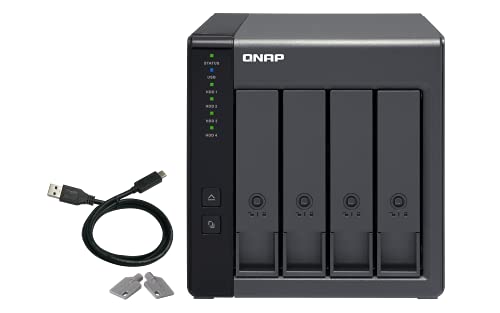
- USB Type-C direct-attached storage for Windows, macOS, and Linux
- Hardware RAID 0/1/5/JBOD plus individual disks
- Lockable bays and support for NAS backup/expansion
Best For: QNAP users and backup-focused 4-bay storage
Budget Two-Bay Choice
CENMATE Dual-Bay USB-A/C RAID Enclosure

- Supports 2.5-inch and 3.5-inch SATA HDDs/SSDs
- RAID 0/1/Normal/JBOD modes
- Aluminum build with built-in cooling fan
Best For: basic two-drive RAID storage at a lower cost
4-Bay RAID Flexibility
MAIWO 4 Bay 3.5" SATA RAID Enclosure

- 8 RAID modes including RAID 0, 1/10, 3, 5, and JBOD
- Up to 96TB for four 24TB 3.5" SATA drives
- Dual cooling fans plus USB-A/C and USB-C/C cables
Best For: Users who want flexible RAID options and high-capacity 3.5-inch DAS storage
High-Capacity 5-Bay Storage
Yottamaster PS500C3 USB-C Enclosure
- 5-bay enclosure with up to 110TB total capacity
- Supports 2.5" and 3.5" SATA HDDs and SSDs
- Aluminum body plus 80mm fan for cooling
Best For: Shoppers who want large USB-C storage expansion without hardware RAID
RAID Modes Plus Capacity
UGREEN 5-Bay USB-C DAS Enclosure

- 8 modes including RAID 0, 1/3/5/10, Large, Clone, and PM
- Up to 160TB for five 32TB 2.5/3.5" SATA drives
- Smart cooling with S.M.A.R.T.-based fan control and LED status
Best For: Users who want a feature-rich 5-bay USB-C RAID DAS with high capacity
Stable JBOD Dock
SABRENT 4-Bay USB-C 10Gbps Docking Station
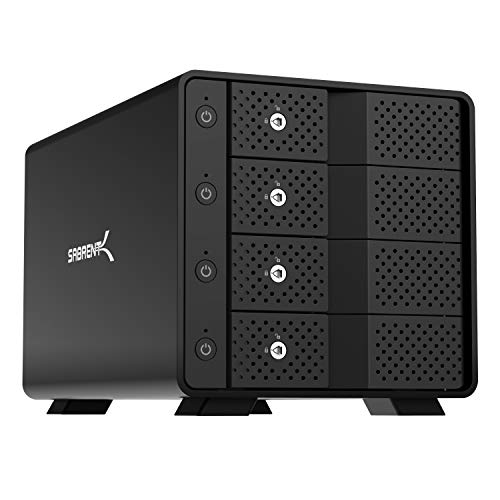
- Independent controller per bay
- 10Gbps USB-C with up to 80TB
- Trayless hot-swap with active cooling
Best For: People who want simple multi-drive USB-C storage without RAID
Budget No-RAID Pick
CENMATE 4-Bay USB A/C 3.0 Enclosure

- Supports 2.5-inch and 3.5-inch SATA drives
- Includes USB A/C 3.0 plus eSATA cables
- Aluminum body with cooling fan
Best For: Budget-minded buyers who want simple 4-bay external storage
RAID-Capable Option
CENMATE 4-Bay USB/C eSATA RAID Dock

- 8 RAID modes plus clone and normal modes
- Supports 2.5-inch and 3.5-inch SATA drives
- Includes cooling fan and dual cable types
Best For: Users who want configurable RAID modes in a 4-bay enclosure
High-Capacity 5-Bay Option – Yottamaster 5 Bay USB-C RAID Enclosure
If you need one of the more flexible usb c raid enclosures for large backup sets, the Yottamaster PS500RC3 is built around capacity and RAID choice. It supports five SATA drives, multiple RAID modes, and USB 3.1 Type-C connectivity, making it a practical fit for users who want a configurable desktop DAS rather than a simple single-drive dock.
Best For: photographers, video editors, and teams that need up to 110TB of configurable external storage.
Pros:
- Supports up to 5 x 22TB drives for as much as 110TB total capacity
- Offers RAID 0/1/3/5/10/JBOD/CLONE for flexible workflows
- Aluminum enclosure plus 80mm smart fan for active cooling
- Works with 2.5-inch and 3.5-inch SATA HDDs and SSDs
Cons:
- Requires attention to total drive power draw, with a 78W limit noted
- New drives may need formatting and partitioning before use
- USB 3.1 Type-C tops out at 5Gbps, not a faster Thunderbolt-class connection
Overall, this is a strong choice when raw capacity and RAID flexibility matter more than compact size. It is especially appealing for buyers who want a single enclosure that can scale with large media libraries or backup needs.
Fast Thunderbolt Choice – OWC ThunderBay 4 40Gb/s Storage Enclosure
Among usb c raid enclosures, the OWC ThunderBay 4 stands out for speed-focused workflows that can use Thunderbolt 3. It supports four SATA drives, dual Thunderbolt ports, and user-configurable RAID modes, so it suits buyers who need a high-performance desktop enclosure for demanding storage tasks.
Best For: Mac or Windows users with Thunderbolt 3 who want fast, quiet, RAID-capable storage.
Pros:
- Thunderbolt 3 connectivity with up to 1527MB/s sustained performance
- Supports 3.5-inch or 2.5-inch drives with no adapter needed
- User-configurable RAID 0/1/4/5/1+0 (10)
- Aluminum chassis is designed to stay quiet and dissipate heat
Cons:
- Designed around Thunderbolt 3 rather than standard USB-only setups
- Sold as a storage enclosure, so drives are not included
- Larger desktop footprint than smaller 2-bay options
This is a strong pick if transfer speed is the priority and your computer supports Thunderbolt. It is less about simplicity and more about getting a fast, configurable multi-drive platform.
QNAP Expansion Pick – QNAP TR-004 4-Bay USB-C RAID DAS
QNAP TR-004 4 Bay USB Type-C Direct Attached Storage (DAS) with hardware RAID (Diskless)
Check Price On AmazonThe QNAP TR-004 is a practical option in usb c raid enclosures if you want a four-bay DAS for direct attachment, backup, or NAS expansion. It uses USB Type-C, supports hardware RAID, and is compatible with Windows, macOS, and Linux, making it a straightforward storage add-on for mixed environments.
Best For: users who want a simple four-bay RAID enclosure for backup or QNAP NAS expansion.
Pros:
- Hardware RAID modes include RAID 0, 1, 5, JBOD, and individual disks
- USB Type-C connectivity works with Windows, macOS, and Linux
- Lockable drive bays add a bit of physical security
- Can be used as external storage or for QNAP NAS backup/expansion
Cons:
- Diskless, so drives must be purchased separately
- Some QNAP NAS models are not supported
- NAS applications cannot be installed on the TR-004 itself
For buyers already in the QNAP ecosystem, this enclosure is especially appealing because it is built for storage expansion and backup use cases. It is less versatile than a general-purpose external SSD enclosure, but it is very focused and practical.
Budget Two-Bay Choice – CENMATE Dual-Bay USB-A/C RAID Enclosure
If you want usb c raid enclosures on a tighter budget, the CENMATE 2-bay model keeps things simple with USB A/C 3.0 compatibility and four RAID modes. It supports both 2.5-inch and 3.5-inch SATA HDDs and SSDs, so it can serve as a compact desktop storage box for everyday backup or mirrored storage.
Best For: home users and small office buyers who need a basic two-drive RAID enclosure.
Pros:
- Supports 2.5-inch and 3.5-inch HDDs/SSDs up to 20TB per drive
- Includes RAID 0, RAID 1, Normal, and JBOD modes
- USB A/C 3.0 cable included for flexible connection options
- Aluminum body with built-in fan for cooling
Cons:
- Fan noise is noted at around 40–50 dB
- Mac OS has no RAID software support, per the notes
- Maximum throughput is limited to 5Gbps USB 3.0 speeds
This enclosure makes sense when you want a practical two-drive RAID setup without moving into a larger or more expensive chassis. It is best viewed as a functional, no-frills option rather than a premium performance product.
4-Bay RAID Flexibility – MAIWO 4 Bay 3.5" SATA RAID Enclosure
If you want usb c raid enclosures with broad RAID support and simple 3.5-inch drive handling, this MAIWO model is built for flexible DAS storage. It supports Normal, 0, 3, 5, 1/10, Clone, and Large (JBOD), and its USB A/C 3.1 connection tops out at 5Gbps for everyday transfer work.
Best For: Professionals and power users who need a 4-bay RAID enclosure for backups, media libraries, or surveillance storage.
Pros:
- Supports eight RAID and storage modes, including RAID 0, 1/10, 3, 5, Clone, and JBOD.
- Up to 96TB capacity with support for four 24TB 3.5″ SATA drives.
- Includes two cooling fans with a switch to turn them on or off.
- Comes with both USB-A to USB-C and USB-C to USB-C cables.
Cons:
- Designed for 3.5″ SATA drives only, so it is not the most versatile option for mixed drive sizes.
- USB transfer speed is limited to 5Gbps rather than a faster USB-C interface.
This is a practical choice if your priority is RAID flexibility and high-capacity 3.5-inch storage in a straightforward desktop enclosure. The dual-fan cooling setup and included cables make it easy to put into service right away.
High-Capacity 5-Bay Storage – Yottamaster PS500C3 USB-C Enclosure
For usb c raid enclosures shoppers who actually need plain, high-capacity expansion, this Yottamaster enclosure focuses on storage rather than hardware RAID. It supports up to five 2.5/3.5-inch SATA HDDs or SSDs, uses a USB 3.1 Type-C connection, and is aimed at workflow tasks like editing, archiving, and duplication.
Best For: Buyers who want a 5-bay USB-C DAS with strong capacity and cooling, but do not need built-in RAID.
Pros:
- Supports 5 drives with up to 110TB total capacity.
- Works with both 2.5″ and 3.5″ SATA HDDs and SSDs.
- Includes an aluminum shell and an 80mm cooling fan for heat control.
- USB 3.1 Gen1 Type-C interface offers up to 5Gbps transfer speeds.
Cons:
- This is a non-RAID version and does not support hardware RAID.
- Users who want RAID must rely on software RAID tools in their operating system.
If you need a spacious USB-C enclosure and can live without built-in RAID, this model is easy to justify. Its removable trays, broad drive support, and active cooling make it a solid everyday storage expansion option.
RAID Modes Plus Capacity – UGREEN 5-Bay USB-C DAS Enclosure
If you are comparing usb c raid enclosures for a more complete desktop setup, this UGREEN 5-bay DAS stands out for its mix of RAID choices, capacity, and safety features. It supports PM, RAID 0, RAID 1/3/5/10, Large, and Clone modes, plus 5Gbps USB-C connectivity for Windows, macOS, and Linux systems.
Best For: Users who want a five-drive USB-C RAID enclosure with multiple modes, smart cooling, and clear status indicators.
Pros:
- 8 RAID and storage modes for different performance and protection needs.
- Up to 160TB total capacity with support for five 32TB drives.
- Smart cooling uses S.M.A.R.T. temperatures to adjust fan speed automatically.
- Five LED indicators help show drive presence, mode issues, and RAID rebuilding.
Cons:
- Changing RAID modes requires reformatting, so backups are essential.
- At 5Gbps, transfer speed is solid but not especially fast by higher-end USB-C standards.
For buyers who want a serious all-around RAID enclosure, this UGREEN model offers a strong balance of capacity, usability, and cooling. It is especially appealing if you value easy status checks and a wider set of storage modes.
Stable JBOD Dock – SABRENT 4-Bay USB-C 10Gbps Docking Station
If you need usb c raid enclosures for multi-drive expansion but want simple, independent drive access instead of hardware RAID, this SABRENT 4-bay enclosure is built for direct-attached storage. Each bay uses its own controller, and the USB-C 10Gbps connection is designed for stable, practical use with 3.5-inch SATA HDDs or SSDs.
Best For: Users who want a USB-C 4-bay dock with individual drive mounting, trayless hot-swap convenience, and active cooling.
Pros:
- Dedicated ASMedia controller for each bay helps keep drive connections stable and independent.
- 10Gbps USB-C interface with support for up to 4 drives and 80TB total capacity.
- Trayless hot-swap design with per-bay power switches, activity LEDs, locking key, and Kensington slot.
- Aluminum and metal build with a 92mm fan for 24/7 operation.
Cons:
- Not a hardware RAID enclosure; it functions as JBOD/direct-attached storage.
- Built for 3.5-inch SATA drives, so it is not the most flexible option for mixed drive sizes.
This is a strong pick if you want a durable USB-C enclosure that prioritizes stability and easy drive swapping over RAID features. The main tradeoff is that it is explicitly not a RAID unit, so buyers looking for array management should look elsewhere.
Budget No-RAID Pick – CENMATE 4-Bay USB A/C 3.0 Enclosure
For buyers comparing usb c raid enclosures but mainly needing straightforward external storage, this CENMATE 4-bay enclosure focuses on no-RAID convenience and broad compatibility. It supports both 2.5-inch and 3.5-inch SATA HDDs or SSDs, includes USB A/C 3.0 plus eSATA cables, and is built around a cooling fan and aluminum-alloy housing.
Best For: Users who want an affordable 4-bay enclosure for everyday storage expansion with USB-C support and no RAID complexity.
Pros:
- Supports both 2.5-inch and 3.5-inch SATA HDDs/SSDs up to 80TB total.
- Includes USB A/C 3.0 and eSATA cables for flexible connectivity.
- Aluminum-alloy body with built-in fan for heat management.
- Plug-and-play compatibility with Windows, Mac, and Linux.
Cons:
- Runs at up to 5Gbps, which is slower than 10Gbps USB-C enclosures.
- Fan noise is listed around 40-50 decibels, so it may not suit quiet workspaces.
This model makes sense if you want a practical 4-bay enclosure and value cable flexibility over speed. It is a no-RAID design, so it fits storage expansion better than users seeking array protection or advanced RAID features.
RAID-Capable Option – CENMATE 4-Bay USB/C eSATA RAID Dock
If you want usb c raid enclosures with built-in array options, this CENMATE model is the most feature-focused of the group. It supports 8 RAID modes, including RAID 0, 1, 3, 5, and 10, along with CLONE, LARGE, and NORMAL, while still offering support for 2.5-inch and 3.5-inch SATA drives.
Best For: Buyers who need configurable RAID modes in a 4-bay enclosure and are comfortable managing the array setup carefully.
Pros:
- Supports 8 RAID modes, including RAID 0/1/3/5/10, CLONE, LARGE, and NORMAL.
- Works with both 2.5-inch and 3.5-inch SATA HDDs/SSDs up to 80TB total.
- Includes USB A/C 3.0 and eSATA cables for connection flexibility.
- Aluminum-alloy housing with built-in fan and DC 12V power adapter.
Cons:
- RAID changes require careful switching steps and can cause data loss.
- Mac OS does not have RAID software support noted in the supplied details.
- Top transfer rate is 5Gbps, so it is not a high-speed USB-C solution.
This enclosure stands out when RAID mode choice matters more than raw speed. It is best treated as a configurable storage tool that needs careful setup, especially if you plan to switch between RAID configurations.
How We Picked the Best USB C Raid Enclosures
We looked for enclosures that balance performance, reliability, and ease of setup. The strongest options support common 2.5-inch and 3.5-inch SATA drives, offer useful RAID modes, include active cooling where needed, and provide a USB-C connection that fits modern desktops and laptops. We also favored models with practical bay counts, tool-free or straightforward installation, and solid compatibility for backup, media, and small NAS-style use cases.
Quick Comparison
In general, 2-bay models are best for simple mirrored backups or compact desktop storage, while 4-bay and 5-bay units are better for larger media libraries, edit drives, and multi-disk redundancy. If you want the easiest setup, choose a USB-C DAS with fewer configuration options. If you want maximum flexibility, look for USB C Raid Enclosures with multiple RAID modes and stronger cooling.
Key Buying Factors for USB-C RAID Enclosures
RAID Modes
Check whether the enclosure supports RAID 0, RAID 1, JBOD, and large-capacity spanning or parity-style modes. Not every buyer needs every option, but more modes can make the enclosure more future-proof.
Drive Size and Capacity
Make sure the enclosure supports your drive type, especially if you plan to mix 2.5-inch SSDs and 3.5-inch HDDs. Capacity limits matter too, particularly for users planning to load 20TB-class drives or larger.
Cooling and Noise
Multi-bay storage generates heat. A built-in fan, decent airflow design, and aluminum construction can improve long-term stability. If the enclosure will sit on your desk, noise level may matter as much as temperature control.
Connection Speed
USB-C is convenient, but not all ports are equal. A 10Gbps USB-C connection is a solid baseline for many workloads, while Thunderbolt can be a better fit for demanding creative users who want higher throughput.
Who Should Buy Which USB C Raid Enclosures?
Choose a 2-bay model if you want a compact mirrored backup solution or a simple upgrade for a laptop or home office. Go with a 4-bay enclosure if you need better balance between capacity and footprint for photo, video, or business storage. Pick a 5-bay unit if you want maximum room for growth, larger RAID arrays, or a shared archive with plenty of headroom. If your workflow depends on speed and you already have Thunderbolt-capable hardware, a premium enclosure may be worth the extra cost.
For most buyers, the best USB C Raid Enclosures are the ones that match your drive count, your redundancy needs, and your available port speed without adding unnecessary complexity.