Choosing the right storage can make a bigger difference in video editing than almost any other upgrade. A well-matched RAID enclosure helps you move large files faster, cut smoother from high-bitrate footage, and protect active projects.
Below, we focus on enclosures that make sense for real editing workflows, from compact desktop setups to high-capacity bays for serious post-production.
Best 10 Raid Enclosure for Video Editing Picks for 2026
Thunderbolt RAID Workhorse

- Thunderbolt 3 enclosure with up to 1527MB/s sustained performance
- Supports RAID 0, 1, 4, 5, and 1+0 with SoftRAID Premium
- Fits up to four 2.5-inch or 3.5-inch SATA drives
Best For: editors who want fast, configurable desktop RAID storage
High-Capacity 5-Bay Pick
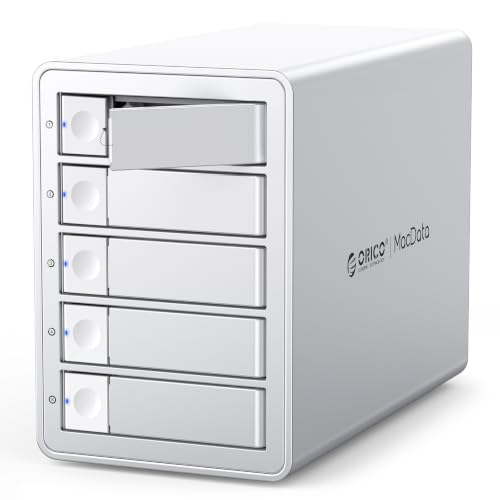
- Five-bay enclosure with up to 130TB total capacity
- Offers RAID 0, 1, 5, 10, JBOD, and Normal modes
- Built-in fan and aluminum alloy body support cooling
Best For: producers needing large-capacity RAID storage with flexible modes
Quiet Thunderbolt Storage
- Thunderbolt 3 enclosure with up to 1527MB/s sustained performance
- Ultra-quiet aluminum chassis helps with heat dissipation
- Supports RAID 0, 1, 4, 5, and 1+0 (10)
Best For: editors who want quiet, fast desktop Thunderbolt storage
Budget-Friendly RAID Expansion

- Four-bay enclosure with eight modes including RAID 0, 1, 3, 5, 10, JBOD, CLONE, and CLEAR
- Supports up to 88TB total capacity with 22TB drives
- USB 3.0 design includes a 150W power supply and silent cooling fan
Best For: editors who need affordable, high-capacity RAID storage
Pro-Grade 8-Bay Performance

- Eight-bay Thunderbolt 3 enclosure for high-capacity workflows
- Includes SoftRAID Premium with multiple RAID modes
- Plug-and-play on Mac and Windows with no drivers needed
Best For: Editors who want a powerful, flexible RAID enclosure for large media libraries
Budget-Friendly 4-Bay DAS
CENMATE 4-Bay Aluminum RAID Enclosure

- Holds four SATA HDDs or SSDs up to 80TB total
- Offers RAID 0/1/3/5/10 plus clone and basic modes
- USB 3.0 and eSATA connections with included cables
Best For: Editors on a budget who need a flexible 4-bay RAID enclosure
Simple High-Capacity Storage
OWC ThunderBay 8 External Enclosure

- Eight-bay Thunderbolt enclosure for large storage builds
- Dual Thunderbolt 3 ports and daisy-chaining support
- Plug-and-play on Mac and Windows
Best For: Editors who want a large Thunderbolt enclosure without bundled RAID software
Flexible 4-Bay RAID

- Supports RAID 0/1/3/5/10, Clone, and JBOD
- Up to 96TB with four 3.5-inch SATA drives
- Two built-in cooling fans for thermal control
Best For: Editors needing flexible RAID modes and large-capacity DAS storage
Hybrid USB4 Speed
ACASIS 4-Bay Hybrid RAID Enclosure

- Combines SATA HDD bays and NVMe SSD bays
- USB4 40Gbps with Thunderbolt 3/4/5 support
- Active cooling and 96W power supply included
Best For: Editors wanting one hybrid enclosure for fast work and large archives
High-Capacity 5-Bay RAID
Yottamaster FS5RU3 5-Bay RAID Enclosure
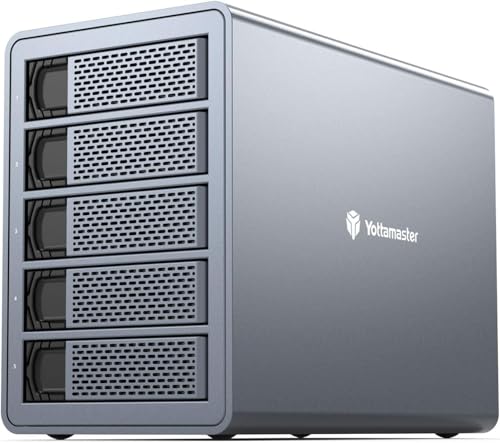
- Up to 120TB across five drive bays
- Supports RAID 0/1/5/10, JBOD, Clone, and Normal
- Built-in 80mm fan and aluminum enclosure
Best For: Studio and location workflows that need large SATA RAID storage
Thunderbolt RAID Workhorse – OWC ThunderBay 4
If you want a raid enclosure for video editing that prioritizes speed and software flexibility, the OWC ThunderBay 4 is built for serious desktop storage. It supports up to four 2.5-inch or 3.5-inch SATA drives, connects over Thunderbolt 3, and can be configured in RAID 0, 1, 4, 5, or 1+0 (10) with the included SoftRAID Premium subscription.
Best For: Editors who want a Thunderbolt 3 RAID enclosure with strong sustained performance and flexible RAID setup.
Pros:
- Up to 1527MB/s sustained performance for fast editing workflows
- Dual Thunderbolt 3 ports for daisy-chaining and flexible desktop setups
- Supports both 2.5-inch and 3.5-inch SATA drives without adapters
- Includes SoftRAID Premium for creating, monitoring, and managing arrays
Cons:
- Requires Thunderbolt 3 for the intended performance level
- Software RAID setup may be more than casual users need
Overall, this is the most workflow-focused option in the group if your editing setup benefits from Thunderbolt speed and configurable RAID protection. The aluminum chassis and enterprise-style RAID software make it a strong fit for a dedicated post-production desk.
High-Capacity 5-Bay Pick – ORICO 5 Bay RAID Enclosure
This raid enclosure for video editing is aimed at users who need a lot of capacity and a wide mix of RAID modes. The ORICO 5-bay enclosure uses the JMS591 chip, supports up to 130TB total capacity, and offers RAID 0, 1, 5, 10, JBOD, and Normal modes for different balance points between speed, redundancy, and flexibility.
Best For: Video producers and editing teams who need high-capacity storage with multiple RAID options.
Pros:
- Five-bay design supports up to 130TB total capacity
- 6 RAID modes including RAID 0, 1, 5, 10, JBOD, and Normal
- USB 3.2 Gen 2×2 interface is built for high-speed transfers
- Built-in 45dB fan and aluminum alloy body help with cooling
Cons:
- Full 20Gbps speed is only achieved over USB4, not Thunderbolt
- RAID or mode changes will erase drive contents
For editors handling large media libraries, this enclosure stands out for its capacity and practical cooling features. It is a good choice when storage expansion matters as much as transfer speed.
Quiet Thunderbolt Storage – OWC ThunderBay 4 0TB
If your priority is a raid enclosure for video editing that stays quiet while moving serious data, the OWC ThunderBay 4 is a straightforward fit. It uses Thunderbolt 3, supports up to four 2.5-inch or 3.5-inch SATA drives, and can be configured in RAID 0, 1, 4, 5, or 1+0 (10) with software RAID support.
Best For: Editors who want a quiet Thunderbolt RAID enclosure for a desktop workstation.
Pros:
- Up to 1527MB/s sustained performance for editing and file transfers
- Ultra-quiet, heat-dissipating aluminum chassis
- Supports RAID 0, 1, 4, 5, and 1+0 (10)
- Works with both Mac and PC systems that have Thunderbolt
Cons:
- Only supports up to four drives
- Requires Thunderbolt connectivity to make sense for a video workflow
This enclosure makes sense if you want a dependable desktop RAID setup without extra noise near your edit station. It focuses on performance, compatibility, and thermal design rather than adding extra bells and whistles.
Budget-Friendly RAID Expansion – ORICO 4 Bay 9848RU3
For shoppers looking for a practical raid enclosure for video editing without stepping up to Thunderbolt pricing, the ORICO 4-bay model focuses on core storage features. It supports four 3.5-inch SATA drives, offers eight modes including RAID 0, 1, 3, 5, 10, JBOD, CLONE, and CLEAR, and uses USB 3.0 for straightforward desktop connectivity.
Best For: Editors who want a cost-conscious 4-bay RAID enclosure with multiple configuration options.
Pros:
- Eight RAID and utility modes for flexible storage setups
- Supports up to 88TB total capacity with 22TB drives
- Built-in 150W power supply for multi-disk operation
- Aluminum body and 80mm silent fan help with heat dissipation
Cons:
- USB 3.0 speed is much lower than Thunderbolt options
- Supports 3.5-inch drives only
This is the most straightforward value-oriented option here, especially if you mainly need roomy RAID storage and dependable cooling. It is less about maximum speed and more about practical, expandable capacity for media files and backups.
Pro-Grade 8-Bay Performance – OWC ThunderBay 8 w/ SoftRAID
If you want a raid enclosure for video editing that can handle large projects and fast turnaround, the OWC ThunderBay 8 is built for heavy workstation use. It gives you eight universal drive bays, dual Thunderbolt 3 ports, and bundled SoftRAID support, making it a strong fit for editors who need high-capacity, high-speed local storage on Mac or Windows.
Best For: Editors who need a high-capacity Thunderbolt RAID enclosure with pro-grade speed and flexible RAID options.
Pros:
- Eight 2.5-inch or 3.5-inch drive bays for scalable storage
- Dual Thunderbolt 3 ports with daisy-chaining support for additional devices
- Includes SoftRAID Premium with RAID 0/1/4/5/1+0 (10) support
- Plug-and-play setup with no drivers needed
Cons:
- More enclosure than many casual editors need
- Requires separate drives, since this is diskless
For editors building a serious desktop workflow, this enclosure stands out for its combination of capacity, Thunderbolt connectivity, and RAID flexibility. The thumb-screw trays also make drive swaps quick when you are working with multiple projects or backup sets.
Budget-Friendly 4-Bay DAS – CENMATE 4-Bay Aluminum RAID Enclosure
This raid enclosure for video editing is a practical way to add external storage without moving up to a larger Thunderbolt setup. The CENMATE 4-bay enclosure supports 2.5-inch and 3.5-inch SATA HDDs or SSDs, offers eight RAID modes, and connects over USB 3.0 or eSATA for straightforward desktop use.
Best For: Editors who want an affordable 4-bay DAS with basic RAID modes and broad compatibility.
Pros:
- Supports 2.5-inch and 3.5-inch SATA HDDs/SSDs
- Eight RAID modes including RAID 0, 1, 3, 5, 10, clone, large, and normal
- USB 3.0 and eSATA connectivity with included cables
- Built-in fan and aluminum-alloy housing for cooling
Cons:
- USB 3.0 speeds are limited to 5Gbps
- Fan noise may be noticeable for quiet workspaces
- Switching RAID modes requires careful manual steps
For smaller editing setups, this model covers the essentials: multiple drives, multiple RAID configurations, and simple plug-and-play operation. It is not the fastest option here, but it offers a solid balance of capacity and value for personal or small-team workflows.
Simple High-Capacity Storage – OWC ThunderBay 8 External Enclosure
For a raid enclosure for video editing where you mainly want fast, high-capacity storage without bundled RAID software, this OWC ThunderBay 8 keeps the formula straightforward. It offers eight universal drive bays, dual Thunderbolt 3 ports, and Thunderbolt-certified compatibility for Mac and Windows.
Best For: Editors who want an eight-bay Thunderbolt storage enclosure and plan to manage RAID separately.
Pros:
- Eight universal 2.5-inch or 3.5-inch drive bays
- Dual Thunderbolt 3 ports with daisy-chaining support
- Includes Thunderbolt cable and supports plug-and-play setup
- Thunderbolt certified for Mac and Windows
Cons:
- Does not include SoftRAID in this version
- Requires separate drives because it is diskless
- No warranty listed in the supplied details
This enclosure is best suited to editors who already have their RAID workflow handled and just need a spacious, fast chassis. If you want room to grow and a clean Thunderbolt connection for a desktop editing rig, it is a strong no-frills choice.
Flexible 4-Bay RAID – MAIWO 4 Bay HDD Enclosure
If you want a raid enclosure for video editing with straightforward hardware RAID options and plenty of capacity, the MAIWO 4-bay model is built around storage flexibility. It supports RAID 0, 1/10, 3, 5, Normal, Clone, and Large (JBOD), making it a practical pick for users who want to balance speed, redundancy, and expansion in one DAS enclosure.
Best For: Editors and power users who need flexible RAID modes, large 3.5-inch drive support, and simple USB-C connectivity.
Pros:
- Supports multiple RAID modes, including RAID 0/1/3/5/10, Clone, and JBOD.
- Up to 96TB capacity with four 24TB drives.
- Includes two cooling fans to help manage drive temperatures.
- USB A-C and C-C cables are included for easier setup.
Cons:
- Designed for 3.5-inch SATA drives, so it is not as versatile for mixed NVMe workflows.
- USB transfer speed tops out at 5Gbps.
- The cooling fans are switch-controlled rather than fully automatic.
Overall, this MAIWO enclosure is a solid choice if your priority is dependable bulk storage with common RAID options rather than maximum interface speed. It suits editors building a large media archive or a redundant workspace on a budget-conscious USB setup.
Hybrid USB4 Speed – ACASIS 4-Bay Hybrid RAID Enclosure
This raid enclosure for video editing stands out because it combines HDD storage and NVMe speed in one unit. The ACASIS hybrid design gives you dual-bay 3.5/2.5-inch SATA support for archives and dual-bay NVMe support for active projects, so you can separate long-term media storage from high-speed editing workloads without juggling multiple enclosures.
Best For: Video editors who want one hybrid enclosure for fast project work, backups, and high-capacity storage.
Pros:
- Hybrid layout combines SATA bays and NVMe bays in one enclosure.
- USB4 40Gbps support with Thunderbolt 3/4/5 compatibility.
- Hardware RAID 1 on HDDs, software RAID 0 on NVMe, and LARGE mode for unified storage.
- Premium aluminum chassis with active cooling and a 96W power supply.
Cons:
- Full 40Gbps performance requires compatible USB4 or Thunderbolt ports.
- RAID and capacity results depend on the drives you install.
- Its feature set is more complex than a basic single-purpose DAS.
For editors who want a single enclosure that can handle both archive storage and performance-heavy work, this ACASIS model is the most versatile option in the group. The hybrid design is especially useful when you need separate speed tiers for active timelines and backup media.
High-Capacity 5-Bay RAID – Yottamaster FS5RU3 5-Bay RAID Enclosure
If your raid enclosure for video editing needs lean more toward capacity than raw interface speed, the Yottamaster 5-bay unit is built for large media sets. It supports up to 120TB across five drives and offers hardware RAID modes like RAID 0, 1, 5, 10, JBOD, Clone, and Normal, giving editors plenty of ways to build a workflow around backups, edits, and long-term storage.
Best For: Studio and location editors who need high-capacity RAID storage with broad drive compatibility.
Pros:
- Five-bay design supports up to 120TB total capacity.
- Multiple hardware RAID options, including RAID 0/1/5/10, JBOD, and Clone.
- Works with both 2.5-inch and 3.5-inch SATA HDDs and SSDs.
- Built-in 80mm fan and aluminum housing help with heat dissipation.
Cons:
- USB 3.0 transfer speed is limited to 5Gbps.
- Bulkier five-bay design may be more than some desktop setups need.
- It is focused on SATA storage rather than faster NVMe drives.
This Yottamaster enclosure is a strong fit when storage volume and RAID flexibility matter more than high-end connectivity. For editors managing large footage libraries or project backups, the five-bay layout provides room to grow without moving to a more specialized system.
How We Picked the Best Raid Enclosure for Video Editing
We looked for enclosures that balance performance, drive capacity, and practical editing features. For a Raid Enclosure for Video Editing, raw speed matters, but so do sustained transfer rates, reliable cooling, supported RAID modes, and compatibility with common drive sizes and host connections. We also considered whether each model fits solo editors, small teams, or heavier multi-stream projects.
Quick Comparison
In general, Thunderbolt models are the best fit when you need the fastest timeline scrubbing and large file transfers on a modern Mac or PC. USB 3.2 options can still be excellent for 4K work and budget-conscious setups, especially when your footage doesn’t demand extreme throughput. Four-bay enclosures are usually the sweet spot for compact workstations, while five- and eight-bay units make more sense when you need higher capacity, stronger RAID flexibility, or room to grow.
Key Buying Factors for a Raid Enclosure for Video Editing
Connection Speed
Match the enclosure interface to your editing workload. Thunderbolt 40Gb/s is ideal for demanding multicam, ProRes, or large RAW projects. USB-C 10Gbps or 20Gbps can be enough for lighter 4K editing, proxy workflows, and backup volumes.
RAID Support and Flexibility
Look for RAID 0 if speed is the priority, RAID 5 or similar parity-based modes if you want a better balance of performance and protection, and RAID 1 or mirror options if redundancy matters most. More supported modes usually mean better long-term versatility.
Drive Bays and Capacity
Four bays work well for most independent editors. Five bays offer a useful step up in usable capacity and RAID flexibility. Eight bays are better for larger archives, shared project libraries, or teams handling higher-resolution footage.
Cooling and Noise
Video editing often involves long writes and sustained reads, so cooling is not optional. Fan design, aluminum construction, and drive spacing all affect performance stability and noise in a studio environment.
Drive Type and Workflow Fit
Choose 3.5-inch HDDs for cost-effective bulk storage, SSDs for faster responsiveness where supported, or a mixed setup if the enclosure allows it. If you need both speed and capacity, think about how often you access active media versus long-term archives.
Who Should Buy Which Raid Enclosure for Video Editing?
Solo editors working on 4K timelines should usually start with a four-bay Thunderbolt or high-speed USB-C model. Creators handling larger project libraries, RAID protection, or higher-resolution footage should step up to five bays or more. Teams and post houses that need room for expansion, active collaboration, or bigger media pools are best served by eight-bay systems.
If your priority is the best all-around balance, pick the enclosure that matches your host connection first, then choose the bay count and RAID mode that fit your storage growth over the next year or two.