Choosing the right sampler can make a home studio feel faster, more creative, and far less dependent on a computer. The best options balance sound-shaping tools, workflow, portability, and ease of use.
Below, we focus on samplers for home studios that suit different budgets and production styles, whether you want a compact beatmaker, a controller-based setup, or a standalone groove box.
Best 10 Samplers for Home Studios Picks for 2026
Performance-Ready Sampler
Roland SP-404MKII Creative Sampler and Effector

- Vivid OLED display for waveform editing
- 17 velocity-sensitive RGB pads
- Strong onboard effects and fast sampling tools
Best For: Portable beatmakers who want hands-on sampling and performance effects
All-in-One Ideastation
Yamaha SEQTRAK Mobile Music Ideastation

- Onboard sampler for capturing ideas anywhere
- Built-in speaker, microphone, and rechargeable battery
- Advanced sequencer with hands-on controls
Best For: Portable creators who want sampling, sequencing, and quick sketching in one device
Portable Production Sampler

- Easy sampling and flexible song-making
- Supports streaming and large sample libraries
- Includes a dedicated rigid molded case
Best For: Portable producers who want a compact sampler with a travel case
Integrated Groove System
Native Instruments Maschine Mk3 Drum Controller

- Sampler, arranger, mixer, and FX in one system
- Includes 25 GB KOMPLETE 11 SELECT library
- Built-in 96 kHz / 24-bit audio interface
Best For: DAW-based producers who want hands-on sampling and beat control
Portable MPC Starter

- Battery-powered standalone sampling
- 16 pads with instant chop workflow
- USB-C, MIDI, and stereo I/O
Best For: Beatmakers and beginners who want portable MPC-style sampling
Compact Live Sketchpad
teenage engineering EP-133 K.O. II
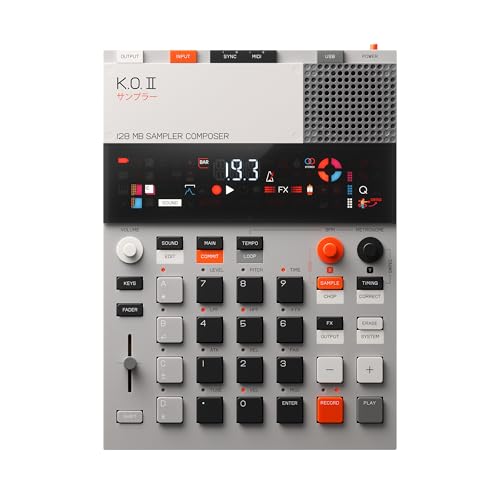
- Built-in mic and speaker for quick sampling
- 4 groups x 99 patterns with fast sequencing
- Punch-in effects and fader-based control
Best For: Producers who want a portable, performance-friendly sampler
Standalone Studio Hub

- 7" touchscreen with classic MPC pads
- Standalone arranging with MPC3 OS
- USB-C audio/MIDI plus DAW integration
Best For: Home studio producers needing a full standalone production center
Portable MPC Pad Controller

- Ultra-compact, computer-based MPC workflow
- 16 backlit pads with swing and note repeat
- Includes MPC software and sample library
Best For: Computer-based beatmakers who want a portable MPC controller
Compact Sample Pad

- Eight velocity-sensitive pads for finger drumming
- Loads WAV samples from SD or SDHC cards
- USB MIDI and standard MIDI I/O support
Best For: Small home studios that need simple sample triggering
Standalone Production Center
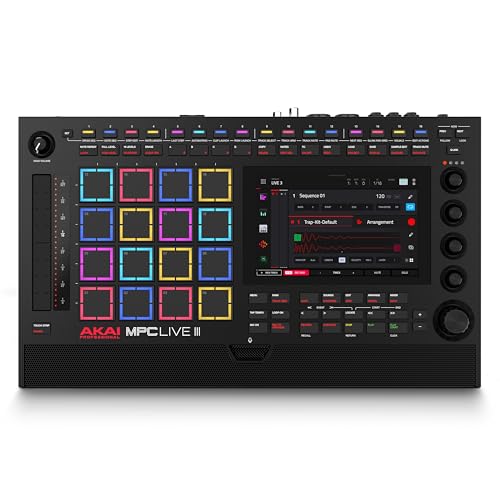
- Fully standalone with 8-core processor and 8GB RAM
- MPCe pads with pressure and X/Y control
- Built-in speakers, mic, battery, and 128GB storage
Best For: Producers needing a standalone sampling and beat workstation
Performance-Ready Sampler – Roland SP-404MKII Creative Sampler and Effector
If you want samplers for home studios that also feel built for hands-on beatmaking, the Roland SP-404MKII is a strong fit. It combines fast sample editing, expressive pads, and a deep effects section in a compact unit that still leaves room for serious creative work.
Best For: Producers who want a portable sampler with fast workflow, performance pads, and built-in effects.
Pros:
- Vivid OLED display and waveform editing make sample work more visual.
- 17 velocity-sensitive RGB pads with no-click design support smooth performance.
- Built-in editing tools include auto-chop, auto BPM detect, pitch shift, and resampling.
- Extensive effects suite includes Vinyl Simulator, DJFX Looper, Lo-fi, and Cassette Simulator.
Cons:
- It is geared heavily toward performance and sampling rather than being a full studio production hub.
- Hands-on workflow may take time to learn if you are new to SP-style samplers.
The SP-404MKII stands out when you want a sampler that encourages quick ideas and live-style creativity in a home studio setup. Its combination of internal storage, fast startup, and broad effects makes it especially practical for sample-based production.
All-in-One Ideastation – Yamaha SEQTRAK Mobile Music Ideastation
For samplers for home studios that also work as a grab-and-go sketchpad, the Yamaha SEQTRAK keeps the process simple. Its onboard sampler, sequencer, built-in speaker, and rechargeable battery make it easy to capture ideas anywhere without setting up a full desk rig.
Best For: Musicians who want a compact all-in-one device for capturing ideas, sampling, and quick sequencing.
Pros:
- Built-in sampler lets you capture sounds on the go.
- Compact design includes a speaker, microphone, and rechargeable battery.
- Advanced sequencer supports intuitive composition and quick arrangement.
- Three-part user interface and real-time controls keep the workflow hands-on.
Cons:
- It is focused on portability and idea capture, so it is not as deep as a dedicated studio sampler.
- The compact format may feel limited if you want a more expansive production surface.
SEQTRAK is a practical choice when your priority is speed and portability over a large studio footprint. It brings sampling and sequencing into one lightweight box, which makes it useful for quick home-studio sketches and mobile creation.
Portable Production Sampler – Sonicware SmplTrek with Case
If you are comparing samplers for home studios and want a compact production-first box, the Sonicware SmplTrek is worth a look. It is built around easy sampling, flexible song-making, and broad connectivity, and this bundle adds a semi-hard case for transport.
Best For: Home-studio users who want a portable sampler for easy sampling and flexible song creation.
Pros:
- Designed for easy sampling and flexible song-making.
- Supports music streaming and massively sample libraries.
- Versatile connectivity helps it fit into different setups.
- Bundle includes a rigid molded case made specifically for the SmplTrek.
Cons:
- The supplied details are high level, so feature depth is harder to judge from the listing alone.
- It is more clearly positioned as a portable production tool than a traditional desktop sampler.
The SmplTrek makes sense if you want a lightweight sampler that focuses on getting ideas moving quickly. The included case also makes it a more travel-friendly option for creators who move between home, practice space, and other locations.
Integrated Groove System – Native Instruments Maschine Mk3 Drum Controller
For home-studio users who want samplers for home studios that are tightly linked to software production, the Native Instruments Maschine Mk3 is a strong controller-based option. It combines sampler, arranger, mixer, FX, and audio interface functions in one hardware/software system, which can streamline beat creation inside a DAW.
Best For: Producers who want a hardware controller with integrated sampler and software workflow.
Pros:
- Integrated hardware/software system includes sampler, arranger, mixer, FX, and more.
- Includes a 25 GB KOMPLETE 11 SELECT library and creative FX.
- Pro-grade 96 kHz / 24-bit audio interface adds recording and playback flexibility.
- Compatible with major DAWs as a VST, Audio Units, or AAX plug-in.
Cons:
- It depends on software integration, so it is less standalone than a dedicated hardware sampler.
- System requirements and DAW compatibility matter more here than with simpler grooveboxes.
Maschine Mk3 is best when you want a studio-centered workflow that blends sampling with arrangement and mixing. It is especially appealing if you already work in a DAW and want a hands-on production surface with an included audio interface.
Portable MPC Starter – Akai MPC Sample
If you want samplers for home studios that also travel well, the Akai Professional MPC Sample gives you the classic MPC workflow in a compact standalone box. It combines sampling, sequencing, and effects in a battery-powered unit with a built-in speaker, internal microphone, and microSD storage, so you can capture ideas without needing a computer.
Best For: Beatmakers, DAWless creators, and beginners who want an easy entry into MPC sampling with portable standalone recording.
Pros:
- Standalone operation with battery power, built-in speaker, internal mic, and microSD storage
- 16 responsive MPC pads plus a 2.4″ full-color display for hands-on chopping and beatmaking
- Over 100 factory kits, Instant Sample Chop Mode, timestretch/repitch, and resampling with FX
- USB-C audio/MIDI, stereo I/O, MIDI sync, and smart device sampling for studio use
Cons:
- MIDI DIN adapter is not included
- Compact format may be limiting if you want a larger desktop production surface
- Focused on portability and workflow simplicity rather than deep multi-track workstation features
The MPC Sample is a strong pick if you want a portable sampler that still feels capable in a home studio setup. It is especially appealing for fast idea capture, finger drumming, and learning the MPC style without a laptop.
Compact Live Sketchpad – teenage engineering EP-133 K.O. II
Among samplers for home studios, the teenage engineering EP-133 K.O. II stands out as a fast, portable sketchpad for building beats and variations quickly. It offers built-in mic sampling, a built-in speaker, a line-out, and a reworked sequencer with pattern-based workflow, so you can move from idea to track without much setup.
Best For: Creators who want a compact, battery-powered sampler for quick beatmaking, live tweaks, and everyday carry.
Pros:
- Built-in mic and line-in for easy sampling from voice, synths, vinyl, or other sources
- Fast sequencer workflow with 4 groups x 99 patterns and a commit button for real-time arrangement
- 12 punch-in 2.0 effects, 6 built-in effects, and multifunction fader control for live performance
- Portable design with AAA battery power, USB-C, built-in speaker, and MIDI/sync I/O
Cons:
- 128 MB memory is practical, but still more limited than larger studio samplers
- Small format may suit sketching and performance more than complex arrangement work
- Included USB-C cable only; other studio accessories are not specified
The K.O. II is a very appealing option if you value speed, hands-on control, and portability over a deep workstation layout. It fits home studio use best as a creative idea machine that encourages quick sampling and performance-focused beat building.
Standalone Studio Hub – Akai MPC One G2
If your priority is a more complete hub among samplers for home studios, the Akai Professional MPC One G2 brings a larger standalone workflow with a 7″ touchscreen, classic pads, and stronger processing. It is built to chop samples, sequence external gear, and arrange full songs without a computer, while still offering USB-C studio connectivity and hybrid DAW integration.
Best For: Home producers who want a standalone desktop sampler and production center for full songs, external gear, and DAW integration.
Pros:
- Standalone MPC3 OS workflow with track-based arranging and Linear Arranger
- 7″ touchscreen plus 16 velocity- and pressure-sensitive RGB pads for hands-on production
- USB-C provides 24×24 multichannel audio streaming and expanded MIDI over one cable
- Upgraded 8-core processor supports up to 16 stereo audio tracks and 32 plugin instruments per project
Cons:
- Less portable than the smaller battery-powered models in this roundup
- Designed as a desktop production center, so it takes more space in a home studio
- Advanced feature set may be more than casual beat sketching needs
The MPC One G2 is the most studio-centered option here, especially if you want one device to sample, sequence, arrange, and integrate with a computer when needed. It is a strong fit for producers who want a serious standalone workflow without giving up modern connectivity.
Portable MPC Pad Controller – Akai MPC Studio Black
If you want samplers for home studios that also travel well, the Akai Professional MPC Studio Black keeps the classic MPC workflow tied to your computer. Its 16 backlit pads, touch-sensitive knobs, and included MPC software make it a practical option for beatmakers who want hands-on control without taking up much desk space.
Best For: Producers who want a compact, computer-based MPC setup for beat making, sampling, and sequencing at home or on the move.
Pros:
- Ultra-compact body fits easily in a laptop bag
- Includes MPC software with 128-track sequencing, sampling, and audio editing
- 16 genuine MPC pads plus swing, note repeat, and full level controls
- Brushed aluminum build with included neoprene sleeve
Cons:
- Requires a connected computer to operate
- No built-in standalone sound engine
For home studios centered around a DAW, this is a streamlined way to get hands-on MPC performance and sample workflow in a small footprint. It is especially appealing if portability matters as much as pad feel and sequencing control.
Compact Sample Pad – Akai MPX8 MIDI Sample Pad
For samplers for home studios, the Akai Professional MPX8 is a simple pad controller built around loading and triggering your own WAV samples from an SD or SDHC card. It gives you eight velocity-sensitive pads, USB MIDI, and basic sample editing, making it a straightforward tool for finger drumming and launching one-shots without a large footprint.
Best For: Home studio users who need a small sample trigger pad for drums, one-shots, and MIDI control.
Pros:
- Eight backlit velocity- and pressure-sensitive pads
- Loads 16-bit mono WAV samples from SD or SDHC cards
- USB MIDI plus standard MIDI I/O for flexible connection options
- Includes sample kit editor with tuning and reverb controls
Cons:
- Internal sample playback is limited to loaded WAV files
- Only eight pads, so it is less expansive than larger controllers
The MPX8 makes sense when you want a compact sampler that handles basic triggering and quick sample access without a steep learning curve. It is a practical choice for adding tactile sample performance to a small studio rig.
Standalone Production Center – Akai MPC Live III
If you want samplers for home studios that can also work as a complete standalone rig, the Akai Professional MPC Live III is built for producing, recording, mixing, and performing without a computer. It combines MPCe pads, a 7-inch multi-touch display, built-in speakers, a rechargeable battery, and deep sequencing tools into one portable production center.
Best For: Producers who want a fully standalone sampler and beat-making workstation for studio and mobile use.
Pros:
- Standalone operation with 8-core processor and 8GB RAM
- MPCe pads add velocity, pressure, and X/Y control
- Built-in mic, stereo monitors, battery, and internal storage
- Wide connectivity including USB-C, CV/Gate, MIDI I/O, and audio interface functions
Cons:
- More expensive and complex than basic pad controllers
- Larger feature set may be more than casual users need
This is the strongest pick here if you want a centerpiece instrument rather than a simple controller. Its standalone workflow, performance controls, and expandable storage make it well suited to serious sample-based production.
How We Picked These Samplers for Home Studios
We prioritized workflow, sampling flexibility, connectivity, portability, and value for typical home-studio use. That means favoring units that are easy to integrate with speakers, headphones, MIDI gear, and DAW-based setups, while still offering enough hands-on control to inspire real use.
We also looked for a spread of formats so buyers can compare compact samplers, performance-oriented boxes, and more complete production centers without paying for features they may never use.
Quick Comparison
If you want a simple sketchpad for ideas, portable models with built-in speakers or batteries are the easiest to use anywhere. If you want deeper sequencing and arrangement, standalone MPC-style machines are better for building full tracks without a computer. For drum programming and sample triggering inside a larger setup, controller-based options are often the best fit.
Key Buying Factors for Samplers for Home Studios
Workflow and Screen Size
Fast navigation matters in a home studio. Touchscreens, dedicated pads, and clear menus can save time when chopping audio, sequencing drums, or editing patterns. If you work quickly, prioritize a sampler that makes recording and arranging feel immediate.
Standalone Use Vs. Computer Integration
Some samplers work best as self-contained production tools, while others are designed to control software. Standalone units are ideal if you want less screen time and more hardware-based creativity. Controller models are better if your DAW is already the center of your studio.
Sampling and Sound-Shaping Features
Look at input options, sample editing depth, effects, and pad sensitivity. For Samplers for Home Studios, these features affect everything from voice recording to drum chopping and live resampling. If you like performance-style production, onboard effects can be especially useful.
Portability and Power Options
Compact, battery-friendly, or USB-powered gear is easier to move around a bedroom studio, shared space, or travel setup. If your studio is fixed, larger units may be worth it for the extra controls and deeper arrangement tools.
Who Should Buy Which Samplers for Home Studios?
Buy a portable sampler if you want to capture ideas anywhere and build beats fast. Choose a standalone production center if you want one box to handle sampling, sequencing, and song arrangement. Pick a controller-based sampler if you already use software and want a tactile way to trigger samples and drums. If you need a simple entry point, compact sample pads and lightweight groove tools can be a low-cost way to start building a more creative home studio.