The right transmitter can make an RC racer feel faster, smoother, and easier to control. This roundup compares 10 options across channel counts, receiver features, ergonomics, and compatibility.
Whether you race cars, tune a crawler, or need a flexible radio system for multiple models, use the guide below to narrow your choices by driving style and budget.
Best 10 Rc Transmitters for Racing Picks for 2026
Long-Range Precision

- 400-meter listed range with FHSS anti-interference
- Adjustable built-in gyro for drift and on-road control
- Telemetry, mixing, ABS, EPA, and 30-model storage
Best For: Drivers wanting advanced tuning for drift, on-road, or crawler vehicles
Versatile Six-Channel Control
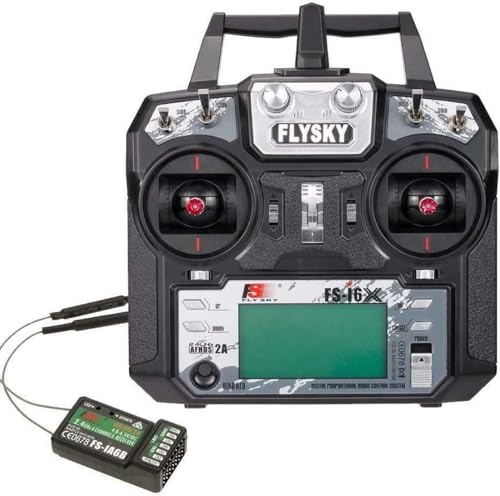
- Six default channels with support described up to 10
- Bidirectional sensor communication
- Compatible with PWM, PPM, i-BUS, and simulators
Best For: Users wanting a flexible, telemetry-capable RC radio
Customizable Drift Control

- 30-model memory with separate low-voltage alarms
- Adjustable gyro and five customizable channels
- Programmable mixing for tanks and twin-engine boats
Best For: Drift and on-road drivers managing multiple customized models
Simple Three-Channel Setup

- Three-channel transmitter with included FS-GR3E receiver
- 2.4GHz frequency hopping for interference resistance
- Trim, dual-rate, endpoint, ABS, and EXP adjustments
Best For: Drivers wanting a focused radio for cars, trucks, crawlers, or boats
Best Budget Practice Pick

- Throttle speed limit for beginners
- FHSS anti-interference technology
- Compact kit with fail-safe protection
Best For: Beginner crawler drivers seeking affordable, safer practice control
Best Portable LCD Option
Turbo Racing P32 4CH Controller

- LCD setup and adjustment display
- 15-model memory
- Removable handle and low-battery warning
Best For: Portable RC car and boat control with convenient tuning features
Best Advanced Control Pick

- Ten channels for flexible functions
- Color screen and coach mode
- Rechargeable with fail-safe and cruise control
Best For: Advanced compatible RC setups needing extensive customization
Versatile 4-Channel Pick
2.4G Transmitter With Receiver

- FHSS control with approximately 150 m range
- Supports throttle-and-steering mixing
- Includes lighting controls and adjustable lanyard
Best For: Casual racing, crawling, and general RC driving
Best Heavy-Duty Pick

- Eight channels for auxiliary functions
- Color screen with real-time channel information
- Up to 300 m stated ground range
Best For: Experienced hobbyists with customized RC models
Beginner-Friendly Pick

- Up to 150 m stated 2.4GHz range
- Throttle speed limit for easier learning
- Includes low-voltage and out-of-control protection
Best For: Beginners driving compatible cars, boats, or tanks
Long-Range Precision – Radiolink RC4GS V3
For drivers comparing rc transmitters for racing, the Radiolink RC4GS V3 stands out with long-range control, adjustable gyro assistance, and advanced tuning features. Its included R6FG receiver supports vehicle-voltage telemetry, while the five-channel layout suits cars, boats, tanks, and other surface models.
Best For: Drift, on-road, crawler, and multi-function RC vehicles needing range and adjustable control.
Pros:
- Control range is listed up to 400 meters with FHSS interference resistance.
- Built-in adjustable gyro helps maintain a straight line and supports drifting.
- Offers telemetry, EPA, ABS, fail-safe, dual-rate, timer, and programmable mixing.
Cons:
- The advanced feature set may take more setup time than a basic radio.
- Telemetry requires a compatible R7FG, R8FG, or R8FGH receiver; the included receiver is R6FG.
This is a strong choice when racing-oriented control adjustments and extended range matter more than a minimalist interface.
Versatile Six-Channel Control – Flysky FS-i6X
Flysky FS-i6X 6-10(Default 6)CH 2.4GHz AFHDS RC Transmitter w/ FS-iA6B Receiver
Check Price On AmazonThe Flysky FS-i6X is a flexible option among rc transmitters for racing, especially for users who want bidirectional communication and broad receiver compatibility. It includes an FS-iA6B receiver and supports PWM, PPM, i-BUS, and compatible simulator devices.
Best For: RC users seeking a versatile six-channel radio with telemetry-capable communication.
Pros:
- Offers six default channels, with the system described as supporting up to 10 channels.
- Bidirectional communication can receive information from temperature, altitude, and other sensors.
- Unique transmitter-and-receiver IDs help prevent unintended connections.
Cons:
- The transmitter is listed as not water resistant.
- Its broader compatibility may require checking the specific protocol or device connection before use.
Choose this model if you want a general-purpose radio platform with sensor communication and multiple control-system options rather than a racing-only feature set.
Customizable Drift Control – DTXMX RC4GS V3
The DTXMX RC4GS V3 is aimed at drivers who want configurable controls in a practical surface-radio design. For rc transmitters for racing, its adjustable gyro, five channels, model memory, and programmable mixing make it especially useful for drift, on-road, boat, and twin-motor applications.
Best For: Drift and on-road drivers who want personalized switches, model profiles, and multi-channel mixing.
Pros:
- Stores settings for up to 30 models with separate names and low-voltage alarms.
- Adjustable built-in gyro helps keep vehicles straight and supports drifting.
- Any two channels can be programmed for mix control, useful for tanks and twin-engine boats.
- Ergonomic handle, textured trigger, hook, and FPV monitor holder hole add practical usability.
Cons:
- It requires six AA batteries.
- The extensive switch customization may require setup before racing.
This version is a good fit for racers and hobbyists managing multiple models or tuning a vehicle around customized switch assignments.
Simple Three-Channel Setup – Flysky FS-GT3B
The Flysky FS-GT3B is a straightforward three-channel package for RC cars, trucks, crawlers, and boats. As one of the more accessible rc transmitters for racing, it includes core adjustment functions such as steering and throttle trim, dual rate, endpoint, ABS, and exponential settings.
Best For: Drivers who need a focused three-channel radio for cars, trucks, crawlers, or boats.
Pros:
- Includes the FS-GR3E receiver for a ready transmitter-and-receiver setup.
- Frequency hopping across the 2.4GHz band is designed to resist interference.
- Provides model memory plus servo reversing, trim, dual-rate, endpoint, ABS, and EXP settings.
Cons:
- Three channels provide less expansion than the five- or six-channel alternatives.
- The supplied notes do not list telemetry support or a stated control range.
This package makes sense for users who prioritize essential driving adjustments and a simple setup over advanced telemetry or extensive channel expansion.
Best Budget Practice Pick – INJORA T6M 6CH Transmitter
For shoppers comparing rc transmitters for racing, the INJORA T6M is a compact, cost-conscious option for smaller crawlers and other RC vehicles. Its throttle speed limit helps beginners practice at a safer pace, while FHSS frequency hopping is designed to reduce interference.
Best For: Beginners using 1/24 or 1/18 RC crawlers who want basic safety and control features.
Pros:
- Throttle speed limit supports gradual practice.
- FHSS 67-channel hopping provides anti-interference performance.
- Includes fail-safe protection, brake functionality, and automatic voltage alerts.
- Works with cars, boats, and tanks and supports high-voltage servos.
Cons:
- Receiver compatibility and vehicle fit should be checked before purchase.
- Uses four AA batteries rather than a rechargeable built-in battery.
- Recommended age information is inconsistent in the supplied listing; review the safety guidance carefully.
The T6M makes the most sense when affordability, compact size, and beginner-friendly speed control matter more than advanced racing adjustments or a display.
Best Portable LCD Option – Turbo Racing P32 4CH Controller
The Turbo Racing P32 is a practical choice among rc transmitters for racing when you want an LCD interface and adjustable driving controls. It supports throttle and steering adjustments, stores up to 15 models, and has a removable handle for easier transport.
Best For: RC car or boat users who value portability, model memory, and quick access to setup controls.
Pros:
- LCD display provides access to reverse, trim, EXP, EPA, and other settings.
- Stores settings for up to 15 models.
- Includes low-battery warning and fail-safe functionality.
- Removable handle makes the controller easier to carry.
Cons:
- Requires four AA batteries.
- It offers four channels, which may limit more complex vehicle setups.
- The supplied listing gives different age guidance, so verify suitability before use.
Choose the P32 if portability and accessible tuning controls are priorities. Drivers needing numerous auxiliary channels may want a more advanced transmitter instead.
Best Advanced Control Pick – MEUS Racing ME-10B 10CH
The MEUS Racing ME-10B stands out among rc transmitters for racing and off-road use with 10 channels, a color screen, and coach mode. Its adjustable wheel and trigger, fail-safe functions, and stated maximum ranges make it suited to users who want extensive control over compatible RC models.
Best For: Experienced hobbyists and families managing compatible crawlers, cars, boats, or motorcycles with multiple functions.
Pros:
- Ten channels include a three-position channel, two knobs, and five buttons.
- Color screen shows channel parameters clearly.
- Coach mode allows two transmitters to control one car for training.
- Includes fail-safe, cruise control, low-voltage warning, rechargeable power, and adjustable controls.
Cons:
- It only works with 2.4GHz receivers from MEUS Racing.
- The broad feature set may be more than a basic crawler setup requires.
- Confirm compatibility with the specific vehicle and receiver before ordering.
The ME-10B is the strongest fit here for customization and multi-function control, provided you are prepared to stay within the MEUS Racing receiver ecosystem.
Versatile 4-Channel Pick – 2.4G Transmitter With Receiver
RC Remote Control 4CH 2.4G Transmitter with Receiver and Lanyard for RC Car Crawler Boat
Check Price On AmazonFor shoppers comparing rc transmitters for racing, this 4-channel set offers responsive 2.4G control, a receiver, and useful lighting functions in one package. Its approximately 150-meter range and broad vehicle compatibility make it a practical option for casual racing, crawling, and general RC driving.
Best For: RC drivers who want a simple transmitter-and-receiver set with lighting control and mixing support.
Pros:
- FHSS technology provides anti-interference performance and smooth control inputs.
- Supports steering-and-throttle mixing through the control sticks.
- Built-in controls operate left, right, and head lights.
- Includes an adjustable 13- to 21-inch neck strap.
Cons:
- The transmitter is compatible only with the receiver included in this set.
- It has four channels, offering less customization than more advanced multi-channel radios.
This is a straightforward choice for drivers who value ease of use and included accessories. Confirm the vehicle scale and receiver compatibility before buying, especially if you plan to use it with an existing RC setup.
Best Heavy-Duty Pick – MEUS Racing 8-Channel Radio
Among rc transmitters for racing, the MEUS Racing ME-8B stands out for its eight channels, color screen, and adjustable controls. Its stated ground range of up to 300 meters and broad scale compatibility suit drivers who want more room for customization across crawlers, boats, and other RC models.
Best For: Experienced RC hobbyists who need multiple auxiliary channels and detailed control adjustments.
Pros:
- Provides eight channels, including a three-position channel, two knobs, and three buttons.
- Color screen displays channel parameters at a glance.
- Includes fail-safe, low-voltage warning, lock function, and automatic shutoff.
- Four-bearing wheel and adjustable anti-slip trigger support precise operation.
Cons:
- It works only with MEUS Racing 2.4GHz receivers.
- It cannot store multiple model settings, so rebinding is required when changing models.
- Its extensive controls may be more than beginners need.
This is the most feature-rich option in the group for drivers who use auxiliary functions and want a more configurable radio. The brand-specific receiver limitation and rebinding requirement are important considerations for multi-model owners.
Beginner-Friendly Pick – 3-Channel RC Controller Set
This 3-channel transmitter and receiver set is a practical entry point for shoppers seeking rc transmitters for racing or recreational driving. It combines responsive 2.4GHz control with a throttle speed limit, low-voltage alarm, and out-of-control protection for a more manageable learning experience.
Best For: Beginners driving compatible RC cars, boats, or tanks who want simple controls and speed management.
Pros:
- Offers stable 2.4GHz communication with a stated range of up to 150 meters.
- Throttle speed adjustment helps new drivers practice at a controlled pace.
- Includes low-voltage alarm and out-of-control protection features.
- Comfortable grip and responsive receiver support precise maneuvering.
Cons:
- With three channels, it provides fewer controls for advanced customization.
- Requires four AA batteries.
- Compatibility is centered on the listed RC car, boat, and tank applications.
For new drivers, the speed-limit function and safety features are more useful than a large channel count. It is a sensible basic set when its included receiver matches the vehicle and the 150-meter range meets your driving area.
How We Picked the Best Rc Transmitters for Racing
We focused on the features that matter most when choosing Rc Transmitters for Racing: dependable 2.4GHz connectivity, responsive steering and throttle control, receiver compatibility, channel flexibility, adjustment options, and practical ergonomics. We also considered whether each system is better suited to dedicated racing, casual driving, crawling, boats, or multi-model use.
Channel count is not a ranking by itself. A three-channel radio may be ideal for a simple car, while a six-, eight-, or 10-channel transmitter can support lights, winches, shifting, locking differentials, or other accessories.
Quick Comparison
| Best For | Look For | Typical Choice |
|---|---|---|
| Simple RC cars | Reliable 2.4GHz link and easy controls | 3-channel system |
| Club racing | Precise adjustments, comfortable wheel, dependable receiver | Programmable 4- to 6-channel radio |
| Crawlers and scale builds | Extra channels and accessory control | 6- to 10-channel transmitter |
| Multiple models | Model memory or widely available receivers | Expandable transmitter system |
Key Buying Factors for Rc Transmitters for Racing
Control and Adjustment Range
Look for adjustable steering and throttle trims, dual rates, and endpoint settings. These controls help reduce twitchiness, match the transmitter to a specific vehicle, and improve consistency through corners. A comfortable steering wheel and predictable trigger are equally important during long sessions.
Channels and Receiver Compatibility
Choose the fewest channels that cover your current build, then allow room for upgrades. Confirm that the included receiver works with your vehicle and that replacement receivers are easy to find. Some systems are designed around particular brands or model families, so compatibility should be checked before purchase.
Range, Interference, and Reliability
Modern 2.4GHz systems generally bind automatically and resist interference better than older radio technology. Still, verify the manufacturer’s range claims, failsafe behavior, receiver power requirements, and antenna placement. A failsafe that cuts throttle or applies a safe preset can help protect the model if signal or power is lost.
Display, Power, and Durability
An LCD can simplify setup and make trims, model settings, or telemetry easier to read. Consider battery type, operating time, replacement cost, and whether the transmitter feels secure in one hand. For outdoor use, a durable housing and weather-resistant receiver are valuable, but do not assume “waterproof” applies to every component.
Who Should Buy Which Rc Transmitters for Racing?
- Beginners: Choose a straightforward three- or four-channel set with simple binding and accessible replacement receivers.
- Dedicated racers: Prioritize ergonomic control, precise endpoint and dual-rate adjustments, dependable signal performance, and a receiver that fits your chassis cleanly.
- Crawler owners: Select six or more channels if you plan to operate lights, winches, servos, or transmission functions.
- Multi-model hobbyists: Favor a system with broad receiver availability, model-saving features, and enough channels for future builds.
- Scale-build enthusiasts: Consider higher-channel radios with accessory mixing or coach functionality, especially for detailed crawler projects.
Before buying, confirm the transmitter’s included receiver, connector layout, battery requirements, and supported vehicle type. The best choice is the one that provides the control adjustments you will actually use without adding unnecessary complexity.