Clear, dependable audio can make a business interview sound polished, credible, and easy to follow. The right recorder should match your interview format, microphone setup, portability needs, and tolerance for editing.
We’ve selected 10 options for different workflows, including remote calls, in-person conversations, multi-guest roundtables, and quick meeting capture. Use the guide below to narrow the list before comparing the individual products.
Best 10 Podcast Recorders for Business Interviews Picks for 2026
Best for Multi-Person Interviews

- Four XLR inputs and four headphone outputs
- Automatic mix-minus for phone and remote interviews
- Battery powered with multitrack recording
Best For: Panel podcasts and multi-person business interviews
Best for AI Meeting Workflows
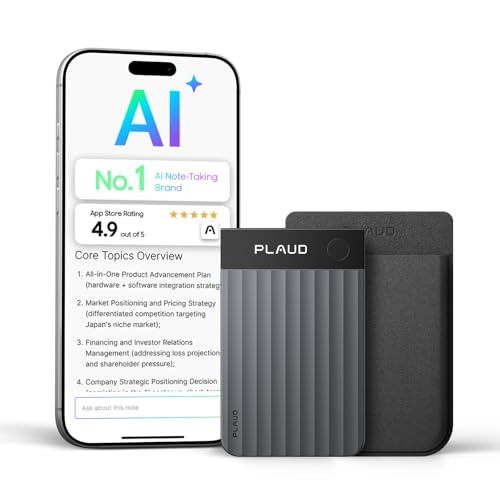
- Transcribes, summarizes, and lets users query recordings
- Adds notes, images, and highlighted moments
- Up to 30 or 50 hours of recording, depending on mode
Best For: Interview documentation and AI-assisted follow-up
Best for Flexible Field Recording

- Built-in stereo microphones and two XLR/TRS inputs
- 32-bit float recording for clip-resistant capture
- USB-C recording plus SD card backup
Best For: Portable interviews and varied field audio projects
Best for Long Battery Life
Tonfarb Digital Voice Recorder

- Up to 68 hours of continuous recording
- 136GB listed storage with included TF card
- One-touch recording and automatic noise reduction
Best For: Long meetings and simple portable interview capture
Best All-Around Multitrack Pick

- 32-bit float recording across six tracks
- Four XLR/TRS inputs plus built-in stereo mics
- USB interface with SD-card backup recording
Best For: Flexible business interviews and expanding podcast setups
Best for Panel Interviews

- Up to 13-track simultaneous recording
- Six mic inputs and six headphone outputs
- Includes microphones, SD card, batteries, and cables
Best For: Panel discussions and multi-guest business podcasts
Best Compact Two-Channel Option

- Two XLR/TRS inputs in a compact recorder
- 32-bit/96kHz recording with waveform display
- Supports SDXC cards up to 1TB
Best For: Portable one-on-one business interviews
Most Flexible Field Recorder

- 32-bit float recording up to 96 kHz
- Nine modes with triple-microphone array
- Includes case, windscreen, adapter, cable, and card
Best For: Mobile interviewers needing adaptable pickup patterns
Best Compact Stereo Option

- Portable 92-gram design
- X/Y stereo microphones for interviews
- USB-C microphone mode and 32-bit float
Best For: Simple, lightweight one-on-one interview recording
Best Complete Podcast Setup

- Includes ZDM-1 mic, headphones, stand, and cable
- Color display with soft-touch controls
- 3.5mm input and line output connections
Best For: Desk-based business podcasts needing a bundled mic setup
Best for Multi-Person Interviews – Zoom PodTrak P4
For business teams comparing podcast recorders for business interviews, the Zoom PodTrak P4 is a practical choice when several people need to connect microphones and monitor the conversation. Its four XLR inputs, four headphone outputs, and phone or USB interview support make it well suited to roundtable discussions and remote calls.
Best For: Multi-person business podcasts, panel interviews, and remote call-in conversations.
Pros:
- Four XLR microphone inputs with phantom power support.
- Four headphone outputs with individual volume control.
- Automatic mix-minus supports phone and remote interviews.
- Battery powered and offers programmable sound pads with multitrack recording.
Cons:
- Battery life is listed at up to 3.5 hours on two AA batteries.
- Its larger multi-input feature set may be more than a solo interviewer needs.
The PodTrak P4 stands out when your interview setup includes multiple speakers, headphones, or remote guests. It is less focused on ultra-small portability, but its flexible inputs and monitoring make it a strong business interview hub.
Best for AI Meeting Workflows – Plaud Note Pro
The Plaud Note Pro takes a software-assisted approach to podcast recorders for business interviews, combining built-in microphones with transcription, summaries, and searchable AI conversations. It is designed for professionals who want to turn recorded interviews and meetings into notes, follow-ups, and draft content.
Best For: Business interviews where transcription, summaries, secure syncing, and follow-up workflows matter.
Pros:
- Can record audio, add typed notes and images, and mark key moments.
- “Ask Plaud” can extract points, suggest next steps, and draft emails from recordings.
- Four MEMS microphones and a VPU microphone support directional audio capture.
- Offers up to 30 hours in Enhance Mode or 50 hours in Endurance Mode.
Cons:
- No headphone jack is listed.
- Transcription is tied to included or upgraded plan allowances.
- Users should obtain consent before recording and follow applicable privacy laws.
For interviewers who need more than an audio file, the Note Pro can streamline documentation and post-interview organization. Its strongest advantages depend on using the Plaud app and transcription services rather than editing audio manually.
Best for Flexible Field Recording – Zoom H4 Essential
The Zoom H4 Essential is a versatile option among podcast recorders for business interviews, especially for users who may also record video audio, live events, or field conversations. Built-in stereo microphones, two XLR/TRS inputs, USB-C connectivity, and 32-bit float recording give it a broad range of uses.
Best For: On-location interviews, creators who need external microphones, and mixed audio projects.
Pros:
- Built-in stereo microphones provide a ready-to-use recording setup.
- Two XLR/TRS inputs accommodate external microphones, instruments, mixers, or soundboards.
- 32-bit float recording helps capture loud and quiet sources without distorted takes.
- Can record to a device through USB-C while also saving a backup to an SD card.
Cons:
- It has only two external XLR/TRS inputs, fewer than the PodTrak P4.
- Two AA batteries are required for portable operation.
The H4 Essential is a strong all-around recorder for interviewers who need portability and the option to expand beyond its built-in microphones. Its 32-bit float feature is particularly useful when recording unpredictable speaking levels or event audio.
Best for Long Battery Life – Tonfarb Digital Voice Recorder
For straightforward podcast recorders for business interviews, the Tonfarb digital voice recorder emphasizes simple operation, long battery life, and generous storage. One-touch recording, voice activation, noise reduction, and a compact design make it convenient for meetings and interviews where a small standalone device is preferred.
Best For: Extended meetings, travel interviews, lectures, and simple voice capture.
Pros:
- Up to 68 hours of continuous recording on a charge.
- Includes 8GB of built-in storage and a 128GB TF card for 136GB total listed capacity.
- One-click recording can start even while the device is powered off.
- Supports PCM recording, automatic noise reduction, and voice-activated recording.
Cons:
- It uses built-in microphones rather than external XLR microphone inputs.
- The listed details identify MP3 as the microphone recording format, while the product description also mentions WAV support.
- Its feature set is oriented toward voice recording rather than multitrack podcast production.
The Tonfarb is best viewed as a convenient interview note recorder rather than a full podcast production system. Its long runtime, one-touch controls, and substantial storage are useful for business users who prioritize simplicity over microphone expansion.
Best All-Around Multitrack Pick – Zoom H6 Essential
For podcast recorders for business interviews, the Zoom H6 Essential is a flexible choice when you need to capture multiple microphones or sources. Its 32-bit float recording is designed to help prevent clipped audio, while four XLR/TRS inputs and built-in stereo microphones support interviews, panels, and location work.
Best For: Business interviewers who need several inputs, backup recording, and adaptable microphone options.
Pros:
- 32-bit float recording across up to six tracks helps protect against distortion.
- Four XLR/TRS combo inputs accommodate multiple microphones.
- Can function as a USB audio interface while recording to an SD card.
- Interchangeable microphone capsules support different recording scenarios.
Cons:
- Requires four AAA batteries for portable operation.
- Optional capsules may be needed for some specialized setups.
- The feature set may be more than needed for a simple one-microphone interview.
The H6 Essential is a strong fit for teams that want room to expand beyond straightforward two-person interviews. Its input count, clip-resistant recording, and USB workflow make it useful both in the field and at a desk.
Best for Panel Interviews – Zoom PodTrak P8 Bundle
The Zoom PodTrak P8 is built for podcast recorders for business interviews involving several participants. It records up to 13 tracks, provides six high-gain microphone inputs, and includes separate headphone mixes, making it suited to roundtables, panels, and structured interview productions.
Best For: Business podcasts with multiple in-room guests, independent monitoring, and computer-free production.
Pros:
- Records up to 13 tracks simultaneously for complex sessions.
- Six high-gain microphone inputs support larger interview groups.
- Onboard compression, de-essing, noise reduction, and mix-minus processing help refine recordings.
- Six headphone outputs offer separate volume-controlled monitoring, and the bundle includes microphones, batteries, cables, and a memory card.
Cons:
- At 12.1 pounds, it is less convenient for lightweight mobile recording.
- Its extensive controls may be excessive for simple one-on-one interviews.
- Battery, SD-card, and accessory details in the bundle add more components to manage.
The P8 is the most production-oriented option here for teams recording panels or recurring interview shows. Its routing, monitoring, and onboard editing tools can reduce reliance on a computer during a session.
Best Compact Two-Channel Option – Zoom H1 XLR
For straightforward podcast recorders for business interviews, the compact Zoom H1 XLR offers two XLR/TRS inputs without the size of a larger multitrack unit. It records at up to 32-bit/96kHz, includes an OLED waveform display, and supports external monitoring through its 3.5mm headphone output.
Best For: Mobile interviewers who need a simple two-microphone setup and a small recorder.
Pros:
- Two XLR/TRS combo inputs support microphones and other sources.
- 32-bit/96kHz recording provides detailed audio capture.
- Compact 6.4-ounce design is convenient for portable interview kits.
- Supports SDXC cards up to 1TB and includes a waveform display for level monitoring.
Cons:
- Two-channel input capacity limits larger group interviews.
- Battery life is listed at approximately 10 hours.
- Its 0.96-inch display is smaller than the H6 Essential’s screen.
The H1 XLR is a practical choice when portability and uncomplicated two-person recording matter most. It covers the core needs of a business interview while leaving larger productions to recorders with more inputs.
Most Flexible Field Recorder – Zoom H2essential Bundle
For podcast recorders for business interviews, the Zoom H2essential stands out when you need flexible coverage for solo conversations, group discussions, or changing room layouts. Its triple-microphone design, multiple recording patterns, and 32-bit float recording make it a versatile option for mobile interview setups.
Best For: Business interviewers who need adaptable microphone pickup and a complete travel-ready accessory bundle.
Pros:
- 32-bit float recording at up to 96 kHz helps preserve quiet and loud details without gain-setting concerns.
- Nine recording modes and a triple-microphone array support front, rear, side, surround, stereo, and mono capture.
- Can function as a USB microphone while recording a backup to the SD card.
- Includes a windscreen, case, AC adapter, USB-C cable, and 32GB microSDHC card.
Cons:
- Its broader feature set may be more than needed for simple one-on-one interviews.
- Battery life is listed at up to 11 hours on two AA batteries, so extended field work may require spares.
The H2essential is a strong choice when interview conditions vary and you want both portable recording and USB connectivity. The included accessories also reduce the need to assemble a separate starter kit.
Best Compact Stereo Option – Zoom H1essential Recorder
The Zoom H1essential is a straightforward pick among podcast recorders for business interviews when portability and simple operation matter most. Its X/Y stereo microphones capture conversations naturally, while USB-C microphone mode supports remote meetings, calls, and desktop recording.
Best For: Solo interviewers, meeting recorders, and creators who want a lightweight stereo recorder for in-person or USB-based use.
Pros:
- X/Y stereo microphones are designed to capture clear voices for conversations, podcasts, meetings, and interviews.
- 32-bit float recording provides clip-free audio according to the supplied product description.
- Works as a USB microphone for livestreams, remote meetings, video calls, and podcasts.
- Compact 92-gram design and up to 10 hours of battery life support mobile recording.
Cons:
- It offers stereo operation rather than the H2essential’s broader selection of pickup patterns.
- The recorder uses two AAA batteries, which may require replacements during longer recording days.
The H1essential keeps the setup uncomplicated: point the X/Y microphones toward the conversation or connect it by USB-C. It is especially practical for users who value a small recorder over advanced multi-pattern control.
Best Complete Podcast Setup – Zoom H4essential Bundle
For business interviews that need a more traditional podcast setup, the Zoom H4essential bundle combines a handy recorder with a ZDM-1 podcast microphone, headphones, stand, windscreen, and XLR cable. Its controls, color display, and input/output connections make it suited to desk-based interviews as well as portable recording.
Best For: Business podcasters who want a bundled microphone-and-recorder setup with monitoring accessories included.
Pros:
- Includes the ZDM-1 podcast microphone, headphones, windscreen, XLR cable, and tabletop stand.
- Provides 3.5mm line output for headphones or camera connection and a 3.5mm mic/line input.
- Soft-touch recording and rotary controls are designed for quieter operation.
- Full-color LCD and built-in speaker simplify menu navigation and quick playback checks.
Cons:
- The bundle is less minimal than a pocket recorder with built-in microphones alone.
- The supplied notes do not specify a battery-life figure.
The H4essential bundle is appealing when you want to start recording interviews with a dedicated podcast microphone rather than relying only on built-in mics. It offers a more complete desk setup while retaining recorder-style connectivity and portability.
How We Picked the Best Podcast Recorders for Business Interviews
We focused on the features that matter most when recording interviews: input and output flexibility, recording quality, portability, monitoring, power options, and ease of transferring files. We also considered whether each model suits a solo interviewer, a small production team, or a larger panel.
Some picks are dedicated podcast recorders with multiple microphone inputs, while others are handheld or voice-focused devices. That range is intentional: business interviews can happen in a studio, conference room, trade-show floor, or remote call.
Quick Comparison
| Recorder type | Best suited to | Main advantage |
|---|---|---|
| Multi-input podcast recorder | In-person panels and co-hosted shows | Separate microphone control and headphone monitoring |
| Handheld audio recorder | On-location interviews | Compact design and built-in microphones |
| Voice or AI recorder | Meetings and informal conversations | Fast capture, playback, transcription, or summaries |
| Recorder and microphone bundle | First-time interview setups | Includes more of the equipment needed to begin |
Key Buying Factors for Podcast Recorders for Business Interviews
Microphone Inputs and Interview Size
For one-on-one interviews, a two-channel recorder may be enough. Choose four or more XLR inputs if you expect two hosts, multiple guests, or a panel. Balanced inputs can help reduce interference when using longer cable runs.
Monitoring and Headphone Outputs
Headphone monitoring lets you catch clipping, cable problems, room noise, or a muted channel while recording. If several people need to monitor the conversation, look for multiple headphone outputs or plan to use a compatible splitter.
Recording Quality and File Handling
Choose a recorder that supports uncompressed WAV recording when editing quality is important. Built-in microphones are convenient, but external XLR microphones usually offer better control in a treated room. Check memory-card support, USB connectivity, and battery life before recording a long session.
Remote Interviews and Transcription
For calls, confirm how the recorder connects to a phone or computer and whether it supports the devices and apps you use. AI transcription and summaries can save time, but they should be reviewed for names, technical terms, and important quotes.
Portability and Setup
A handheld model is easier to carry to client offices and events. A larger podcast unit may be the better choice for a permanent desk setup because it provides more controls, inputs, and monitoring options.
Who Should Buy Which Podcast Recorders for Business Interviews?
- Choose a multi-input podcast recorder if you regularly record co-hosted shows, panel discussions, or interviews with separate microphones.
- Choose a handheld recorder if you travel frequently, record in offices or events, or want built-in microphones and a compact footprint.
- Choose a voice or AI recorder if your priority is capturing meetings, calls, notes, and follow-up material rather than producing a fully mixed podcast.
- Choose a bundle if you need a microphone, headphones, cables, or accessories and want to reduce compatibility questions.
Before buying, map your typical interview: number of speakers, microphone type, recording location, session length, and editing workflow. The best Podcast Recorders for Business Interviews are the ones that handle that routine reliably without adding unnecessary setup.