The best microcontroller starter kits make it easier to move from wiring basics to useful electronics projects. This roundup compares 10 kits spanning Arduino, ESP32, Raspberry Pi Pico, and BBC micro:bit platforms.
Use the buying guide below to match each kit’s board, included components, documentation, and connectivity features to your experience level and project plans.
Best 10 Microcontroller Starter Kits Picks for 2026
Best Beginner Build Kit
UNO R3 Project Super Starter Kit

- 22+ guided Arduino projects
- Solderless components for easy setup
- Includes sensors, displays, and motors
Best For: Families, homeschool, clubs, and STEM classrooms
Best for Connected Projects
ESP32 Camera Ultimate Starter Kit

- Built-in camera, Wi-Fi, and Bluetooth
- 122 projects with detailed guidance
- Supports MicroPython, C, and Processing
Best For: Wireless, camera, and multi-language learning
Best for Advanced Arduino Expansion
Mega 2560 Complete Starter Kit

- 54 digital I/O pins and 256 KB flash
- 35+ guided projects
- 200+ components for larger builds
Best For: Older students, clubs, and multi-sensor projects
Best Premium Learning Experience

- Original Uno R4 WiFi with wireless connectivity
- 50 projects and 60+ video lessons
- 300+ components and IoT support
Best For: Beginners, educators, and connected Arduino projects
Best Raspberry Pi Pico Kit

- RP2040 Raspberry Pi Pico platform
- MicroPython, C/C++, and Piper Make support
- LCD, servo, RGB LED, sensor, and buzzer modules
Best For: Pico-based STEM lessons and beginner electronics projects
Best Connected Arduino Kit
ELEGOO UNO R4 WiFi Super Starter Kit

- UNO R4 WiFi with Arduino IDE compatibility
- 200+ components and practical modules
- Built-in Wi-Fi, Bluetooth, USB-C, and LED matrix
Best For: Progressive Arduino learning and connected maker projects
Best Micro:bit Learning Kit
KEYESTUDIO Micro:bit V2 Starter Kit
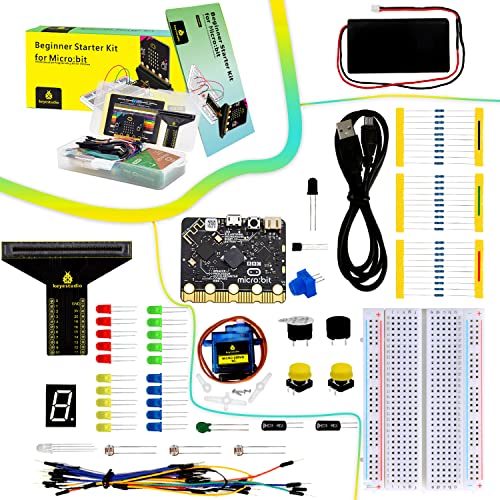
- Includes BBC micro:bit V2.21 controller
- 18+ guided projects with online tutorials
- Servo, displays, sensors, LEDs, and breadboard included
Best For: Teen beginners and classroom micro:bit coding
Best All-Around Arduino Kit
LAFVIN Project Super Starter Kit
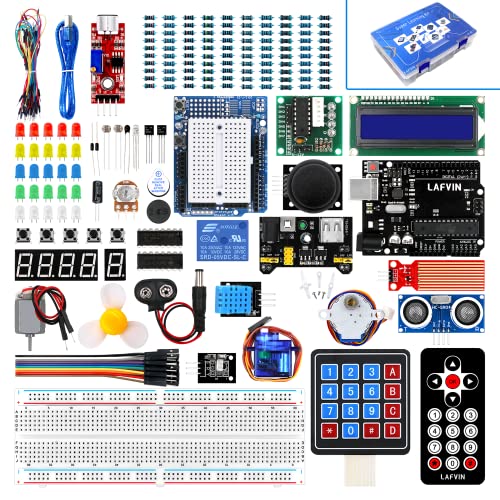
- 20+ guided lessons with code and libraries
- Includes motors, LCDs, displays, and sensors
- Works with Arduino IDE on major desktop operating systems
Best For: Beginners learning classic Arduino electronics and programming
Best for IoT Projects
ELEGOO ESP-32 Super Starter Kit

- Dual-core ESP-32 with Wi-Fi and Bluetooth 4.2
- 35+ modules and components for varied builds
- 30+ guided projects with code and diagrams
Best For: Connected devices, smart-home projects, and ESP-32 learning
Best Basic ESP32 Kit
LAFVIN ESP32 WiFi IoT Starter Kit

- ESP32 board with Wi-Fi and Bluetooth
- Includes OLED, DHT11, PIR, and obstacle sensor
- Tutorial provides beginner code and assembly lessons
Best For: Introductory ESP32 sensor and IoT experiments
Best Beginner Build Kit – UNO R3 Project Super Starter Kit
For learners comparing microcontroller starter kits, the ELEGOO UNO R3 Project Super Starter Kit offers a straightforward, solderless way to practice Arduino basics. Its 22+ guided lessons cover LEDs, sensors, displays, motors, and input devices, with example code and a downloadable tutorial to help first-time builders get started.
Best For: Families, homeschool learners, coding clubs, and STEM classrooms seeking varied beginner projects without soldering.
Pros:
- Includes 22+ guided projects covering sensing, displays, input, and motor control.
- Provides a broad selection of components, including an LCD, ultrasonic sensor, DHT11, joystick, servo, and stepper motor.
- Solderless breadboard, plug-in modules, and pre-soldered LCD simplify setup.
Cons:
- The UNO R3 has modest 2 KB RAM and 16 MHz processing speed.
- Users must observe the power module’s 9V maximum and check wiring and component polarity.
This is a well-rounded entry point for learning Arduino fundamentals and then modifying example projects into alarms, monitors, games, and motion builds.
Best for Connected Projects – ESP32 Camera Ultimate Starter Kit
Among microcontroller starter kits, the Freenove ESP32 Kit stands out for projects involving cameras, wireless connectivity, and multiple programming languages. Its dual-core ESP32 camera board includes Wi-Fi, Bluetooth, a memory card slot, and code examples in MicroPython, C, and Processing.
Best For: Learners and makers who want a progressive path from basic electronics to camera, wireless, and computer-interface projects.
Pros:
- ESP32 board provides dual-core 240 MHz processing, 4 MB flash, 8 MB PSRAM, Wi-Fi, and Bluetooth 4.2.
- Includes 122 step-by-step projects with schematics, wiring diagrams, code, and explanations.
- Offers 240 components and projects using MicroPython, C, and Processing.
Cons:
- The 795-page tutorial is downloadable or online rather than supplied as a paper manual.
- Processing projects require a computer to provide graphical interfaces.
With its camera hardware, 1GB memory card, and extensive documentation, this kit is suited to users who want more than basic Arduino-style LED and sensor exercises.
Best for Advanced Arduino Expansion – Mega 2560 Complete Starter Kit
The ELEGOO Mega 2560 is one of the more expandable microcontroller starter kits for learners who expect to combine many sensors, controls, and displays. Its MEGA 2560 board offers 54 digital I/O pins, 16 analog inputs, four hardware serial ports, and 256 KB of flash, while the kit supplies 35+ guided projects and more than 200 components.
Best For: Older students, coding clubs, and makers building larger Arduino projects with multiple simultaneous inputs and outputs.
Pros:
- More I/O, memory, analog inputs, PWM outputs, and serial ports than a typical UNO-based setup.
- Includes RFID, RTC, PIR, ultrasonic, water-level, motion, environmental, motor, and display modules.
- Storage case and small-parts box help organize components between projects.
Cons:
- The extensive component selection may be more than a complete beginner needs.
- The recommended age is 13 years and up.
This kit makes sense when the goal is to move beyond simple exercises into access systems, monitoring devices, alarms, and interactive prototypes that need additional connections.
Best Premium Learning Experience – Arduino Uno R4 WiFi Elite Kit
For buyers seeking polished microcontroller starter kits with connected-project support, the SunFounder Elite Explorer Kit pairs an original Arduino Uno R4 WiFi with more than 300 components. Its 50 projects, 60+ video lessons, and Arduino IoT Cloud integration create a guided route from basic circuits to Wi-Fi and Bluetooth applications.
Best For: Beginners, teachers, students, and engineers who value video instruction, current wireless features, and a large project selection.
Pros:
- Uses the Arduino Uno R4 WiFi with a 32-bit processor, built-in Wi-Fi, and Bluetooth.
- Includes 50 projects across basic, fun, and IoT categories.
- Provides 300+ components, open-source code, video courses, online tutorials, and technical support resources.
Cons:
- The supplied notes do not identify the individual components included in the 300+ count.
- Its broad lesson and component offering may be more than needed for very simple introductory builds.
This is a strong choice for learners who want structured instruction and a clear progression toward IoT projects while retaining compatibility with other Arduino boards such as the Uno R3 and Nano.
Best Raspberry Pi Pico Kit – LAFVIN Pico Basic Starter Kit
The LAFVIN Pico kit is a practical choice among microcontroller starter kits for learners who want to explore Raspberry Pi Pico projects. It combines the RP2040 board with displays, sensors, lights, a servo, and support for MicroPython, C/C++, and Piper Make.
Best For: Beginners, STEM classrooms, and hobbyists learning embedded programming through guided projects.
Pros:
- Includes the Raspberry Pi Pico and useful modules such as an LCD1602, SG90 servo, WS2812 RGB LEDs, buzzer, buttons, and motion sensor.
- Supports multiple programming approaches, including MicroPython, C/C++, and graphical Piper Make programming.
- Detailed tutorials and sample code help with wiring, programming, and project testing.
Cons:
- Its Bluetooth listing may not represent a built-in wireless feature of the standard Pico board; verify the configuration before buying.
- The project scope is focused on core electronics rather than a large connected-IoT component collection.
This is a focused, approachable kit for learning fundamental inputs, outputs, displays, and control. Choose it if Raspberry Pi Pico compatibility and flexible programming matter more than wireless connectivity.
Best Connected Arduino Kit – ELEGOO UNO R4 WiFi Super Starter Kit
The ELEGOO UNO R4 WiFi Super Starter Kit is one of the more expandable microcontroller starter kits for beginners progressing from simple circuits to connected projects. Its UNO R4 WiFi board offers Arduino IDE compatibility, Wi-Fi, Bluetooth, USB-C, and a broad selection of practical modules.
Best For: Beginners, educators, and makers who want a structured path from basic Arduino exercises to wireless and IoT-style prototypes.
Pros:
- Features a 32-bit 48 MHz Renesas RA4M1 board with built-in Wi-Fi, Bluetooth, USB-C, and a 12 × 8 LED matrix.
- Includes more than 200 components and modules, including RFID, OLED, ultrasonic, PIR, motors, relay, keypad, joystick, and environmental sensors.
- Step-by-step tutorials, wiring diagrams, sample code, and support help reduce setup friction for new users.
Cons:
- The large component selection may feel overwhelming until parts are organized and projects are followed progressively.
- It is designed around the UNO R4 WiFi platform, so users seeking a smaller or simpler kit may find it more than they need.
With its connectivity options and unusually broad module selection, this kit has room to support continued learning. It is a strong pick when you want one package that can cover both foundational circuits and more ambitious prototypes.
Best Micro:bit Learning Kit – KEYESTUDIO Micro:bit V2 Starter Kit
The KEYESTUDIO Micro:bit Basic Starter Kit is a beginner-friendly option among microcontroller starter kits, especially for teens and classroom coding. It includes a BBC micro:bit V2.21, breakout adapter, breadboard, common components, and materials for at least 18 guided projects.
Best For: Teen learners, coding beginners, schools, and hobbyists starting with the BBC micro:bit platform.
Pros:
- Includes the micro:bit V2.21 with Bluetooth, accelerometer, compass, buttons, and a 5 × 5 LED matrix.
- Provides a useful range of parts, including a servo, LED display, buzzer, potentiometer, temperature sensor, photocells, and RGB LED.
- Detailed online tutorials cover introductions, wiring, test code, drivers, and example projects.
Cons:
- The project ecosystem is centered on BBC micro:bit V2.21 compatibility rather than Arduino or Raspberry Pi Pico platforms.
- Many small components require careful organization despite the included compartmented storage box.
This kit offers a gentle introduction to coding and electronics through the micro:bit’s built-in interactive features. It makes the most sense for learners who want guided experimentation without starting from a bare microcontroller board.
Best All-Around Arduino Kit – LAFVIN Project Super Starter Kit
For beginners comparing microcontroller starter kits, the LAFVIN Project Super Starter Kit offers a broad Arduino-compatible project base with motors, displays, sensors, and a tutorial covering more than 20 lessons. It works with the Arduino IDE on Windows, macOS, and Linux.
Best For: Beginners who want a wide selection of classic Arduino-compatible components and guided lessons.
Pros:
- Includes a tutorial with more than 20 lessons, code, libraries, and datasheets.
- Supports projects involving servo, stepper, and DC motors.
- Includes LCD 1602, a 4-bit seven-segment display, sensors, LEDs, buttons, and other components.
- LCD 1602 module includes a pin header, so it does not require soldering.
Cons:
- Its feature set is centered on Arduino-compatible projects rather than built-in Wi-Fi or Bluetooth.
- The included components may be more extensive than necessary for someone seeking only a basic introductory kit.
This is a versatile choice for learning core electronics and programming through structured, hands-on projects. Choose it when motors and traditional displays matter more than connected IoT features.
Best for IoT Projects – ELEGOO ESP-32 Super Starter Kit
The ELEGOO ESP-32 Super Starter Kit is one of the more capable microcontroller starter kits for connected projects. Its dual-core ESP-32 board includes Wi-Fi and Bluetooth 4.2, while more than 35 modules and 30+ tutorial projects provide a path from basic circuits to practical IoT builds.
Best For: Students, makers, engineers, and hobbyists building Wi-Fi- or Bluetooth-enabled projects.
Pros:
- Dual-core ESP-32 board includes integrated Wi-Fi and Bluetooth 4.2.
- Provides more than 35 modules and components, including sensors, displays, motors, an OLED screen, and a keypad.
- Online tutorial includes 30+ projects with code, circuit diagrams, and step-by-step instructions.
- Supports Arduino IDE and offers technical support plus an active online community.
Cons:
- Its connected features and larger component selection may be more than a beginner needs for simple circuits.
- The supplied details emphasize online tutorials, so users should be prepared to access the learning materials digitally.
Choose this kit if you want a clear route into smart-home controllers, weather stations, remote devices, and other connected builds. It combines guided learning with stronger networking capabilities than a basic Arduino board.
Best Basic ESP32 Kit – LAFVIN ESP32 WiFi IoT Starter Kit
The LAFVIN Basic Starter Kit is a compact entry point for microcontroller starter kits focused on ESP32 programming and introductory IoT experiments. It includes an ESP32 development board, breadboard, OLED display, temperature and humidity sensor, motion sensor, and tutorial materials with code and lessons.
Best For: Beginners who want to learn ESP32 basics with a focused set of sensors and modules.
Pros:
- Includes an ESP32 development board with Wi-Fi and Bluetooth connectivity.
- Provides practical beginner components such as an OLED, DHT11, PIR motion sensor, photosensitive resistor, and obstacle-avoidance module.
- Includes an 830-point breadboard, resistors, jumpers, switches, LEDs, buzzer, relay, and Micro USB cable.
- Tutorial includes assembly guidance, code, and introductory lessons.
Cons:
- It is a basic kit, so it has a narrower project scope than a larger multi-module starter bundle.
- The supplied details list Linux as the operating system and Arduino IDE compatibility, but do not specify Windows or macOS support.
This kit makes sense when you want a manageable ESP32 learning setup rather than a large inventory of parts. Its mix of environmental, motion, display, and control components supports useful first experiments without an overly broad component list.
How We Picked These Microcontroller Starter Kits
We focused on kits that combine a development board with enough components and documentation to support multiple beginner projects. The selection includes established Arduino-compatible boards, wireless ESP32 options, the Raspberry Pi Pico, and BBC micro:bit kits so shoppers can compare different learning paths.
We also considered the usefulness of the included parts, such as displays, sensors, motors, LEDs, breadboards, jumper wires, and camera modules. Clear tutorials matter just as much as component count, especially for first-time users. Compatibility with common software environments, including the Arduino IDE, MicroPython, C, and C++, was another important factor.
Quick Comparison
| Platform | Best For | Notable Strength |
|---|---|---|
| Arduino Uno R3 | First electronics projects | Simple lessons and broad accessory support |
| Arduino Uno R4 WiFi | Beginners wanting modern connectivity | Wi-Fi and Bluetooth-enabled projects |
| Arduino Mega | Large, complex builds | More pins and memory than Uno boards |
| ESP32 | IoT and wireless projects | Built-in Wi-Fi and Bluetooth on many boards |
| Raspberry Pi Pico | Low-cost programming practice | MicroPython and C/C++ support |
| BBC micro:bit | Young learners and classroom use | Beginner-friendly coding ecosystem |
Key Buying Factors for Microcontroller Starter Kits
Board and Software Ecosystem
Choose the board according to what you want to build. Uno kits are usually the easiest starting point, while Mega boards suit projects that need many input and output connections. ESP32 boards are better for connected devices, and Pico kits are attractive for MicroPython learners. The micro:bit is especially approachable for education and block-based coding.
Included Components
A larger parts count is not automatically better. Look for practical essentials: a breadboard, resistors, LEDs, buttons, sensors, a display, motor components, and reliable connection cables. A kit with fewer but more relevant parts may be more useful than one with a long accessory list.
Tutorials and Documentation
Beginners benefit from step-by-step PDFs, example code, wiring diagrams, and projects that increase gradually in difficulty. Check whether tutorials match the exact board and operating system you plan to use.
Connectivity and Expansion
For remote sensors, dashboards, and smart-home experiments, select Wi-Fi or Bluetooth hardware such as an ESP32 or Uno R4 WiFi. For basic circuits, connectivity may add cost without offering much value.
Who Should Buy Which Microcontroller Starter Kits?
First-time electronics learners: Start with an Arduino Uno R3 kit for straightforward lessons and abundant community support.
IoT and wireless makers: Choose an ESP32 kit, or an Uno R4 WiFi kit if you prefer the Arduino ecosystem with newer connectivity options.
Large project builders: Pick an Arduino Mega kit when your project needs more pins for displays, sensors, motors, or multiple modules.
Python learners: A Raspberry Pi Pico kit is a good fit for experimenting with MicroPython while retaining a path to C/C++.
Students and younger beginners: The BBC micro:bit platform offers an accessible entry point, particularly for classroom projects and visual programming.