The best educational games for toddlers make learning feel like play. But a game that delights an active two-year-old may be too simple for a preschooler ready to practice letters and counting.
These 10 picks cover movement, matching, sorting, memory, and early literacy. Use the guide below to choose a game your child can enjoy now, with the level of help you’re happy to provide.
Best 10 Educational Games for Toddlers Picks for 2026
Best for Fine Motor Practice
The Sneaky, Snacky Squirrel Game
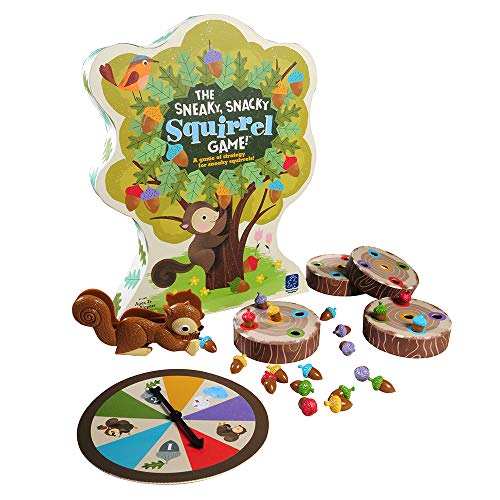
- Ages 3+; two to four players
- Squeezer builds dexterity
- Color-matching acorn play
Best For: Preschoolers practicing turn-taking and fine motor skills
Best for Moving Together
Peaceable Kingdom Monkey Around
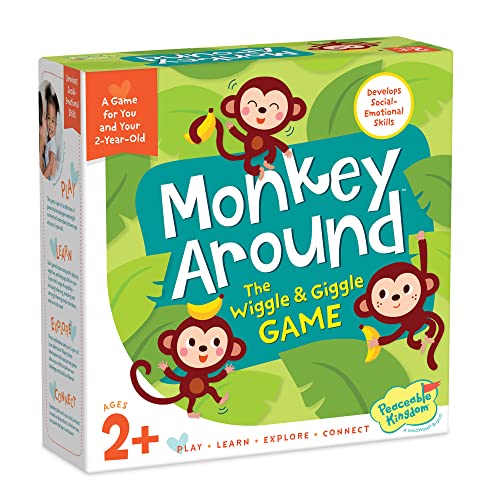
- Designed for ages 2+
- Active parent-child prompts
- Supports coordination and vocabulary
Best For: Caregivers seeking an active first game for a two-year-old
Best for At-Home Exploration

- Ages 2+; one to four players
- 20 double-sided activity cards
- Uses familiar household objects
Best For: Screen-free indoor search-and-find play
Best for Sorting and Counting
Counting Animals Color Sorting Game

- Recommended from 36 months
- 36 animals and six bowls
- Two tweezers for pickup practice
Best For: Hands-on color sorting and early counting
Best for Creative Building

- 36 wooden shape pieces
- 60 guided pattern cards
- Storage box included
Best For: Ages 3+ who like shape-building challenges
Best for First Spelling Practice
BEESTECH Alphabet ABC Learning Toy
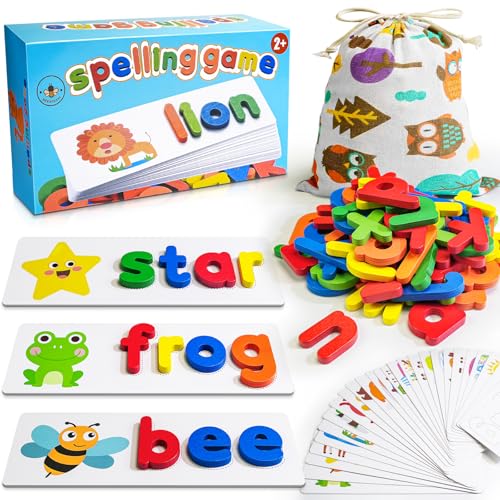
- 52 wooden letters
- 28 word flash cards
- Storage bag included
Best For: Preschoolers ages 3+ practicing letters and words
Best for Group Memory Play

- 27 farm-themed matching pairs
- Difficulty adjusts by pair count
- Plays with one to four players
Best For: Ages 3+ practicing matching and visual memory
Color-Matching Pick

- Practices 12 colors
- More than 48 pictured matching pieces
- Compact cardboard format
Best For: Ages 3+ learning colors and picture words
Letter-Matching Pick
Chuckle & Roar Alphabet Memory Game

- Matches uppercase and lowercase letters
- Sturdy cardboard tiles
- Portable for trips or group play
Best For: Ages 3+ practicing letter recognition
Early-Math Pick

- 36 animals and six sorting bowls
- Includes two tweezers
- Storage bucket included
Best For: Ages 3+ practicing counting and sorting
Best for Fine Motor Practice – The Sneaky, Snacky Squirrel Game
Among educational games for toddlers, The Sneaky, Snacky Squirrel Game is a good fit for preschoolers ready to practice color matching while using a squirrel-shaped squeezer to collect acorns. The spinner adds simple surprises to each turn.
Best For: Ages 3 and up who enjoy turn-taking games with hands-on fine motor practice.
Pros:
- Squeezer play builds hand-eye coordination and dexterity.
- Five acorn colors support matching practice.
- Tree-shaped game board doubles as the box for setup and cleanup.
Cons:
- Recommended for ages 3 and up, so it is not the pick for younger toddlers.
- Windstorms and acorn-snatching can set players back, which may frustrate children still learning to lose gracefully.
Choose this one when you want a structured game for two to four players rather than open-ended sorting play.
Best for Moving Together – Peaceable Kingdom Monkey Around
Peaceable Kingdom Monkey Around First Game for Toddlers Interactive play with Parent Ages 2+
Check Price On AmazonIf you want educational games for toddlers that get everyone off the floor and moving, Monkey Around offers simple activity-card prompts for a parent and child. Actions include hugs, high fives, balancing, hopping, and marching.
Best For: Ages 2 and up who like active, interactive play with a caregiver.
Pros:
- Movement prompts support gross motor skills and coordination.
- Activities encourage listening, body-part recognition, and vocabulary.
- Includes a beanbag banana for additional play activities.
Cons:
- Designed around parent-child play rather than independent play.
- Some actions may need caregiver help while a child learns them.
This is a practical first game when shared movement matters more than sitting at a board or keeping score.
Best for At-Home Exploration – Scavenger Hunt Cards at Home
Scavenger Hunt Cards at Home turn familiar rooms into a search-and-find activity, making them a flexible choice among educational games for toddlers. Each illustrated card asks children to find an everyday object and do something playful with it.
Best For: Ages 2 and up who need a screen-free indoor activity using items already at home.
Pros:
- Open-ended prompts encourage observation, conversation, and movement.
- Includes 20 double-sided, wipe-clean cards on a reclosable ring.
- Works for one to four players.
Cons:
- Activities depend on having the requested household objects nearby.
- Limited to indoor, at-home prompts rather than a traditional board-game format.
The compact ring makes the cards easy to store; pick this set when you prefer flexible play over fixed turns and rules.
Best for Sorting and Counting – Counting Animals Color Sorting Game
For educational games for toddlers who are at least 3, this counting-animal set offers hands-on sorting rather than a board or spinner. Children can group the colored animals into bowls, count them, and use tweezers for pickup practice.
Best For: Ages 3 and up practicing color recognition, early counting, and fine motor control.
Pros:
- Includes 36 animals, six sorting bowls, and two large tweezers.
- Supports sorting, counting, and color identification.
- Washable rubber animals can be used for repeated hands-on play.
Cons:
- Recommended from 36 months, not for younger toddlers.
- Primarily a sorting activity, with no turn-based rules described in the supplied details.
This set makes the most sense when you want reusable math and motor-skill materials for one child, at home or in a classroom.
Best for Creative Building – LiKee Wooden Shape Puzzle
LiKee Wooden Shape Puzzle, 36 Blocks & 60 Cards, Montessori Toy for Kids 3+ | open-end
Check Price On AmazonAmong educational games for toddlers ages 3 and up, the LiKee Wooden Shape Puzzle offers a hands-on way to explore colors, shapes, and spatial arrangements. Children can copy designs from 60 pattern cards or use the 36 wooden pieces to make their own.
Best For: Children ages 3 and up who enjoy building patterns and experimenting with shapes.
Pros:
- Includes 60 pattern cards for guided play.
- Open-ended pieces support original designs as well as card-based challenges.
- Storage box keeps the wooden pieces together.
Cons:
- Recommended for ages 3 and up, not younger toddlers.
- Keeping track of 36 separate pieces may take some cleanup.
This is a flexible pick if you want both a structured matching activity and room for creative play; the age recommendation matters if you’re shopping for a younger child.
Best for First Spelling Practice – BEESTECH Alphabet ABC Learning Toy
For families comparing educational games for toddlers ages 3 and up, this BEESTECH set focuses on letters and simple word-building. Children place wooden letters over the words on 28 flash cards, turning spelling practice into a tactile matching activity.
Best For: Preschoolers ages 3 and up beginning to recognize letters and form words.
Pros:
- Includes 52 wooden letters and 28 flash cards.
- Letter-placement activity gives children hands-on spelling practice.
- Comes with a storage bag for the cards and letters.
Cons:
- Recommended for ages 3 and up, so it is not intended for younger toddlers.
- The activity centers on matching letters to cards rather than free-form building.
Choose this set when alphabet practice is the priority. Its straightforward card-and-letter format is more focused than an open-ended shape toy.
Best for Group Memory Play – School Zone Memory Match Farm
School Zone Memory Match Farm brings a familiar matching format to educational games for toddlers ages 3 and up. Its farm-themed deck has 27 pairs, and adults can use fewer pairs to make a round more manageable for beginners.
Best For: Children ages 3 and up who enjoy farm animals and matching games, playing alone or with others.
Pros:
- Adjustable difficulty: play with some or all 27 pairs.
- Large, rounded-corner cards feature colorful farm illustrations.
- Includes two parent cards with directions, tips, and variations.
- Supports play for one to four players.
Cons:
- Recommended for ages 3 and up, not younger toddlers.
- Using the full deck may be a bigger challenge for a child just learning to match.
This portable card game is a practical choice when you want to work on visual memory and concentration. Start with a small set of pairs, then add more as play becomes easier.
Color-Matching Pick – Montessori Busy Book
For families comparing educational games for toddlers, this compact busy book offers hands-on practice with 12 colors. Children match more than 48 illustrated hook-and-loop pieces, each labeled with a word, while working on color recognition and early vocabulary.
Best For: Preschoolers ages 3 and up who enjoy independent or parent-guided color matching.
Pros:
- Combines color sorting with pictured words for vocabulary practice.
- Grasping and attaching pieces exercises fine motor skills.
- Compact, extra-thick cardboard pages have rounded corners.
Cons:
- Despite the title’s 2–4 age range, the manufacturer’s recommended age starts at 36 months.
- Loose matching pieces need to be kept together between sessions.
This is a focused choice for repeated color practice rather than a game with changing rules; shared play lets adults talk through the pictures and words.
Letter-Matching Pick – Chuckle & Roar Alphabet Memory Game
Among educational games for toddlers nearing preschool age, this alphabet memory game targets uppercase-to-lowercase letter matching. Its sturdy cardboard tiles support screen-free play at home or on trips.
Best For: Children ages 3 and up ready to practice letters through a memory game, alone or with others.
Pros:
- Pairs uppercase and lowercase letters for recognition practice.
- Memory-style play encourages attention and concentration.
- Portable tiles work for solo play, family games, or classroom activities.
Cons:
- Recommended for ages 3 and up, not younger toddlers.
- Its alphabet focus offers less variety if you’re seeking number or color activities.
Choose this one when letter recognition is the priority; the matching format adds a memory challenge beyond simply identifying ABCs.
Early-Math Pick – Counting Animals Sorting Set
For shoppers looking at educational games for toddlers ages 3 and up, this hands-on set brings counting and sorting together. It includes 36 colorful animals, six sorting bowls, and two tweezers for matching by color or grouping by animal type.
Best For: Preschoolers ages 3 and up practicing counting, color sorting, and tweezer-handling skills.
Pros:
- 36 animals and six bowls allow multiple sorting and counting activities.
- Two tweezers add a fine-motor challenge.
- Washable plastic pieces come with a storage bucket.
Cons:
- Manufacturer recommends it for ages 3 and up, not younger toddlers.
- Individual animals and accessories require cleanup and storage after play.
This set is more flexible than a single-purpose matching activity: adults can adjust the task from simple color sorting to counting and animal grouping.
How We Picked the Best Educational Games for Toddlers
We looked for a useful range of play styles and early skills rather than ten versions of the same activity. The selection includes cooperative movement, indoor searching, color and shape sorting, counting, memory, and alphabet play. We also considered the stated age ranges, how much adult involvement a game may need, and whether its pieces and rules seem practical for everyday play. A listed age is a starting point, not a guarantee that every child at that age will enjoy the game.
Quick Comparison: Find the Right Type of Play
- Play together: Monkey Around offers parent-child interaction for ages 2+, while The Sneaky, Snacky Squirrel Game introduces turns and color matching for ages 3+.
- Get moving: Scavenger Hunt Cards at Home turn familiar household objects into an indoor search activity.
- Sort and build: The animal sorting sets, Montessori Busy Book, and LiKee Wooden Shape Puzzle offer hands-on color, counting, or shape practice.
- Practice recall: School Zone Memory Match Farm and Chuckle & Roar Alphabet Matching Memory Game focus on finding and remembering pairs.
- Explore letters: BEESTECH Alphabet ABC toys and the alphabet matching game suit children showing interest in letter recognition.
Key Buying Factors for Educational Games for Toddlers
Match the Activity to Your Child
Start with what your toddler likes doing. A child who wants to move may engage more readily with a hunt or action game than a seated card game. Children who enjoy filling, arranging, and repeating patterns may prefer sorting bowls, blocks, or a busy book. Pick one skill to emphasize without expecting the game to teach everything at once.
Check Age Guidance and Small Pieces
Several picks are labeled 2+ or 3+, and those differences matter. Check each product’s current age recommendation, warnings, and piece sizes before buying, especially for children who still mouth objects. Sorting pieces, cards, and blocks also need a storage plan if you want the set to stay playable.
Consider Setup and Adult Time
A simple activity your toddler can revisit is often more useful than a complicated game you rarely set up. Cooperative games can be rewarding when you have time to join in; matching cards and sorting activities may be easier to adapt for a short play session. For younger toddlers, start with fewer cards or pieces and add complexity as they’re ready.
Who Should Buy Which Educational Games for Toddlers?
For a two-year-old who enjoys playing with a caregiver, start with Monkey Around or the at-home scavenger hunt. For a child practicing colors and hand coordination, consider The Sneaky, Snacky Squirrel Game or a color-sorting set, subject to its age and safety guidance. Choose the LiKee puzzle or an animal counting set for a preschooler who likes arranging and counting objects. If your child asks about letters, look at the BEESTECH ABC toys or Chuckle & Roar’s alphabet matching game. For a family that already enjoys cards, School Zone’s farm-themed memory game is a familiar format you can simplify by using fewer pairs.