The best voice recorders for interviews make it easier to capture clear conversations, review important details, and keep reliable audio records without relying on a phone.
This roundup compares 10 options with different storage capacities, recording controls, playback features, USB connections, and AI-powered transcription tools.
Best 10 Voice Recorders for Interviews Picks for 2026
Best Overall
EVISTR L357 64GB Voice Recorder

- Clear 1536kbps stereo recording with noise reduction
- 64GB storage and up to 32 hours of recording
- Voice activation plus flexible playback controls
Best For: Interviewers who want a capable standalone recorder with extensive storage
Best AI Features
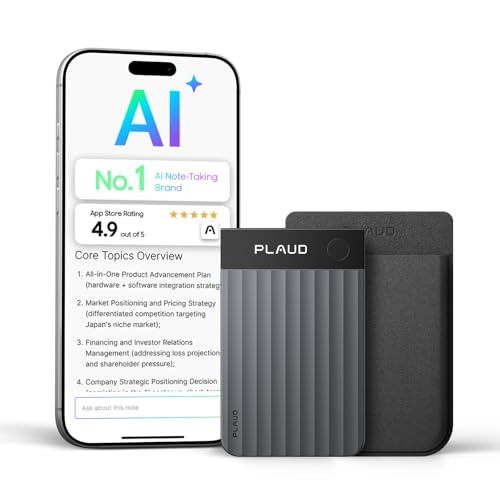
- Transcribes, summarizes, and lets you chat with recordings
- Directional audio with multiple microphones
- Slim design with up to 30 hours in Enhance Mode
Best For: Professionals who want AI-assisted interview notes and follow-up
Best Value Kit

- 72GB storage and up to 35 hours of recording
- One-touch start with voice-activated recording
- Includes headphones, cables, and replacement refills
Best For: Users wanting a high-capacity recorder with accessories included
Best for Long Storage

- 160GB total storage with an included 128GB card
- Up to 56 hours of battery life
- LCD, built-in speaker, A/B repeat, and password protection
Best For: Frequent recorders who need extensive storage and long battery life
Best Simple-Operation Pick

- One-button recording and playback
- Noise reduction with voice activation
- Up to 30 hours of recording
Best For: Simple interview, lecture, and meeting recording
Best Long-Battery Pick
Tonfarb 136GB Digital Voice Recorder

- Up to 68 hours of continuous recording
- 8GB storage plus 128GB TF card
- PCM audio and dual noise-reduction microphones
Best For: Extended interviews and high-volume recording
Best Playback-Control Pick
HoTiyan 16GB Interview Recorder

- Stereo recording with noise reduction
- A-B repeat and variable playback speed
- Up to 20 hours of continuous recording
Best For: Interview review and organized playback
Best High-Capacity Pick

- 9,296-hour storage capacity
- PCM and MP3 recording options
- Voice activation and password protection
Best For: Interviewers needing extensive storage and flexible file management
Best Hands-Free Pick
Qunifyed 136GB Magnetic Recorder

- 18,800-hour file storage
- Double-sided magnetic attachment
- AI noise filtering and USB-C transfer
Best For: Hands-free interviews, meetings, and mobile work
Best Lightweight Pick

- One-ounce portable design
- Up to 48 hours of recording
- Voice activation and AI noise cancellation
Best For: Portable interviews, lectures, and everyday recording
Best Overall – EVISTR L357 64GB Voice Recorder
For shoppers comparing voice recorders for interviews, the EVISTR L357 offers a strong mix of recording quality, storage, and simple controls. Its 360-degree microphone, adjustable gain, and PCM noise reduction are designed to capture speech clearly, while voice activation can reduce silent sections during longer conversations.
Best For: Interviewers, students, writers, and professionals who want high storage capacity, straightforward operation, and playback features.
Pros:
- 1536kbps stereo recording with adjustable seven-level gain and PCM noise reduction.
- 64GB storage, supporting up to 4,660 hours at lower bitrate settings.
- One-touch recording, voice activation, A-B repeat, variable-speed playback, and scheduled recording.
- Up to 32 hours of continuous recording and easy USB-C file transfer to Windows or Mac.
Cons:
- The many recording and playback settings may take time to learn.
- Voice activation can omit quiet portions if sensitivity is not adjusted carefully.
Choose the EVISTR if you want a traditional standalone recorder with generous capacity and flexible controls. It is especially practical when you need to record interviews without relying on a phone or subscription-based transcription service.
Best AI Features – Plaud Note Pro AI Recorder
The Plaud Note Pro takes a more connected approach to voice recorders for interviews by pairing recording with transcription, summaries, and AI-assisted follow-up. Its directional audio system, multiple microphones, and multimodal notes can help organize an interview beyond the original audio file.
Best For: Business professionals, researchers, and teams who want recording, transcription, summaries, and searchable AI insights in one workflow.
Pros:
- Four MEMS microphones and a VPU microphone system designed for clear speech capture.
- AI tools can answer questions about recordings, extract key points, and draft emails.
- Supports typed notes, image capture, and one-button highlighting during recording.
- Ultra-slim 1.06-ounce design with a display, cross-device sync, and up to 30 hours in Enhance Mode.
Cons:
- Full transcription capacity depends on the included or upgraded Plaud plan.
- No headphone jack is listed, and the workflow relies on the Plaud app or web and desktop platforms.
- Connected AI features may be more than needed for users who only want basic audio files.
The Plaud Note Pro is the most suitable option here for an interview workflow centered on transcription and follow-up. Consider it when organizing insights matters as much as capturing the conversation, and review privacy requirements before recording others.
Best Value Kit – Yegolito 72GB Voice Recorder
For buyers seeking practical voice recorders for interviews, the Yegolito combines a large 72GB capacity with one-touch operation and useful accessories. Its omnidirectional microphone and DSP noise reduction are suited to everyday interviews, meetings, classes, and other situations where voices come from different directions.
Best For: Budget-conscious users who want ample storage, voice activation, headphone playback, and a ready-to-use accessory kit.
Pros:
- 72GB storage can hold up to 7,600 hours at low bitrate settings.
- One-touch recording and voice activation help simplify long interview sessions.
- 360-degree microphone and DSP noise reduction support focused voice capture.
- Includes headphones, USB-C cables, replacement refills, and a one-year warranty.
Cons:
- Its listed recording time is up to 35 hours, so extended use still requires charging.
- The supplied notes specify WAV format rather than a wider choice of recording formats.
The Yegolito is a sensible pick if you want a simple recorder with unusually high storage and useful extras. It offers the core features needed for interviews without adding the AI subscription workflow of a connected note-taking device.
Best for Long Storage – Holyask 160GB Voice Recorder
The Holyask stands out among voice recorders for interviews with 160GB of total storage from 32GB of internal memory and an included 128GB card. Its large LCD, built-in speaker, password protection, and WAV recording make it a practical choice for users who want extended storage and easy on-device review.
Best For: Journalists, students, and professionals who record frequently and want substantial storage with straightforward playback and file transfer.
Pros:
- 160GB total storage helps accommodate extensive interview and meeting archives.
- WAV recording is designed for clear audio capture in interviews, lectures, and meetings.
- Large LCD shows recording information, while the built-in speaker supports quick playback.
- A/B repeat, password protection, USB transfer, and up to 56 hours of battery life add convenience.
Cons:
- The 160GB total includes an internal drive and included microSD card rather than internal storage alone.
- The supplied details do not specify noise reduction or voice-activation performance.
- At 4.13 inches long and 3.31 ounces, it may be less discreet than ultra-slim recorders.
The Holyask is a good fit when storage and battery endurance take priority over advanced smart features. Its built-in speaker and password protection are useful for reviewing and safeguarding a growing collection of interview recordings.
Best Simple-Operation Pick – Compact 16GB Voice Recorder
For shoppers seeking voice recorders for interviews, this compact 16GB model emphasizes straightforward controls and clear playback. Its one-button recording, noise-reduction technology, voice activation, and built-in speaker make it practical for interviews, lectures, and meetings.
Best For: Interviewers who want a lightweight recorder with simple controls, voice activation, and up to 30 hours of recording time.
Pros:
- One-button recording and simple playback controls help reduce setup time.
- Noise reduction and a sensitive built-in microphone are designed to capture clearer speech.
- Voice-activated recording can conserve recording time and power.
- 16GB storage, USB transfer, and a 3.5mm headphone jack add everyday convenience.
Cons:
- Its 30-hour recording battery life is shorter than some larger-capacity alternatives.
- The listed microphone operation is mono rather than stereo.
This is a sensible choice when ease of use and portability matter more than maximum storage or the longest battery runtime. The A-B repeat function is also helpful for reviewing important interview passages.
Best Long-Battery Pick – Tonfarb 136GB Digital Voice Recorder
Among voice recorders for interviews, the Tonfarb stands out for its substantial storage and long claimed runtime. It combines PCM recording, dual noise-reduction microphones, one-click recording, voice activation, and USB-C file transfers in a portable metal-cased design.
Best For: Journalists, students, and interviewers handling extended sessions or frequent back-to-back recordings.
Pros:
- Up to 68 hours of continuous recording is suited to long interviews and multi-session use.
- Built-in 8GB storage plus a complimentary 128GB TF card provides substantial capacity.
- One-click recording can start even when the device is powered off.
- PCM recording, noise reduction, voice activation, A-B repeat, and password protection support flexible use.
Cons:
- At about 97–100 grams, it is heavier than the smallest recorders in this group.
- The supplied details describe the included storage as 8GB plus a TF card, so total usable capacity may depend on the card.
This model is the strongest fit for buyers who prioritize endurance and storage over the lightest possible carry. Its large LCD screen and USB-C connection also make routine recording management more convenient.
Best Playback-Control Pick – HoTiyan 16GB Interview Recorder
This HoTiyan model is a practical option among voice recorders for interviews when reviewing and organizing files is important. It offers high-definition stereo recording, adjustable voice activation, MP3/WAV support, variable playback speed, A-B repeat, and password protection.
Best For: Interviewers and students who need detailed playback controls and flexible recording-quality settings in a small recorder.
Pros:
- Stereo recording and a more sensitive microphone are designed for high-quality voice capture.
- Voice activation can reduce silent sections and conserve storage space.
- A-B repeat and variable playback speed make it easier to review key statements.
- 16GB capacity supports multiple recording-quality options, with up to 20 hours of continuous recording per charge.
Cons:
- The 20-hour recording battery life is shorter than the Tonfarb model’s claimed runtime.
- File transfer uses the supplied Micro USB cable rather than USB-C.
- The recorder supports up to 199 recording files, according to the supplied details.
Choose this recorder if interview review is central to your workflow. Its playback tools, timestamps, password protection, and MP3/WAV support make it more versatile for revisiting and managing captured conversations.
Best High-Capacity Pick – EVIDA 128GB Voice Recorder
The EVIDA 128GB recorder is a practical choice among voice recorders for interviews when you need substantial storage, adjustable recording formats, and straightforward file organization. Its noise-canceling microphone records in PCM at up to 1536kbps, while voice activation can help reduce silent sections.
Best For: Interviewers, students, teachers, and professionals who want high storage capacity, playback, password protection, and flexible WAV or MP3 recording.
Pros:
- 128GB capacity stores up to 9,296 hours of recordings.
- Supports WAV 1536kbps and MP3 recording options.
- Voice activation, password protection, bookmarks, and four-folder file management.
- Up to 54 hours of continuous recording and computer file transfer.
Cons:
- The built-in microphone is mono.
- It does not include a headphone jack.
- Its 1.5-inch screen may feel small for managing files.
Choose this model if storage, recording-format flexibility, and organizational features matter more than a headphone connection or a larger display.
Best Hands-Free Pick – Qunifyed 136GB Magnetic Recorder
The Qunifyed magnetic recorder stands out among voice recorders for interviews for its hands-free double-sided magnetic design and one-touch operation. AI noise filtering and DSP processing are intended to reduce background interference, while USB-C and OTG support simplify transfers across several devices.
Best For: Professionals, journalists, and students who want a compact recorder that can attach to metal surfaces during meetings, interviews, or classroom sessions.
Pros:
- 136GB of storage supports up to 18,800 hours of recording files.
- Double-sided magnets enable hands-free placement on metal surfaces.
- AI smart noise filtering helps reduce background interference.
- USB-C and OTG transfer support works with iPhone, Android, Mac, and Windows devices.
Cons:
- The supplied notes do not specify a recording bitrate or audio format.
- Magnetic attachment is useful only with compatible metal surfaces.
This is a strong fit when quick operation, portable storage, and flexible hands-free placement are priorities for your interview setup.
Best Lightweight Pick – Xelarvex 72GB AI Recorder
The Xelarvex is a lightweight option among voice recorders for interviews, weighing just 1 ounce and offering a clip-friendly design. Its voice activation can limit silent gaps, while AI noise cancellation, automatic file saving, and USB-C connectivity support convenient everyday recording.
Best For: Students, interviewers, and professionals who want a highly portable recorder for lectures, meetings, travel, and short recording sessions.
Pros:
- 72GB storage holds up to 4,800 hours at 192kbps.
- Voice activation helps eliminate silent gaps and conserve storage.
- Up to 48 hours of continuous recording on a full charge.
- Weighs 1 ounce and includes AI noise cancellation and USB-C.
Cons:
- Individual audio files are limited to two-hour sessions before auto-saving to a new file.
- The supplied notes do not specify a WAV or higher-resolution recording mode.
- Its one-year warranty is shorter than some competing options in this roundup.
Consider this model if portability and battery endurance are more important than maximum storage or advanced file-format flexibility.
How We Picked the Best Voice Recorders for Interviews
We compared these recorders by focusing on the features that matter during real interviews: recording reliability, microphone and noise-control capabilities, storage capacity, battery convenience, playback options, and file-transfer methods. We also considered practical differences between traditional digital recorders and newer AI-focused devices that transcribe or summarize conversations.
Capacity claims can vary depending on recording quality and file format, so treat advertised recording hours as a maximum rather than a guarantee. Likewise, voice activation and noise reduction work best when used in suitable environments; neither replaces good microphone placement.
Quick Comparison
| Best For | Look For | Notable Options |
|---|---|---|
| Everyday interviews | Simple controls, playback, and dependable storage | EVISTR, EVIDA, Tonfarb |
| Transcription and summaries | AI processing, app support, and compatible call recording | Plaud Note Pro |
| Long recording sessions | Large storage and rechargeable battery | 160GB, 136GB, and 72GB models |
| Discreet portable use | Small design, one-touch start, or magnetic mounting | 16GB models and the double-sided magnetic recorder |
| Computer file transfer | USB-C or built-in USB connectivity | 72GB USB-C and USB-C AI models |
Key Buying Factors for Voice Recorders for Interviews
Audio Quality and Microphone Performance
Prioritize a recorder that captures speech clearly from the expected distance. Built-in noise reduction can help in busy locations, but directional microphone placement and a quiet position often make a larger difference. For professional work, check whether the recorder supports an external microphone before buying.
Storage and Battery Life
Choose enough storage for your longest planned sessions, including repeat interviews and backup files. High-capacity models are useful for frequent users, while a smaller 16GB device may be sufficient for occasional interviews. Rechargeable batteries simplify travel, but confirm expected runtime and charging requirements.
Controls, Playback, and File Transfer
One-touch recording is valuable when a conversation starts unexpectedly. Playback through a built-in speaker or headphones helps verify files immediately. USB-C is convenient with newer computers and chargers, while password protection may be worthwhile when recordings contain confidential information.
Transcription and Privacy
AI recorders can save time by producing transcripts and summaries, but check whether processing occurs on the device, in an app, or through a cloud service. Review subscription costs, language support, accuracy expectations, and privacy policies before using one for sensitive interviews.
Who Should Buy Which Voice Recorders for Interviews?
Choose a straightforward digital recorder if you want dependable recording, physical controls, playback, and simple computer transfer. These models suit students, journalists, researchers, and interviewers who prefer managing audio files themselves.
Choose an AI recorder if transcription and meeting summaries are more important than traditional recorder controls. It is particularly useful for users who regularly process multiple interviews and accept the requirements of an app or online service.
Choose a high-capacity model for fieldwork, extended research, or frequent recording when clearing files often is inconvenient. For occasional interviews, a smaller recorder with easy one-touch operation may be lighter, simpler, and better value.