The best channel strips for vocals combine several recording essentials—preamplification, compression, EQ, and de-essing—in one streamlined unit. That can make tracking vocals faster while helping singers sound polished before the signal reaches your interface or mixer.
Our 2026 selection includes practical voice-focused processors, tube designs, premium mono channels, and 500 Series options for different studios, budgets, and production styles.
Best 10 Channel Strips for Vocals Picks for 2026
Versatile Vocal Control

- Mic preamp with four independent processors
- Dedicated compression and de-essing
- Rack-mountable with loop-out connectivity
Best For: Home studios, podcasts, and live vocal processing
Tube Recording Flexibility
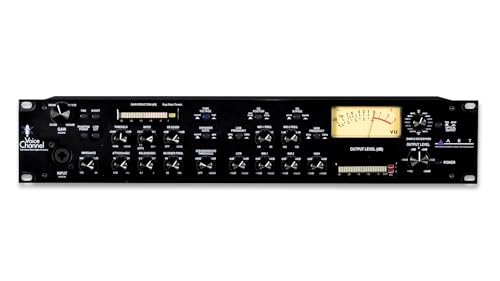
- Tube preamp for warmth and definition
- Compressor, expander, de-esser, and gate
- USB and several digital output formats
Best For: Studios needing tube tone and digital connectivity
Classic Studio Character

- All-tube 610-derived microphone preamp
- 1176LN-style Class A FET compressor
- Split or series signal-path operation
Best For: Vocal tracking with classic analog character
Flexible Tube Shaping

- Class A 12AX7 tube preamp
- VCA compressor with automatic attack and release
- Three-band EQ with variable-Q mid band
Best For: Studios needing detailed vocal tone shaping
Premium Vocal Control

- Discrete preamp with Lundahl I/O transformers
- Tube saturation, compressor, and Transient Designer
- Mono format for focused vocal recording
Best For: Engineers wanting broad vocal tone and dynamics control
Tube Vocal Character

- Vacuum-tube mic, instrument, and line preamp
- Optical compressor and EQ included
- Single-channel design with listed 2-year warranty
Best For: Tube-focused vocal tracking with onboard EQ and compression
Vocal Dynamics and De-Essing

- Mic/instrument preamp with compressor/limiter
- Three-band EQ and dedicated de-esser
- Output metering in a mono channel strip
Best For: Vocal tracking with integrated control of sibilance and dynamics
Tube Vocal Control
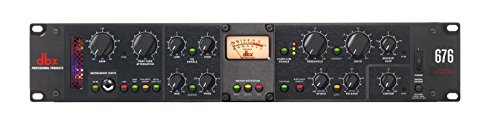
- Class-A tube preamp with variable coloration
- Compressor, limiter, and sweepable 3-band EQ
- XLR, 1/4-inch, instrument input, and VU meter
Best For: Vocal recording with flexible tube tone and onboard processing
SSL Rack Expansion

- Three SSL SiX Channel modules included
- Mic preamp, EQ, and dynamics per module
- Designed for standard 500 Series racks
Best For: Expanding a compatible rack with multiple SSL-style channels
British Vocal Character

- 73 mic preamp with up to 80 dB of gain
- Expanded 73 EQ and diode bridge compressor
- Class-A DI with pad, phase, and impedance controls
Best For: British-style vocal tone with integrated EQ and compression
Versatile Vocal Control – dbx 286s Channel Strip
For buyers comparing channel strips for vocals, the dbx 286s offers a practical combination of microphone preamp and four independent processors. Its compressor, de-esser, enhancer, and expander/gate can help shape a vocal before it reaches the mixer or recording interface.
Best For: Home studios, vocalists, podcasters, and live setups needing straightforward analog vocal processing.
Pros:
- Includes compression, de-essing, enhancement, and expander/gate processing.
- Dedicated de-esser helps reduce harsh high frequencies and sibilance.
- Provides XLR microphone input, TRS line input, loop-out, and rack-mountable 1U construction.
Cons:
- Single-channel design limits use to one source at a time.
- Requires corded power and external equipment for complete recording or monitoring workflows.
The 286s is a sensible choice when you want several essential vocal-processing stages in one affordable rack unit, with visible status LEDs and flexible insert connectivity.
Tube Recording Flexibility – ART VoiceChannel
The ART VoiceChannel is a feature-rich option for channel strips for vocals, combining a tube preamp with compressor, expander, de-esser, and gate sections. It also stands out for offering USB and multiple digital-output formats alongside its XLR connectivity.
Best For: Recording setups that need tube coloration, onboard dynamics control, and flexible digital integration.
Pros:
- ART tube preamp is designed to provide warmth and definition.
- Includes compressor, expander, de-esser, and gate processing.
- Supports USB, ADAT, AES/EBU, S/PDIF, and TOSLink digital connections.
Cons:
- Its broad feature set may be more than a simple vocal recording chain requires.
- At 5.5 kg, it is a relatively substantial piece of rack equipment.
Choose the VoiceChannel if digital connectivity is a priority and you want tube-based input character with several vocal-control tools in a single channel.
Classic Studio Character – Universal Audio 6176
The Universal Audio 6176 targets engineers seeking established analog character from a tube microphone preamp and 1176LN-style Class A FET compressor. For channel strips for vocals, its split-or-join operation lets you use the preamp and compressor separately or as a series chain.
Best For: Engineers who want classic tube preamp tone and FET compression for vocal tracking.
Pros:
- All-tube preamp is derived from the Bill Putnam-designed 610 console.
- Includes a signature 1176LN Class A FET compressor section.
- Split/join switching allows separate or series operation of the two sections.
Cons:
- Its feature set is focused on preamp and compression rather than a broad multi-effect strip.
- Supplied notes specify XLR connectivity but do not list digital outputs or USB.
The 6176 is best viewed as a character-focused recording channel: a strong fit when the preamp and compressor sound and signal path matter more than extensive onboard processing.
Flexible Tube Shaping – PreSonus StudioChannel
The PreSonus StudioChannel combines a high-voltage Class A 12AX7 tube preamp, VCA compressor, and three-band EQ, making it a flexible choice among channel strips for vocals. Its input, filtering, dynamics, and equalization controls support detailed tone shaping in a rack-based studio setup.
Best For: Project and professional studios wanting tube preamp color with integrated compression and parametric EQ.
Pros:
- Provides tube drive, high-pass filtering, pad, phantom power, and polarity reverse.
- VCA compressor includes automatic attack/release and soft/hard-knee options.
- Three-band EQ includes a variable-Q mid band and shelving/peak low and high bands.
Cons:
- Its extensive controls may require more setup time than a simpler channel strip.
- It is a 1U rack unit and may be less convenient for compact or portable rigs.
With preamp, compression, and detailed EQ in one chassis, the StudioChannel suits users who want to shape vocals extensively before recording or mixing.
Premium Vocal Control – SPL Channel One MK3
For vocalists and engineers seeking versatile channel strips for vocals, the SPL Channel One MK3 combines a discrete preamp with Lundahl input/output transformers, tube saturation, compression, and transient shaping. Its mono design provides a focused signal path for individual vocal tracking.
Best For: Vocal recording setups that need preamp character, dynamics control, and transient shaping in one unit.
Pros:
- Discrete preamp with Lundahl I/O transformers
- Includes compressor and Transient Designer processing
- Tube saturation adds an additional tonal option
Cons:
- Its 16.78-pound weight may make installation less convenient
- Large 21.5-inch-wide chassis requires suitable rack or studio space
The Channel One MK3 is a feature-rich choice when you want one vocal channel to cover preamp duties, coloration, dynamics, and transient control.
Tube Vocal Character – Universal Audio LA-610 Mk II
The Universal Audio LA-610 Mk II is a tube-based option among channel strips for vocals, pairing a vacuum-tube microphone, instrument, and line preamp with an EQ and optical compressor. Its single-channel configuration is suited to dedicated vocal tracking.
Best For: Vocalists and producers who prefer tube preamp character with optical compression and onboard EQ.
Pros:
- Vacuum-tube microphone, instrument, and line preamp
- Optical compressor included for vocal dynamics control
- Onboard EQ supports shaping the recorded signal
- Backed by a listed 2-year warranty
Cons:
- Single-channel design is intended for one source at a time
- At 15.7 pounds, it is not especially lightweight
The LA-610 Mk II stands out for a tube-oriented vocal path that combines foundational tone shaping and compression before the signal reaches the recorder or interface.
Vocal Dynamics and De-Essing – SPL Track One MK3
The SPL Track One MK3 is a practical pick among channel strips for vocals, combining a mic/instrument preamp with a compressor/limiter, output metering, three-band EQ, and a de-esser. That feature set targets common vocal-recording tasks in a single mono unit.
Best For: Vocal tracking that benefits from integrated de-essing, EQ, dynamics control, and clear output metering.
Pros:
- Mic/instrument preamp supports vocal recording workflows
- Includes compressor/limiter and dedicated de-esser
- Three-band EQ provides straightforward tonal shaping
- Output metering helps monitor the processed signal
Cons:
- Mono design limits it to one channel
- Its 21.5-inch-wide chassis requires dedicated studio space
- At 10.26 pounds, it is still a substantial rack unit
The Track One MK3 is especially workflow-focused, bringing the core tools for controlling vocal dynamics, sibilance, tone, and output level into one channel strip.
Tube Vocal Control – dbx 676FX
The dbx 676FX is a versatile option for channel strips for vocals, combining a high-voltage Class-A tube preamp with compression, limiting, and a sweepable 3-band parametric EQ. Its flexible controls let you shape clean, warm, or more saturated vocal tones while monitoring levels with the front-panel VU meter.
Best For: Vocalists and recording setups that want tube coloration, onboard dynamics control, and detailed EQ in a rack-mountable unit.
Pros:
- 250-volt Class-A tube design supports clean, warm, or richly dirty tones.
- Built-in compressor/limiter helps produce louder, cleaner output.
- Sweepable mid EQ provides focused frequency shaping for vocals.
- XLR and 1/4-inch connectivity plus a front-panel instrument input add flexibility.
Cons:
- The 2U rack format requires more space than a compact desktop preamp.
- Its broad feature set may be more than needed for simple vocal recording.
Choose the 676FX if you want one rack unit to cover preamp tone, dynamics, and corrective EQ, with enough connectivity for studio or live use.
SSL Rack Expansion – SiX Channel 500 Series
The Solid State Logic SiX Channel bundle brings three compact channel-strip modules to setups looking for channel strips for vocals in a 500 Series format. Each module combines SSL console-style mic preamp, EQ, and dynamics processing, making the bundle useful for expanding a compatible rack.
Best For: Studios that already use a standard 500 Series enclosure and want multiple SSL-style vocal processing channels.
Pros:
- Three SiX Channel modules are included in the bundle.
- Combines mic preamp, EQ, and dynamics processing in each module.
- 500 Series compatibility supports integration with an existing rack system.
- Suitable for tracking, mixing, and live applications.
Cons:
- Requires a compatible 500 Series rack enclosure.
- The three-module bundle may be excessive for a single-channel vocal setup.
This bundle makes the most sense when you need several matching processing channels and already have the rack infrastructure to house them.
British Vocal Character – BRITSTRIP
The BRITSTRIP is a strong choice among channel strips for vocals when you want a distinctly British-style recording path. It combines a 73 mic preamplifier, expanded 73 equalizer, discrete Class-A DI, and diode bridge compressor for tone shaping and dynamics control.
Best For: Vocal tracking that benefits from high preamp gain, British-style EQ, and diode bridge compression in one channel strip.
Pros:
- 73 mic preamplifier provides up to 80 dB of gain.
- Expanded 73 equalizer offers additional tone-shaping control.
- Diode bridge compressor adds onboard dynamics processing.
- Includes a discrete Class-A DI, 20 dB pad, phase reversal, and selectable input impedance.
Cons:
- The product’s British-style feature set may not suit every vocal aesthetic.
- Its larger 23 x 13 x 4-inch product dimensions may require careful placement.
Consider the BRITSTRIP when vocal tone and character are priorities, especially if you also want expanded preamp controls and a built-in compressor for shaping the signal before recording.
How We Picked the Best Channel Strips for Vocals
We focused on signal quality, vocal-friendly processing, connectivity, control layout, and overall value. A strong channel strip should provide a clean, usable preamp along with dynamics and tone-shaping tools that solve common vocal problems such as uneven levels, excessive sibilance, muddiness, and harsh upper mids.
We also considered workflow. Some models are designed for fast, straightforward tracking, while others offer the headroom, transformer color, tube character, or detailed controls expected in a professional recording chain. Rack format, digital outputs, 500 Series compatibility, and ease of recall also influence which studio each model suits best.
Quick Comparison
| Type | Best For | What to Look For |
|---|---|---|
| Voice-focused processor | Home recording and streaming | Simple controls, de-essing, compression, and expansion |
| Tube channel strip | Warmth and harmonic color | Tube gain staging, transformer character, and headroom |
| Premium mono channel | Serious vocal tracking | Low noise, flexible EQ, precise dynamics, and robust metering |
| 500 Series strip | Modular studios | Compatible rack, power requirements, and module depth |
Key Buying Factors for Channel Strips for Vocals
Preamp Character and Gain
Choose a transparent preamp if you want the microphone and singer to remain the focus. Tube, transformer-based, and console-inspired designs can add thickness or saturation, but they may be less forgiving if the source is already dark or aggressive. Check the available gain range, input impedance, phantom power, and noise performance, especially with low-output dynamic or ribbon microphones.
Compression, De-Essing, and Gating
Vocal compression should be easy to control and capable of smoothing peaks without making the performance lifeless. A dedicated de-esser is valuable for bright condenser microphones and sibilant singers. Expanders and gates can reduce headphone bleed or room noise, but they require careful threshold and release settings to avoid cutting off word endings.
EQ, Routing, and Connections
Parametric or semi-parametric EQ provides more precise problem-solving than fixed tone controls. Look for useful high-pass filtering, flexible midrange control, insert points, line outputs, and metering. Digital outputs can simplify integration with compatible interfaces, while balanced XLR and TRS connections are preferable for longer studio runs.
Who Should Buy Which Channel Strips for Vocals?
Home recordists, podcasters, and vocalists who want an efficient all-in-one front end should prioritize a compact, voice-oriented model with straightforward compression and de-essing. Singers seeking audible warmth may prefer a tube channel strip, particularly when pairing it with a clean or bright microphone. Professional tracking rooms should favor premium designs with quieter operation, refined metering, broad EQ control, and dependable headroom.
If you already own a compatible 500 Series rack, a modular strip can deliver an excellent space-saving solution. For a versatile long-term purchase, select the model whose preamp character matches your microphone collection and whose dynamics section gives you enough control to handle both intimate vocals and louder performances.