The best channel strips for recording combine several front-end tools—typically a microphone preamp, EQ, compression, and sometimes gating or de-essing—into one efficient signal path. That can simplify tracking while helping you shape a more polished sound before it reaches your interface.
This roundup covers compact voice-focused processors, 500 Series modules, dual-channel preamps, and high-end tube designs. Use the guide below to match features, connectivity, tone, and workflow to your studio and recording style.
Best 10 Channel Strips for Recording Picks for 2026
Versatile Vocal Control

- Mic and instrument preamp
- Compression, de-essing, enhancement, and gating
- Rackmount design with loop-out
Best For: Home studios and vocal-focused recording setups
Tube-Driven Connectivity
- Tube preamp for warmth and definition
- Integrated compressor, expander, de-esser, and gate
- USB and multiple digital output formats
Best For: Studios needing tube character and flexible digital I/O
Classic EQ Foundation

- Up to 80 dB of gain
- Transformer-balanced Class A circuitry
- Three-band EQ with mic, line, and DI inputs
Best For: Source recording that needs high-gain preamp tone and EQ
Compact 500-Series Control
- Mic preamp, EQ, and single-knob compressor
- +48V phantom power and 75 Hz high-pass filter
- Front-panel TRS input with Hi-Z switch
Best For: 500 Series racks needing compact recording control
Tube Tone Control
- Tube mic preamp, compressor, and EQ in one unit
- Selectable optical/tube compression modes
- Selectable VU metering for three signal points
Best For: Tube-based vocal and voice recording setups
Project Studio Workhorse

- Class A tube preamp with VCA compression
- Three-band EQ with variable-Q mid band
- Mic, instrument, and line inputs
Best For: Versatile project-studio recording
Classic Signal Shaping
Rupert Neve Designs Shelford Channel
- Transformer-gain microphone preamp
- Inductor EQ and diode-bridge compressor
- Sidechain stereo-link sends and returns
Best For: Detailed mono-source studio processing
Tube Control

- Tube preamp for mic, instrument, and line sources
- Integrated EQ and optical compressor
- Single-channel design with a 2-year warranty
Best For: Tube-focused vocal and instrument recording
Classic Two-Channel Front End

- Two-channel mic, line, and DI preamp/EQ
- Up to 80dB of gain
- Adds inserts, filters, polarity reverse, and headphone amp
Best For: Flexible two-channel studio recording
High-Voltage Versatility
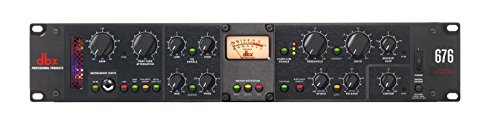
- 250-volt Class-A tube preamp
- Compressor/limiter plus 3-band parametric EQ
- Instrument input, VU meter, and rack-mountable 2U design
Best For: Versatile tube-based recording and live signal chains
Versatile Vocal Control – dbx 286s Channel Strip
The dbx 286s is a practical choice for recording setups that need microphone or instrument input plus several built-in processing stages. It combines a preamp with compression, de-essing, enhancement, and expander/gate controls, making it one of the more feature-rich channel strips for recording in a single 1U rack unit.
Best For: Home studios, vocal recording, podcasting, and users who want multiple voice-processing tools without adding separate processors.
Pros:
- Includes compression, de-esser, enhancer, and expander/gate sections.
- Accepts microphone and balanced or unbalanced 1/4-inch line-level sources.
- Loop-out and insert connections support additional external processing.
- Status LEDs provide at-a-glance level and processor monitoring.
Cons:
- It is a single-channel processor.
- Its 1U rack format may be less convenient for compact desktop-only setups.
The dbx 286s stands out when flexibility and straightforward signal shaping matter more than a minimalist signal path. Its broad set of processing tools makes it especially useful for getting vocals under control before they reach the mixer or interface.
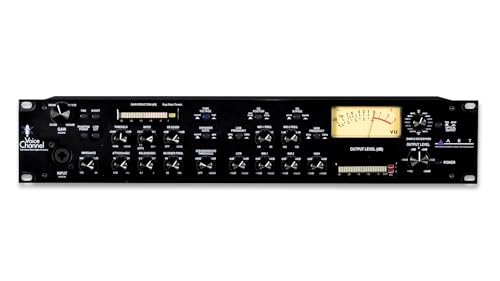
Tube-Driven Connectivity – ART VoiceChannel
The ART VoiceChannel combines a tube preamp with dynamics processing and extensive digital connectivity. For buyers comparing channel strips for recording, it offers a flexible input solution with compression, expansion, de-essing, gating, and multiple ways to connect to an interface or computer.
Best For: Recording engineers who want tube-style preamp character, integrated dynamics control, and direct digital connectivity.
Pros:
- Uses an ART tube preamp design for warmth and definition.
- Provides compressor, expander, de-esser, and gate processing.
- Supports ADAT, AES/EBU, S/PDIF, TOSLink, and USB connections.
- Supports sample rates up to 192 kHz.
Cons:
- It is a single-channel unit.
- The extensive connectivity may be unnecessary for simpler recording chains.
The VoiceChannel is a strong fit when a channel strip needs to do more than provide analog preamplification. Its combination of tube-based input design, dynamics tools, and digital outputs gives it broad utility across computer-based recording systems.
Classic EQ Foundation – Neve 1073SPX Preamp and EQ
The Neve 1073SPX focuses on a transformer-balanced Class A mic, line, and DI preamp with integrated three-band EQ. It is a streamlined option among channel strips for recording, suited to engineers who prioritize substantial gain and tone-shaping controls over a long list of dynamics processors.
Best For: Recording microphones, guitars, bass, keyboards, and other sources that benefit from high-gain preamplification and three-band EQ.
Pros:
- Offers up to 80 dB of gain.
- Uses transformer-balanced Class A circuitry.
- Combines mic, line, and DI input capability with three-band EQ.
- Includes polarity reverse for signal-routing flexibility.
Cons:
- The supplied notes do not list built-in compression, gating, or de-essing.
- It provides one preamp/EQ channel rather than a multi-channel solution.
The 1073SPX is best viewed as a focused preamp-and-EQ channel strip. Choose it when the recording chain calls for high gain, Class A transformer-balanced circuitry, and straightforward tonal shaping.
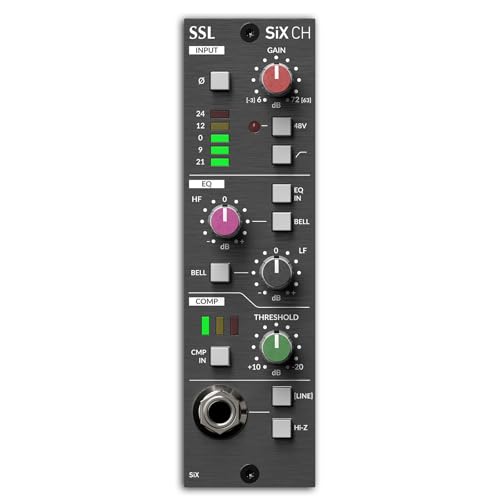
Compact 500-Series Control – SSL SiX Channel Strip
Solid State Logic SiX Channel Strip 500 Series | Mic-Pre, EQ, and Single Knob Compressor
Check Price On AmazonThe SSL SiX Channel Strip brings mic preamp, EQ, and a single-knob compressor into a 500 Series module. For channel strips for recording, it is a compact option with phantom power, high-pass filtering, selectable EQ response, and a front-panel high-impedance input for suitable line or instrument sources.
Best For: 500 Series owners who want a compact recording channel with essential input, EQ, and compression controls.
Pros:
- Combines a mic preamp, EQ, and single-knob compressor.
- Provides switchable +48V phantom power.
- Includes a 75 Hz, 12 dB/octave high-pass filter.
- Front-panel TRS input includes a 1 MΩ Hi-Z switch.
Cons:
- Requires a compatible 500 Series chassis.
- Its compressor uses a single-knob control rather than a full multi-parameter layout.
- It is a single-channel module.
The SSL SiX is a sensible choice for a modular studio that values a compact, focused signal path. Its controls cover the most useful recording basics while fitting into an existing 500 Series setup.
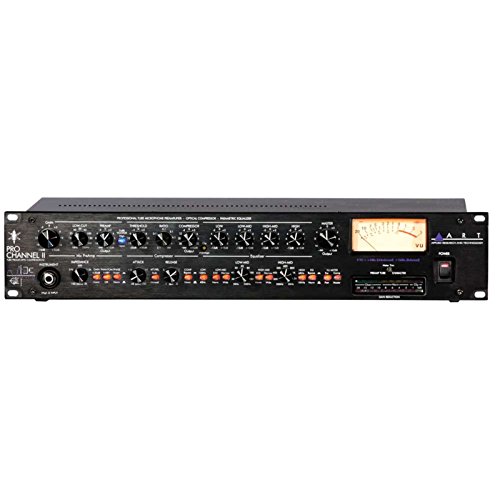
Tube Tone Control – ART Pro Channel II
ART Pro Channel II Microphone Preamp/Compressor/EQ Professional Tube Based Selectable VU Metering
Check Price On AmazonThe ART Pro Channel II is a flexible option for anyone comparing channel strips for recording and wanting three dedicated processing stages in one rack unit. Its tube preamp, selectable optical/tube compressor, and tube EQ are designed for warm, smooth shaping of microphone or line signals, while selectable VU metering helps monitor different points in the chain.
Best For: Vocal recording, voice work, streaming, and project studios that want tube-based preamp, compression, and EQ control in one channel.
Pros:
- Combines tube microphone preamp, compressor, and EQ modules.
- Selectable optical or tube compressor modes provide processing flexibility.
- Selectable VU metering can monitor preamp, compressor, or main output.
- Offers XLR, 1/4-inch TRS, and 1/4-inch TS connectivity.
Cons:
- Provides one channel rather than a multichannel setup.
- Its 13.4-pound, rack-style format may be more than a compact setup needs.
Choose the Pro Channel II when tube character and three-stage signal shaping are priorities. The selectable metering and compressor modes add useful control for recording workflows, though its full-size hardware design suits a dedicated studio better than a highly portable rig.
Project Studio Workhorse – PreSonus StudioChannel
The PreSonus StudioChannel is a practical pick among channel strips for recording when you need preamp, compression, and EQ for microphones, instruments, keyboards, or synths. Its Class A 12AX7 tube preamp, VCA compressor, and three-band EQ provide a broad set of controls in a rugged 1U rack-mountable chassis.
Best For: Project and professional studios recording vocals, acoustic instruments, bass, piano, snare, keyboards, or synths.
Pros:
- Combines a high-voltage Class A tube preamp, VCA compressor, and three-band EQ.
- Includes mic, instrument, and line inputs for varied sources.
- Offers useful preamp features such as phantom power, polarity reverse, pad, and high-pass filter.
- Provides variable-Q mid EQ and automatic compressor attack/release options.
Cons:
- The supplied notes specify a one-year warranty, shorter than some competing options.
- Its 1U rack format is less convenient for mobile recording than a compact interface-based setup.
The StudioChannel stands out for source flexibility and detailed control in a conventional rack format. It is a strong match for studios that want one channel to handle several instruments and vocal applications, especially where mic, line, and instrument inputs are all useful.
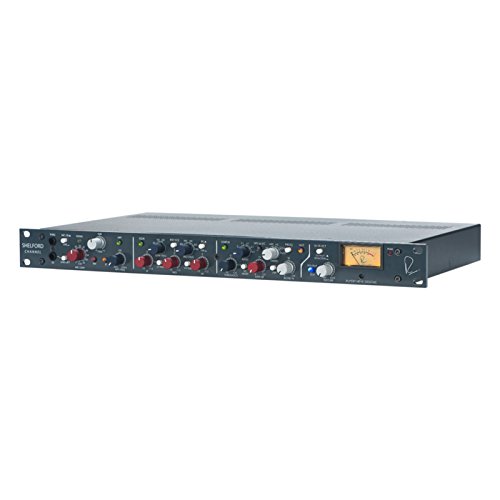
Classic Signal Shaping – Rupert Neve Designs Shelford Channel
Rupert Neve Designs Shelford Channel Microphone Preamp, Inductor EQ & Diode Bridge Compressor
Check Price On AmazonThe Rupert Neve Designs Shelford Channel is a premium-minded choice among channel strips for recording, pairing a transformer-gain microphone preamp with an inductor EQ and diode-bridge compressor. Its mono design and sidechain stereo-link sends and returns make it suited to focused, hands-on processing of individual sources.
Best For: Recording engineers who want transformer-based preamp color, dedicated EQ, and diode-bridge compression for a mono source.
Pros:
- Uses a transformer-gain microphone preamp and transformer output stage.
- Combines inductor EQ with diode-bridge compression.
- Includes sidechain stereo-link sends and returns.
- Supplied as a complete unit with preamp, EQ, compressor, and power supply.
Cons:
- It is a mono channel strip, so stereo sources require additional equipment.
- The supplied notes do not specify a broad set of input types beyond XLR and 1/4-inch TRS connections.
The Shelford Channel is best considered when the character of its transformer-gain preamp and inductor EQ matters more than having multiple channels. Its dedicated compressor and sidechain connectivity add studio-oriented control for carefully shaped mono recordings.
Tube Control – Universal Audio LA-610 Mk II
The Universal Audio LA-610 Mk II is a focused choice among channel strips for recording when you want a tube microphone, instrument, or line preamp paired with EQ and optical compression. Its single-channel design suits a carefully equipped vocal or instrument recording chain.
Best For: Recording engineers seeking tube-based preamp, EQ, and optical compression in one channel.
Pros:
- Combines a vacuum tube preamp, EQ, and optical compressor.
- Supports microphone, instrument, and line-level applications.
- Includes a stated 2-year warranty.
Cons:
- Provides one channel rather than a stereo or two-channel setup.
- At 15.7 pounds, it is a substantial piece of studio hardware.
This channel strip is best suited to producers who value an integrated tube front end and want flexible source compatibility without assembling separate preamp, EQ, and compression units.
Classic Two-Channel Front End – Neve 1073DPX
The Neve 1073DPX is a two-channel microphone, line, and DI preamp/EQ module for recording setups that need two inputs and substantial gain. Its rear-panel inserts, highpass filters, polarity reverse, and headphone amp add practical routing and monitoring options.
Best For: Studios needing two channels of high-gain preamp and EQ processing with flexible connectivity features.
Pros:
- Provides two microphone, line, and DI preamp channels.
- Offers up to 80dB of gain.
- Includes EQ, rear-panel inserts, highpass filters, polarity reverse, and a headphone amp.
Cons:
- At 26.5 pounds, it is relatively heavy.
- The supplied dimensions and assembly notes indicate a sizable piece of equipment.
Choose the 1073DPX when two-channel operation and extensive front-end facilities matter more than a compact footprint. It is a strong fit for recording chains handling multiple sources or stereo duties.
High-Voltage Versatility – dbx 676FX Tube Channel Strip
The dbx 676FX combines a high-voltage Class-A tube preamp with compression, limiting, and a 3-band parametric EQ. For channel strips for recording, it offers broad tone-shaping control, a front-panel instrument input, XLR and 1/4-inch connectivity, and rack-mountable 2U construction.
Best For: Home and professional studios wanting tube coloration, dynamics control, and sweepable-mid EQ in one rack unit.
Pros:
- Uses a 250-volt high-voltage tube design for warm, clear, or dirty tones.
- Combines compressor/limiter processing with a 3-band parametric EQ and sweepable mids.
- Includes front-panel instrument input, XLR and 1/4-inch connections, VU meter, and side-chain insert.
Cons:
- Its 2U rack-mountable format requires suitable rack space.
- The unit weighs 13 pounds, so it is not a lightweight portable option.
The 676FX is a practical all-in-one option when you want to shape tone and control dynamics before the signal reaches your interface. Its connectivity also makes it suitable for both studio and live environments.
How We Picked the Best Channel Strips for Recording
We evaluated these channel strips by looking at the quality and flexibility of their core signal path: microphone preamp gain, EQ control, compression behavior, metering, connectivity, and overall usefulness during tracking. We also considered whether each unit is best suited to vocals, instruments, stereo sources, or broad studio duties.
Build quality and workflow mattered too. A straightforward processor can be more useful than a feature-heavy unit if its controls are easy to set while recording. Tube and transformer-based designs were considered for their coloration, while cleaner solid-state options were assessed for transparency and precision.
Quick Comparison
| Best For | What to Look For |
|---|---|
| Voice and spoken word | Compression, de-essing, gating, and a flexible preamp |
| Classic tone shaping | Transformer coloration, musical EQ, and tube circuitry |
| Fast, controlled tracking | Clear metering, accessible controls, and reliable compression |
| Stereo or multi-mic recording | Two matched channels or a dual-channel design |
| Rack or modular studios | Compatible format, suitable I/O, and efficient integration |
Key Buying Factors for Channel Strips for Recording
Preamp Character and Headroom
Choose a clean preamp when you want the microphone and source to remain natural, or select a tube, transformer, or diode-bridge design when harmonic color is part of the sound. Check available gain and input options for low-output dynamic and ribbon microphones.
Compression and Dynamics Control
Tracking compression should be easy to monitor and forgiving enough to avoid damaging a performance. Optical and tube-style compressors often produce smooth control, while more assertive designs can add punch. A gate or expander is useful for reducing room noise, headphone bleed, and pauses between phrases.
EQ, De-Essing, and Signal Routing
Parametric EQ provides precise problem-solving, while broad shelving or inductor-style EQ can shape tone musically. De-essing is especially valuable for close-miked vocals. Also verify insert points, line inputs, loop-outs, digital outputs, and whether the unit supports the connections in your interface setup.
Format, Metering, and Studio Space
A rackmount unit is convenient for a permanent recording rig, whereas a 500 Series module requires a compatible chassis. VU meters can make gain staging intuitive, but modern LED metering may be easier to read during fast sessions. Leave enough headroom for peaks and compare processed and unprocessed signals at matched volume.
Who Should Buy Which Channel Strips for Recording?
Choose a feature-rich voice channel strip if you record podcasts, streaming audio, vocals, or broadcast-style speech and want compression, de-essing, and noise control in one box. A simpler preamp-and-EQ design is a strong fit for guitar, bass, drums, and sources where hands-on tone shaping matters more than extensive dynamics processing.
Tube channel strips suit engineers who want warmth, density, and noticeable analog character. Solid-state or 500 Series options are better for compact studios, repeatable tracking, and flexible integration. If you regularly record stereo keyboards, drum overheads, or multiple microphones, prioritize a dual-channel model. For premium vocal and instrument tracking, invest in the unit whose preamp character and compressor behavior best complement your microphones and room rather than choosing solely by feature count.