Clear speech can make or break an interview. The right wireless microphone reduces room noise, keeps voices consistent, and gives you more freedom to position the camera or move around your subject.
These 10 options cover lightweight lavalier kits, handheld interview microphones, and more flexible systems for phones, cameras, and computers. Use the guide below to match features, connectivity, and value to your recording setup.
Best 10 Wireless Microphones for Interviews Picks for 2026
Best Overall
DJI Mic Mini with Charging Case

- Two transmitters for interviews
- 400 m range with noise cancellation
- Up to 48 hours with case
Best For: Two-person interviews and extended recording sessions
Best Handheld
COMICA Revo S Interview Microphone
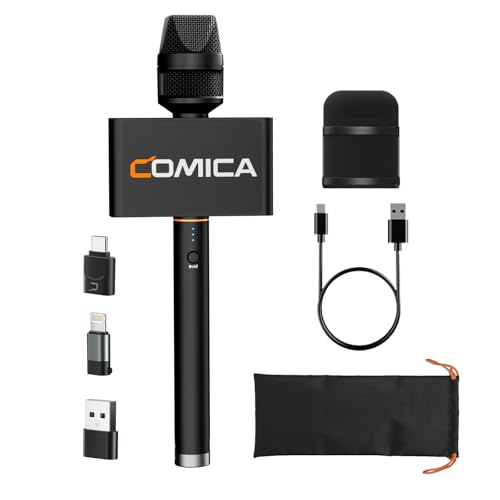
- Cardioid handheld condenser design
- 48 kHz/24-bit recording
- Up to 15 hours of battery life
Best For: Reporter-style interviews and mobile podcasting
Best DJI Value
DJI Mic Mini Two-Transmitter Kit
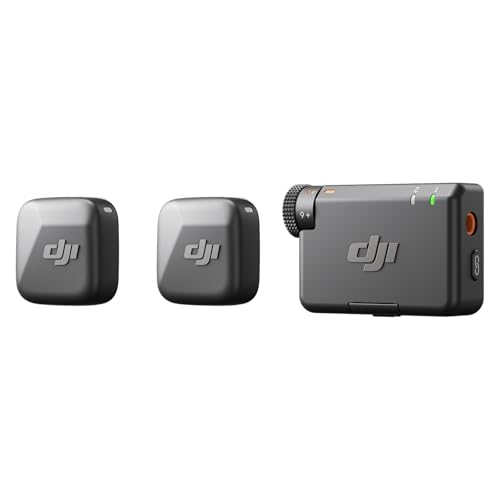
- Two lightweight 10 g transmitters
- 400 m range and automatic limiting
- Up to 10 hours of operation
Best For: Compact two-person interviews and DJI creators
Best Compatibility
NearStream AWM20T Wireless Lapel Mic
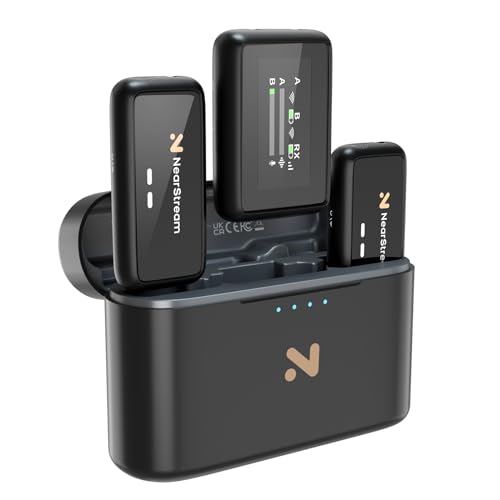
- USB-C and 3.5 mm outputs
- LCD monitoring with gain control
- Up to 20 hours with charging case
Best For: Interviews across phones, cameras, and computers
Best for Easy Setup
COMICA Revo S Wireless Interview Microphone
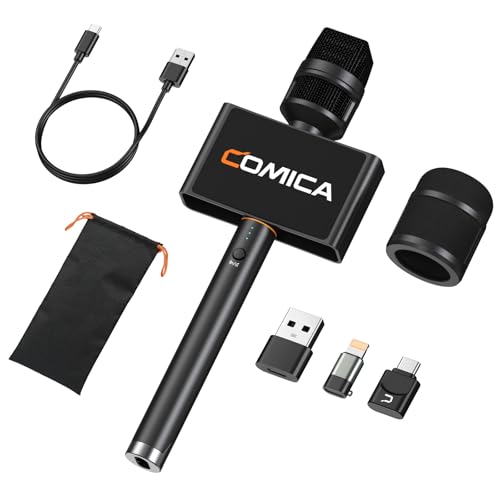
- 48kHz/24-bit audio with one-key noise reduction
- Cardioid pickup and three-level gain control
- Up to 15 hours of battery life; adapters included
Best For: Reporters and creators who prefer a handheld mic
Best Compact Lavalier
Mini Mic Pro Wireless Interview Mic

- Two lightweight clip-on lavalier microphones
- Lightning and USB-C adapters included
- Up to six hours of use with outdoor wind protection
Best For: Mobile creators needing a discreet two-mic kit
Best Multi-Device Value
PQRQP 3-in-1 Wireless Lavalier Mic

- Receiver supports USB-C, Lightning, and 3.5mm
- Two microphones for dual-person interviews
- Up to seven hours of use with active noise reduction
Best For: Creators switching between phones and cameras
Best Plug-and-Play Value
KUKIHO 2-Pack Wireless Lavalier Microphones

- Two microphones for simultaneous interviews
- Automatic pairing without Bluetooth or apps
- Up to 4 hours of use with phone charging support
Best For: Two-person mobile interviews and podcasts
Best for Case-Friendly Phone Setup
MAYBESTA 2-Pack Wireless Mini Mics

- Longer receiver designed for use with phone cases
- Works with Lightning and USB-C devices
- Includes two mics and multiple clips
Best For: Phone interviews and multi-device content creation
Best for Recording Flexibility
CZOCPOS 2-Pack Wireless Lavalier Mics

- Noise reduction, mute, and reverb modes
- Up to 98 feet of stated wireless range
- Up to 5 hours of continuous use
Best For: Two-person interviews with adjustable recording modes
Best Overall – DJI Mic Mini with Charging Case
For shoppers comparing wireless microphones for interviews, the DJI Mic Mini stands out as a discreet two-transmitter kit with strong range, noise cancellation, and extended battery life. Its 10 g transmitters are comfortable for on-camera interviews, while automatic limiting helps reduce clipping when voices get loud.
Best For: Two-person interviews, outdoor reporting, livestreaming, and creators who need long battery life.
Pros:
- Includes two transmitters, one receiver, and a charging case.
- Up to 400 m transmission range and two noise-cancellation levels.
- Up to 48 hours of use with the charging case.
- Works with cameras, smartphones, and supported DJI OsmoAudio devices.
Cons:
- The feature set may be more than needed for simple single-person recordings.
- DJI ecosystem direct connection is limited to supported DJI devices.
The DJI Mic Mini is a well-rounded choice when interview flexibility, discreet placement, and dependable recording time matter more than keeping the kit minimal.
Best Handheld – COMICA Revo S Interview Microphone
The COMICA Revo S takes a traditional reporter-style approach to wireless microphones for interviews. Its handheld design, cardioid pattern, 48 kHz/24-bit recording, and one-key noise reduction make it a practical option for direct-to-camera interviews, podcasts, and mobile video.
Best For: Report-style interviews, podcasts, smartphone video, and creators who prefer a handheld microphone.
Pros:
- 14 mm condenser capsule with a cardioid pickup pattern.
- Supports 48 kHz/24-bit recording and one-key CalMix noise reduction.
- Three gain levels allow quick sensitivity adjustments.
- Built-in battery provides up to 15 hours of use.
Cons:
- The single-channel handheld design is less suited to two-person interviews.
- Lightning devices may require a separate OTG-compatible USB-C-to-Lightning adapter.
Choose the Revo S if you want the familiar handling of a news microphone with plug-and-play digital output for compatible phones, tablets, laptops, and computers.
Best DJI Value – DJI Mic Mini Two-Transmitter Kit
If you want wireless microphones for interviews without the added charging case, this DJI Mic Mini kit provides two lightweight transmitters and a receiver in a streamlined package. It offers a 400 m maximum range, noise cancellation, automatic limiting, and up to 10 hours of operating time for the transmitter and receiver.
Best For: Two-person interviews, mobile creators, and DJI users who want a compact kit.
Pros:
- Two 10 g transmitters are discreet and comfortable to wear.
- 400 m maximum transmission range supports outdoor recording.
- Noise cancellation and automatic limiting help maintain usable vocals.
- Transmitter can connect directly to supported DJI OsmoAudio devices.
Cons:
- Maximum operating time is shorter than the charging-case version.
- The supplied details list one channel, which may limit some recording setups.
This is a sensible pick for creators who value DJI’s compact form factor and ecosystem features but do not need the extended runtime of a charging case.
Best Compatibility – NearStream AWM20T Wireless Lapel Mic
The NearStream AWM20T is a flexible choice among wireless microphones for interviews, with both USB-C and 3.5 mm outputs for phones, cameras, computers, and tablets. Its receiver includes an LCD for status monitoring, while adjustable gain, a mute button, and real-time monitoring add useful control during field recording.
Best For: Interviewers switching between cameras, USB-C devices, and computers.
Pros:
- Supports USB-C and analog 3.5 mm connections.
- One-click noise cancellation and an included windscreen help reduce background sound.
- Receiver LCD shows pairing, battery, mute, and volume information.
- Up to 20 hours of use with the charging case and up to 200 m transmission range.
Cons:
- The stated 200 m range can be reduced by obstacles and wireless interference.
- Battery ratings vary by component, with the transmitter listed at 7 hours and receiver at 6 hours.
The AWM20T is especially appealing when device compatibility and on-the-fly monitoring are priorities, making it a practical general-purpose kit for interviews and content production.
Best for Easy Setup – COMICA Revo S Wireless Interview Microphone
For shoppers comparing wireless microphones for interviews, the COMICA Revo S is a handheld option built for clear, controlled vocal recording. It combines 48kHz/24-bit audio, one-key noise reduction, cardioid pickup, and three gain levels in a durable metal body.
Best For: Reporters, podcasters, and creators who prefer a handheld microphone for indoor or outdoor interviews.
Pros:
- 48kHz/24-bit recording captures detailed voice audio.
- Cardioid pickup focuses on sound in front of the microphone while reducing side and rear noise.
- Up to 15 hours of battery life and a wireless range of up to 65 feet.
- USB-C receiver, Lightning adapter, and USB-A adapter support a range of devices.
Cons:
- The handheld design is less discreet than a clip-on lavalier microphone.
- Its receiver-based setup requires the appropriate adapter for the recording device.
The Revo S is a strong fit when interview presence and vocal clarity matter more than a nearly invisible microphone. Its gain controls and noise-reduction button also make it practical for changing recording environments.
Best Compact Lavalier – Mini Mic Pro Wireless Interview Mic
The Mini Mic Pro is a compact choice among wireless microphones for interviews, using clip-on lavalier transmitters instead of a handheld body. It is designed for quick, app-free connection to iPhone, Android, tablets, and laptops, with wind protection for outdoor recording.
Best For: Mobile creators and interviewers who want a lightweight, discreet two-microphone setup.
Pros:
- Includes two lavalier microphones for flexible recording setups.
- USB-C and Lightning adapters provide broad device compatibility.
- Foam wind protection and dead cat covers help with outdoor recording.
- Each charge provides up to six hours of recording, and the device can be charged while using the lav mic.
Cons:
- Six-hour battery life is shorter than some handheld alternatives.
- The lavalier form factor may be less suitable for formal reporter-style interviews where a handheld mic is preferred.
Choose the Mini Mic Pro when portability and a low-profile appearance are priorities. The included charging case, adapters, clips, and wind accessories make it a convenient kit for creators who record interviews in varied locations.
Best Multi-Device Value – PQRQP 3-in-1 Wireless Lavalier Mic
For interviews recorded across phones, cameras, and other devices, the PQRQP 3-in-1 system offers a flexible lavalier setup. Its universal receiver supports USB-C, Lightning, and 3.5mm connections, while active noise reduction and a claimed 65-foot transmission range support mobile recording.
Best For: Interviewers and creators who switch between smartphones, cameras, and compatible computers.
Pros:
- Three-in-one receiver supports USB-C, Lightning, and 3.5mm connections.
- Dual wireless microphones allow two-person recording.
- Active noise reduction helps reduce environmental distractions.
- Up to seven hours of operating time, with receiver charging during use.
Cons:
- Some Android and USB-C devices may require OTG to be enabled manually.
- The 3.5mm receiver connection is not suitable for laptop audio input according to the supplied notes.
- Omnidirectional pickup may capture more surrounding sound than a directional microphone.
The PQRQP is a practical choice for users who need one wireless interview microphone system across multiple recording platforms. Confirm your device connection and OTG requirements before buying, especially if you plan to use a laptop.
Best Plug-and-Play Value – KUKIHO 2-Pack Wireless Lavalier Microphones
For shoppers comparing wireless microphones for interviews, this KUKIHO set offers a straightforward two-person setup for phones, tablets, and computers. The receiver pairs automatically without Bluetooth or an app, while the omnidirectional microphones and noise-reduction chip are designed to keep voices clear in indoor or outdoor recordings.
Best For: Two-person interviews, podcasts, vlogs, and mobile video recording.
Pros:
- Includes two microphones for recording two speakers at once.
- Plug-and-play operation with automatic pairing and no app required.
- Compatible with iPhone, iPad, Android phones, Windows PCs, and Mac computers with the included adapters.
- Offers up to 4 hours of use and lets the receiver charge the phone during recording.
Cons:
- The stated 66-foot range applies in unobstructed conditions.
- Requires about 1.5 hours to recharge.
This is a practical choice when ease of use and two-person coverage matter more than advanced controls. Its compact clip-on design and included adapters make it flexible for creators who record across multiple devices.
Best for Case-Friendly Phone Setup – MAYBESTA 2-Pack Wireless Mini Mics
The MAYBESTA set is a useful option among wireless microphones for interviews if you prefer a receiver designed to work with many phone cases. Its longer connector, automatic connection, omnidirectional pickup, and compatibility with Lightning and USB-C devices simplify recording across phones, tablets, and laptops.
Best For: Phone-based interviews, teaching, video conferences, vlogging, and livestreaming.
Pros:
- Longer receiver interface is designed to work with most phone cases.
- Supports Android devices, iPhones, iPads, laptops, and tablets.
- Automatic plug-and-play connection needs no app or separate adapter selection beyond the appropriate connector.
- Includes two lavalier microphones, windscreen tips, and multiple clips.
Cons:
- The supplied notes do not specify an exact transmission range or runtime.
- Its listed warranty information indicates an 18-month policy with a 120-day refund period, so coverage details should be checked before purchase.
The receiver’s extended interface is the main convenience feature here, especially for creators who do not want to remove a phone case before an interview. It is a versatile everyday kit, though buyers seeking precise battery or range specifications may want to confirm those details.
Best for Recording Flexibility – CZOCPOS 2-Pack Wireless Lavalier Mics
For wireless microphones for interviews with extra control options, the CZOCPOS pair combines automatic setup with noise reduction, mute, and reverb modes. It supports iPhone, iPad, Android phones, Windows PCs, and Mac computers through its USB-C connector and iOS adapter, making it suitable for both mobile and desktop recording.
Best For: Two-person interviews, podcasts, video shoots, and creators who want selectable audio modes.
Pros:
- Includes two microphones for simultaneous two-person recording.
- Offers noise reduction, single-click mute, and double-click reverb modes.
- Provides up to 5 hours of continuous use after about 1.5 hours of charging.
- Stated wireless range reaches up to 98 feet, and the receiver can charge the phone while recording.
Cons:
- Android users may need to enable OTG before use.
- The receiver uses a USB-C connector with an iOS adapter, so users should verify the included connection fits their device.
This set stands out for its combination of two-person coverage, longer stated range, and switchable recording modes. It is a strong fit for interviewers who want more flexibility than a basic plug-and-play microphone while retaining a compact clip-on design.
How We Picked the Best Wireless Microphones for Interviews
We focused on the factors that have the biggest effect on real-world interview recording: voice clarity, connection reliability, device compatibility, battery life, microphone format, portability, and setup simplicity. The roundup includes both dual-transmitter kits for two-person conversations and single-microphone options for solo creators. We also considered whether each system is designed primarily for smartphones or can connect to cameras and computers.
Because interview environments vary, no single microphone is ideal for everyone. A compact lavalier kit may be best for seated conversations, while a handheld transmitter can be more practical for street interviews or quick subject changes.
Quick Comparison
| Type | Best for | Main advantage | Watch for |
|---|---|---|---|
| Dual wireless lavalier kit | Two-person interviews | Hands-free recording from two speakers | Connector and receiver compatibility |
| Single wireless lavalier | Solo creators and one subject | Small, discreet, and easy to clip on | Less flexibility for multiple speakers |
| Handheld wireless microphone | Street and conducted interviews | Natural question-and-answer handling | Requires the interviewer to hold the mic |
| Multi-device system | Hybrid phone, camera, and PC workflows | Greater long-term versatility | Usually costs more or requires adapters |
Key Buying Factors for Wireless Microphones for Interviews
Device Compatibility
Check the receiver connection before buying. USB-C models suit many newer Android phones, iPhones with USB-C, tablets, and computers, while Lightning versions are intended for older iPhones and compatible iPads. Camera-ready systems may use a 3.5mm connection. If you switch between devices, choose a kit with multiple receiver options or confirmed adapter support.
Microphone Style and Speaker Count
Lavalier microphones clip to clothing and keep both hands free, making them a strong choice for sit-down interviews. Handheld models are easier to aim at the active speaker and often feel more natural for on-location reporting. For interviews with two people, look for two transmitters rather than assuming one transmitter can record both voices.
Audio Quality and Noise Control
Look for clear speech reproduction, effective wind protection, and noise reduction that does not make voices sound artificial. A 48kHz/24-bit specification can indicate higher-resolution recording, but placement and the recording environment still matter more than numbers alone.
Battery Life and Operating Range
Choose enough runtime for the entire shoot, including setup and retakes. Charging cases are useful for mobile work. A stable range matters when the subject moves away from the receiver, but walls, crowds, and wireless interference can reduce the advertised distance.
Who Should Buy Which Wireless Microphones for Interviews?
Choose a dual lavalier kit if you regularly record two-person interviews, podcasts, testimonials, or demonstrations. Choose a handheld system for street reporting, events, and interviews where the microphone needs to move quickly between speakers. Choose a compact single lavalier if you mainly create solo videos or interview one subject at a time and want the smallest setup. Choose a multi-device kit if you record across phones, cameras, and computers and prefer one microphone system that can grow with your workflow.
Before ordering, confirm the exact phone port, included receiver, transmitter count, and whether the package includes the cables or adapters you need. Those details usually matter more than a small difference in advertised range or recording resolution.