If you are searching for a SOULWIT Quest 2 face pad review, this accessory is aimed at a simple problem: making longer VR sessions more comfortable.
It combines two cushion options and a nose guard, so the buying question is really whether that mix fits your headset use.
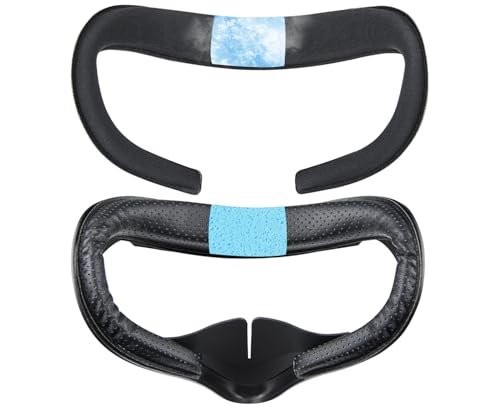
Quest 2 Face Pad Review Summary
The SOULWIT cooling face pad makes sense for Quest 2 owners who want a more comfortable facial interface without changing the core headset.
Its appeal is practical rather than flashy: one cover focuses on cooling and sweat management, the other gives you a different feel, and the nose guard is there to reduce stray light.
That combination makes it a strong fit for active players, people who run hot, and anyone who wants a more forgiving surface during extended sessions.
The main reason to buy it is not novelty.
It is the promise of a better day-to-day experience when the headset is on your face for a while.
If you use the Quest 2 for long gaming sessions, exercise apps, or shared household use, those small comfort gains can matter more than cosmetic upgrades.
If you are looking for a full premium facial interface ecosystem, though, this is more of a focused accessory than a complete overhaul.
Review Scorecard
| Category | Score | Editorial take |
|---|---|---|
| Comfort | 8/10 | The product is built around comfort-first materials and a cooling layer for longer wear. |
| Heat and sweat handling | 8/10 | The listing explicitly emphasizes a cooling gel layer and breathable ice-silk fabric. |
| Light blocking | 7/10 | The nose flap should help reduce interference, but this is still an accessory cover, not a sealed system. |
| Fit and installation | 8/10 | It is designed specifically for Quest 2 and the glasses spacer, with tool-free installation. |
| Durability | 7/10 | Stitched and glued construction suggests better resistance to splitting than a basic cover. |
| Versatility | 8/10 | Two included covers give you more than one setup option for different sessions or preferences. |
Key Features and Specifications of Quest 2 Face Pad
The SOULWIT set is designed specifically for the Meta/Oculus Quest 2 headset.
The listing says it includes 2 pieces: a cooling gel cover and a protein leather cover.
That matters because it gives buyers two different contact surfaces instead of forcing one feel for every session.
The feature set is built around airflow and comfort.
The cooling side uses a soft gel layer under breathable ice-silk fabric, which is meant to pull sweat away and keep the forehead cooler during extended use.
The design also adds airflow grilles at the top and bottom to improve circulation.
In plain terms, this is trying to solve the two most common VR comfort complaints: heat build-up and wet foam fatigue.
Another useful detail is the nose flap.
The listing says it blocks light and reduces interference, which is especially relevant in VR because even a small amount of light leakage can break immersion.
It is not described as a rigid light seal, so the expectation should be improved blocking rather than total darkness around the nose.
The brand also says the covers are stitched and glued to improve durability and reduce splitting.
That is a sensible construction note for an item that gets repeated skin contact and regular removal.
The product is also described as easy to install and compatible with the Quest 2 headset and glasses spacer without additional tools.
| Spec | What it means for buyers |
|---|---|
| Compatibility | Made for Quest 2 |
| Included pieces | 2 covers |
| Cushion types | Cooling gel cover and protein leather cover |
| Comfort features | Ice-silk fabric, soft gel layer |
| Ventilation | Top and bottom airflow grilles |
| Light blocking | Nose flap included |
| Installation | Tool-free fit |
| Construction | Stitched and glued |
Pros and Cons of Quest 2 Face Pad
Pros
- Two included covers give you flexibility instead of a single fixed feel.
- Cooling gel and breathable fabric are well matched to sweaty or warm sessions.
- Airflow grilles are a sensible design touch for better circulation.
- The nose flap adds another layer of immersion support.
- Tool-free installation lowers the friction for first-time buyers.
- Stitched and glued construction suggests a more durable finish than a very basic replacement pad.
Cons
- It is still a comfort accessory, not a full headset redesign.
- The listing does not provide detailed measurements, so fit expectations rely on Quest 2 compatibility.
- The nose flap should help with light leakage, but it will not necessarily eliminate it completely.
- Buyers who want a single premium leather feel may not need both included covers.
Who Should Buy Quest 2 Face Pad?
This is a smart buy for Quest 2 owners who want a more comfortable face interface for regular play.
It is especially relevant if you run warm, sweat during active games, or stay in VR long enough for the stock cushion to become annoying. The two-cover approach also makes it useful for households where more than one person uses the headset and preferences may differ.
It is also a good fit for people who care about light control.
The built-in nose guard is a small detail, but in VR small details can affect immersion more than buyers expect.
If you often notice light intrusion around the nose, this type of accessory can be worth more than a purely cosmetic replacement.
You should probably skip it if you want a full face interface system with more advanced materials, detailed sizing data, or a highly customized fit.
It is also less compelling if your current Quest 2 cushion already feels fine and you do not have heat or sweat complaints.
Comfort and Fit Details
Cooling Feel
The strongest selling point is the cooling-focused layer.
The listing’s combination of gel, ice-silk fabric, and airflow grilles is clearly aimed at reducing the hot, sticky feeling that can build up during long sessions.
That makes the product most attractive to players who notice comfort loss after the first half hour rather than those who only use the headset briefly.
Light Blocking
The nose flap is a useful addition because light leakage can be distracting even when the rest of the headset fits correctly.
This kind of feature does not need to be dramatic to be valuable; for many users, simply softening the light leak is enough to improve immersion.
The right expectation is better blocking, not a perfect blackout solution.
Installation and Everyday Use
The fact that it is designed for the Quest 2 and the glasses spacer without tools is a real buying advantage.
Accessories that are awkward to mount often get ignored after the first setup.
Here, the low-friction install story suggests this is something buyers can actually keep using instead of treating as a one-time experiment.
Durability and Material Choice
The stitched-and-glued construction is a reassuring detail because facial interfaces take repeated wear from skin contact, sweat, and cleaning.
It does not make the product indestructible, but it does signal that the brand is thinking beyond the cheapest possible replacement pad.
For buyers comparing options, that usually matters more than marketing language.
Alternatives to Quest 2 Face Pad
If you want a different fit or a broader ecosystem, a few Amazon search alternatives are worth comparing. VR Cover Quest 2 facial interface is the most obvious alternative if you want a better-known replacement path. AMVR Quest 2 face cover is another common option for buyers who want a similar comfort-focused upgrade. KIWI design Quest 2 facial interface is also worth checking if you prefer a broader accessory brand.
The main difference to watch for is not just the brand name.
Compare whether the alternative offers cooling materials, a nose guard, or multiple cushion choices, because those are the features that make the biggest practical difference here.
Is Quest 2 Face Pad Worth It?
For most Quest 2 owners who want better comfort, yes, this looks worth considering.
The SOULWIT face pad is not trying to be the most advanced accessory on the market; it is trying to solve the most common friction points in a straightforward way: heat, sweat, light leakage, and install hassle.
If that is your problem set, the two included covers and the nose guard make this a sensible buy.
If you already like your current facial interface or want a more premium, heavily specified replacement, you may want to compare it with better-known alternatives first.
For comfort-focused Quest 2 buyers, though, this is a practical and reasonable upgrade.