Looking for a game that will bring kids and family together this Christmas? These 18 picks span cooperative play, quick challenges, clever strategy, and portable games.
Use the age guidance and play style to find a gift that suits the child and the people they’ll play with.
18 Christmas Board Game Gift Ideas for Kids to Consider in 2026
A Pattern-Matching Strategy Gift

- Players match tiles by color or shape and score points.
- Designed for 2–4 players, ages 6 and up.
- Includes 108 wooden tiles and four trays for organizing pieces.
Best For: Ages 6+ who enjoy spotting patterns and playing family strategy games.
A Bluey-Themed Hands-On Game
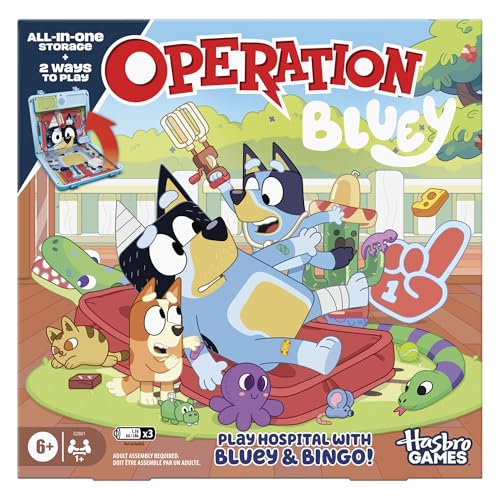
- Features Bluey, Bingo, and Dad, with music and phrases from the show.
- Offers Hospital and Emergency play modes for ages 6+.
- The board folds into a handled case with built-in storage.
Best For: Bluey fans ages 6+ who enjoy careful hands-on challenges.
A Cooperative Counting Game

- Players work together to help Mother Hen gather chicks.
- For 2–4 players ages 3 and up, with no reading required.
- Includes a game board, mother hen, 40 chicks, spinner, and instructions.
Best For: Younger children learning counting and taking turns with others.
A Family Game About Big Choices

- Players make choices about college, family, careers, and retirement.
- For 2–4 players ages 8 and up.
- Includes a gameboard with spinner, cards, cars, pegs, and play money.
Best For: Kids ages 8+ who enjoy stories and making choices.
A Classic Stacking Challenge

- Play classic Jenga or add six challenge modes using the digital die.
- Includes 54 wooden blocks and a stacking sleeve.
- For ages 6+; the game also offers solo play.
Best For: Kids and families who enjoy suspenseful stacking challenges.
A Portable Two-Player Matchup

- Players try to connect four discs of their color in a row.
- For two players ages 6+; rounds are listed as five minutes.
- The grid folds into a carrying case with storage and score trackers.
Best For: Kids ages 6+ who like quick head-to-head games.
A Marble-Run Building Gift
Ravensburger GraviTrax PRO Starter Set

- Combines gravity and magnetic marble play with construction challenges.
- The set includes 152 components.
- Listed for ages 8 and up, with opportunities for collaborative play.
Best For: Kids ages 8+ who like building, experimenting, and solving challenges.
A First Tile-Placement Game

- Players place tiles to build the city and help children catch animals.
- Designed for ages 4+ and 2–4 players.
- Uses tile placement without high-score counting.
Best For: Children ages 4+ ready for a light tile-laying game.
A Portable Solo Puzzle Pair
SmartGames IQ Bundles 3D Series

- Combines IQ Puzzler Pro and IQ Fit with 240 challenges.
- Includes compact portable cases with lids and challenge booklets.
- Designed for one player, ages 6 through adult.
Best For: Kids ages 6+ who enjoy solo logic puzzles at home or on the go.
A Playful Fantasy Card Game

- Features a fantasy theme with playful characters.
- Listed for 2–5 players with an approximately 15-minute game duration.
- Comes in a folding box.
Best For: Children who enjoy fantasy-themed card games and short rounds.
A Train Route-Building Adventure
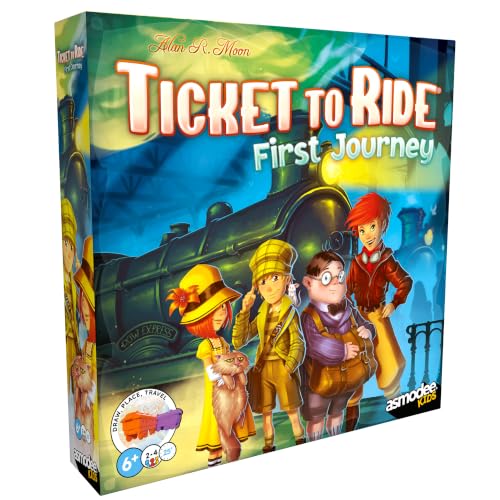
- Players collect train cards and claim routes across a North American map.
- For 2–4 players ages 6+ with simplified rules.
- Destination tickets and a Golden Ticket give players clear goals.
Best For: Kids ages 6+ who enjoy trains and simple strategy.
A Travel-Ready Word Game

- Players race to build crossword grids from letter tiles.
- Includes 144 tiles in a banana-shaped pouch.
- For 1–8 players, recommended for ages 7 and up.
Best For: Kids ages 7+ who enjoy spelling and word-building games.
An Oversized Strategy Board

- The 12-by-12-inch board is larger than the regular game board.
- For 2–4 players ages 7 and up.
- Players place pieces by corners and try to block opponents.
Best For: Kids ages 7+ who like spatial puzzles and friendly competition.
A Customizable Card-Drafting Game

- Players pick and pass cards to build combinations.
- Customizable menus add variety between games.
- For ages 8+; playtime is listed as 15–20 minutes.
Best For: Kids ages 8+ who enjoy quick card games with family or friends.
A People-And-Pets Guessing Game

- Players ask yes-or-no questions to guess a mystery character.
- Choose between people cards and pet cards.
- For two players ages 6+, with fold-up cases for storage and travel.
Best For: Kids ages 6+ who enjoy asking questions and making deductions.
A No-Reading-Required Match

- Players play a card and place a chip on the matching character.
- The first player to make a row of four chips wins.
- For 2–4 players; the product listing targets kids ages 3–6.
Best For: Young children learning matching and turn-taking.
A Fast Verbal Challenge

- Players name three items in a category before the timer runs out.
- Includes 200 cards with 400 questions and a twisted timer.
- Designed for ages 6+ and three or more players.
Best For: Kids ages 6+ who like quick verbal challenges with a group.
A Team Mystery for Kids
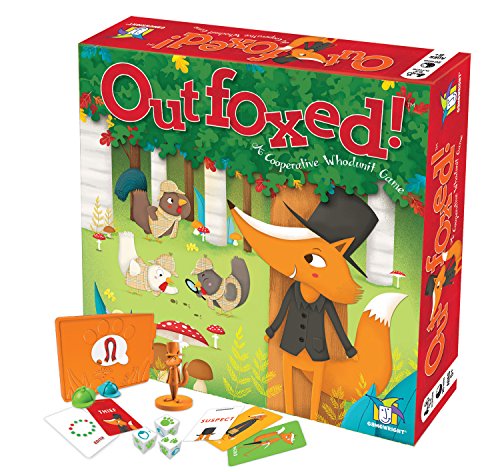
- Players work together to solve clues and catch the fox.
- The game uses dice, clues, and a decoder to eliminate suspects.
- Listed for ages 5+ with 15–20-minute rounds.
Best For: Kids ages 5+ who like solving clues together.
Christmas Board Game Gift Ideas for Kids: How to Choose
Christmas board game gift ideas for kids work best when the game fits the child’s age, interests, and usual play group. Start with the age guidance on the game, then consider whether the child likes matching, building, solving clues, wordplay, or friendly competition. The right fit is often a game whose central action sounds appealing before anyone opens the box.
Match the Game to the Group
Think about who will join in. Some options are built for two players, while others accommodate small groups or a broader family table. Cooperative games such as Count Your Chickens and Outfoxed let players work toward a shared goal. For a head-to-head choice, Connect 4 and Guess Who? focus on two players. Games like Qwirkle, Ticket to Ride: First Journey, and Blokus XL offer family strategy play with more than two participants.
Also consider how much attention and explanation the group will want to give. A quick round can be easier to fit between other holiday activities. A longer or more involved game may suit a family that enjoys settling in for a full game night. The listed playtime varies, and some products do not specify a duration, so check the game details when session length matters.
Choose a Play Style They’ll Return to
For young children, look for simple matching or turn-taking mechanics, and check the age guidance before gifting. Count Your Chickens is a cooperative counting game for ages three and up, while My First Carcassonne introduces tile placement for ages four and up. For older children, choices include route planning in Ticket to Ride: First Journey, pattern matching in Qwirkle, and spatial strategy in Blokus XL.
Consider whether the recipient prefers to play with others or independently. SmartGames IQ Bundles is a solo puzzle option, while Jenga can be played solo or with a group. A travel-friendly format can also be useful: Bananagrams comes in a pouch, and the Connect 4 and Guess Who? editions have fold-up carrying cases. Look at the actual storage and player details to decide what fits the family’s routines.
Budget Considerations for Christmas Game Gifts
Set a comfortable budget before comparing games. The supplied products range from compact card and word games to a larger GraviTrax PRO Starter Set. The game’s format, components, and intended play style can help explain why one choice may suit your budget better than another. Prices and availability can change, so check the current listing when you are ready to buy.
A smaller game can still make a thoughtful present if it matches the child’s interests. For a shared family gift, consider whether several people will play it and how often it might come out. Avoid choosing by box size alone: a portable game or a compact puzzle may be a better match for a child who likes travel or solo challenges.
Personalization Tips
Make the gift feel considered by matching it to a specific interest. A child who likes trains may enjoy a route-building theme; one drawn to mysteries may prefer clue-solving; a fan of Bluey may connect with the themed Operation edition. For a child who enjoys words, consider Bananagrams, while a budding strategist might prefer a game built around tiles, routes, or spatial choices.
You can also personalize the moment you give it: pair the game with an invitation to play together during the Christmas break, or write a note naming the first family member they can challenge. These touches do not require changing the game itself and keep the focus on shared play.
Last-Minute Christmas Buying Advice
Before ordering, verify the recommended age, player count, and what the box includes. Check whether the game calls for batteries: Operation Bluey requires three AA batteries, which are not included. For small children, follow the product’s age guidance and safety information, especially where small parts are noted.
If timing is tight, confirm the seller’s current delivery estimate and whether the item is available for your location; delivery dates can vary. Keep the recipient’s interests and the family’s likely player count in mind, then choose a game that is easy to bring out and enjoy together. That simple fit is what makes a Christmas game gift useful well after the holiday.