If you want a Razer Tartarus V2 Left-Handed Gaming Keypad review that focuses on real buying tradeoffs, this is a strong place to start.
The Razer Tartarus V2 Left-Handed Gaming Keypad is built for people who want more commands, better thumb control, and a tighter one-hand layout than a standard keyboard can offer.
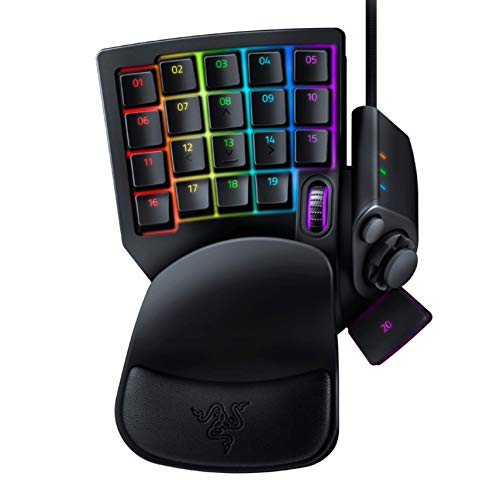
Tartarus V2 Left-Handed Gaming Keypad Review Summary
The Razer Tartarus V2 Left-Handed Gaming Keypad makes the most sense for players who live on hotkeys or creators who want a compact macro surface instead of reaching across a full keyboard.
Its value is not in being a replacement for every input device, but in concentrating a lot of programmable control into a shape that keeps the left hand anchored and the right hand free for mouse precision.
That makes it especially appealing for MMO, MOBA, and strategy players, along with anyone who uses repeated shortcuts in editing or streaming work.
The biggest upside is the combination of 32 programmable keys, an 8-way thumbpad, and Razer’s remapping and lighting ecosystem.
The main tradeoff is that this is a specialized device, so buyers who just want a general-purpose gaming keyboard replacement may find it more niche than useful.
Review Scorecard
| Category | Score | Buyer-focused rationale |
|---|---|---|
| Programmable control | 9/10 | 32 keys and macro remapping give it a lot of command density for one hand. |
| Thumb navigation | 8/10 | The 8-way thumbpad helps movement and directional input feel more natural than pure key clusters. |
| Comfort and posture | 8/10 | The left-hand layout keeps the hand in one area and can reduce awkward stretches. |
| Gaming versatility | 8/10 | Strong fit for MMO, MOBA, and strategy play, but less compelling for simple keyboard-only use. |
| Workflow utility | 7/10 | The programmable layout can help creative shortcuts, though it is still clearly optimized for gaming. |
| Ecosystem value | 8/10 | Razer Chroma support and remapping features add flexibility for users already in the Razer environment. |
Key Features and Specifications of Tartarus V2 Left-Handed Gaming Keypad
The Razer Tartarus V2 Left-Handed Gaming Keypad centers on high-performance mecha-membrane switches, which Razer describes as giving a tactile keypress feel while keeping the surface softer than a full mechanical board.
That matters because this device is meant to support long sessions where rapid input repetition can become tiring.
It includes 32 mecha-membrane keys, which is a major selling point for anyone who wants a dedicated command pad.
In practice, that many inputs let you keep skill rotations, utility actions, map bindings, or editing shortcuts close at hand without constantly reaching back to the main keyboard.
The 8-way directional thumbpad is another defining feature.
It is there to improve movement controls and ergonomics, especially for players who prefer using the left hand for navigation while the mouse handles aiming or camera control.
That makes the keypad feel more like a compact control surface than a simple macro pad.
Razer also builds in fully programmable macros through Razer Hypershift, allowing keys and combinations to be remapped to more complex commands.
For buyers who like to stack actions, this can reduce friction during gameplay or workflow tasks.
The device also supports Razer Chroma lighting with individually backlit keys and broad ecosystem syncing, which is more than cosmetic if you already use other Razer gear.
In short, the hardware story here is straightforward: the Razer Tartarus V2 Left-Handed Gaming Keypad is about concentrated inputs, thumb-based movement, and a software layer that lets the same physical layout do a lot of different jobs.
Pros and Cons of Tartarus V2 Left-Handed Gaming Keypad
Pros
- Lots of programmable input in a small footprint. The 32-key layout is the headline feature and the biggest reason to buy it.
- Thumbpad improves control. The 8-way directional pad makes the device more useful than a plain macro grid.
- Useful for both play and productivity. Macro remapping can help in games and in shortcut-heavy creative tasks.
- Good fit for Razer users. Chroma sync and ecosystem compatibility add value if you already own other Razer devices.
Cons
- Specialized rather than universal. If you do not need macro density or left-hand control, the benefit is limited.
- Learning curve is real. A compact command device usually takes time to configure and memorize well.
- Not a full keyboard substitute. Buyers looking for a general typing or everyday input solution should not expect that here.
Who Should Buy Tartarus V2 Left-Handed Gaming Keypad?
The Razer Tartarus V2 Left-Handed Gaming Keypad is best for players who use a large number of bindings and want them concentrated under one hand.
MMO and MOBA players are the obvious audience, but the device also makes sense for strategy games, simulation games, and any setup where fast access to multiple commands matters more than typing.
It is also a practical option for streamers, editors, and creators who want a shortcut-heavy control surface.
If your workflow uses repeated actions, programmable macros can be more valuable than they first appear.
The more often you repeat the same commands, the more this keypad starts to justify itself.
Buy it if you want left-hand control, macro flexibility, and a compact device that can replace a messy cluster of keyboard bindings.
Skip it if you mainly play games with only a few core inputs, prefer a standard keyboard layout, or do not want to spend time setting up custom bindings.
How Tartarus V2 Left-Handed Gaming Keypad Handles Control and Comfort
32 Keys for Dense Bindings
The 32-key layout is the feature that gives the Razer Tartarus V2 Left-Handed Gaming Keypad its identity.
It is built for users who are tired of running out of accessible keys or who want to keep most actions within a tight reach zone.
That can make combat rotations, utility actions, and application shortcuts easier to manage once the layout is trained.
Thumbpad for Movement and Direction
The 8-way thumbpad is one of the main reasons this keypad is more interesting than a basic macro pad.
Instead of forcing all motion onto the fingers, it gives the thumb a defined role.
For buyers who want a more natural control split between hand and mouse, that is a real usability advantage.
Mecha-Membrane Feel
Razer’s mecha-membrane switch design is a middle-ground choice.
It aims to give a tactile press without going all the way to a heavy mechanical board feel.
That should appeal to buyers who want distinct actuation and a softer landing zone, though people who strongly prefer traditional mechanical switches may still have a preference one way or the other.
Chroma and Remapping
Razer Chroma support and Hypershift remapping add the software layer that makes the hardware more useful.
The lighting is not the main reason to buy the keypad, but the remapping is central to its value.
The better your profile setup, the more the Razer Tartarus V2 Left-Handed Gaming Keypad can adapt to different games or applications.
Alternatives to Tartarus V2 Left-Handed Gaming Keypad
If you want a different style of input device, the best alternatives are usually other command pads or macro-focused controllers rather than a normal keyboard.
- Razer Tartarus Pro – a higher-end cousin if you want a similar layout with a more premium feel.
- Razer Tartarus V2 – the same core family for buyers comparing generations or listings.
- Logitech G13 – an older but well-known style of left-hand gaming keypad.
- Elgato Stream Deck – better for creator workflows than game movement, but still a strong macro alternative.
Is Tartarus V2 Left-Handed Gaming Keypad Worth It?
The Razer Tartarus V2 Left-Handed Gaming Keypad is worth it if you want a focused command device with serious binding density, a useful thumbpad, and a layout that rewards customization.
It is not the right buy for everyone, but it is a sensible purchase for MMO players, macro-heavy users, and anyone who wants a more controlled left-hand setup than a standard keyboard can provide.
If that describes your use case, this is a good, practical specialty buy rather than a novelty.