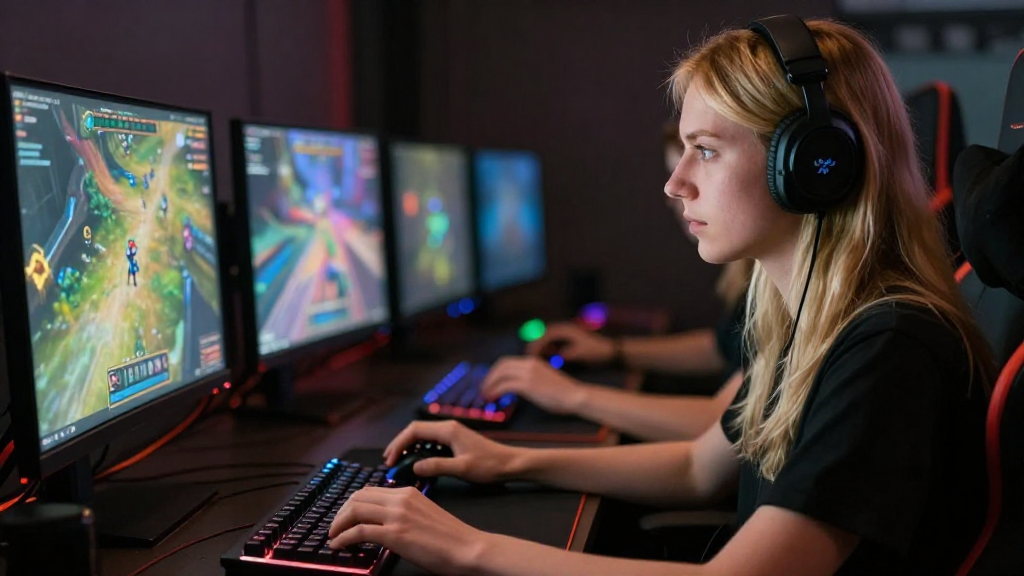
In today’s digital landscape, understanding how gamers transfer skills between different gaming environments is a fascinating aspect of gaming culture.
The ability to apply skills learned from one game to another not only enhances the gaming experience but also demonstrates the versatile nature of a gamer’s skill set.
What Are In-Game Skills?
In-game skills refer to the abilities and strategies a player develops while engaging with a particular game.
These skills can vary widely depending on the genre of the game.
Examples of in-game skills include:
- Strategic thinking: Used in real-time strategy games.
- Hand-eye coordination: Essential for fast-paced action games.
- Teamwork and communication: Crucial in multiplayer and team-based games.
- Resource management: Important in simulation and strategy games.
- Problem-solving: Required in puzzle and adventure games.
How Do Gamers Transfer Skills From One Game to Another?
Understanding how gamers transfer skills involves exploring the cognitive and psychological aspects of gaming.
There are a few key mechanisms at play:
1. Cognitive Flexibility
Cognitive flexibility is the ability to adapt one’s thinking to new and unexpected conditions.
Gamers often demonstrate this flexibility due to their experience with varied game mechanics and strategies.
For example, a player familiar with first-person shooters may have honed their reflexes and strategic thinking through high-pressure scenarios.
In a real-time strategy game, these elements can be utilized to make quick decisions, manage resources, and anticipate an opponent’s moves.
2. Pattern Recognition
Gamers are adept at recognizing patterns and cues within games.
This ability helps them make predictions about game mechanics, enemy behavior, and optimal strategies.
Consider the following:
- A player who excels in a racing game learns to gauge their opponents’ moves through observation.
- They can apply this skill in a fighting game, anticipating an opponent’s attacks or combos based on visual cues.
3. Transference of Skills
Skill transfer in gaming often happens in small but significant ways.
When we discuss how gamers transfer skills, we refer to the application of learned strategies or techniques from one gaming environment to another.
For instance:
- Movement mechanics learned in platformers can enhance agility in action-adventure games.
- Team coordination skills nurtured in multiplayer role-playing games can improve communication in tactical shooters.
4. Motor Skills and Reaction Time
Many gaming genres rely heavily on motor skills and quick reaction times.
FPS games can create muscle memory for quick aiming and shooting.
This learned ability can be transferred to games requiring similar controls, such as racing games or battle arenas.
For instance, if a player is adept at shooting in a game like “Call of Duty,” they may find it easier to aim in other shooter games due to their refined motor skills.
5. Learning from Failure
Failure is often an integral part of gaming.
Through trial and error, players develop resilience and learn to adapt their strategies.
This mental adaptability can be crucial in various gaming genres.
When a gamer encounters challenges in one game, they often analyze what went wrong and how to improve.
Such analytical skills can help them perform better in different contexts, whether in single-player adventures or competitive multiplayer.
Can Gamers Transfer Skills to Real-Life Situations?
Discussing how gamers transfer skills naturally leads to the intriguing question of whether these transferable skills find applicability in real life.
Many studies suggest that gaming can improve various cognitive and physical abilities, leading to practical benefits.
Improved Problem-Solving Skills
Gamers frequently engage in complex problem-solving scenarios.
These experiences can enhance their ability to tackle real-world challenges.
For example:
- Critical thinking: Analyzing a complex game scenario can translate to better decision-making in work or academic projects.
- Adaptability: Navigating different game mechanics teaches players to pivot and adapt strategies in everyday situations.
Enhanced Teamwork Capabilities
As gaming increasingly becomes a social activity, the collaborative skills developed during online play can translate into effective teamwork in the workplace.
Gamers learn to communicate effectively and understand group dynamics, making them valuable team members.
Stress Management
High-pressure gaming situations can teach players how to flourish under stress.
The ability to stay calm and composed in chaos enhances performance in real-world scenarios, such as public speaking or high-stakes work situations.
Technological Proficiency
With the advent of increasingly complex gaming software, gamers often become tech-savvy.
This competency can translate directly to improved efficiency and adaptability with technology in personal and professional settings.
What Are the Challenges in Skill Transfer?
While there are multiple ways in which how gamers transfer skills can be beneficial, challenges do exist.
1. Context-Specific Skills
Some skills are strictly tied to specific game mechanics.
For example, skills learned in a first-person shooter may not translate effectively into a puzzle game, diminishing the efficacy of skill transfer.
2. Counterproductive Learning
In some cases, skills learned from one game may result in negative transfer.
For instance, a player accustomed to fast-paced gameplay may struggle with slower, strategical games, leading to frustration and a steep learning curve.
3. Overconfidence
Gamers might overestimate their skill transferability, causing them to face challenges unprepared.
Being aware of the differences between games can mitigate this issue and prevent frustration.
Conclusion: Embracing Transferable Skills in Gaming
Understanding how gamers transfer skills enhances our appreciation of the gaming experience and its broader implications.
Gamers develop a diverse array of skills, from cognitive flexibility and pattern recognition to teamwork and stress management.
As gaming continues to evolve, the transfer of these skills will likely become even more pertinent, bridging the gap between gaming and real-life applications.
As a gamer, reflecting on your own experiences may reveal how you’ve harnessed and implemented various skills across multiple gaming platforms.
It’s a testament to the adaptability of gamers and their profound capacity to learn and grow through the digital landscapes they navigate.